





 Portuguese
  English
  Spanish
  4 min of reading
  0 comments


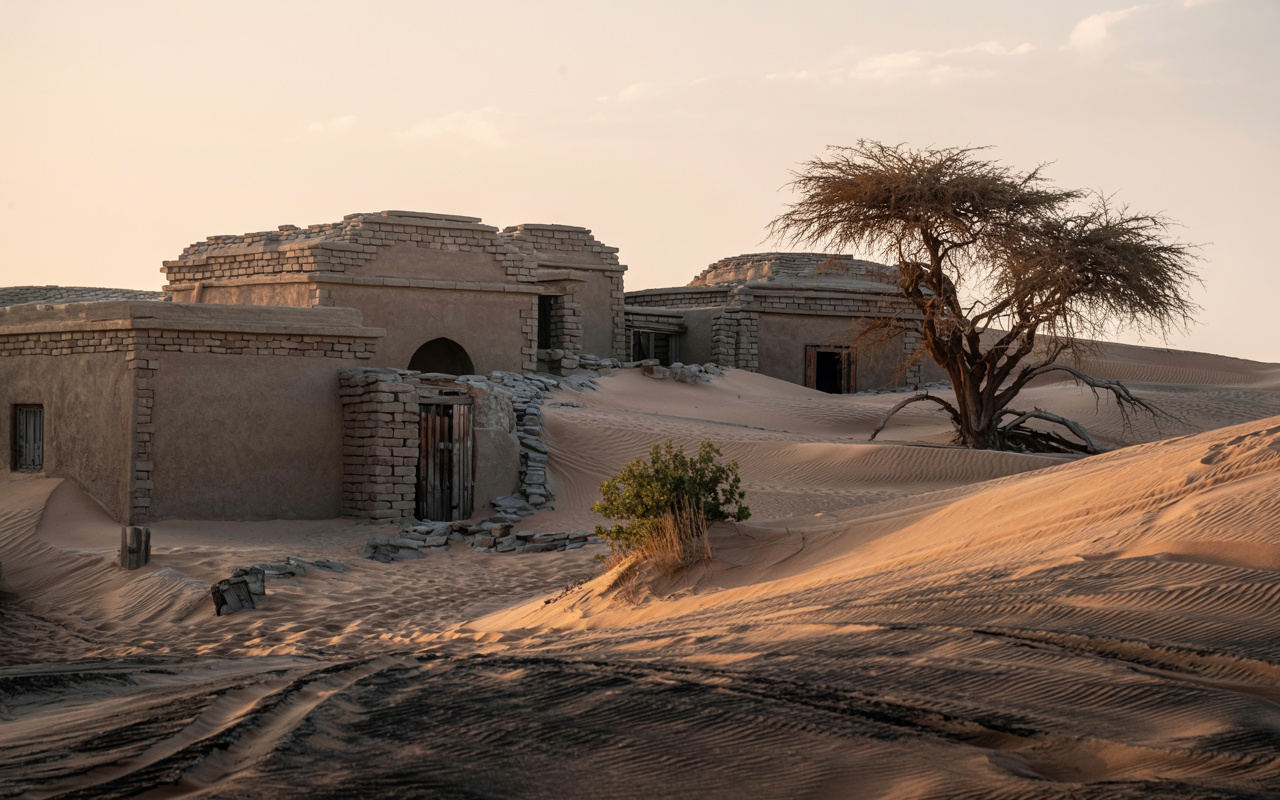
Kolmanskop, Ghost Town in the Namib Desert, Was Home to Millionaires During the Diamond Rush. Today, It Is Buried Under Dunes and Attracts Tourists from All Over the World.
In the heart of the Namib Desert, surrounded by scorching dunes and winds that never cease, there lies a town where time has stopped. The windows no longer have glass, but are filled with fine sand. The rooms are deserted, yet still hold traces of luxury. And the corridors, once walked by German officials and wealthy miners, now echo only with the sound of the wind. This is Kolmanskop, the most iconic ghost town on the African continent — a symbol of fleeting wealth, abandonment, and nature reclaiming its space.
The Birth of Kolmanskop: When the Diamond Sprang from the Sand
The year was 1908. Namibia, then under German colonial control, was an arid and seemingly barren territory. But everything changed when a railway worker named Zacharias Lewala found a shining crystal while cleaning tracks near Lüderitz. He handed the stone to his German supervisor — and unknowingly, he had discovered an open diamond field.
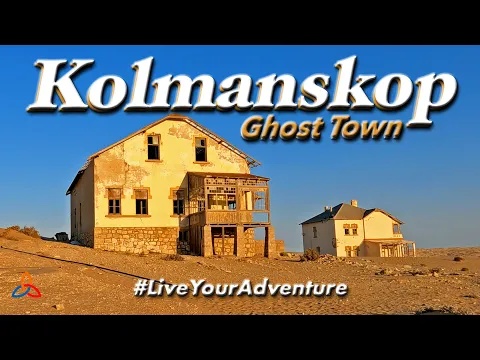

The news spread like wildfire. Soon, geologists and adventurers arrived in the region, and within months, an entire town sprang up in the middle of nowhere: Kolmanskop.
-
Friends have been building a small “town” for 30 years to grow old together, with compact houses, a common area, nature surrounding it, and a collective life project designed for friendship, coexistence, and simplicity.

-
This small town in Germany created its own currency 24 years ago, today it circulates millions per year, is accepted in over 300 stores, and the German government allowed all of this to happen under one condition.

-
Curitiba is shrinking and is expected to lose 97,000 residents by 2050, while inland cities in Paraná such as Sarandi, Araucária, and Toledo are experiencing accelerated growth that is changing the entire state’s map.

-
Tourists were poisoned on Everest in a million-dollar fraud scheme involving helicopters that diverted over $19 million and shocked international authorities.


A Piece of Germany in the African Desert
With the wealth generated from mining, Kolmanskop grew rapidly. At its peak, it housed about 1,300 inhabitants, mostly German settlers and their families. But it was not just any village: it was a model town, with infrastructure more advanced than many European metropolises of the time.
The houses were built in classic German style, with sloping roofs and ornamental details. The town had:
- Hospital with an X-ray machine (one of the first in Africa);
- School, theater, and ballroom;
- Casino and ice factory in the desert;
- Plumbed water system and its own electricity;
- Internal railway transport.
It was an urban oasis created solely to exploit and control the region’s diamond mines.
Kolmanskop and the Diamond Empire
The area around the town was transformed into a exclusion zone, known as Sperrgebiet (forbidden zone), strictly controlled by colonial authorities. Access was restricted, and extraction was carried out using increasingly sophisticated techniques — even including manual sieving at first, since the diamonds literally surfaced.
During the 1910s, Kolmanskop produced about 11% of all the diamonds in the world, serving as a key piece in the German economic empire in Africa.
However, as happens with all towns that arise from a single natural resource, Kolmanskop’s fate was sealed from the beginning. By the 1920s, new, far more productive deposits were discovered to the south, near the Orange River.
The town entered a decline. Operations were gradually shut down, and in 1956, Kolmanskop was officially abandoned. Families left behind houses, furniture, medical instruments, bottles in the bar — everything, except for the diamonds, of course.
The desert, silent and patient, began its reconquest. Without maintenance, the dunes invaded the rooms. Today, in many houses, the sand covers up to half of the doors and windows. The rooms have turned into sandy caves lit only by slits of light. The structures still standing seem to struggle against the inevitable.
A Surreal Landscape: Tourism Amid Forgetfulness
Despite the abandonment, Kolmanskop has never completely disappeared. Thanks to its unique beauty and melancholic atmosphere, the town has begun to attract photographers, tourists, and curios from all over the world.
Today, it is one of the most visited tourist destinations in Namibia. Entry is controlled, as the region still belongs to the protected mining zone of Sperrgebiet, now managed by the Namibian government and private mining companies.
Guided tours are allowed, and part of the town has been preserved to avoid collapses. However, most remains at the mercy of the sand and time, creating an apocalyptic scene that seems straight out of a science fiction movie.
Kolmanskop, Ghost Town and Forgotten Heritage
Kolmanskop is much more than an abandoned town. It is a symbol of the cycle of colonial extraction: a sudden wealth that benefited a few and vanished as quickly as it appeared. Its buried structures tell a story of greed, engineering, adaptation, and ultimately, disintegration.
The ghost town serves as a warning and historical memory about the impact of economic cycles dependent on non-renewable resources. And also as an almost poetic portrait of nature reclaiming the space that was taken from it.










Seja o primeiro a reagir!