





 English
  Francês
  Alemão
  Italiano
  Japonês
  Norueguês
  Portuguese
  Spanish
  5 min of reading
  0 comments


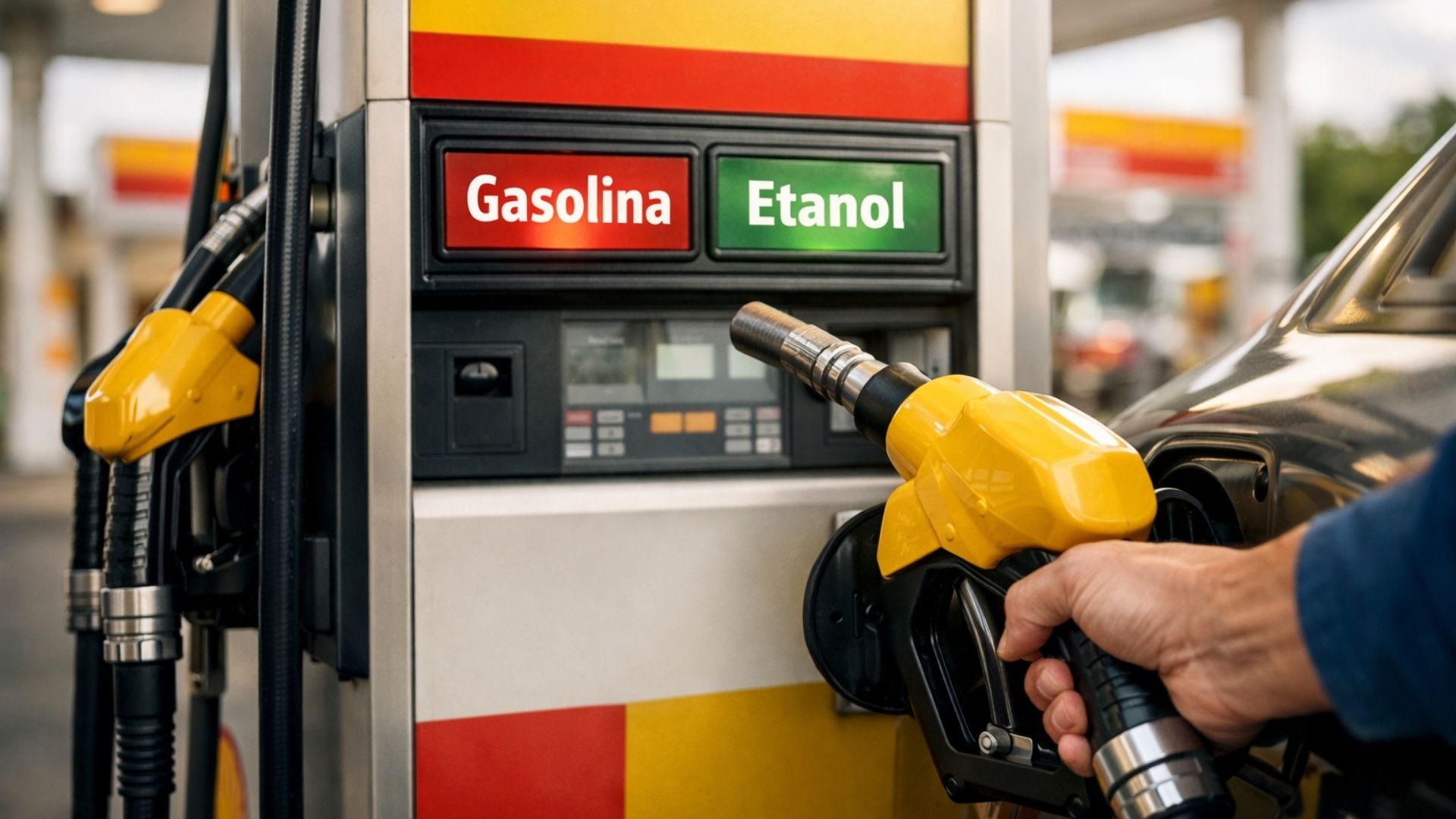
Expansion of biofuels advances in Brazil with technical tests for higher blends in gasoline and diesel, involving million-dollar investments and participation of universities, industry, and government in search of safety, efficiency, and reduction of emissions in the national energy matrix.
The federal government has initiated a new phase of tests to evaluate whether gasoline sold in the country can reach 35% anhydrous ethanol and whether diesel can receive 25% biodiesel, without compromising engine performance, vehicle safety, and fuel quality.
The research front was structured by the Ministry of Mines and Energy with coordination from the National Agency of Petroleum, Natural Gas and Biofuels, ANP, and will have an investment of around R$ 30 million over three years.
This measure is part of the implementation of the Future Fuel Law, enacted in October 2024.
-
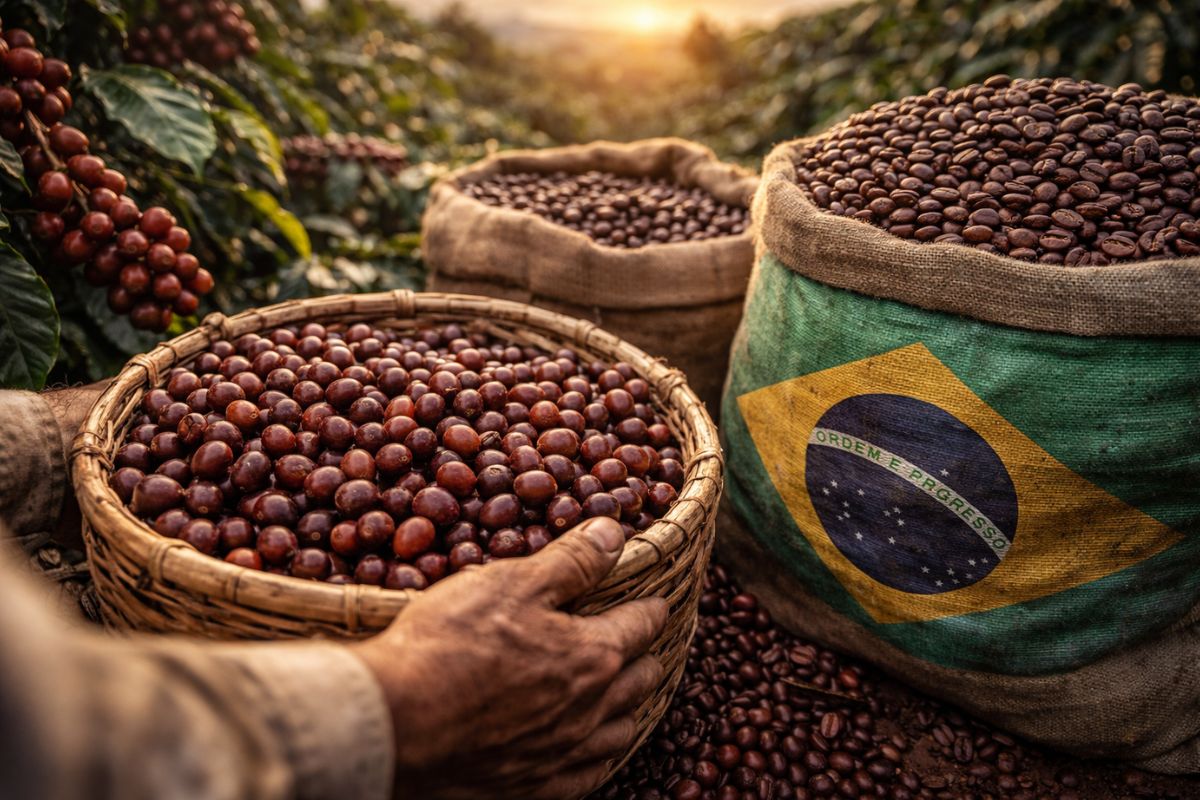
Brazil is the largest coffee producer in the world, but four foreign companies control more than half of the domestic market, including brands that you probably have in your kitchen like Pilão, 3 Corações, Melitta, and Nescafé.
-
Expansion of Federal Institutes: 38 new campuses and R$ 200 million for public education; see the cities included.

-
Lula’s government changes rule in important benefit and thousands of Brazilians will no longer receive it; see what has changed.

-
New Gripen fighter makes Argentines surrender to Brazil, and the heavy reaction exposes envy, frustration, and shock at Brazil’s technological leap.


Technical tests precede possible adoption of E35 and B25
In practice, the initiative does not mean that the adoption of E35 and B25 is already authorized in the Brazilian market.
What has been established is a national research network aimed at producing technical evidence to support future public policy decisions.
The ANP itself emphasizes that the project does not equate to a definitive assessment for the commercial release of these blends and that any subsequent adoption will depend on completed studies and deliberation by the National Energy Policy Council, CNPE.
Current percentages of ethanol and biodiesel in Brazil
Currently, the mandatory percentage in force is lower.
Since August 1, 2025, regular gasoline has been circulating with 30% anhydrous ethanol (E30), while diesel has been containing 15% biodiesel (B15).
This advancement was approved by the CNPE in June of last year and came into effect at the beginning of August.
This positions the new tests as the next step in a gradual policy to expand the use of biofuels in the country.
National network brings together universities and research centers
The new network will concentrate on physicochemical analyses of the blends, performance tests in engines and vehicles, and the development of methodologies to monitor fuel quality.
Surveys on consumption, energy efficiency, and greenhouse gas emissions are also planned.
The government’s intention is to gather data that will allow for laboratory and operational responses to whether higher levels of ethanol and biodiesel can be increased without compromising injection systems, component durability, drivability, and safety of use.
The coordination of the work will be with the ANP’s Center for Research and Technological Analysis, within a network formed by nine laboratories.
In addition to the agency itself, institutions such as the Federal University of Minas Gerais, the Technological Research Institute of São Paulo, the Mauá Institute of Technology, the National Institute of Technology, Lactec, the Federal University of Goiás, the Federal University of Rio de Janeiro, and the Federal University of Rio Grande do Norte will participate.
According to the ANP, approximately R$ 9.91 million of the total will be directly allocated to the project executed by its research center.
Committee brings together industry, government, and experts
While the national network is being structured, the Ministry of Mines and Energy is concurrently conducting, within the scope of the Permanent Technical Committee of the Future Fuel, the development of test plans that should guide the evaluation of higher blends.
This work brings together government, automakers, engine manufacturers, universities, research centers, and fuel producers.
The participatory format was adopted so that the technical analysis is not restricted to public administration.
Manufacturers and other sector agents can contribute to the definition of parameters, methodologies, and validation criteria.
Biodiesel already has test plan in public consultation
In the case of biodiesel, the process has already advanced to a more detailed phase.
The test plan submitted for public consultation foresees campaigns in two phases, evaluating blends above B15 and up to B20.
Subsequently, a second phase may reach B25.
The technical documents indicate tests with heavy and light engines of different technological generations, as well as tractors and stationary equipment.
The tests include monitoring of cold starts, emissions, consumption, chemical compatibility of materials, durability, and degradation of lubricating oil.
Future Fuel Law allows gradual advancement
For ethanol in gasoline, the movement has a similar logic but starts from a different stage.
The Future Fuel Law raised the legal limit of ethanol content in regular gasoline to up to 35%, although the mandatory percentage has been set at 27% by the regulation.
The legislation allows variation between 22% and 35% by executive decision.
After the law was enacted, the government conducted technical discussions on E30 and reached commercial adoption of this level in 2025.
Now, E35 appears as a hypothesis to be investigated, not as a percentage already incorporated into the routine of gas stations.
Strategy seeks to reduce dependence on fossil fuels
The backdrop of this agenda is the attempt to increase the participation of renewable fuels in the transport matrix.
The strategy also seeks to reduce dependence on fossil derivatives and provide technical support for future regulatory decisions.
In the case of diesel, the legislation itself established a growth trajectory for the blend of biodiesel, with forecasts for gradual increases until 2030.
This depends on the demonstration of adequate technical and regulatory conditions.
In the case of gasoline, the expansion depends on the demonstration of feasibility and subsequent government decisions.
For this reason, the announced tests gain strategic weight within Brazilian energy policy.
The official formulation presented by the government seeks to prevent the expansion of biofuels from occurring without technical support.
Therefore, the studies have been designed to measure not only the behavior of the new blends in the laboratory but also their effects on engines and vehicles.
Possible reflections on the quality of the final product, efficiency, and emissions will also be analyzed.
At the end of the process, the data should serve as a basis for regulatory decisions and for defining the next steps of public policy.






Seja o primeiro a reagir!