





 Portuguese
  English
  Spanish
  7 min of reading
  0 comments


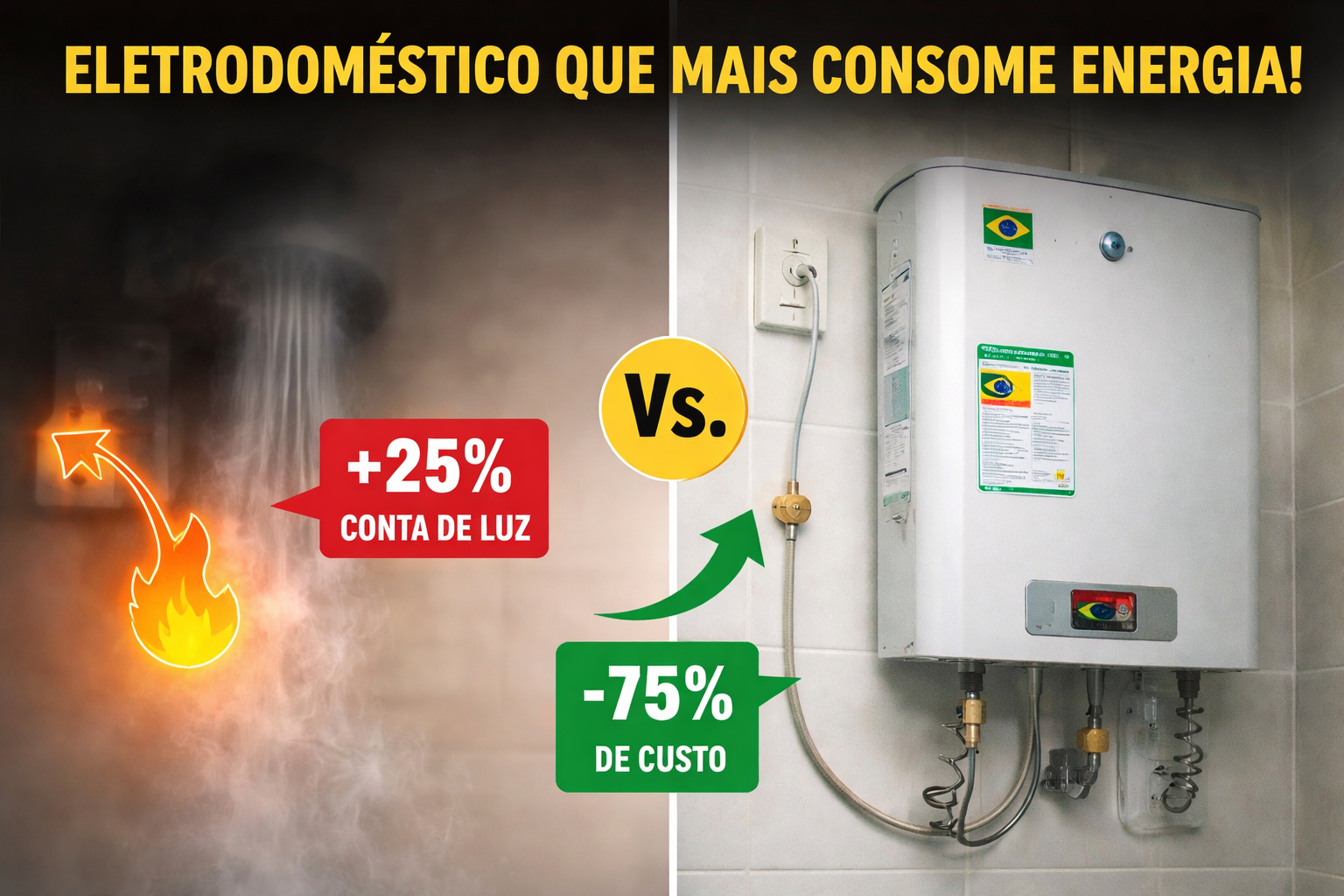
Electric shower consumes up to 40% of the electricity bill in Brazil; heat pump reduces expenses by up to 75% and relieves the electric system
When the electricity bill arrives high, most Brazilians immediately associate the increase with air conditioning. However, according to a study by the School of Electrical and Computer Engineering at the State University of Campinas, the main contributor to residential energy consumption is in the bathroom: the electric shower. Present in most Brazilian households, the device can account for 20% to 30% of total electricity consumption, reaching up to 40% of the electricity bill in the South and Southeast regions during peak hours.
The impact is even more significant when analyzed on a national scale. The energy consumed by all the showers in the country over a year is equivalent to almost 30% of the annual production of the Itaipu hydroelectric plant, one of the largest hydroelectric plants in the world. This data highlights the structural weight of the electric shower in the Brazilian energy system.
Electric shower in Brazil: national invention with high energy consumption
The electric shower is a Brazilian invention, created by Francisco Canho and popularized from the 1930s. Its operation is based on a simple principle: an electric resistance heats the water instantly at the moment of use. This technical simplicity ensured its widespread dissemination, mainly due to the low installation cost and the immediate delivery of hot water.
-
Son of a seamstress from the rural area of Ceará who did not speak English wins a scholarship of over 2 million reais at Williams College, one of the top 10 universities in the United States, covering everything including dormitory, meals, and annual trips to Brazil.

-
Bill Gates revealed that the true secret behind every great achievement is not a brilliant leap but rather small improvements repeated over the years, and the data from his own career and the fight against climate change prove that he is right.

-
With 22 thousand tons of steel, a height nearly three times greater than the Eiffel Tower, and a cost of R$ 1.6 billion, China is building the highest bridge on the planet over a colossal canyon, reducing a crossing time of over 2 hours to just over 2 minutes.

-
With more than 635,000 doctors, Brazil sees competition increasing in large cities, and recent graduates are competing for shifts at an accelerated pace while the countryside still faces shortages.




However, the critical point is in the power. A typical shower in the South and Southeast regions operates at around 5,500 watts, an extremely high value compared to other appliances. A microwave consumes about 1,000 watts, while a refrigerator runs around 300 watts.
This means that the electric shower consumes, in a few minutes, the equivalent of the prolonged use of several other devices, becoming the main vector of energy expenditure within Brazilian households.
Electric shower consumption in the electricity bill: real monthly expense calculation
The math of consumption is rarely done at the time of the shower, but the numbers are significant. A family of four, taking showers of approximately 15 minutes each, uses the shower for about one hour a day.
With a 5,500-watt device, this represents a daily consumption of 5.5 kWh, totaling about 165 kWh per month. Considering an average rate of R$ 0.85 per kWh, the monthly cost reaches approximately R$ 140 just for the electric shower.
In a total bill of R$ 400, this amount represents about 35% of the monthly consumption, which can significantly increase during the winter when the water temperature is adjusted to higher levels and showers tend to be longer.
Peak hours and impact of the electric shower on the Brazilian electric system
The impact of the electric shower is not limited to individual consumption. It is a systemic problem that directly affects the country’s energy infrastructure.
Between 6 PM and 7 PM, millions of Brazilians simultaneously use the shower, causing a sudden peak in electrical demand. This increase forces the system to activate thermal power plants, which have higher operational costs and greater environmental impact.
According to the research from Unicamp, up to half of residential consumption during peak hours is directly associated with the use of the electric shower. This concentration of demand puts pressure on the electrical grid and raises the overall costs of energy generation.
Heat pump for water heating: alternative to electric shower with up to 75% savings
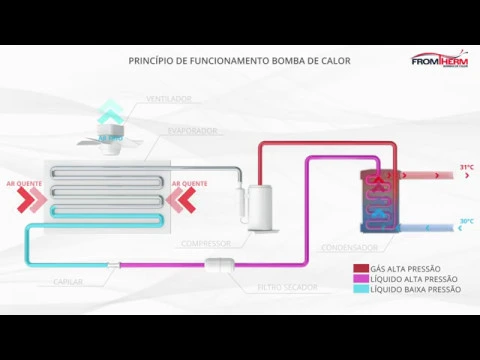
The main technological alternative to the electric shower is the heat pump for water heating. This system operates on the same principle as air conditioning units, but inverted.
Instead of removing heat from the environment, the heat pump captures thermal energy from the air and transfers it to the water stored in a thermal reservoir.
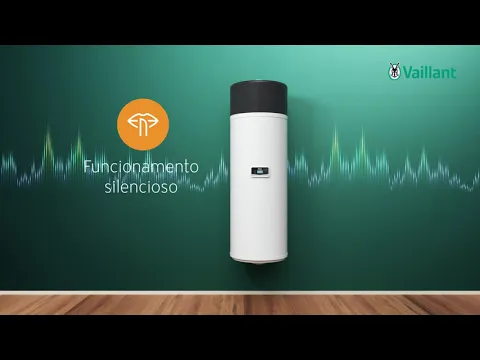
The system uses a compressor, refrigerant fluid, and heat exchangers to carry out this process very efficiently.
While the electric shower consumes about 5,500 watts to heat water directly, the heat pump operates with 800 to 1,500 watts, utilizing heat already present in the environment. For every 1 kWh consumed, the system can generate between 3 and 4 kWh of thermal energy, multiplying energy efficiency.
Energy savings with heat pump: reduction of up to 75% in electricity bill
The efficiency of the heat pump is measured by the coefficient of performance. While the electric shower has a 1:1 ratio between energy consumed and heat generated, the heat pump can achieve ratios of 3:1 or even 4:1.
In practice, this means that energy consumption can be reduced by up to 75% for the same volume of heated water. Manufacturers like Fromtherm and Fasterm document this savings in real applications.
For the same family that spends R$ 140 monthly on the electric shower, the cost with the heat pump can drop to a range between R$ 35 and R$ 50 per month, representing a significant reduction in the household budget.
Operation of the heat pump in daily life: boiler and thermal storage
Unlike the electric shower, which heats water instantly, the heat pump works with pre-heating. Water is stored in a thermal reservoir, known as a boiler, which maintains a constant temperature throughout the day.
A 200-liter boiler serves a family of up to four people, while 300-liter models are recommended for larger households. The water is heated to temperatures between 55°C and 60°C, being maintained with minimal thermal losses thanks to the tank’s insulation.
This model completely eliminates the need for electric resistance during the shower, reducing energy consumption at peak demand times.
Cost of residential heat pump: initial investment and financial return
The main obstacle to adopting the heat pump is the initial cost. While an electric shower costs between R$ 100 and R$ 500, with simple installation, a heat pump system with a boiler can range from R$ 4,000 to R$ 8,000 installed.
Despite this, the financial return occurs in the medium term. With monthly savings between R$ 90 and R$ 100, the investment can be recovered in about two to three years.
Considering a lifespan of over 15 years, the accumulated savings over time is significant, making the system economically advantageous in the long run.
Installation of heat pump in apartment: viability and technical limitations
One of the main questions about the system is its application in apartments. The heat pump requires space for the installation of the external unit, similar to an air conditioner.
In residential properties, this can be resolved with installation on balconies, service areas, or technical spaces. More modern models operate with noise levels below 60 decibels, equivalent to a normal conversation.
However, the need for hot water piping may require structural adaptations, especially in properties that were not designed for central heating systems.
In countries in Europe, the United States, and Japan, the resistance electric shower is practically non-existent. Water heating is done by gas systems, solar thermal energy, or heat pumps.
In Europe, public policies encourage the adoption of heat pumps with subsidies and tax incentives, as part of carbon emission reduction goals.
Brazil, with a climate favorable to the operation of these technologies, has ideal conditions for large-scale adoption. Still, the market remains dominated by the electric shower, mainly due to the low initial cost and established culture.
Solar heating combined with heat pump: high-efficiency hybrid system
The most efficient solution currently is the combination of solar thermal heating with heat pump. In this model, solar panels perform the primary heating of water during the day, while the heat pump acts as a complement during periods without sunlight.
According to studies from the University of São Paulo, well-designed solar systems can reduce the electricity bill by up to R$ 87 monthly for families with average consumption.
The integration between solar energy and heat pump allows reducing electrical consumption for water heating to nearly zero levels at certain times of the year.
Systemic impact of the electric shower: structural problem of the Brazilian energy matrix
The gradual replacement of the electric shower with more efficient systems does not only represent individual savings. It is a change with a direct impact on the national energy infrastructure.
Reducing consumption during peak hours would decrease the need to activate thermal power plants, reduce operational costs of the system, and relieve pressure on the transmission grid.
The electric shower, therefore, is not just a household appliance, but a central element in the energy consumption dynamics of Brazil, with effects that go beyond the residential environment and affect the entire chain of energy generation and distribution.










Seja o primeiro a reagir!