





 Portuguese
  English
  Spanish
  4 min of reading
  0 comments


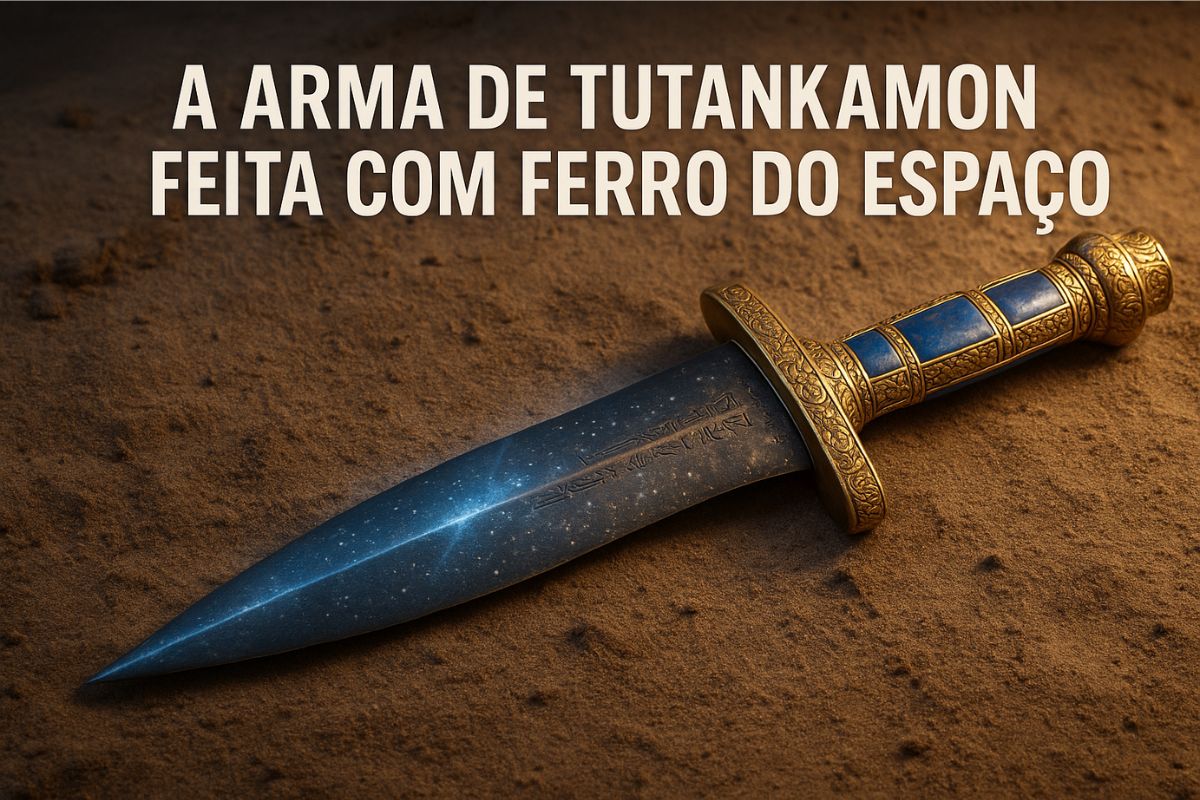
A Weapon Forged with Iron That Fell from the Sky? Scientists Discover that Tutankhamun’s Dagger Did Not Come from Earth and May Hide a Pact Between Ancient Kingdoms
When archaeologists opened Tutankhamun’s tomb in 1922, they were far from imagining that one of the most fascinating objects buried with the young pharaoh was not only a symbol of power… but something that literally did not come from Earth.
Among the thousands of artifacts found in the burial chamber, a dagger with a shiny metal blade caught attention for its unusual beauty. Decades later, modern science would reveal what the eyes could not see: this dagger was forged with iron of extraterrestrial origin, coming from a meteorite.
Iron That Fell from the Sky
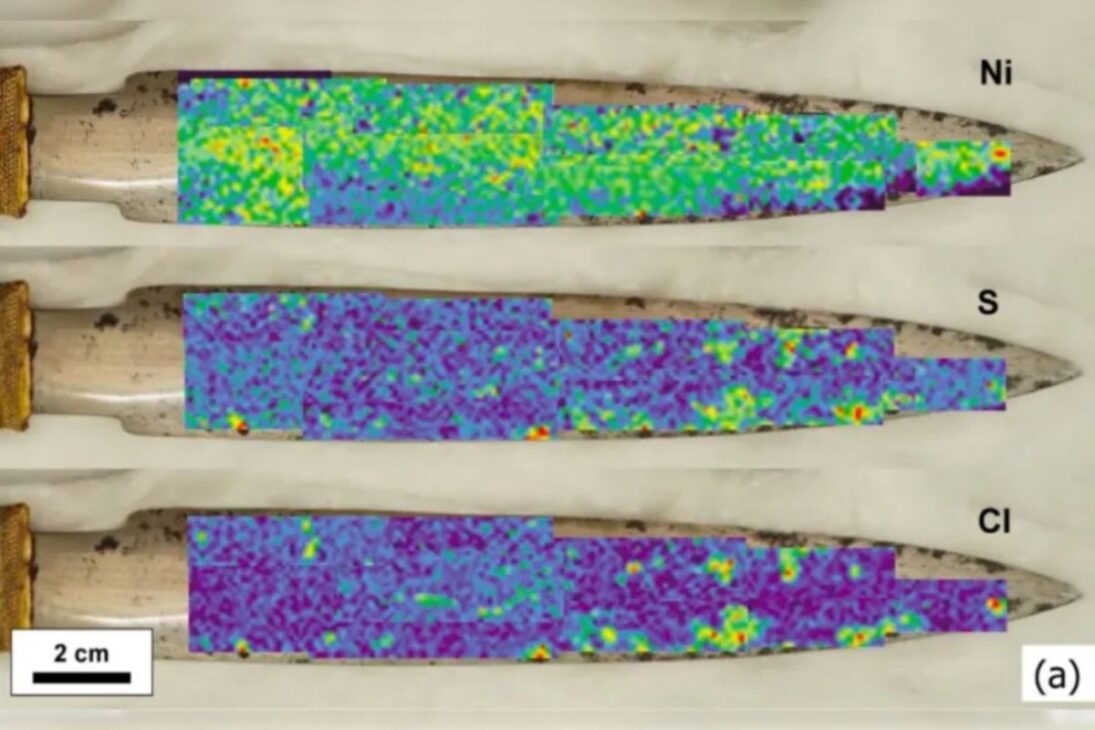
In 2015, a team of scientists led by Daniela Comelli from the Polytechnic University of Milan published a groundbreaking study in the journal Meteoritics and Planetary Science. They analyzed the blade’s composition using portable spectrometry and found an unusual concentration of nickel and cobalt – exactly like those in octahedrite meteorites. More than that, they identified a microscopic pattern known as Widmanstätten structure, impossible to replicate by terrestrial means.
-
Friends have been building a small “town” for 30 years to grow old together, with compact houses, a common area, nature surrounding it, and a collective life project designed for friendship, coexistence, and simplicity.

-
This small town in Germany created its own currency 24 years ago, today it circulates millions per year, is accepted in over 300 stores, and the German government allowed all of this to happen under one condition.

-
Curitiba is shrinking and is expected to lose 97,000 residents by 2050, while inland cities in Paraná such as Sarandi, Araucária, and Toledo are experiencing accelerated growth that is changing the entire state’s map.

-
Tourists were poisoned on Everest in a million-dollar fraud scheme involving helicopters that diverted over $19 million and shocked international authorities.


The verdict was clear: the iron used in Tutankhamun’s dagger came from space.
But this discovery opened even more questions. How was this metal shaped? Who was able to forge it so carefully at a time when Egypt did not even master iron metallurgy?
When Egypt Did Not Know Iron
Tutankhamun’s tomb dates back to the 14th century BC, a time when iron was still extremely rare and considered more precious than gold. Egypt only began using this metal centuries later, and even then in a rudimentary way.
But this dagger is different. It exhibits perfect symmetry, fine polishing, and technical details that simply do not match the Egyptian knowledge of the time. In 2022, another study—led by Takafumi Matsui from the Chiba Institute of Technology—revealed that the piece was forged at less than 950°C, without complete melting, which indicates a sophisticated technique, perhaps intermediate between cold working and light forging.
In other words: Egypt did not have the technology to make it. But someone did.
A Gift from Another Kingdom?
The clues to this enigmatic origin emerged from an unlikely place: the famous Amarna Letters, a set of diplomatic correspondence between the Egyptian pharaohs and kings of other ancient Near Eastern peoples.
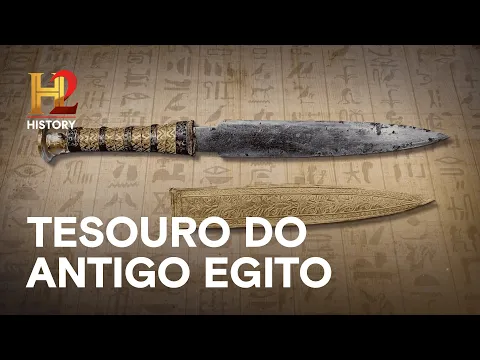
In one of these letters, the king of Mitanni reports having sent to Pharaoh Amenhotep III (Tutankhamun’s grandfather) a dagger with an iron blade, a gold handle, and lapis lazuli inlays. Notably, the dagger buried with Tutankhamun has exactly these characteristics.
And there’s more. The analysis of the dagger’s handle shows that the gemstones were fixed with lime plaster, a type of adhesive common in Mitanni, but not in Egypt, which preferred sulfate plaster. It’s as if the dagger itself cried out its foreign origin.
All signs indicate that the weapon was a diplomatic wedding gift, presented to Amenhotep III, then passed down through generations until it was buried with Tutankhamun.

A Sacred Metal for the Gods
Meteoric iron was not seen merely as rare. It was divine. For the Egyptians, who worshiped the sky and the stars, a metal “that fell from the sky” was sacred. It was not meant to be used in common battles. It was reserved for kings, gods… and eternity.
Not coincidentally, other objects in Tutankhamun’s tomb also have cosmic origins. One of the pharaoh’s necklaces includes a translucent yellow stone made of Libyan desert glass, formed when a meteorite melted the Sahara’s sand thousands of years ago.
In life, Tutankhamun may have been a fragile young king with a short reign. But in his death, the symbols surrounding him were anything but fragile. They were messages to the gods, signs of status, and—perhaps—clues about alliances and stories that we still do not fully understand.
An Enigma That Still Intrigues
Tutankhamun’s meteoric dagger is more than a treasure. It is a piece that shuffles the chronology of history, challenges what we know about ancient metallurgy, and reminds us how archaeology still has much to reveal.
Thanks to modern spectrometry techniques and collaboration between universities like those in Milan and Chiba, we can today understand much more than the eyes of the 20th century saw. But perhaps the most impressive thing is to realize that there is so much more to discover.
After all, if a single dagger can bring so many revelations, what else is still hidden in the unexcavated tombs of Egypt?










Seja o primeiro a reagir!