





 English
  Francês
  Alemão
  Italiano
  Japonês
  Norueguês
  Portuguese
  Spanish
  4 min of reading
  0 comments


With new FPSOs and investments in refining, Petrobras forecasts significant increase in oil and derivatives production, generating value for Brazil, increasing efficiency, and strengthening national energy security
Petrobras, the FPSO platforms, and oil production in Brazil are back in the spotlight following strategic statements made during the Macaé Energy 2026. According to Lourenço Fróes, coordinator of the state-owned company’s new FPSO program, the company is preparing for a significant leap in production capacity, with a direct impact on the economy, the supply chain, and the energy security of the country.
During an interview with Click Petróleo e Gás, Fróes detailed that the company already has robust projects underway, which are expected to come online in the short term and significantly increase national production.


New FPSOs can add up to 900 thousand barrels per day to Brazilian production
According to Lourenço Fróes, Petrobras plans to put into operation three new FPSOs as early as the beginning of 2027, each with an estimated capacity of around 225 thousand barrels of oil per day.
-
Billions of barrels in the Equatorial Margin could double Amapá’s oil production in Brazil and attract companies from the Campos Basin.

-
Mature Fields Take Center Stage and Are Expected to Generate New Opportunities in the Oil and Gas Sector

-
Offshore And New Investment Opportunities Will Be At The Center Of Discussions At Macaé Energy 2026

-
Oil And Gas Supply Chain Gains Prominence And Will Be A Strategic Topic At Macaé Energy 2026
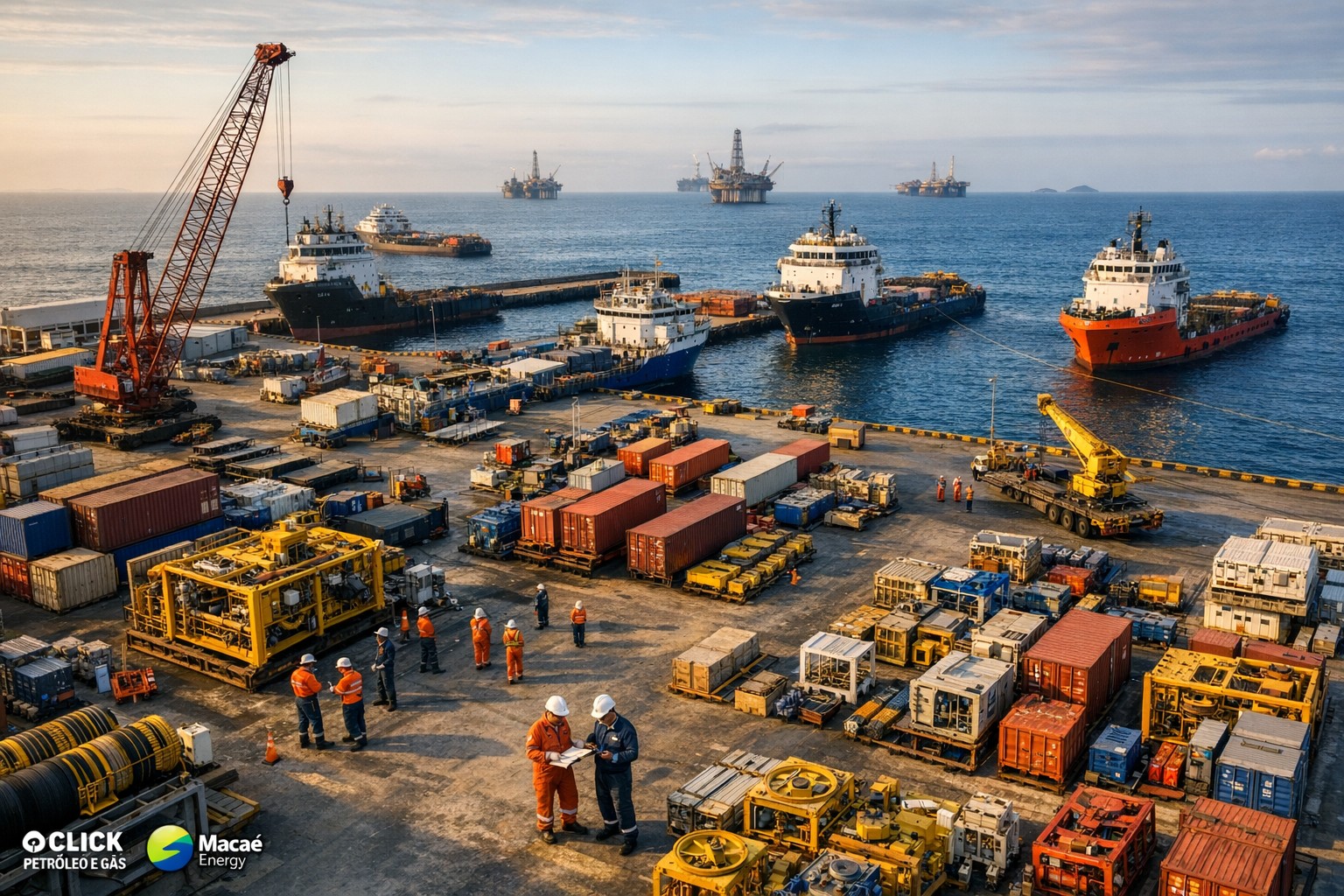

In practice, this represents an increase of nearly 900 thousand barrels/day of installed capacity, a highly relevant number when compared to Brazil’s current production, which is around 3 to 4 million barrels/day, according to recent data from the National Agency of Petroleum (ANP).
Moreover, this movement reinforces Brazil’s position as one of the main global players in the offshore sector, especially in the pre-salt region, where Petrobras’s most productive projects are concentrated.
Consequently, this increase impacts not only the state-owned company but also the entire oil and gas supply chain, including shipyards, equipment suppliers, engineering services, and offshore logistics.
Petrobras strategy focuses on efficiency and cost reduction in projects
Despite the advancement in investments, Fróes highlighted that Petrobras faces significant challenges, mainly in the search for greater operational efficiency and cost reduction in FPSO projects.
According to him, the company is working to maintain the same level of production with more optimized structures, seeking solutions that allow similar functions to be performed at lower costs.
Additionally, a crucial point of this strategy has been collaboration with suppliers. The state-owned company has been receiving innovative technical suggestions from companies in the sector, which are being directly incorporated into the engineering projects of the new FPSOs.
With this, Petrobras is able to improve the return on investment, maintaining the expected productivity but with greater financial efficiency.
This collaborative model also strengthens the ecosystem of the national industry, encouraging innovation and competitiveness among suppliers.
Investments in refining expand derivative supply and strengthen energy security
Another strategic point highlighted by Lourenço Fróes was the advancement in the refining sector, which is regaining prominence within Petrobras.
The state-owned company has resumed work on the so-called Train 2 of a refinery in the Northeast, a project that will allow for doubling the oil processing capacity at the unit.
In practice, this means that Brazil will be able to refine a larger amount of oil internally, reducing the need for importing derivatives such as diesel and gasoline.
Furthermore, the increase in refining capacity also expands the supply of petroleum by-products, which directly contributes to the stability of the internal market.
According to Fróes, this strategy is fundamental because it goes beyond the production of crude oil. In other words, it is not enough to extract — it is necessary to transform the resource into products that meet national demand.
Consequently, this movement strengthens the so-called energy security, ensuring greater predictability in supply and reducing external vulnerabilities.
Brazil enters a new phase of growth in the oil and gas sector
The statements made at Macaé Energy 2026 reinforce a clear scenario: Brazil is entering a new phase of expansion in the oil and gas sector, driven by investments in offshore production and refining.
Moreover, the advancement of FPSOs and the resumption of strategic projects indicate that Petrobras is aligned with a long-term vision focused on sustainable growth and operational efficiency.
Therefore, the impact of these projects goes far beyond production. They are expected to generate jobs, attract investments, and further consolidate the country as a global reference in offshore exploration.
At the same time, the integration between production and refining creates a more balanced environment, ensuring that the oil extracted in Brazil also generates value within the country itself.









Seja o primeiro a reagir!