





 English
  Francês
  Alemão
  Italiano
  Japonês
  Norueguês
  Portuguese
  Spanish
  5 min of reading
  0 comments


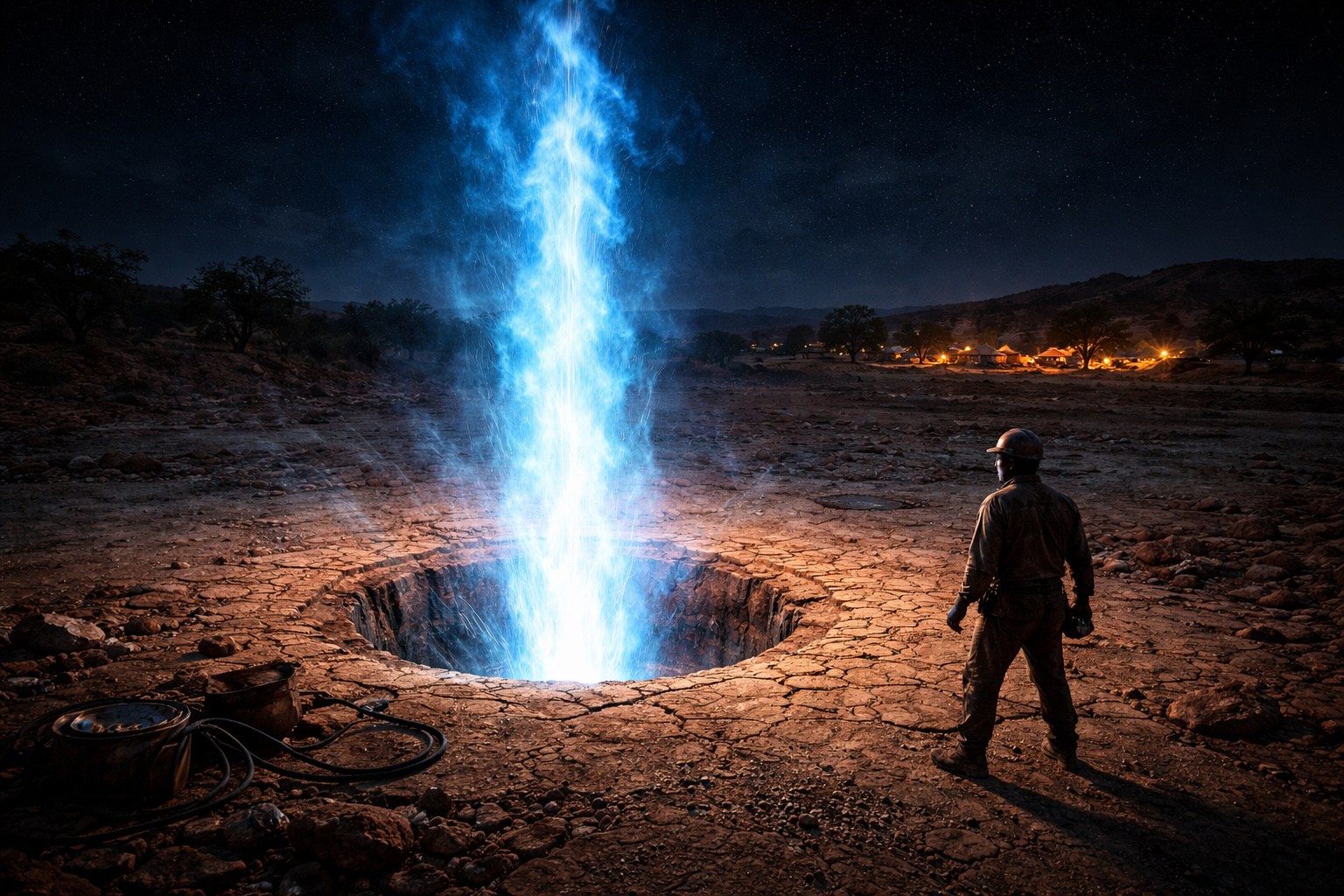
Natural hydrogen field in Mali, discovered in 1987, generates clean energy at low cost and could redefine the global energy future.
In 1987, a drilling team arrived in the village of Bourakébougou, 60 kilometers from Bamako, the capital of Mali, with a simple mission: to find water. One of the wells came up dry at a depth of 108 meters. The workers gave up and left. The next day, the locals noticed something strange: a current of air was coming from the hole. They called the drillers back. One of them approached with a lit cigarette. The gas exploded. According to Hydroma Inc., the company that now operates the field, the fire burned for weeks. During the day, the flame had the blue color of seawater. At night, it was golden enough to illuminate the surrounding fields. The locals thought it was a curse. The well was sealed, isolated, and forgotten.
For 24 years, no one returned to the site.
The unknown gas that revealed an almost pure natural hydrogen field
In 2007, Malian entrepreneur Aliou Diallo acquired the prospecting rights to the area and decided to investigate the so-called “cursed well.” In 2011, the Bougou-1 well was reopened, and analyses conducted by Chapman Petroleum Engineering revealed an unexpected result: the gas was composed of about 98% pure hydrogen.
-
A study reveals the expansion of renewable energy procurement in Brazil and shows how companies are taking advantage of opportunities to reduce expenses, ensure energy efficiency, and strengthen strategic environmental commitments.

-
Mato Grosso do Sul excels in the sugar-energy sector: the state reaches a milestone of 22 operating mills and accelerates the production of clean energy in MS with a focus on sustainability.

-
National energy dilemma: Brazilians support clean energy but reject increases in tariff costs to finance the sustainable transition.
-
Research indicates that Brazilians support clean energy and wish to advance in the energy transition, but reject paying more on their electricity bill, showing a direct conflict between cost and sustainability.



This discovery contradicted the dominant geological understanding. The accepted hypothesis until then was that hydrogen, being the smallest existing molecule, would not remain trapped in natural reservoirs long enough to accumulate in exploitable quantities.
Shortly thereafter, an adapted engine was installed to use the gas as fuel. The result was immediate: combustion produced only water, with no carbon emissions. For the first time, the village of Bourakébougou had continuous access to electricity.
How natural hydrogen is generated underground by serpentinization
The geological formation of the region belongs to the Taoudeni Basin, one of the oldest in West Africa, with rocks dated to the Neoproterozoic, approximately 600 million years ago. These formations are rich in iron and magnesium-containing minerals.
Hydrogen is generated by a process called serpentinization, in which groundwater reacts with these rocks, releasing gaseous hydrogen. This is a continuous reaction that occurs over millions of years and is still active today.
Studies published in 2023 indicate that the reservoirs of the field recharge naturally. The wells exhibit active pressure and continuous gas flow, characterizing the system not as a finite stock, but as a dynamic energy source.
Hydrogen reservoir in Mali could contain 60 billion cubic meters
Between 2017 and 2019, Hydroma expanded exploration and drilled dozens of new wells around Bougou-1. All found hydrogen, distributed in different geological layers between 100 and 1,500 meters deep.
Petrophysicist Denis Brière estimated that the field contains at least 60 billion cubic meters of recoverable hydrogen, distributed over an area greater than eight kilometers in diameter.
This volume represents a significant reserve compared to global industrial hydrogen production, which today mostly relies on fossil fuel-based processes.
Why natural hydrogen was ignored for decades by the energy industry
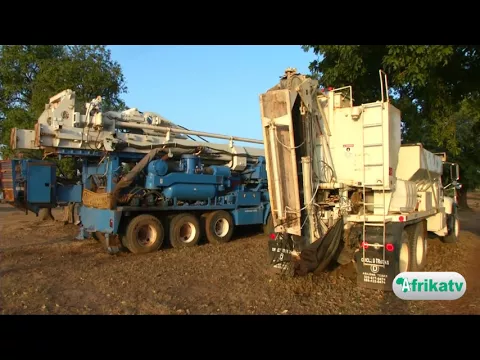
For decades, the oil and gas industry drilled thousands of wells around the world without considering hydrogen as a relevant resource. The analysis equipment simply was not calibrated to systematically detect the gas.
In many cases, occurrences of hydrogen were classified as anomalies and ignored. Historical records show that drilling in Australia had already identified high concentrations of the gas as early as the 20th century, but with no economic interest.
This pattern reveals that the resource has always been present but was systematically neglected due to a lack of knowledge and technological direction.
Cost of natural hydrogen in Mali is lower than that of fossil hydrogen and green hydrogen
The Bourakébougou field produces hydrogen at an estimated cost of $0.50 per kilogram. This value is significantly lower than that of gray hydrogen, produced from natural gas, which costs between $1 and $2.50 per kilogram.
Green hydrogen, produced by electrolysis with renewable energy, can reach costs between $3.50 and $7 per kilogram, making it unviable on a large scale in many markets.
Additionally, the carbon intensity of Mali’s natural hydrogen is extremely low, reinforcing its potential as a clean and competitive energy source.
New discoveries indicate that natural hydrogen may exist on a global scale
The Bourakébougou field remained an isolated case until recently. Starting in 2018, scientific studies began to analyze the phenomenon in greater depth.
In 2022, estimates indicated that the Earth’s underground may contain trillions of tons of natural hydrogen. Additional discoveries in France, Australia, and the United States reinforce the hypothesis that the resource may be widely distributed across various regions of the planet.
Despite this, the field in Mali remains the only one in commercial operation, while others remain in the exploration phase.
The field in Mali shows that natural hydrogen can redefine the future of global energy
The village that witnessed an inexplicable fire in 1987 now uses the same gas as a stable energy source. The case does not yet represent a global solution to energy demand, but it demonstrates that natural hydrogen can be explored in a viable, clean, and economically competitive manner.

What Bourakébougou proves is that the direct extraction of hydrogen from underground is possible, and that this resource can play a relevant role in the energy transition.
The question that remains open is how many other similar reservoirs still exist and how many of them remain unknown, waiting for an accidental discovery like the one that occurred in Mali.






Seja o primeiro a reagir!