





 English
  Francês
  Alemão
  Italiano
  Japonês
  Norueguês
  Portuguese
  Spanish
  5 min of reading
  0 comments


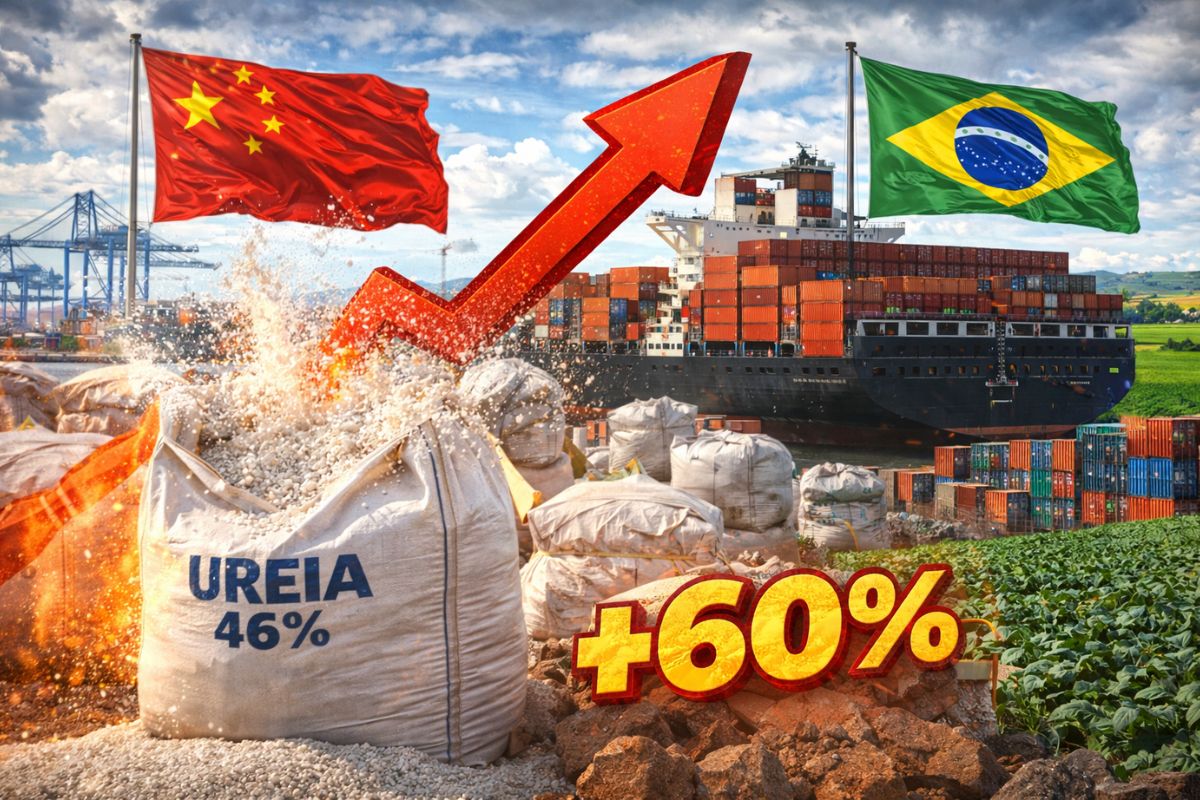
The rise in fertilizer prices caused by the war in the Middle East pressures the Brazilian agribusiness, which depends on 85% of imports of these inputs. With China restricting exports and urea rising nearly 60%, producers fear impacts on the next harvest.
The fertilizer sector is one of the most affected by the escalation of the conflict in the Middle East, and the effects are already reaching the Brazilian fields. Urea, the main nitrogen fertilizer used in agriculture, jumped from $350 to $550 per ton in just three weeks, an increase of nearly 60%. At the same time, China, the largest supplier of fertilizers to Brazil, restricted its exports, worsening a scenario that worries the entire national agribusiness.
Brazil imports an average of 85% of the fertilizers it consumes, and in the case of nitrogen fertilizers, external dependence reaches 95%. The combination of war, supply restrictions, and rising oil prices creates a domino effect that can increase agricultural production, pressure food prices, and compromise the profitability of producers in the next harvest.
How the war in the Middle East is affecting the fertilizer market

The conflict in the Middle East directly impacts the global fertilizer supply chain because the region concentrates large producers of urea and ammonia, produced from natural gas and oil. Iran, one of the world’s leading exporters of nitrogen fertilizers, is at the center of the conflict, and the stranglehold on the supply of raw materials is already reflected in international prices.
-
Forgotten region becomes a powerhouse in the heart of Brazil, transforming unproductive lands into fortune and making MATOPIBA the new billion-dollar agricultural empire that almost no one saw being born.
-
With a 775 hp engine, the world’s largest axial combine harvester arrives in Brazil, promising to harvest more in less time with advanced automation and the capacity for platforms up to 61 feet.
-
With 18 million feet, giant farms, and 2.2 million sacks per year, a mining group is building a coffee empire in Brazil with heavy mechanization, giant silos, and exports to various continents.
-
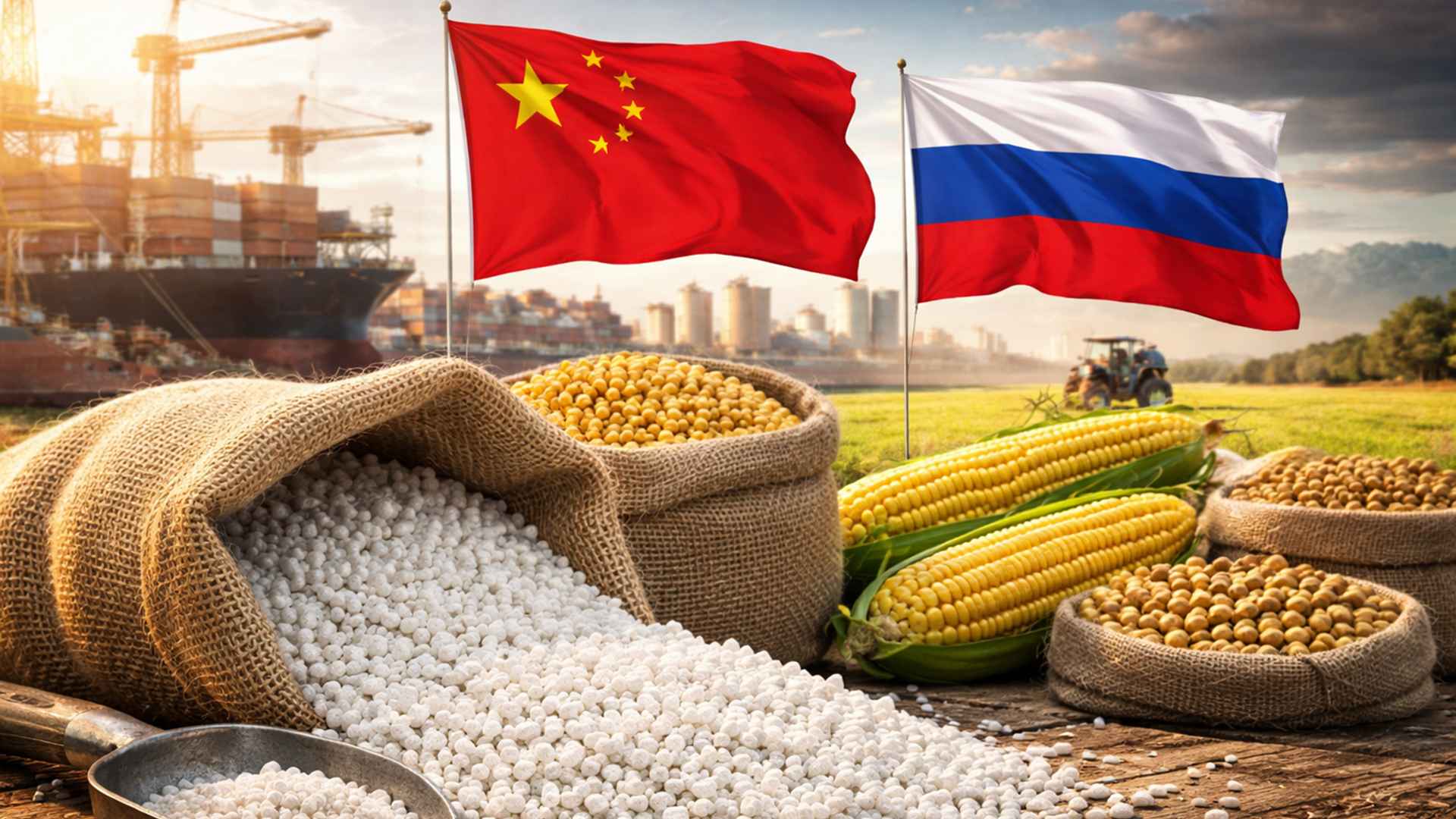
China and Russia suspend fertilizer exports, prices soar, and Brazil is already at real risk of shortages in the fields.


In addition to urea, the MAP (monoammonium phosphate) fertilizer also recorded a significant increase, rising from $520 to $710 per ton. The widespread increase in fertilizer prices accompanies the rise in oil, a fundamental input in the production of these compounds. In some regions of the Brazilian interior, there are already reports of diesel shortages, signaling that the effects of the conflict go beyond the agricultural sector.
Brazilian dependence on imported fertilizers
Brazilian agribusiness has grown impressively over the last 30 years, leading global rankings in agricultural and livestock productivity. However, during the same period, the dependence on imported fertilizers has increased dramatically. On average, Brazil depends on 85% of imports for the three basic types of fertilizers, NPK: nitrogen, phosphorus, and potassium.
The situation is even more severe for nitrogen fertilizers. In 2000, Brazil produced 39% of the urea it consumed. By 2020, that share fell to just 4.3%. External dependence on nitrogen fertilizers reached 95% because domestic factories have been closed over the years, including by Petrobras, under the argument that the cost of domestic production is about four times higher than that of countries like Iran and Russia.
The National Fertilizer Plan and the lack of continuity
In light of this vulnerability, the National Fertilizer Plan was presented in 2021, aiming to raise national fertilizer production to 50% of domestic consumption by 2050. The plan was created during the Bolsonaro administration, under the management of Minister Tereza Cristina, and received broad support from the productive sector.
However, with the change of government, the plan was set aside. The lack of continuity in long-term strategic policies is a recurring problem in Brazil, and now the fertilizer crisis caused by the war in the Middle East clearly exposes the consequences of this discontinuity. With each new international conflict, the country becomes hostage to external suppliers and subject to price fluctuations that compromise the competitiveness of agribusiness.
How the rise in fertilizer prices can affect food prices
The impact of rising fertilizer prices is not limited to the field. The increase in agricultural input costs tends to pressure the entire production chain, from corn to feed, from feed to chicken, from chicken to the final consumer. Crops like corn and wheat are among the most exposed, as they heavily rely on nitrogen fertilization.
The scenario, however, has nuances. Corn, for example, has a relatively low international price due to high global stocks. If the United States produces a large harvest, the price may remain contained, and Brazilian farmers will have to absorb the increased cost of fertilizers without passing it on.
If the price of corn reacts, the pass-through will come, but it will be felt throughout the chain, including by the consumer. The first planting report for the North American harvest, expected at the end of March, should provide clearer signals about the direction of prices.
What agribusiness can expect in the coming months
Brazilian agribusiness is facing a moment of uncertainty that combines uncontrollable external factors with internal fragilities accumulated over decades. The war in the Middle East has raised fertilizer prices, China has restricted exports, and Brazil finds itself exposed for not having consistently invested in the national production of these inputs.
The coming weeks will be decisive. The behavior of international fertilizer and oil prices will depend on the evolution of the conflict. If the war prolongs, the trend is for continuous pressure on production costs, with direct reflections on the profitability of producers and food prices for the Brazilian consumer.
The lesson that the crisis is exposing is clear: an agricultural nation the size of Brazil cannot depend on 85% of fertilizer imports without paying a high price for it.
The fertilizer crisis caused by the war in the Middle East places Brazilian agribusiness in front of an uncomfortable reality: the country that leads global agricultural productivity relies almost entirely on other countries to fertilize its crops. Without consistent investment in national fertilizer production, each new international conflict becomes a direct threat to the harvest and the consumer’s wallet.


With information from the SBT Channel.
What do you think about this situation? Do you believe Brazil should urgently resume the National Fertilizer Plan, or is external dependence inevitable? Leave your opinion in the comments and share with those who follow Brazilian agribusiness.










Seja o primeiro a reagir!