





 English
  Francês
  Alemão
  Italiano
  Japonês
  Norueguês
  Portuguese
  Spanish
  5 min of reading
  0 comments


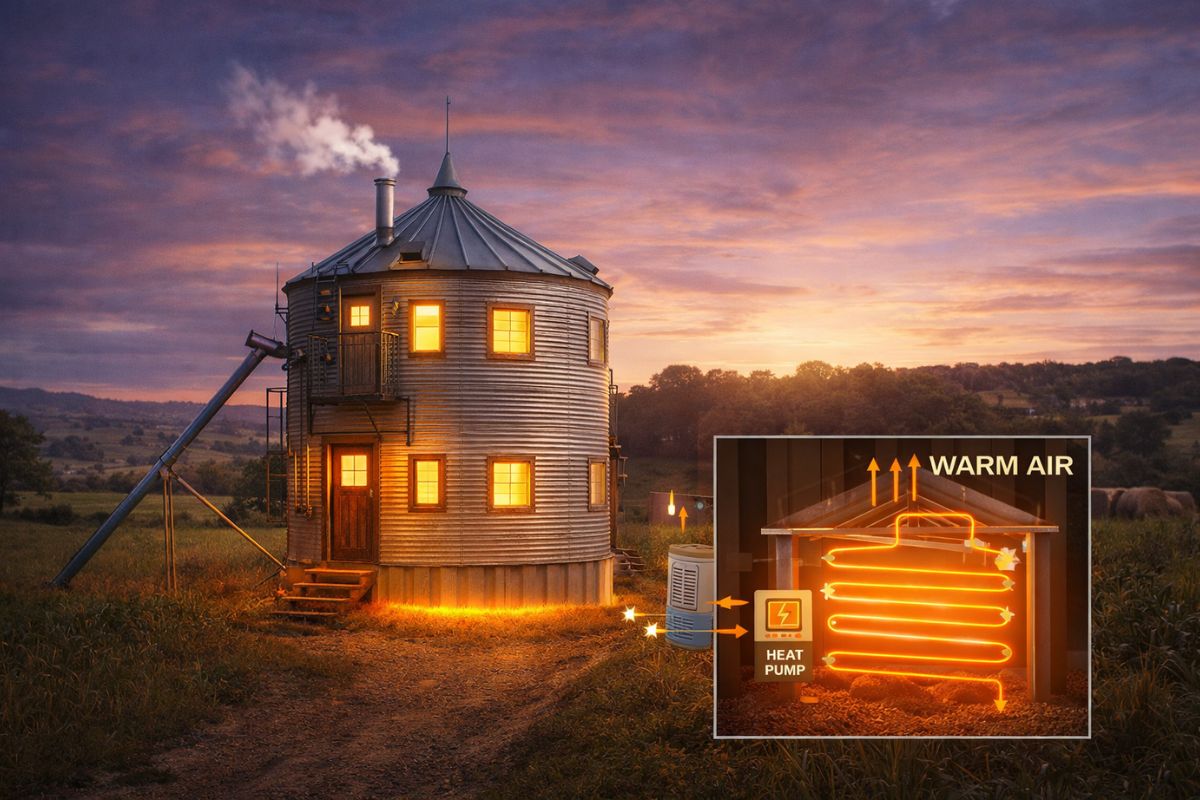
The house made from grain silos is more resilient, more thermally efficient, and cheaper than conventional constructions. However, aesthetic laws, banking evaluation systems, and insurers prevent this form of housing from becoming accessible in the United States.
The grain silo house is the most resilient, thermally efficient, and cost-effective structure that the American housing system can offer. The cylindrical structure made of corrugated galvanized steel can support up to 4,500 kg of load on top, withstands winds that topple conventional buildings, and distributes heat evenly thanks to its circular geometry, without cold corners or dead zones. The cost of the structure is less than that of a garage door.
Nevertheless, this house is systematically blocked in the United States. Not due to engineering failure, not due to structural risk, and not due to safety issues, but due to aesthetic laws that prohibit corrugated metal on facades, banks that cannot find comparable sales to finance, and insurers that do not know how to price what they do not recognize. The structure has never been the problem. Bureaucracy is the problem.
What is a grain silo house and why does it work

A grain silo house is a dwelling built inside a corrugated galvanized steel cylinder, originally designed to store crops. The circular shape is not decorative. It is the most efficient geometry that exists: a circle defines the maximum area with the minimum perimeter. Less perimeter means less wall. Less wall means less surface through which heat escapes.
-
For 20 years, this man from Ceuta has been collecting used oil from bars, mixing it with chemicals in a machine he built himself, and producing his own diesel at almost no cost while the world struggles with fuel prices.

-
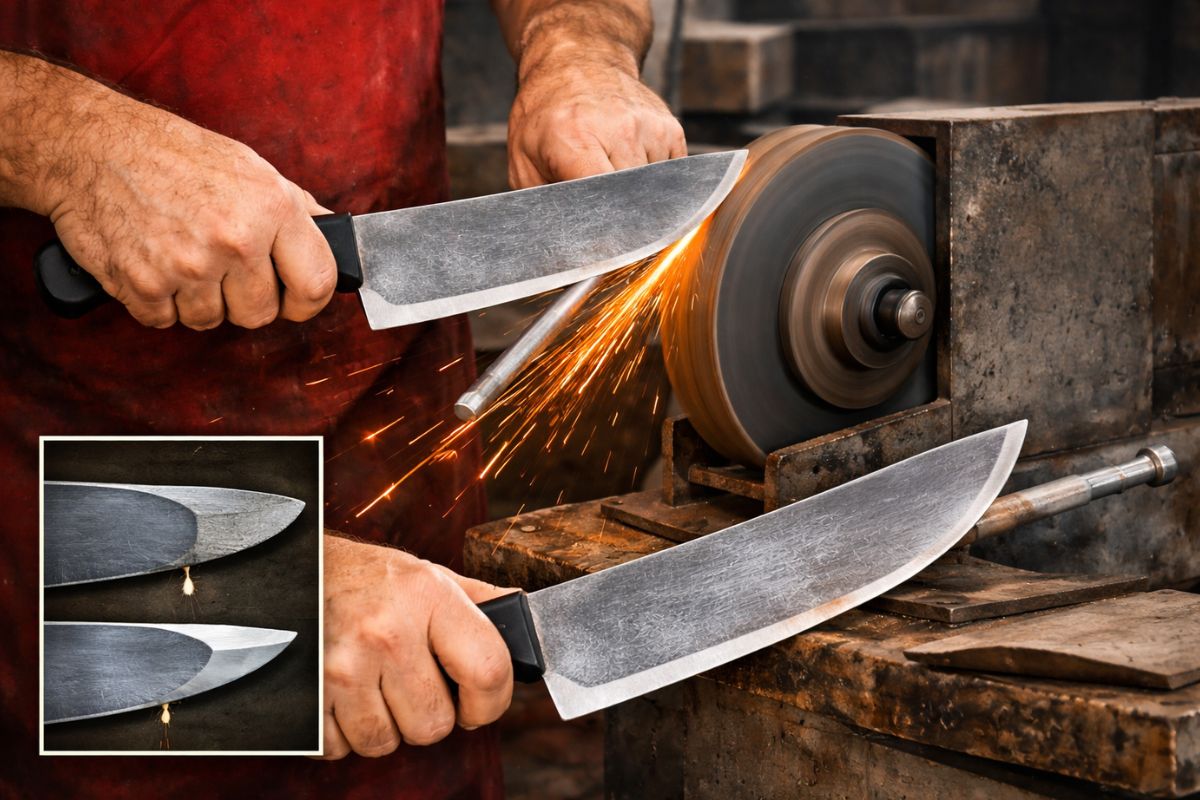
Every butcher asks to have the knife sharpened as soon as they buy it, and this process that changes the geometry of the blade is the real reason why that white-handled knife cuts so well all day long without losing its edge.
-
You may be closer to Cesium-137 than you think: discover equipment that uses the element, where radiation brings real benefits, and how to avoid serious contamination risks.

-
A Canadian sculptor spent two years handcrafting a life-sized Game of Thrones dragon, standing 12 meters tall, weighing 6,800 kilograms of stainless steel, and featuring a system that breathes real fire from its mouth.


The company Sukup Manufacturing manufactures agricultural silos with diameters ranging from 4.5 to 18 meters, tensile strength of 70,000 PSI, and a top load capacity of up to 4,500 kg.
In 2014, architect Christoph Kaiser converted a 1955 silo into a two-story house with 31 m² in Phoenix, Arizona, including underground ducts for passive cooling and a skylight that turns the cylinder into a ventilation chimney. The house exists, is occupied, and is legal.
The physics behind the thermal efficiency of the cylindrical house
The thermal advantage of the cylindrical house is not theory. It is mathematics proven by 3,000 years of circular habitation, from Scotland to Mongolia. The circular Scottish houses, documented from the 8th century BC to the early centuries of the common era, distributed heat radially from a central fire, without cold corners or dead zones.
In 2019, researchers from Harbin Institute of Technology and University College London published a study on the thermal conditions of Mongolian yurts, circular dwellings in continuous use for over a thousand years.
The felt dampened moisture, and the circular geometry distributed heat evenly. In the modern grain silo house, closed-cell polyurethane foam applied to the inner face of the steel solves the insulation: 5 cm delivers R12 to R14, and 7.5 cm approaches R20. The foam bonds to the steel, blocks air and vapor, and transforms the cylinder into a thermal envelope.
The aesthetic laws that block the grain silo house
The most wind-resistant shape in American agriculture fails the aesthetic test even before the first permit application is filed. The city of West Valley City, Utah, prohibits corrugated metal and exposed fasteners on building exteriors. Not for structural reasons, but for appearance.
In Phoenix, design guidelines specify that visible prefabricated metal constructions from streets or residential areas must incorporate substantial percentages of alternative materials such as brick, masonry, stone, or stucco.
The corrugated cylinder is not ugly. It is unknown. And in the language of urban zoning, unknown translates to non-compliant. The grain silo house has not been prohibited. It has been designed out of the system.
Why banks do not finance and insurers do not price this house
The banking evaluation problem is even more severe than aesthetic restrictions. Fannie Mae guidelines allow evaluations of unique and non-traditional properties only when the appraiser can identify comparable sales and develop a reliable opinion of market value. In most American markets, there are no comparable sales of grain silo houses.
Without comparables, there is no estimated value. Without value, there is no financing. The house may be solid, efficient, and well-built, but if the bank cannot find three recent transactions within a reasonable radius, the loan is denied.
Insurers face the same deadlock: non-standard materials and unconventional assemblies escape the underwriting models trained for wood constructions. Some homeowners find coverage with specialized insurers. Others accept higher premiums. Others simply take the risk alone.
The case of Kate Morris and the difficulty of turning a silo into a home
Kate Morris, from Great Falls, Montana, bought a grain silo with the dream of turning it into a home. The silo sat idle for years because the path from an agricultural structure to a licensed, insured, and financed residence was not a door; it was a maze.
Appraisers could not find comparable sales. Financiers could not align their disbursement schedules with the construction sequence of a cylindrical house.
Architect Nick Poncho designed the interior, and builder Tom Scavron, who had assembled grain silos when young, built a house inside one as an adult. Poncho described the result as extraordinary, incredibly simple and utilitarian, a magical space inside. The magic was real. The path to it was brutal.
The system that does not prohibit but prevents the grain silo house
The International Residential Code, section R104.11, allows alternative materials, designs, and construction methods, but only when approved by the competent authority based on evidence submitted by the applicant.
The burden of proof falls on those who want to build. It is necessary to demonstrate equivalence with engineering analyses, test data, and documentation that satisfies a reviewer who has never seen this assembly before. And even when the engineering is proven, municipal aesthetic laws can veto the structure based on appearance.
The code does not say no. The code says prove. And proving costs money, time, and technical knowledge that most homeowners do not have.
Raymond Sterling, director of the Underground Space Center at the University of Minnesota, acknowledged in published work that code barriers and financing difficulties were among the main obstacles to the adoption of unconventional housing, not structural failures, not resident dissatisfaction, not engineering limits. The house worked. The system did not recognize it.
The grain silo house is cheaper in structure, more efficient in heating, more wind-resistant, and proven by 3,000 years of circular habitation.
Yet, aesthetic laws, banks without comparables, and insurers without pricing models prevent this form of housing from becoming accessible. The problem has never been the steel. The problem is bureaucracy.

With information from the Channel OffGrid Secrets.
What do you think about grain silo houses? Would you live in one if the system allowed? Do you believe that building laws should be updated to accept unconventional forms of housing? Leave your opinion in the comments and share with those interested in alternative constructions.









Seja o primeiro a reagir!