





 Portuguese
  English
  Spanish
  4 min of reading
  3 comments


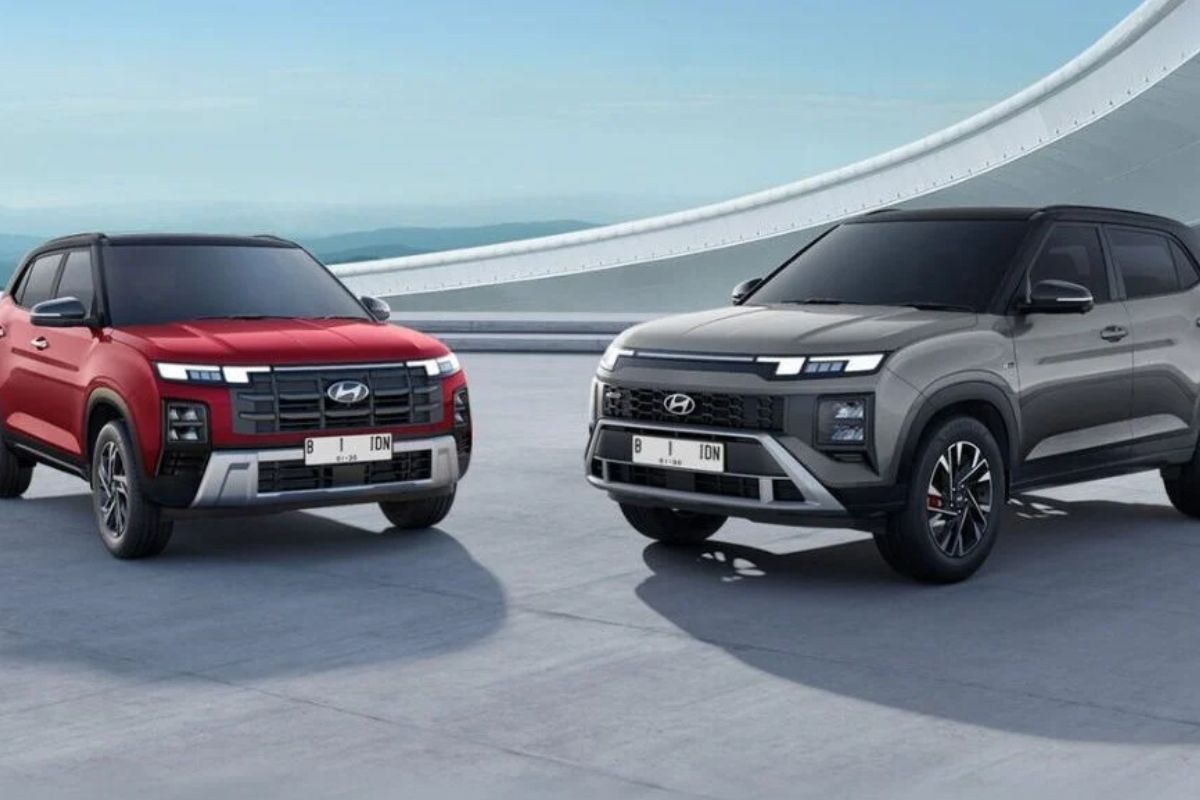


The New Generation of Hyundai’s SUV Expected for 2026, the Model Will Have a 1.6 Hybrid Flex Engine and Futuristic Design to Compete with Toyota and Chinese Brands
Hyundai is about to change the game in the Brazilian market. The new generation of Hyundai’s SUV, the Creta, is coming in 2026, and it’s not just an update, but rather the most significant step the brand is taking towards electrified cars. The project is the company’s direct response to compete with Toyota’s established hybrids and the strong offensive of Chinese cars.
With a billion-dollar investment, the car will be completely new: new platform, design inspired by the electric Ioniq line, and most importantly, a 1.6 turbo hybrid flex engine. This is the first time the SUV receives this combination.
The Billion-Dollar Investment That Made the Project a Reality
The decision to create a completely new Creta did not happen by chance. It is the result of a clear strategy, formalized in February 2024. On this date, Hyundai’s global leadership announced a US$ 1.1 billion (approximately R$ 5.43 billion) investment in Brazil, valid until 2032.
-
Friends have been building a small “town” for 30 years to grow old together, with compact houses, a common area, nature surrounding it, and a collective life project designed for friendship, coexistence, and simplicity.

-
A French brand placed a car on four huge red balloons to prove that its suspension made the vehicle “float,” and the surreal scene became one of the most iconic and unusual images in automotive history.

-
This small town in Germany created its own currency 24 years ago, today it circulates millions per year, is accepted in over 300 stores, and the German government allowed all of this to happen under one condition.

-
Curitiba is shrinking and is expected to lose 97,000 residents by 2050, while inland cities in Paraná such as Sarandi, Araucária, and Toledo are experiencing accelerated growth that is changing the entire state’s map.


This amount was specifically directed toward the development of new technologies. The main focus is the production of hybrid and electric vehicles at the Piracicaba (SP) factory. In addition, the Mover program from the Brazilian government, which offers incentives for decarbonization, further accelerated the automaker’s plans.
A Futuristic Design Drawing from the Ioniq Electric Range

The design is one of the most anticipated aspects of the new generation of Hyundai’s SUV. The brand will abandon the “family look” concept, where all cars look similar. The main inspiration for the 2026 Creta will come from the acclaimed electric Ioniq 5.
This means the SUV will adopt a bolder and more digital aesthetic. The main elements will be the “Parametric Pixels”. This visual signature uses square pixel-shaped LEDs in the headlights and taillights, creating a unique and technological identity. The lines of the car are expected to be straighter and more angular, reinforcing the perception of a modern product.
1.6 Turbo Hybrid Flex Engine, The Power Behind the Change
The heart of the new Creta will be its mechanical system. It will be equipped with a hybrid system based on the technology that Hyundai Motor Group revealed globally in April 2025. The main innovation is a transmission that integrates two electric motors, improving power and efficiency.
The combustion engine will be the well-known 1.6 T-GDi, the same one that already powers the top version of the current Creta. However, it will be optimized to work with the electric system and, crucially, adapted for flex technology, allowing it to run on ethanol. The combined power of the system is expected to be around 230 hp, with a torque of approximately 350 Nm.
A New Platform to Support Hybrid Technology
To accommodate the new hybrid system, the 2026 Creta needs a completely new base. The current model uses the K2 platform, which was not designed for electrification. Therefore, it will be replaced.
The most likely architecture for the new generation of Hyundai’s SUV is an evolution of the B-SUV platform. This base is already used in models like the Hyundai Kona and was developed from the ground up to support electrified drivetrains. A new platform also allows for improvements in safety, rigidity, and interior space.
How the New Generation of Hyundai’s SUV Faces Competition


The launch of the 2026 Creta aims at well-defined targets. Hyundai wants to compete head-on with the three main types of electrified rivals in the Brazilian market.
The first competitor is the Toyota Corolla Cross Hybrid. The battle here will be between the performance of the Creta, with over 230 hp, and Toyota’s established reputation for reliability. The second is the GWM Haval H6, a powerful and larger hybrid.
Hyundai’s advantage will be its extensive dealership network and the strength of the brand in the country. Finally, there is the BYD Song Plus, a plug-in hybrid. As a conventional hybrid, the Creta will have the advantage of practicality for not depending on a plug, along with a likely price advantage, targeting the highest volume of the market.










Show
“Como um híbrido convencional, o Creta terá a vantagem da praticidade por não depender de tomada”: essa frase não faz o mínimo sentido: o phev consegue fazer tudo que um hev consegue, mas TAMBEM consegue ser carregado na tomada. Se quiser, pode dirigir igual como um hev, carregando apenas com o motor a combustão e recuperação durante a desaceleração. Mas o phev tem a grande vantagem de uma bateria maior e a possibilidade de andar só elétrico por muito mais tempo que um hev. Única vantagem de um hev: preço.
Aceita choro!