





 Portuguese
  English
  Spanish
  5 min of reading
  0 comments


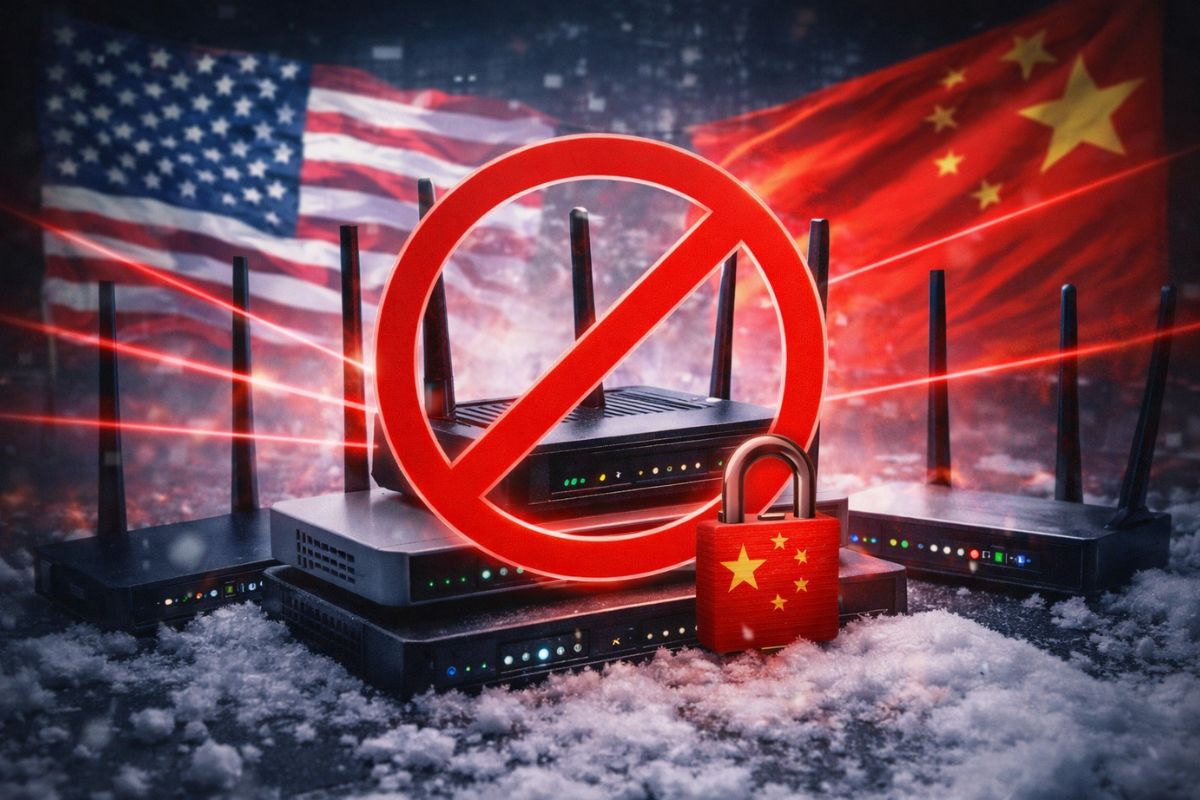
The FCC, the regulatory agency of the United States, announced the ban on the importation of new models of routers manufactured abroad under the argument of cybersecurity risk. China is the main target of the measure, as it controls 60% of the American market for domestic routers. The order does not affect existing models.
The Federal Communications Commission of the United States, the FCC, announced this Monday (23) the ban on the importation of new models of routers manufactured abroad. The official argument is that these devices pose serious concerns regarding the cybersecurity of the United States. The main target of the measure is China, which controls about 60% of the American market for domestic routers, according to the Reuters agency. The order does not affect the importation or use of existing models, but prohibits all those that are launched from now on.
An analysis called by the White House concluded that imported routers represent, in the words of the report, a serious cybersecurity risk capable of disrupting the critical infrastructure of the United States. The FCC cited attacks such as Volt Typhoon, Flax Typhoon, and Salt Typhoon, all attributed to Chinese hacker groups, as examples of the vulnerabilities exploited in new models of routers manufactured abroad. The last of these attacks was said to have been able to infiltrate the email systems of advisors to the American Congress.
What the FCC banned and what remains allowed in the United States
The FCC’s order is specific: it prohibits the importation of new models of routers manufactured outside the United States. This means that any router that has not yet been launched or certified in the American market cannot enter the country from now on.
-
Millions of people have been eating yam for centuries without knowing that this humble tuber contains a compound called diosgenin, which scientists have now discovered can improve memory and help control blood sugar levels.

-
Scientists from an international project drill 1,800 meters of ice in Antarctica using hot water and discover details about one of the most intriguing places on planet Earth.

-
Seen from space, a colossal volcano nearly 5,000 meters high in Russia has released 1,600 km of smoke over the Pacific, forming “devil’s horns” of lava and revealing the brutal force of the Ring of Fire.

-
Expedition 501: Scientists drill into the ocean floor and discover a giant reserve of fresh water hidden beneath the sea, extracting nearly 50,000 liters and revealing an invisible system that could reshape the map of water scarcity.


Existing models in operation are not affected by the measure. Consumers who already own routers manufactured in China or other countries can continue using their devices normally.
The determination also includes an exception: routers that the Pentagon considers do not pose unacceptable risks may be exempt from the ban.
The measure follows the same logic applied in December 2025, when the FCC banned the importation of all new models of Chinese drones under a similar national security argument. The pattern of restrictions on technology equipment manufactured in China has been expanding in the United States in recent years.
Why China is the main target: 60% of the American router market
China dominates the American market for domestic routers with an estimated share of 60%. These devices connect computers, phones, and other devices to the internet in millions of homes and offices across the United States.
For the American government, this massive presence of new models of routers manufactured in China represents an entry point for espionage and cyberattacks against the country’s infrastructure.
The FCC stated that malicious actors have already exploited security gaps in routers manufactured abroad to attack homes, disrupt networks, enable espionage, and facilitate the theft of intellectual property.
The Volt Typhoon, Flax Typhoon, and Salt Typhoon attacks were cited as concrete evidence of these vulnerabilities. All were attributed to hacker groups with ties to the Chinese government, although China has never admitted direct involvement.
The TP-Link case: the lawsuit in Texas and the company’s defense
TP-Link Systems, one of the largest manufacturers of routers in the world, is at the center of this dispute. The company was sued in February by Texas Attorney General Ken Paxton for allegedly marketing its routers misleadingly and allowing Beijing to access American consumer devices.
TP-Link, which is based in California but has origins in a Chinese manufacturer, stated that it would vigorously defend its reputation.
The company asserted that the Chinese government has no form of ownership or control over the company, its products, or user data.
According to Reuters, the Trump administration had suspended a previous proposal to ban domestic sales of routers manufactured by TP-Link, but the new FCC order addresses the issue from another angle: instead of banning sales, it prohibits the importation of new models of routers that have not yet been certified. The Chinese Embassy in Washington has not commented on the measure.
Political reaction in the United States: bipartisan support for the ban
The FCC’s decision received support from American lawmakers who had already been raising security concerns about routers manufactured in China. Congressman John Moolenaar, the Republican chairman of the House Select Committee on China, publicly praised the order.
Moolenaar stated that the decision protects the United States from cyberattacks from China and makes it clear that Chinese devices should be excluded from America’s critical infrastructure.
The congressman also emphasized that routers are essential for keeping the population connected and that Chinese technology should not be allowed to occupy the center of this chain.
The ban on new imported router models reflects a growing trend in the United States to restrict the presence of Chinese technology in sectors considered strategic. Before routers, the targets were telecommunications equipment from Huawei and ZTE, surveillance cameras, and more recently, drones.
What this ban means for the router market and consumers
In the short term, the ban does not change anything for those who already own a router manufactured in China. Existing models continue to function and are sold normally.
The real impact falls on Chinese manufacturers that planned to launch new models of routers in the American market, which are now prevented from importing any product that has not yet been certified by the FCC.
For American consumers, the medium-term effect may be a reduction in the variety of available options and a possible increase in prices, as competition from Chinese manufacturers was one of the factors keeping prices affordable.
For China, the measure represents yet another chapter in the technological war with the United States, which has already reached semiconductors, artificial intelligence, 5G networks, and now reaches domestic routers. The ban on new imported router models signals that the trend of restrictions is likely to continue expanding in the coming years.
And you, what do you think about this ban?









Seja o primeiro a reagir!