





 English
  Francês
  Alemão
  Italiano
  Japonês
  Norueguês
  Portuguese
  Spanish
  5 min of reading
  0 comments


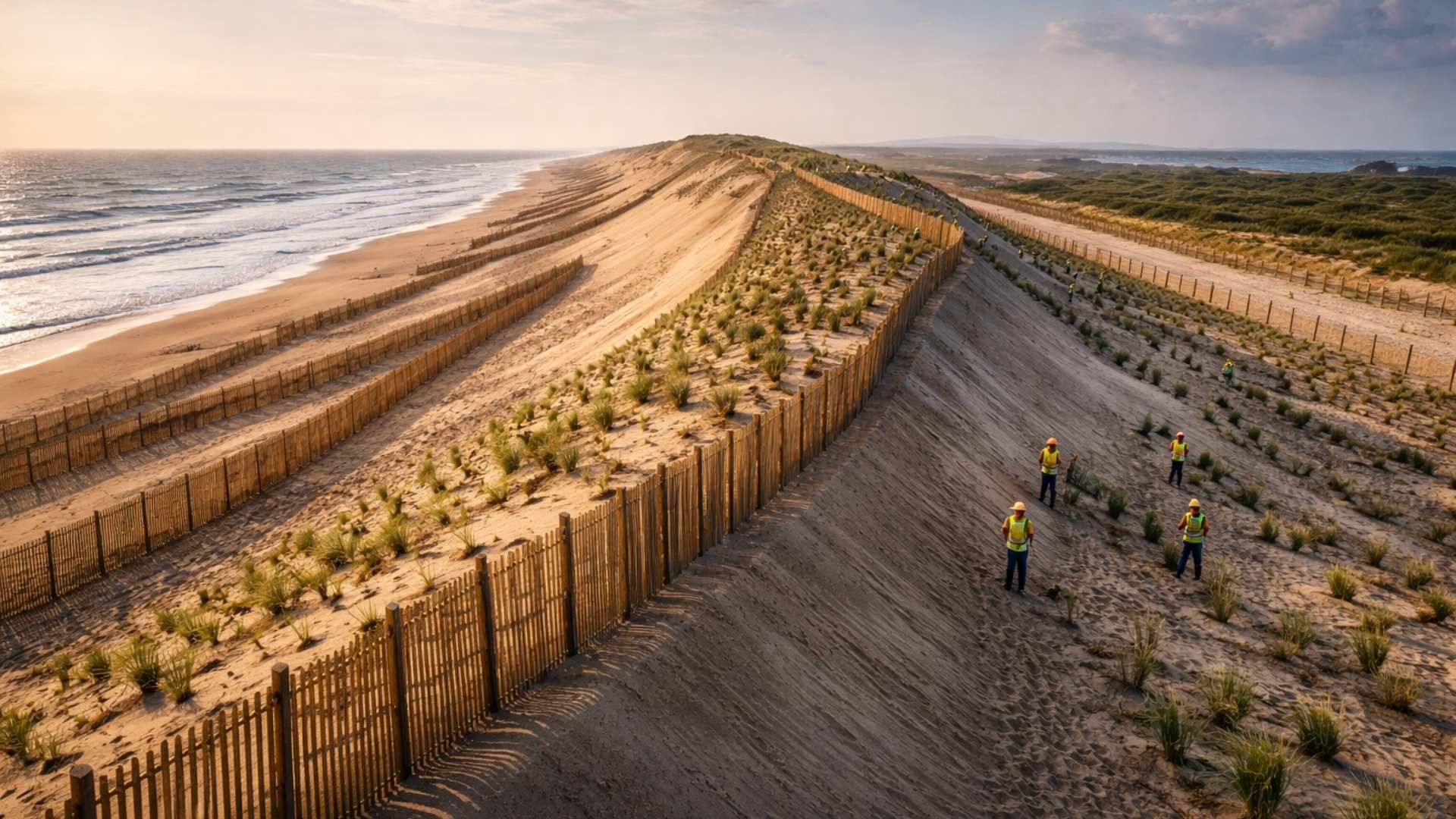
Large-scale coastal intervention transforms Louisiana stripe with engineering and nature combined, recovering kilometers of coastline, strengthening storm protection, and restoring essential habitats, in one of the most ambitious projects ever executed in the United States.
A broad intervention on the Louisiana coastline repositioned the Caminada Headland region as one of the most significant coastal restoration projects ever executed in the United States.
Official data indicates the installation of 21.9 kilometers of sand retention fences, the planting of over 195,000 native seedlings, and the recovery of over 1,050 acres of beaches and dunes.
In total, the work restored approximately 21 kilometers of coastal strip in an area historically affected by intense erosion.
-
Explorers find Roman treasure trapped between rocks on the seabed for nearly 1,600 years and reveal a desperate attempt to hide 53 gold coins during the invasions of the Empire.

-
Archaeologists discover Roman vase buried for over 2,000 years with more than 175 intact gold and silver coins, revealing a desperate strategy to protect wealth during the collapse of the Empire.

-
With 241 meters, 48 thousand tons, and a structure designed to accompany aircraft carriers at sea, the Chinese ship that refuels fleets in motion was born to push Beijing away from the coast and has become the hidden gear of its naval projection.

-
“Discreet” city in the interior of SP stands out among the smartest in Brazil thanks to a national ranking.
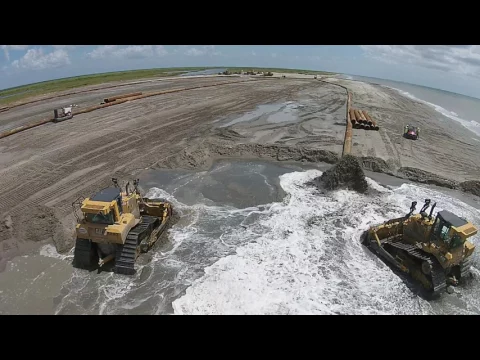
More than 8.8 million cubic yards of sand were used to rebuild a natural system that had been progressively degraded over decades, according to information from the Bureau of Ocean Energy Management.
Coastal protection and environmental importance in Louisiana
Located south and east of Port Fourchon, in Lafourche Parish, the Caminada Headland plays a strategic role in protecting critical infrastructure.
The area protects Highway 1, considered an essential evacuation route for coastal communities such as Fourchon and Grand Isle.
Additionally, it serves as a physical barrier against storms and extreme events that affect the southern coastline of the United States.
The intervention was planned to reinforce not only the physical structure of the coast but also its ecological function.

The region hosts habitats relevant for coastal and migratory birds, which increased the project’s complexity and required additional environmental monitoring measures during execution.
According to the Coastal Protection and Restoration Authority, the degradation of the area occurred over about a century.
There has been a continuous loss of beaches, dunes, and swamp areas, along with an average retreat of the coastline estimated at approximately 35 feet per year.
Among the causes cited are storm action, saltwater intrusion, wave and wind erosion.
Soil subsidence and sea level rise also contribute, reducing the region’s natural capacity to protect against extreme events.
Coastal engineering combined with natural processes
Unlike traditional interventions based solely on rigid structures, the project was designed to integrate coastal engineering with natural processes.
The sand was sourced from an offshore reserve known as Ship Shoal and transported to the restored coastal strip.
In addition to sediment deposition, extensive sand fences were installed, and dune revegetation was carried out with native species.
The strategy aims to stabilize the terrain, reduce material dispersion, and promote the formation of more resilient natural structures.

The involved authorities emphasize that these measures work complementarily. The goal is to allow the reconstructed environment to maintain its integrity even in adverse conditions.
At the same time, the aim is to reduce the need for frequent corrective interventions over the years.
Scale of the project and restoration numbers
The magnitude of the initiative is considered one of the central factors for its national impact.
The Louisiana coastal authority classified the action as the largest restoration project ever conducted by the agency to date.
Official documents indicate the recovery of over 13 miles of beaches and dunes.
There has also been a recorded restoration of 1,059 acres of coastal habitat.
The Caminada Headland is now considered the longest barrier island or headland restoration ever carried out in the state.
The approximately 72,000 linear feet of sand fences is comparable in length to an urban half marathon.
The planting of native vegetation was designed to reinforce the stability of the dunes. This measure also aims to minimize future sediment losses in the face of extreme weather events.
Environmental monitoring and wildlife protection
The execution of the work required strict care to reduce impacts on local wildlife. The region hosts sensitive species, such as nesting and migratory birds.
It is also habitat for the piping plover, a species considered threatened. During construction, teams conducted continuous monitoring of nests.
Activities were temporarily halted whenever necessary. This measure ensured that the intervention occurred without compromising the reproductive cycles of the species.
Another relevant fact involves the management of sea turtles.

197 turtles were successfully removed from dredging areas.
The animals were relocated to safe zones nearby, reducing direct impacts during operations.
Origin of the sand and operation logistics
The sand used in the restoration was extracted from Ship Shoal, in the Gulf of Mexico.
This was the first use of this sediment bank in a project of this type, according to the state coastal authority.
The process involved transportation by vessels to an intermediate area. Then, the material was pumped through pipelines to the coastline.
The operation allowed for the gradual reconstruction of the beach and dunes. The stretch had already been experiencing persistent retreat over the years.
This approach enabled the widening of the sandy strip. It also allowed for the reconfiguration of the coastal structure to be closer to natural conditions.
National recognition and impact of the initiative
The results led the project to receive national recognition. The Caminada Headland was included among the winners of the Best Restored Beaches of 2019 award.
The award was granted by the American Shore and Beach Preservation Association. The distinction highlighted the physical gains and ecological benefits of the intervention.
The initiative has become a reference in coastal restoration strategies. Authorities classified the work as successful on multiple fronts.
The recovery of the protective function of the coast was emphasized. The reconstitution of essential habitats for local biodiversity was also highlighted.






Seja o primeiro a reagir!