





 Portuguese
  English
  Spanish
  5 min of reading
  0 comments


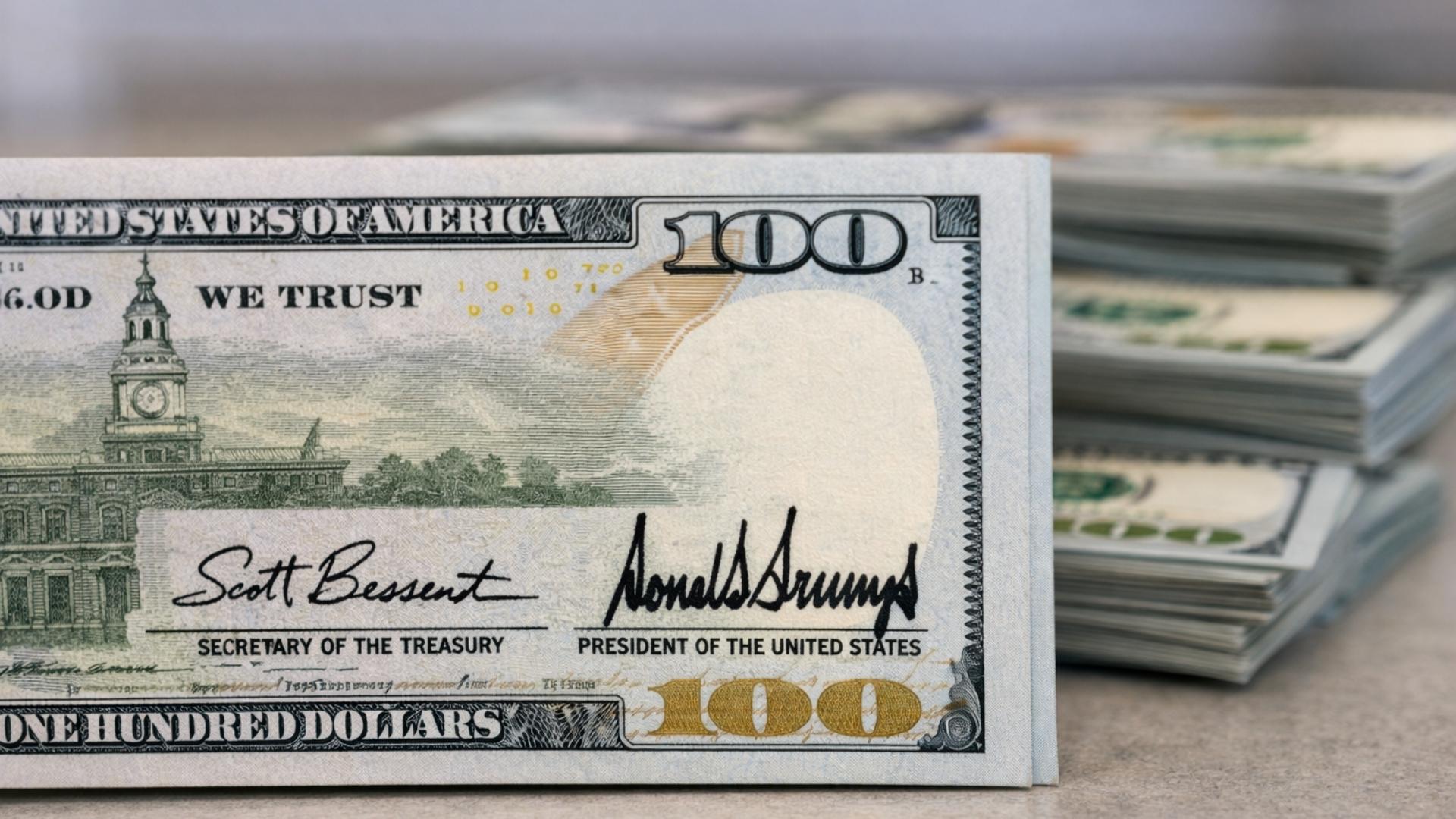
Unique change in US paper money alters century-old tradition, includes presidential signature and marks the 250th anniversary of independence with symbolic and political impact on dollar circulation starting in 2026.
The US Department of the Treasury announced on March 26 that future banknotes in the country will feature the signature of President Donald Trump alongside that of Treasury Secretary Scott Bessent.
This change breaks a practice maintained since 1861, when US federal currency began circulating with the signatures of the Treasury Secretary and the Treasurer of the United States.
The first $100 bills with the new standard are expected to be printed in June 2026, and according to the government, the change was planned for the celebrations of the 250th anniversary of American independence.
-
Globo presenter lives in an R$ 8 million mansion in the interior of São Paulo, with a private lake, basketball and tennis courts, a “private hotel,” a condominium costing R$ 4,000, and surprising details in the decor.

-
Want to fall asleep faster and better? This technique reduces the temperature of the extremities, slows down heartbeats, regulates breathing, and can accelerate the release of melatonin in minutes, helping to combat nighttime anxiety.

-
Presenter leaves colossal mansion to live in a sanctuary after selling property for R$ 45 million with 2,600 m², two swimming pools, and a cinema, exchanging luxury for a sustainable 900 m² house with a jabuticaba tree in the living room.

-
A Brazilian thought he was making a good deal but lost R$ 125,000 while trying to buy a Toyota Hilux on Facebook.


With this decision, the Treasurer’s signature will no longer appear on paper money for the first time in 165 years.
The Treasury stated that the replacement applies to future issuances and does not alter the main design of the banknotes, which will continue to preserve the elements required by law, including the inscription “In God We Trust” and existing historical portraits.
It is expected that other denominations will receive the new combination of signatures in the months following the start of printing the $100 bills.
What changes in dollar bills in the USA
In practice, the announcement does not represent a complete visual overhaul of the dollar.
What changes is the area designated for administrative signatures, traditionally reserved for the Treasury Secretary and the Treasurer of the United States.
This time, the presidential signature will occupy this space, in a decision that the government presented as a symbolic gesture linked to the 250th anniversary of the country’s independence.
Still, the banknotes currently produced with previous signatures will remain valid and will continue to circulate normally.
Reports from Reuters and the Associated Press indicated that the Treasury is still printing notes with the signatures of former Secretary Janet Yellen and former Treasurer Lynn Malerba.
This means that the arrival of the new model in the banking system is likely to occur gradually, after printing and distribution by the Federal Reserve.
The measure also consolidates Lynn Malerba as the last member of an unbroken sequence of Treasurers whose names appeared on federal paper money since the 19th century.
The position of Treasurer continues to exist, but their signature will no longer be included in new issuances, according to the official announcement.
The current Treasurer is Brandon Beach, who publicly supported the initiative, although his name will not be among those appearing on future banknotes.
Trump administration associates change with US anniversary
In announcing the change, Scott Bessent stated that the initiative aims to mark the semi-quincentennial of the United States with an issuance considered historic by the Trump administration.
In an official statement, the Secretary said that the country is on a path of economic growth, fiscal stability, and strengthening of the dollar, and associated this scenario with the decision to place the presidential signature on future banknotes.
The formulation adopted by the government adds a political component to an element that had thus far been treated as administrative.
This point was highlighted in international reports published after the announcement, which recorded criticisms from opponents and public oversight entities.
For these groups, the change amplifies the current administration’s effort to link Trump’s name to official symbols of the American state.
In the legal field, however, the information released so far indicates that the alteration of the signatures relies on the Treasury Secretary’s discretion regarding the design of the notes, as long as the mandatory elements are maintained.
The federal law consulted by the American press requires, for example, that only portraits of deceased individuals may appear on US currency and securities.
Legal rules prevent Trump image on bills
This detail helps explain why the administration moved forward with the signature but encountered barriers in proposals that would involve portraits or images of Trump in common circulation.
Federal legislation stipulates that only deceased individuals may have their portrait printed on US currency and banknotes.
Thus, even though the government has signaled interest in associating the 250th anniversary with the president, the inclusion of his image on circulating money faces explicit legal restrictions.
The same debate arose around a commemorative gold coin featuring Trump’s image.
International coverage reported that a federal arts panel approved the design of a commemorative piece.
However, the attempt to bring the president’s image to a $1 coin ran into rules prohibiting the representation of living persons on American coins.
In this context, the signature ended up being the route chosen by the government to mark the historic date without altering the official portraits in circulation.
When do the new dollar bills start circulating
According to the Treasury, the first $100 bills with the signatures of Trump and Bessent are expected to begin printing in June 2026.
However, the actual presence of this money in banks and commerce will not be immediate.
The interval between printing, distribution, and entry into circulation typically takes weeks.
The pace depends on the demand of the monetary system, the replacement of old banknotes, and the logistics conducted by the Federal Reserve and the Bureau of Engraving and Printing.
Therefore, although the announcement has already caused political and symbolic repercussions, the concrete effect on the money that reaches the public will be gradual.
The overall design of the $100 bill will not be altered, and there has not yet been any official disclosure of a complete simulation of the new banknote.
What is confirmed, so far, is the replacement of the Treasurer’s signature with that of the President, in an unprecedented break since the start of federal paper money issuance in 1861.






Seja o primeiro a reagir!