





 Portuguese
  English
  Spanish
  3 min of reading
  2 comments


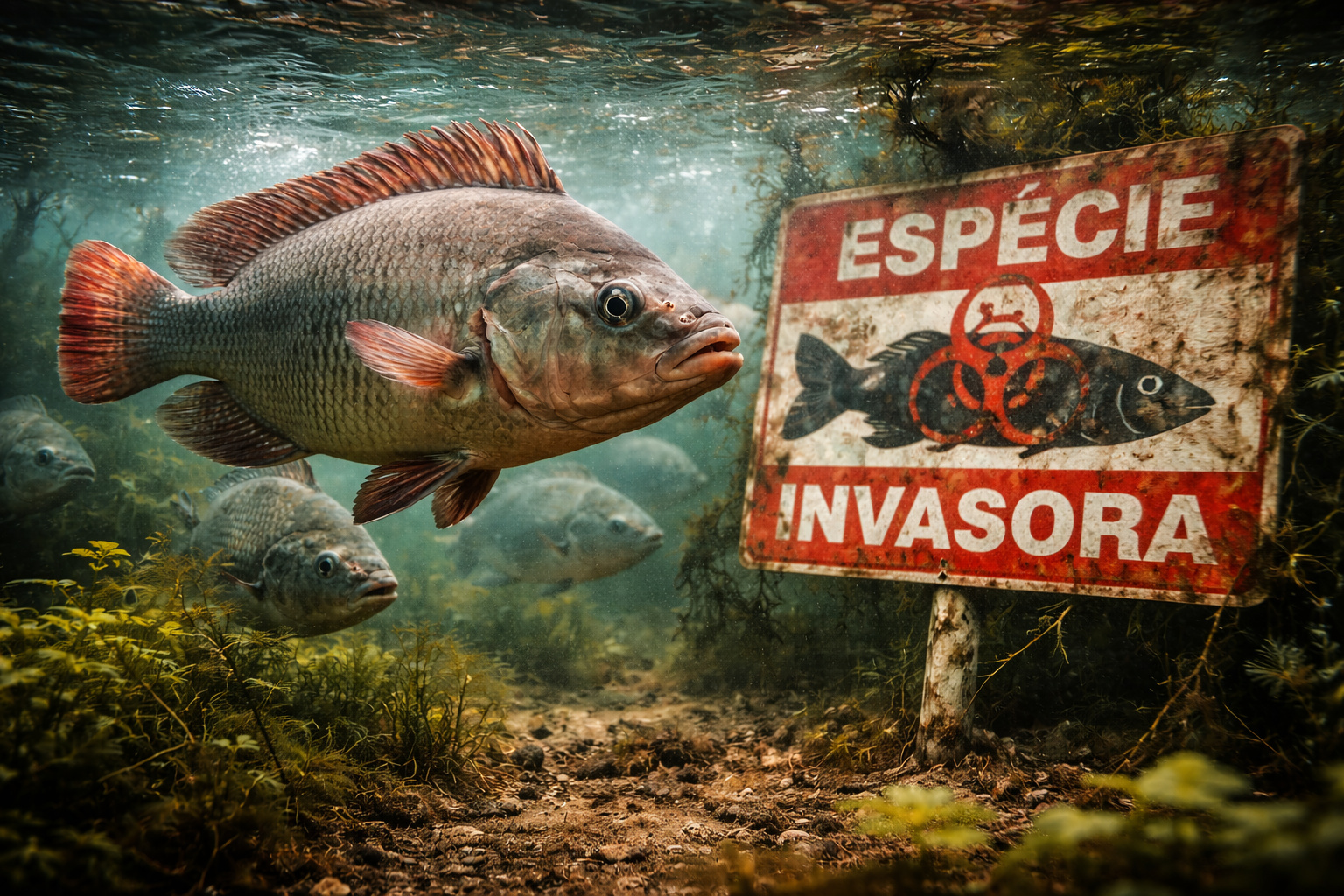


Government Classification Places Tilapia at the Center of Environmental Hurricane and Raises Concerns Over Billion-Dollar Impact on Brazilian Aquaculture
Tilapia, a fish that dominates national aquaculture and is present on the plates of millions of Brazilians, has become the center of an environmental and economic controversy. The species has been included by the federal government in the National Official List of Invasive Exotic Species, a decision that has reignited the debate: is tilapia just a productive fish or a silent threat to Brazilian ecosystems?
The measure, announced by the National Biodiversity Commission (Conabio), linked to the Ministry of the Environment, does not prohibit the farming of the species — but has generated strong reactions from the productive sector, which fears more bureaucracy, legal uncertainty, and direct impacts on a chain that moves billions of reais per year.

Why Did Tilapia Enter the List of Invasive Species?
Originating from Africa, tilapia has been in Brazil since the 1950s and has adapted extraordinarily to local conditions. It is precisely this adaptability that environmental specialists point to as a risk when the fish escapes from farming areas and starts to occupy rivers, lakes, and natural reservoirs.
-
A “silent skill” is allowing Brazilians to earn up to R$ 22,000 per month without a degree and become indispensable for companies that rely on millions of data to survive.

-
Researchers at the Toyota Research Institute found that if a human uses robotic arms to flip a pancake 300 times in an afternoon, the robot learns to do it on its own the next morning, and this is currently the most promising method to solve the biggest bottleneck in modern robotics.

-
Goodbye iron: a common item in households is starting to lose space to technology that smooths clothes in minutes without an ironing board and with less energy consumption.

-
Antarctica reveals an unusual clue high in the Hudson Mountains, and what appeared to be just an isolated rock began to expose a secret hidden under the ice for ages.


According to Conabio’s technical understanding, the presence of tilapia outside controlled systems can:
- compete with native species for food and space;
- alter ecological balance;
- impact natural chains in sensitive environments.
The classification, however, is technical and preventive, and does not mean an automatic ban on the activity.
What Changes in Practice for Tilapia Farmers?
Here lies the point that generated the most concern in the sector.
Although the government states that commercial production remains permitted, producers and entities warn that being included on the list may:
- difficult environmental licensing;
- increase technical requirements and costs;
- create legal uncertainty for future investments.
Today, tilapia aquaculture is the backbone of fish production in Brazil, responsible for the largest share of cultivated fish in the country and for thousands of direct and indirect jobs.

An Environmental Decision with Billion-Dollar Economic Impact
Data from the sector itself shows that Brazilian tilapia farming:
- moves billions of reais per year;
- sustains small, medium, and large properties;
- supplies the domestic market and exports.
Therefore, the mere association of tilapia with the term “invasive species” has raised a red flag among producers, cooperatives, and investors, who fear that the classification will be used in the future for harsher restrictions.
Government Says There Is No Prohibition — Sector Calls for Security
The Ibama and the Ministry of the Environment emphasize that there is currently no prohibition on tilapia farming, and that cultivation remains authorized under existing rules.
Still, representatives of the production chain argue for:
- greater dialogue with the sector;
- clarity on regulatory impacts;
- guarantees that aquaculture will not be penalized.

Invasive Species or Essential Fish?
The debate highlights a classic dilemma between food production and environmental preservation.
On one side, environmentalists advocate caution in view of the expansion of an exotic species.
On the other, producers point out that tilapia is essential for food security, income generation, and regional development.
The question remains clear: is it possible to protect ecosystems without jeopardizing one of the most important chains of Brazilian aquaculture?






A pele da Tilápia L, através de um estudo que começou no Brasil, é usada até para ajudar a queimados a se recuperarem mãos rápido, mas aí um governo federal vendido e rendido pela JBS vem com esse papo **** de Tilápia virar espécie invasora, enquanto o peixe faz parte do cardápio de várias famílias só para empresa lucrar com a importação de peixes que só Deus sabe qual é o recheio sendo que piscicultura no país, com a criação de tilápia está tornando o consumo desse peixe acessível para toda a população.
É incrível o que políticos interessados em encher seus bolsos e de de seus amigos podem fazer por um país! Só maldade em cima de maldade!
A Tilápia é um peixe benéfico.