





 Portuguese
  English
  Spanish
  4 min of reading
  0 comments


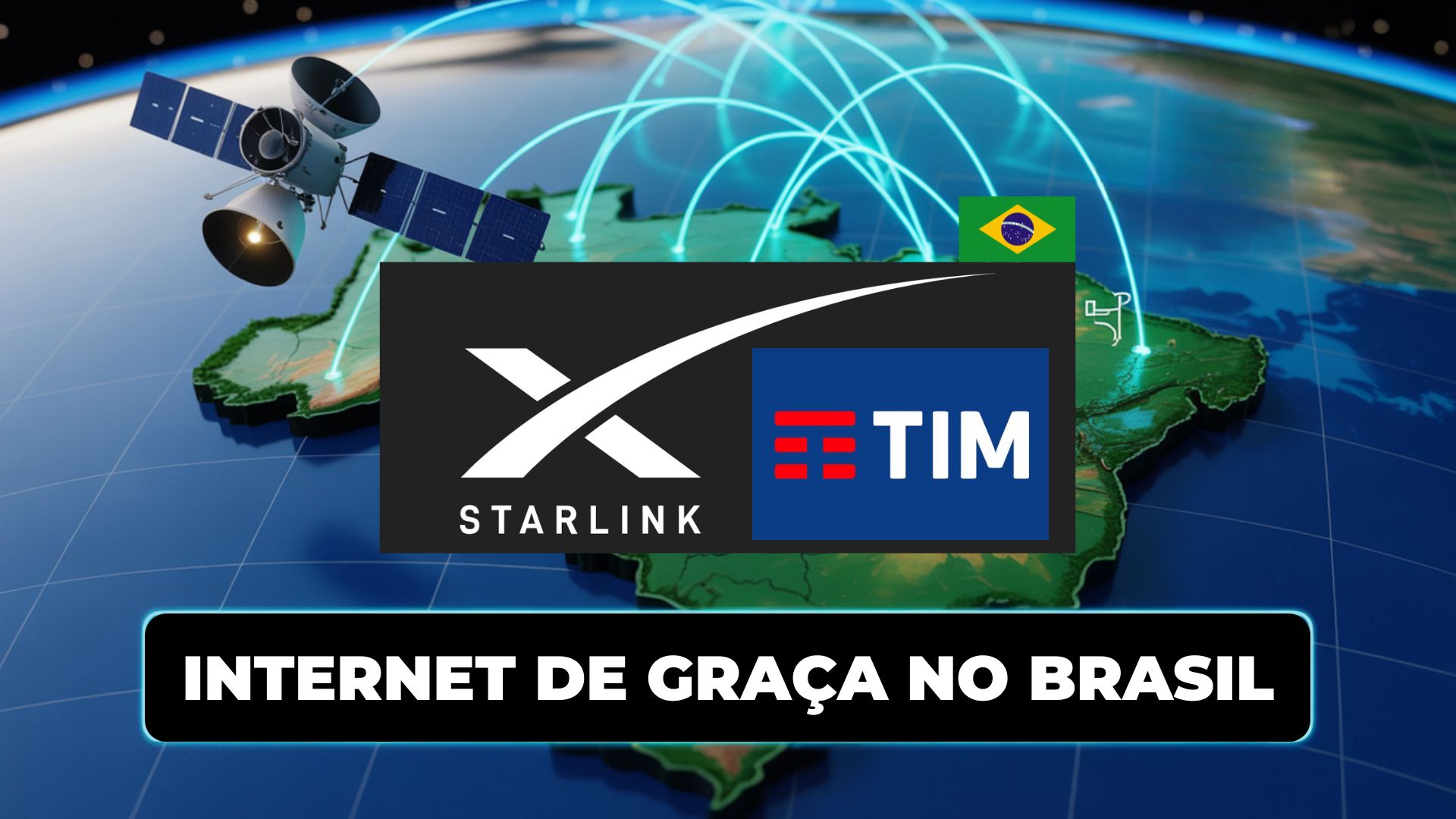
Partnership Brings Free Internet to Schools in Remote Areas, Connecting Educational Institutions in Four Brazilian States with LEO Satellite Technology, Promoting Digital Inclusion and Advances in Public Education.
TIM announced on July 21, 2025, a significant expansion of its partnership with Starlink, a satellite company controlled by Elon Musk, to provide free internet in remote areas of Brazil.
The initiative particularly targets rural schools and educational institutions in hard-to-reach regions in the states of Espírito Santo, Paraná, Rio de Janeiro, and Santa Catarina, making a relevant advancement in digital inclusion.
According to official information, the project already benefits around 1,300 public schools.
-
Motorola launched the Signature with a gold seal from DxOMark, tying with the iPhone 17 Pro in camera performance, Snapdragon 8 Gen 5 that surpassed 3 million in benchmarks, and a zoom that impresses even at night.

-
Satellites reveal beneath the Sahara a giant river buried for thousands of kilometers: study shows that the largest hot desert on the planet was once traversed by a river system comparable to the largest on Earth.

-
Scientists have captured something never seen in space: newly born stars are creating gigantic rings of light a thousand times larger than the distance between the Earth and the Sun, and this changes everything we knew about stellar birth.

-
Geologists find traces of a continent that disappeared 155 million years ago after separating from Australia and reveal that it did not sink, but broke into fragments scattered across Southeast Asia.
With the announced expansion, the number of institutions receiving free internet is expected to reach 1,800.
The service is made possible through low Earth orbit satellite technology, known as LEO (an acronym for “Low Earth Orbit”), which is operated by Starlink, a subsidiary of SpaceX, also founded by Elon Musk.

How Free Internet Works in Remote Areas
TIM, one of the largest mobile phone operators in the country, has formed a strategic collaboration with Starlink aiming to overcome geographical obstacles that have historically limited access to connectivity in rural Brazil.
According to the company, satellite connections enable broadband speeds sufficient to support activities such as video calls, remote classes, use of digital platforms, and real-time content streaming.
The use of LEO satellites marks a significant difference compared to older geostationary satellites, which are often associated with high latency and instability.
The Starlink equipment orbits closer to the Earth’s surface, providing high-speed internet and lower response times, essential factors for the proper functioning of educational tools and digital resources.
Schools Benefiting from the TIM and Starlink Partnership
The free internet is primarily intended for public educational institutions located in rural areas, remote communities, and locations where access to traditional broadband is limited or non-existent.
The announcement does not currently foresee the expansion of the benefit to private households or for individual use by residents of these regions.
According to TIM, the selection of schools follows criteria established in commitments made with the National Telecommunications Agency (Anatel).
Specifically, the agreement integrates requirements from Public Notice No. 004/2012, relating to the bidding for the 2.5 GHz band, which aims to serve schools and communities in less-served regions in the participating states.
Impacts of Free Internet on Rural Communities
Experts in education and digital inclusion point out that the arrival of broadband via satellite can transform the school routine, allowing for everything from online educational activities to access to updated content and participation in innovation projects.
The use of free internet in these institutions helps to reduce regional disparities in access to information, teacher training, student training, and integration among different educational hubs in the country.
According to data from the Brazilian Internet Association (Abranet), over 6,000 Brazilian schools still lacked adequate internet connection in 2024, particularly in rural areas and indigenous communities.
Projects like those of TIM and Starlink represent an advancement, although experts emphasize the need for continuous investments in infrastructure, training, and maintenance to ensure long-lasting results.
Starlink and the Advancement of Satellite Internet in Brazil
Starlink, part of the SpaceX conglomerate, currently holds the largest LEO satellite network on the planet, with thousands of units in operation.
The company began offering its commercial services in Brazil in 2022 and has since rapidly expanded its presence, especially in areas with poor telecommunications infrastructure.
The technological differentiators, such as high speeds, low latency, and rapid deployment, have positioned Starlink as an international reference in the satellite broadband segment.
According to the National Telecommunications Agency (Anatel), over 300,000 customers are already using Starlink services in Brazil as of July 2025, with projections for significant growth in the coming years as new public and private partnerships are formed to serve remote areas.
The Future of Free Internet in Isolated Areas
The union of major national operators with global technology companies tends to accelerate the democratization of access to free internet and high speed in the country.
Organizations such as the United Nations Children’s Fund (UNICEF) and the Ministry of Education indicate that school connectivity is directly associated with improved student performance and reduced school dropout rates.
However, experts warn of challenges such as the cost of maintaining equipment, training teachers to use new digital tools, and the need for public policies that ensure sustainability for the project.
The advancement of free internet in remote areas, through the collaboration between TIM and Starlink, opens new pathways for Brazilian education but still raises questions about the reach and maintenance of this initiative in the long term.
The partnership may inspire other similar projects, accelerating digital inclusion in a country marked by regional inequalities.
Given this scenario, how do you believe that the expansion of free internet could impact the future of education and the development of rural Brazilian communities?







-

-

2 pessoas reagiram a isso.