





 English
  Francês
  Alemão
  Italiano
  Japonês
  Norueguês
  Portuguese
  Spanish
  5 min of reading
  0 comments


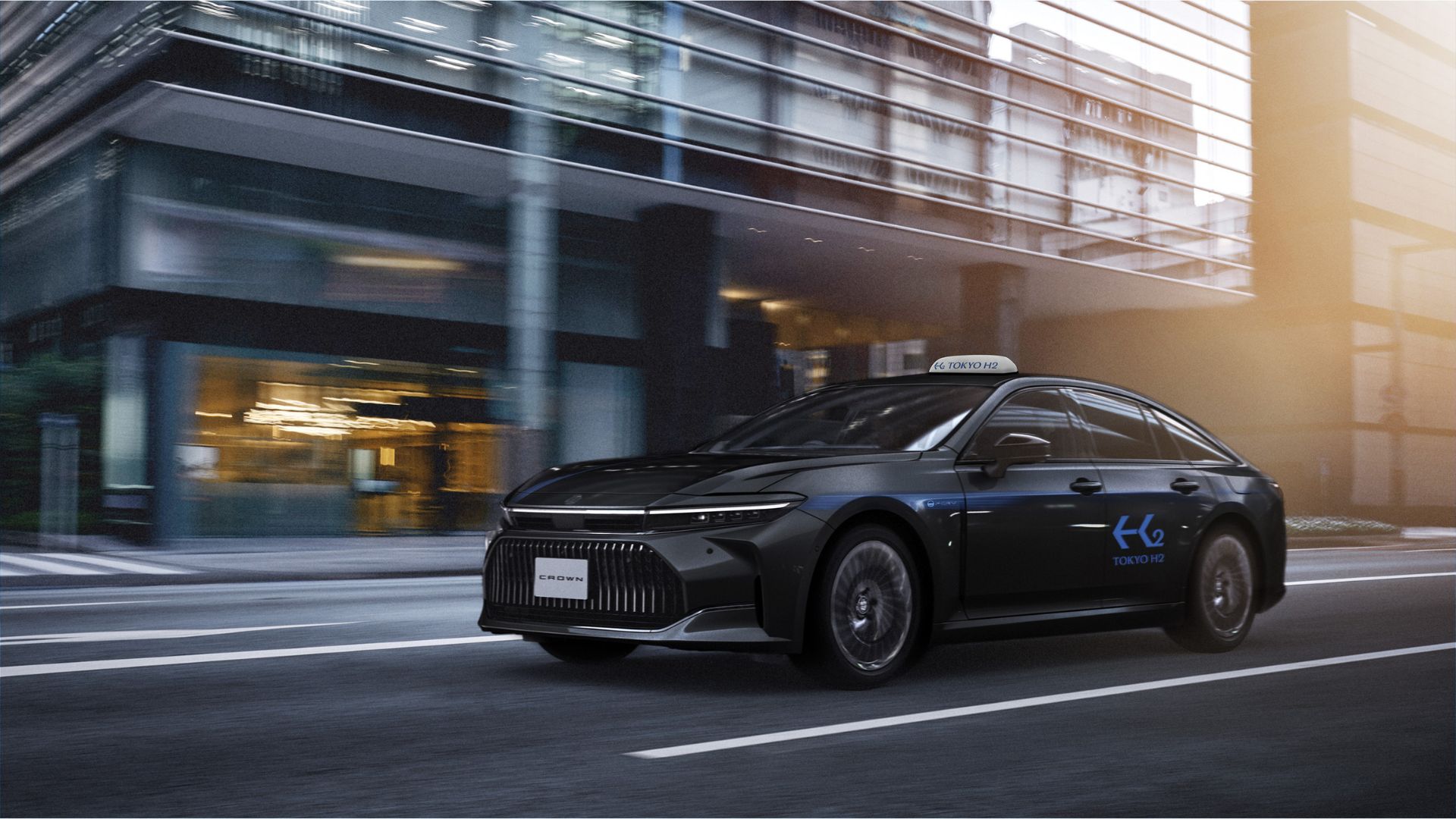
Tokyo Advances In Sustainable Mobility By Launching 200 Hydrogen Taxis From Toyota By The End Of 2025. The Initiative With The Crown FCEV Reinforces The Use Of Renewable Energy
It has been confirmed that Tokyo has begun the deployment of the first hydrogen taxis from Toyota, an important step for sustainable mobility in the Japanese capital. According to an article published by the website garagem 360 on Wednesday (3rd), the vehicles, based on the Crown FCEV model, will begin to circulate as part of the TOKYO H2 project, which aims for 200 units in operation by the end of the 2025 fiscal year.
The TOKYO H2 Project And Its Importance For Mobility
The initiative represents a milestone in Japan’s energy transition for urban transport and reinforces the use of renewable energy solutions in one of the largest metropolises in the world. The strategy places hydrogen as the protagonist of the clean future of mobility, strengthening decarbonization goals and modernizing public and commercial transportation.
The TOKYO H2 program was created by the city government in partnership with private companies with the goal of making Tokyo a global reference in adopting hydrogen as a clean fuel.
-
The Federal District bets on innovation and sustainability by launching a hydrogen-powered bus on a new tourist route, promising to reduce emissions and transform the urban experience for residents and visitors.

-
A study reveals the expansion of renewable energy procurement in Brazil and shows how companies are taking advantage of opportunities to reduce expenses, ensure energy efficiency, and strengthen strategic environmental commitments.

-
Mato Grosso do Sul excels in the sugar-energy sector: the state reaches a milestone of 22 operating mills and accelerates the production of clean energy in MS with a focus on sustainability.

-
National energy dilemma: Brazilians support clean energy but reject increases in tariff costs to finance the sustainable transition.


The plan establishes that by 2030, the city will have around 600 fuel cell vehicles (FCEVs) circulating, including taxis, light trucks, and service vehicles. The inclusion of the 200 Crown FCEVs marks the beginning of a broad and coordinated implementation that should stimulate investments in infrastructure and solidify hydrogen as a strategic source in the local energy matrix.
Furthermore, the program envisions expanding refueling stations, upgrading equipment, and implementing incentive actions for transport companies to adopt the model. Although taxis are the first step, the ultimate goal is to create a diverse network of hydrogen vehicles in continuous operation.
Strategic Participation Of Toyota In Advancing Renewable Energy
Toyota is one of the main partners of TOKYO H2. Its participation goes beyond supplying vehicles. The automaker also contributes with technologies, technical support, publicity, and actions aimed at creating demand for hydrogen.
The company has resumed activities at the former showroom dedicated to fuel cell vehicles, now transformed into the TOKYO H2 HUB. The space serves as an information, training, and integration center, allowing companies, drivers, and citizens to learn details about the technology and track the project’s expansion.
Toyota’s presence underscores the automaker’s commitment to energy transition, expanding its role beyond the Mirai fleet and establishing the Crown FCEV as a mature solution for daily urban use.
Crown FCEV: The Hydrogen Taxi Chosen By Tokyo
The first vehicles used by taxi companies in Tokyo are based on the Toyota Crown FCEV, which combines a fuel cell, extended range, and silent operation.
Among the model’s main highlights are:
Comfort And Quietness:
The Crown FCEV operates with a fuel cell, eliminating typical noises from conventional engines. This results in quieter, more comfortable, and pleasant rides — an important differential in a busy city like Tokyo.
Zero Emissions At The Point Of Use:
The vehicle emits only water vapor, directly contributing to reducing pollutant gases and improving urban air quality, especially in areas of heavy traffic.
Practicality And Internal Space:
The sedan offers excellent rear space, facilitating the transportation of passengers and luggage — a fundamental requirement for taxi companies.
Efficient Performance:
Refueling is quick compared to the charging time of battery electric vehicles, which reduces the downtime for drivers.
As an initial phase, only three units have started operating in Tokyo. They are distributed among companies that joined the project to test vehicle performance and assess the operational experience on urban routes.
Gradual Expansion Of Toyota’s Hydrogen Taxi Fleet In Tokyo
Despite the initial phase involving only a few units, the expansion is aggressive. The goal is to have 200 Crown FCEVs in circulation by the end of the 2025 fiscal year.
This expansion occurs in stages so that the government can monitor:
- vehicle usage pattern
- energy efficiency
- hydrogen demand
- refueling needs
- operational costs
- public and driver acceptance
If the results are positive, the trend is for the model to become standard among taxi companies in the metropolitan area. Since Tokyo receives millions of passengers daily, the technology’s visibility should grow rapidly.
Renewable Energy And Hydrogen: Strategic Role In Urban Mobility
Hydrogen is gaining traction in countries committed to decarbonization goals. It allows for emission reductions without sacrificing range, comfort, or performance, especially in modes of intense use, such as taxis, corporate fleets, and light cargo vehicles.
In Tokyo, the adoption of hydrogen is directly linked to environmental and economic objectives:
Urban Decarbonization:
With thousands of vehicles circulating daily, reducing direct emissions is essential to combat pollution and promote public health.
Stimulus For Innovation:
The presence of fuel cell vehicles encourages the creation of infrastructure, new businesses, and technological advancements related to hydrogen storage and distribution.
Integration With Renewable Energy Sources:
Japan is investing in ways to produce green hydrogen and utilize excess renewable energy, such as solar and wind, to power the production chain.
Boosting The Hydrogen Economy:
With more vehicles regularly refueling, demand increases and makes production more scalable and competitive.
The adoption of Crown FCEVs, in addition, reinforces the transition to cleaner and more modern transport that can be replicated in other major cities around the world.
Challenges In Consolidating Hydrogen Taxis As An Urban Solution
Even with progress, significant challenges remain:
Limited Infrastructure:
The refueling network needs to grow alongside the fleet. Without enough stations, expansion is restricted.
High Costs:
Both vehicles and infrastructure have higher costs than conventional options, requiring incentives and partnerships.
Acceptance By The Public:
Passengers and drivers need to fully trust the safety, refueling speed, and performance of hydrogen.
Hydrogen Source:
For mobility to be truly sustainable, it is ideal that the fuel is produced from clean sources.
Overcoming these challenges requires planning, continuous investment, and alignment between government, companies, and society.
Why Tokyo’s Strategy Can Influence Other Cities
The initiative creates a replicable urban model for metropolises interested in efficiently reducing emissions. Tokyo demonstrates that hydrogen can be utilized on a large scale without compromising daily transportation operations.
Additionally:
- strengthens the city’s image as a hub of innovation
- stimulates international investments
- positions Japan as a leader in clean technologies
- generates a positive direct environmental impact
If the plan achieves its goals, the Crown FCEV may inspire similar projects in Europe, the United States, and emerging countries seeking viable alternatives to fossil fuel use.
Importance Of Tokyo And Toyota’s Initiative For The Future Of Mobility
The deployment of Toyota’s hydrogen taxis demonstrates how technology, sustainability, and urban planning can work together for clean mobility. With the Crown FCEVs, Tokyo begins a cycle of innovation that is likely to transform the city’s public and commercial transportation.
The success of this initial phase will be crucial in defining the next steps, consolidating hydrogen as a practical solution and expanding the potential for renewable energy in urban environments.









-

Uma pessoa reagiu a isso.