





 Portuguese
  English
  Spanish
  8 min of reading
  9 comments


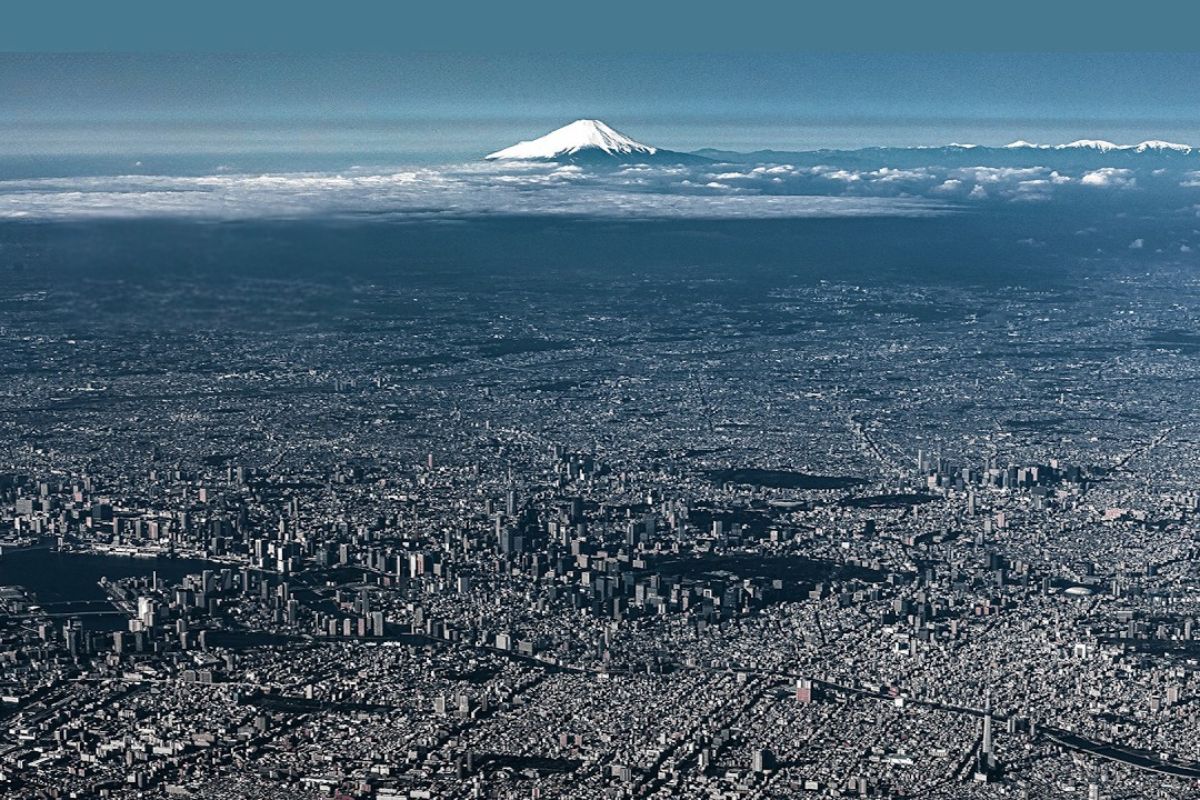


In Tokyo, More Than 41 Million Live in a Megacity Without a Single Center, Born from the Edo Village. Shinjuku, a Guinness Record Holder, Swallows Crowds in 200 Entries. The Urban Railway Network, with Bullet Train and Crowded Trains, Sustains 22 Hours of Walking to Mountains and a Giant Sewer in Neighborhoods That Look Like Manhattans
Tokyo is described as the largest city on the planet, with more than 41 million people in the metropolitan area, a scale comparable to gathering the entire population of Canada into a single city. The feeling is one of practical impossibility, as the size manifests in everything, from daily commutes to the way the city is organized.
When observing Tokyo from central areas, such as Shibuya, the jump in density does not happen quickly. A search for large green areas that did not seem like parks indicated about 11 hours of walking from the center, and even after that, there is still a lot of city ahead. To reach the mountains, it would take another 11 hours on foot, totaling about 22 hours.
The City Measured in Steps and the Distance to the “End” Urban

The vastness of Tokyo becomes clearer when the question shifts from abstract to logistical: how long would it take to walk from a central area to the least dense suburban area, and then to the countryside? The reference used was a central point in Shibuya and the search for large green areas that did not seem like parks.
-
A couple buys an old chalet, breaks the kitchen floor for renovation, and finds over a thousand coins of gold and silver hidden since the English Civil War over 4 centuries ago.

-
Rigid bags with their days numbered: new trend prioritizes comfort in 2026.

-
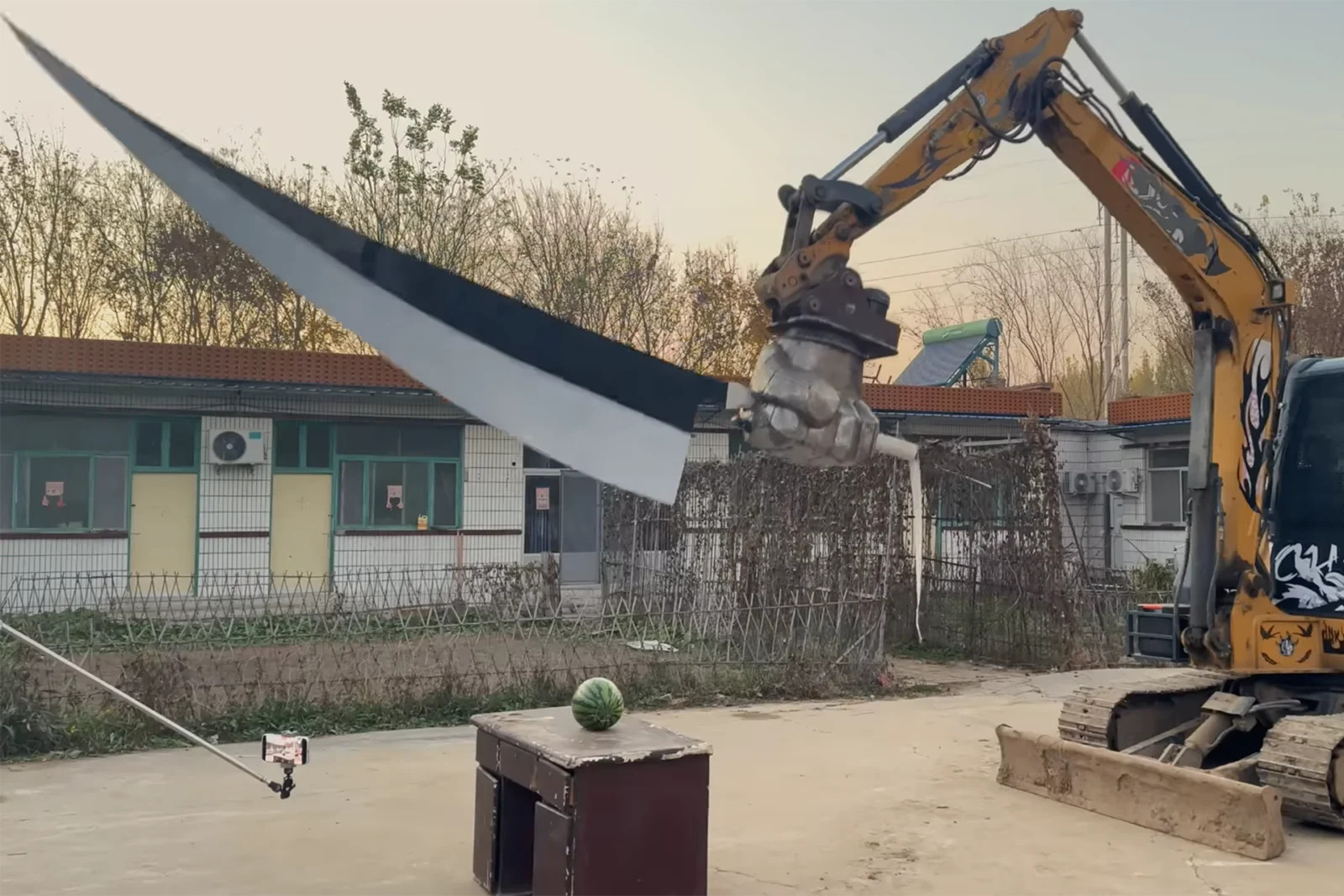
YouTuber creates an excavator equipped with a giant 4.5-meter sword to challenge his brother to a rematch, and the invention quickly goes viral on social media.
-
The U.S. Army surprises the world by presenting the UH-60MX Black Hawk helicopter capable of flying without pilots, controlled by a tablet, featuring the MATRIX system, smart sensors, and full autonomy in real combat and rescue missions.


The result was a walk indicated as 11 hours to those closest green areas, and even there, the density would remain high. What should seem like “leaving the city” still feels like a city, and the “after” would require another 11 hours to the mountains, completing the picture of 22 hours of walking.
Why Public Transportation Becomes the Backbone of Tokyo

In a metropolis of this size, daily commuting cannot rely solely on cars stuck in traffic jams. The description is straightforward: traffic in Tokyo can be “biblical,” and for a city to function, it must be possible to move without spending too much time sitting in traffic.
More than half of the 41 million people in the metropolitan area of Tokyo use public transportation every day. This figure positions the system as a structural element of urban life, not as an alternative. Without rails, the city doesn’t run.
The Most Extensive Urban Railway Network in the World and the Effect of Overlap

The public transportation in the metropolitan area of Tokyo is dominated by the urban railway network described as the most extensive in the world. The visual comparison with other networks, such as those in Los Angeles, Rome, and Delhi, highlights the leap when Tokyo’s grid is overlaid: the density of lines and connections stands out as a hallmark of the territory.
This structure explains how the city maintains daily flow, even with high occupancy. Even though it is described as one of the most efficient systems, the volume math comes at a cost, and some trains inevitably become quite crowded.
Shinjuku, the Record Holder and the Station that Swallows Crowds Every Day

The Shinjuku station, in central Tokyo, is presented as the busiest railway station in the world, certified by the Guinness World Records. The scale of the flow is described comparatively: “the entire population of Berlin or Los Angeles” passes through it every day.
In addition to the volume, there is the physical complexity. With more than 200 different places to enter and exit, Shinjuku is described as “overwhelmingly complicated.” The record is not just about people, it is about operational maze, where efficiency coexists with the feeling of excess.
Tokyo Without a Single Center and the Effect of Multiple “Centers” Simultaneously
Most large cities have a central area where everything converges, with business, shopping, and culture concentrated. In Tokyo, the very scale breaks this pattern: the city is so large that many different areas seem to be the “center” at the same time.
The reported experience is purposefully repetitive: being in Shinjuku feels central; taking the subway for 45 minutes in one direction and getting off somewhere else still feels central; taking another 45 minutes in another direction and the feeling repeats. The center ceases to be a point and becomes a condition.
Neighborhoods that Specialize and Look Like “Multiple Manhattans”
The phrase attributed to Anthony Bourdain summarizes the multiplicity: there would be “15 or 20 different Manhattans” in Tokyo. The idea is that the city fragments into neighborhoods with distinct cultural specializations and atmospheres, each with its own identity and density that reinforces the character of being a “center.”
Akihabara appears as a hub of entertainment linked to otaku culture, with video games, anime, manga, and electronics, along with streets filled with references to anime culture and cosplayers on the sidewalks. Harajuku is described as the center of Japanese youth culture, where different types of alternative fashion can be observed. Asakusa emerges as the neighborhood of temples, with Buddhist temples, traditional crafts shops, and festivals. Ginza is presented as a center of premium luxury, with a 12-story Uniqlo, upscale department stores, and luxury brand streetwear. It’s a city that changes its “capital” every season.
When Megacity Became a Concept and How Tokyo Surpassed Everyone
In the mid-1970s, the UN began using the term megacity for urban areas with more than 10 million people. New York was said to be the first megacity in the 1930s, but Tokyo quickly surpassed it and continued to widen that gap.
This framing helps understand why Tokyo is treated as a reference for urban scale. It is not just a large city: it is a type of city that requires its own systems and solutions to avoid collapsing under its own weight.
Traffic, Sensors, and Real-Time Information to the Driver
Even with the burden of public transportation, traffic remains a critical issue. The description includes control and communication systems, with meters equipped with infrared sensors that identify vehicle occupancy when someone tries to “feed” them repeatedly without moving the car.
When traffic gets congested, information is transmitted to drivers through large signs positioned above the main routes throughout the city. Congestion management becomes part of urban design, not an occasional measure.
The Bullet Train as a Response to the Tokyo-Osaka Axis
The pressure of traffic between Tokyo and Osaka, combined with tens of millions of people living in the region, is described as a situation getting out of control. The response was to invent the bullet train to solve the problem.
The description reinforces the visual and symbolic impact: it looks like a bullet and is treated as a super express that challenges traditional ideas about train speed. The high-speed infrastructure appears as a metropolitan survival tool, connecting volumes that would not fit into slow solutions.
The Largest Sewer in the World and the Invisible Side of the Megacity
Beyond transportation and traffic, there is a less visible but decisive base: Tokyo would also have built the largest sewer in the world. In a city of this scale, sanitation is not a detail; it is a continuity infrastructure.
The point here is simple: without a compatible drainage system, density becomes a risk. The giant sewer is as structural as the record-holding station, only it operates far from daily sight.
From a Village Called Edo to the Capital That Concentrated Power for 200 Years
About 400 years ago, Tokyo “did not exist” in its current form. The place is described as a fishing village that was not called Tokyo but Edo. The turning point comes with the end of the period of warring states, which concluded with the victory of the Tokugawa shogunate, which unified Japan.
The Tokugawa would have moved their de facto capital to Edo, concentrating political and economic power of Japan into a single city. Samurais, merchants, and artisans were attracted, and Edo became a growth hub. The geographical context was also pointed out: a port city in the largest flat land area of Japan, with a capacity for food production in the surrounding area and easy transport through canals and rivers to supply the growing population. The city grew because it had power, food, and logistics.
Edo grew so much that the following 200 years are remembered as the Edo period. Some cited estimates even describe it as the largest city in the world in the 18th century, with over 1 million people.
The Opening of Japan, the Name Change, and the Industrialization that Pulled Migration
In the mid-1800s, after about 200 years of isolation, Japan opened to foreign trade and Western ideas, provoking rapid social and economic changes. During this period, the name Edo was changed to Tokyo, “Eastern Capital.”
The city began to industrialize rapidly, attracting even more people from rural areas to work in factories. Growth began to be described in millions. Tokyo became a city defined by change, including recurring destructive events, such as major fires that burned the city down several times. Still, the narrative is one of reconstruction: Tokyo always rose from the ashes. Continuity did not come from stability, it came from recovery.
The Perception of “Cheap,” the Shock in Dollars, and the Weight of Salaries
A contemporary contrast appears in popular perceptions: many people on social media talk about how cheap it is to live in Tokyo. The observation presented is that the cost of living is much lower than in the U.S. in several ways, but there is one point that distorts comparisons.
These frequently cited prices often appear in U.S. dollars. People used to paying American prices for food and rent feel shocked when arriving in Japan and seeing lower values when converted to dollars. At the same time, there is a central counterpoint: salaries in Japan are much lower. Perceived price is not the same as real cost for those earning locally.
Tokyo has been portrayed as an urban organism that took about 400 years to transform from Edo into a megacity of more than 41 million, without a single center, with neighborhoods functioning as multiple centers and with Shinjuku at the top of the world railway flow. The city relies on public transport used daily by more than half of this population, coexists with crowded trains, manages traffic with sensors and panels, connects axes with bullet trains, and sustains density with heavy infrastructure, such as a giant sewer.
If you had to cross Tokyo on foot, would you face the 22 hours of walking to understand the scale in practice, or would you prefer to map the city by neighborhoods and the subway?






Muito boa
Realmente tem muitos anúncios invasivos/irritantes. Outros sites não aparecem! Vamo arrumar isso. Tá ****!
E outra coisa. Vocês sabiam que a cidade pode afundar? Por ser tão grande e pesada? Fica a dica !
Só existe uma extraordinária diferença a cultura é outra,o que eles fazem é tudo com muito juízo e com muita ideia de sustentabilidade sem depender do estado ou do governo, porque outras culturas de outros povos vivem a depender do estado e do governo sem falar na falta de seu próprio desenvolvimento pessoal!
Ai que vc se engana. Tudo la depende de um estado ativo que exige que as coisas funcionem como um relógio.