





 Portuguese
  English
  Spanish
  4 min of reading
  2 comments


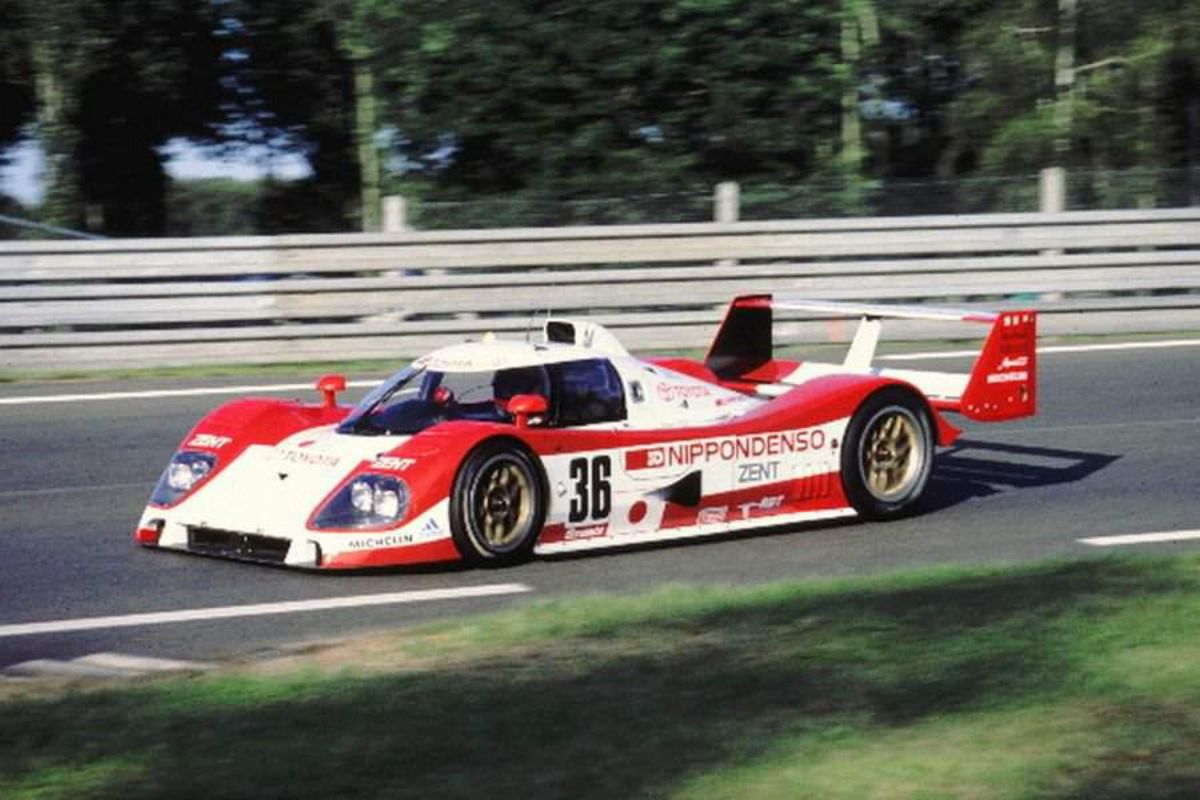


Fast, Advanced, But Dangerous. Discover the Story of the Toyota TS010, the Car That Injured Its Drivers on the Podium at Le Mans.
There is a car that did not need to crash to injure its drivers. It broke bones. Left permanent marks. This was the Toyota TS010. Toyota’s aggressive response, once seen as a joke in the world of endurance. A brutally fast car. Technologically advanced.
But it exacted an extreme physical toll on those who dared to tame it. Its stiff suspensions and extreme G-forces turned every corner into a struggle.
The Rise of Toyota: From Failure to Threat in Endurance
In the late 80s and early 90s, the endurance racing scene was dominated by European giants. Porsche, Jaguar, and Mercedes reigned supreme. Toyota, despite being a giant in the automotive market, was a supporting player on the tracks. Its previous prototypes, like the Toyota 88C, faced technical problems. They rarely made it to the podium. Many considered them a “catastrophe.”
-
For R$ 32,000, a brand new Hyundai car is a rival to the Kwid with a 1.2 engine producing 82 hp, 6 airbags as standard, multimedia with wireless Android Auto, up to 391 liters in the trunk, and a refreshed look for 2026 in India.
-
He bought a new car in 1983, locked it in the barn in 1988, and no one opened the door for 38 years until the family discovered what was stored inside and realized it looked like something out of a movie.
-
A 250cc motorcycle that can reach 560 km with a 14-liter tank, features disc brakes on both wheels and is among the most well-known in Brazil.
-
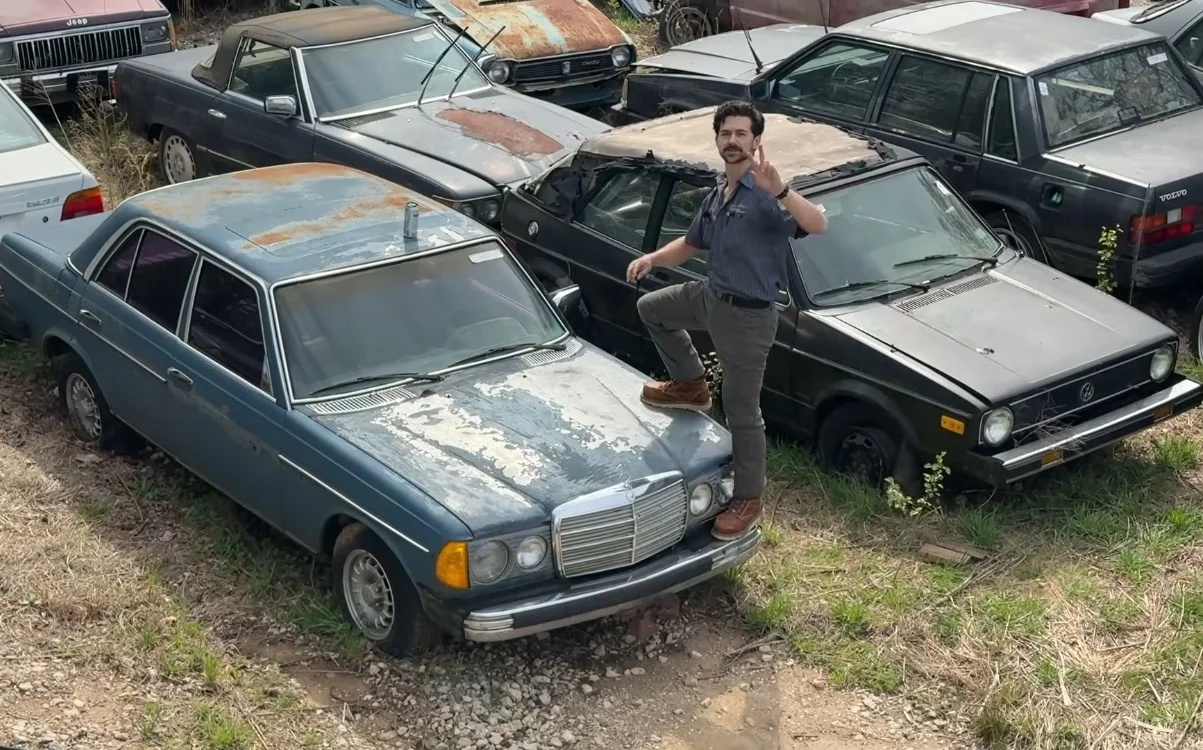
Man finds over 200 rare cars abandoned on a lot and tries to do the impossible in 8 hours with a surprise at the end.

Meanwhile, Porsche racked up victories (1981-1987). Jaguar broke this streak in 1988 and 1990. Mercedes won in 1989. Toyota watched, accumulating experience with its four-cylinder turbo engines. For the Japanese, these defeats were a “strategic learning experience.” They knew they needed a more aggressive approach. The philosophy was one of patience and persistence.
New Rules and the Golden Opportunity
The early 90s brought a radical change in FIA regulations for endurance racing. The main alteration was the mandatory adoption of 3.5-liter naturally aspirated engines, similar to those in Formula 1. This eliminated the era of dominant turbo engines. New weight limits (750 kg) encouraged the use of carbon fiber. Aerodynamics became crucial.
For many manufacturers, like Mercedes and Jaguar, these changes were an obstacle. They abandoned competition citing costs and complexity. But for Toyota, which had little to lose, it was a “golden opportunity.” The new rules leveled the playing field. Toyota hired Tony Southgate, a renowned British designer. He had already designed winning cars at Le Mans, like the Jaguar XJR9. Southgate brought technical knowledge and a winning mentality.
A Beast is Born: Engineering and Challenges of the Toyota TS010
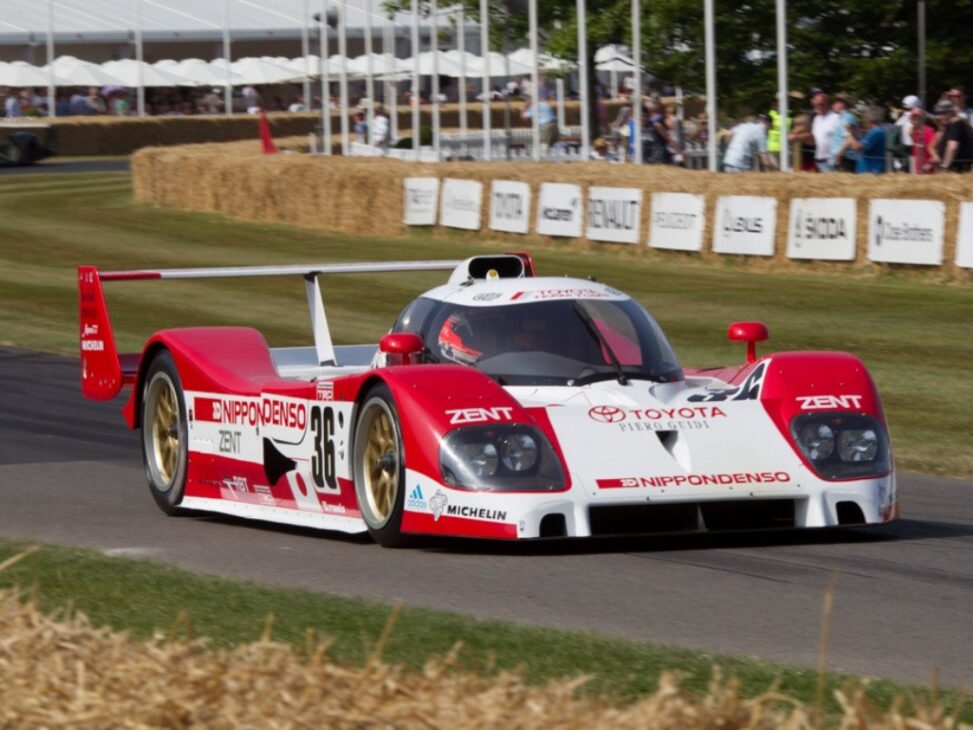
With Southgate and other names like André de Cortanze (French engineer specializing in aerodynamics), Toyota decided to create a car exploiting all technical loopholes. Time was short: less than two years. The heart of the TS010 was the Toyota RV10, a 3.5-liter naturally aspirated V10 engine. It revved at 11,000 RPM and produced about 650 horsepower.
The engineering focused on thermal efficiency and advanced lubrication (dry sump). Materials like titanium alloys were used for the valves. The car adopted carbon fiber on a large scale. Wind tunnel testing was intense to optimize ground effect aerodynamics. During initial tests, driver Geoff Lees noted instability and urgently requested improvements.
“Bone Crusher”: The Physical Cost of Extreme Speed
The TS010 was brutally rigid due to its carbon fiber construction. This generated absurd G-forces. In February 1992, during tests in Australia, the car’s dark side emerged. In a high-speed corner (taken at 315 km/h), there was a small bump. The combination of the undulation, extreme stiffness, and downforce (estimated between 2200 to 3200 kg) created a violent pressure on the drivers.
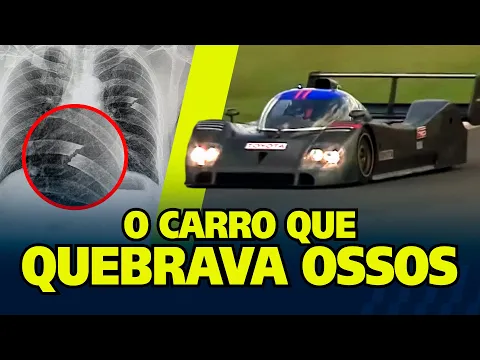
Driver Andy Wallace felt a crack. Two ribs broke instantly. The next day, Japanese driver Ryōtarō Ogawa suffered the same injury, at the same point. The car absorbed no impact at all. The inflexible seat transmitted 100% of the G-forces. The TS010 earned the nickname “Bone Crusher.” Adjustments were made to mitigate the problem without losing performance.
The Battle at Le Mans and the Legacy of the TS010

The official debut was at Autópolis, facing mechanical challenges. But the real test was the 1992 World Endurance Championship, specifically the 24 Hours of Le Mans. Peugeot, with its 905 Evo 1B, was the favorite. The TS010 showed speed, qualifying in second place with Geoff Lees.
During the race, the TS010, driven by Lees, Ogawa, and David Brabham, led at times, challenging Peugeot. The biggest problem was the higher fuel consumption of the Japanese V10. Peugeot managed their pit stops better. The battle was intense throughout the night, with minimal differences. By dawn, Peugeot had pulled ahead. In the end, the Peugeot 905 won. The Toyota TS010 finished in a respectable second place. It was the best result for Toyota at Le Mans thus far.
The TS010 competed in 1993, but the 3.5L era was ending. Toyota was already planning the TS020 (GT-One). Although short-lived, the legacy of the TS010 was profound. It served as a foundation for future hybrid programs, such as the TS050 Hybrid, which finally won Le Mans in 2018. The “Bone Crusher” proved that Toyota could compete with the best and changed the factory’s mindset. Interestingly, while Toyota struggled with the TS010, Mazda became the first Japanese brand to win Le Mans in 1991, with the rotary engine 787B, which was later banned.








Eastern Creek turn 1, the Killer.
Je suis navré mais là, c’est compliqué a lire correctement, il y a tellement de faute de syntaxes ou alors il manques carrément des mots à certains endroits, on dirait juste une traduction mal faite. corrigez vous avant de publier un article svp