





 Portuguese
  English
  Spanish
  5 min of reading
  0 comments


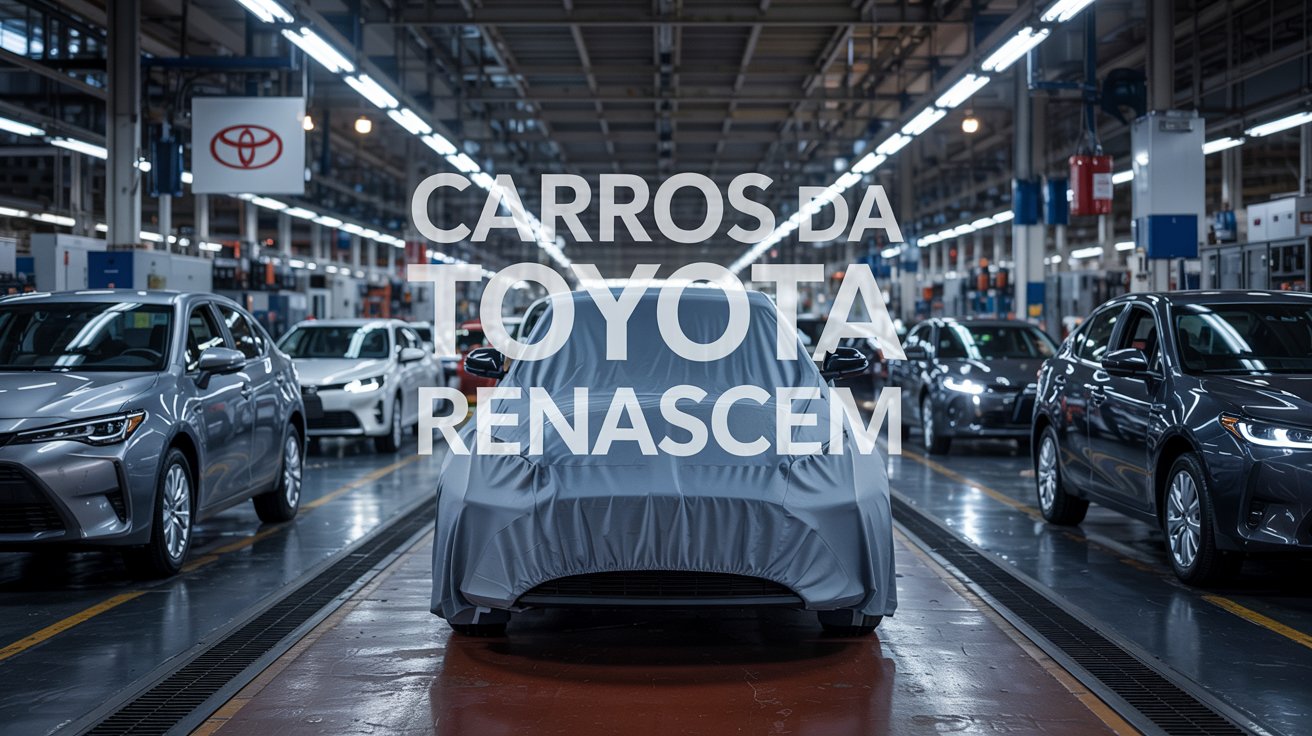
Toyota Revolutionizes The Industry! Starting In 2025, An Innovative Factory Will Transform Old Cars Into New Ones, Reducing Emissions And Reusing Materials Such As Steel, Plastic, And Batteries.
Toyota is about to take a big step towards sustainability with an innovative project that promises to transform old cars into new ones, decreasing environmental impact and contributing to the reduction of carbon emissions.
The Japanese giant aims to become one of the first vehicle manufacturers to achieve net zero carbon emissions across all its global operations by the next decade.
To reach this ambitious goal, the company will heavily invest in recycling and reusing old cars, which will be recycled and repurposed for the manufacture of new models.
-
Neither in the refrigerator nor in the fruit bowl: this is the correct way to store lemons.

-
It has only 11 thousand residents: Brazilian Tuscany impresses everyone with mountains of 1,900 meters and wide views of valleys.

-
What seemed like waste has turned into a barrier, and now human hair collected from salons helps retain debris in the water of ancestral channels in Latin America.

-
Without experience and without giant machines, a young man builds a complete house made only of wood in 30 days, impressing with his talent and the final result is surprising.


The Toyota Circular Factory: Innovation And Sustainability
The new factory, named Toyota Circular Factory, will be inaugurated in the United Kingdom, specifically at the Burnaston plant.
The facility will start its operations at the end of 2025 and will be responsible for recycling and repurposing parts from old cars.
This will be one of the first initiatives of its kind, highlighting Toyota’s commitment to sustainability and the future of the planet.
According to the brand, the plant will be capable of repurposing up to 10,000 cars per year, transforming them into parts that can be used for assembling new vehicles.
The recycling process will be carried out in several stages and will involve everything from reusing intact parts to recovering materials such as steel, copper, and plastic.
Each item will be carefully sorted to determine its condition and function in the production cycle.
The Repurposing Process: How The Recycling Of Old Cars Works
The repurposing process will be divided into several stages, starting with the sorting of vehicles, where Toyota will assess the condition of the parts.
If a component is intact, it will be refurbished, potentially reused, and even resold, usually at a discount, without compromising its functionality.
Essential items, such as batteries and alloy wheels, are not simply sold in their current state.
They will be transformed into raw materials that will feed a new manufacturing cycle.
This includes the recovery of metals and plastics, which, when damaged, can be reused after a processing step, being applied in the production of new cars.
The recycling of steel, one of the main materials used in vehicle manufacturing, plays a crucial role in this process.
The steel will be shredded and sent to a foundry, where it will be transformed into new parts for the cars, significantly contributing to the reduction of carbon emissions.
This process, known as “green steel recycling,” avoids the need for iron ore extraction, which would generate a large amount of CO₂.
In a broader context, Toyota seeks to promote the reuse of these materials, not only with steel but also with other components such as copper, aluminum, and plastics, reducing waste and environmental impact.
The Relevance Of Recycling To Emissions Reduction
While electric cars gain prominence in the automotive market as a solution to emissions reduction, Toyota demonstrates that recycling also plays a crucial role in the fight against global warming.
Studies indicate that the manufacturing process of electric vehicles is responsible for half of the carbon emissions throughout the vehicle’s life cycle.
According to reports from the World Steel Association, steel recycling can reduce carbon dioxide generated in the manufacture of car bodies by up to 58%.
By investing in the use of so-called green steel, Toyota drastically reduces the environmental impact of its operations.
The Zemo Partnership, a think tank dedicated to promoting more sustainable solutions for the automotive sector, emphasizes the importance of this type of material in vehicle production, reinforcing the relevance of the Japanese manufacturer’s project.
Furthermore, the European Union revealed that there are currently six million abandoned vehicles in its territory, representing a massive waste of materials.
These cars, often forgotten and unused, are responsible for serious environmental problems, such as irregular land occupation and environmental contamination, as well as the proliferation of diseases.
In this context, the recycling of old cars becomes an efficient and necessary solution.
Toyota’s Initiatives In Europe: Commitment To The Circular Economy
Toyota’s commitment to the circular economy in Europe goes beyond the recycling of vehicles.
The company appointed a Vice President for Circular Economy, Leon van der Merwe, who plays a crucial role in implementing these initiatives.
According to van der Merwe, Toyota plans to recover, over the course of a year, 300 tons of “high-purity” plastic and 8,200 tons of steel, with the goal of using these materials in about 120,000 new parts for vehicle manufacturing.
This effort not only contributes to the environment but also has a significant impact on production efficiency, reducing reliance on natural resources and minimizing waste.
Toyota positions itself as a leader in developing innovative solutions that can transform the automotive industry, aligning with global trends in sustainability and circular economy.
The Future Of Recycling In The Automotive Industry
Toyota is not alone on this journey.
Other manufacturers are also investing in sustainable alternatives to reduce their carbon footprints.
However, the Toyota Circular Factory project stands out for its ambitious approach, which not only seeks the recycling of materials but also aims to create a fully sustainable and efficient business model.
The future of cars may not be limited to just electric vehicles but also to the idea of repurposing and transforming old cars into new ones, giving new life to materials and contributing to a greener, less polluted world.
In this way, Toyota’s project can serve as an example for other companies in the automotive industry, encouraging a paradigm shift in how cars are manufactured and disposed of.
The concept of circular economy is no longer a distant trend, but a reality that is increasingly closer to transforming how we think about production and consumption in the automotive sector.




Seja o primeiro a reagir!