





 Portuguese
  English
  Spanish
  2 min of reading
  0 comments


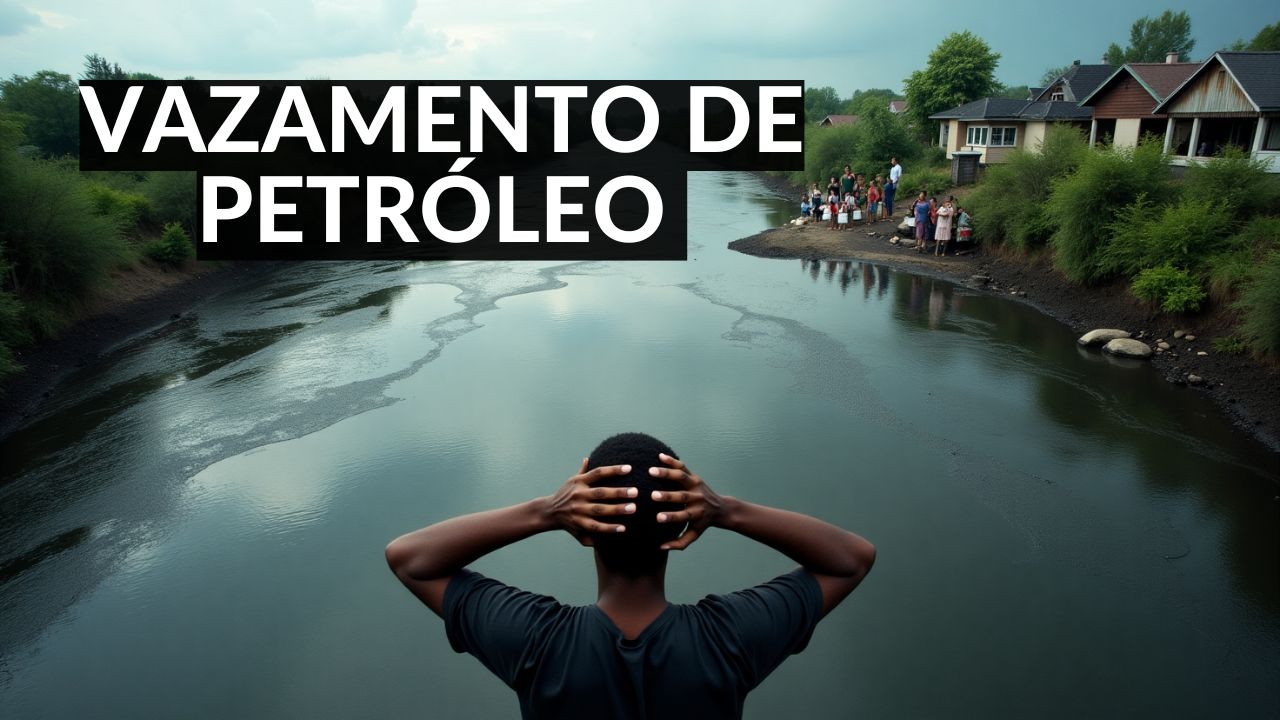
Oil Spill Contaminates Esmeraldas River, Affects Thousands and Forces Government to Declare Emergency. Mayor Warns of Water Crisis and Asks for Water Conservation.
Waking up and discovering that the water you drink may be contaminated by an environmental disaster. That’s exactly what happened in the Esmeraldas province of Ecuador, where an oil spill triggered an environmental emergency.
What Happened?
On Friday night (14), the Ecuadorian government declared an environmental emergency after an oil spill reached the Esmeraldas River. The cause of the accident appears to be linked to a landslide that damaged a pipeline in the Cube region.
The city’s mayor, Vilko Villacís, warned of “unprecedented damage” and suspended water pumping, asking residents to conserve the resource. The Esmeraldas River is essential for the region, making the situation even more critical.
-
Offshore industrial demand in Macaé skyrockets with the recovery of oil and gas and could grow by up to 396% by 2026 in the Campos Basin.
-
Offshore industrial demand in Macaé surges with the recovery of oil and gas and could grow by up to 396% by 2026 in the Campos Basin.
-
Brazilian giant expands borders in the Southeast: Petrobras confirms new oil discovery in ultra-deep waters in the pre-salt of the Campos Basin.

-
Alert in the global energy market: Severe tropical cyclone hits the coast and disrupts gas production at major plants in Australia, threatening global supply.


Environmental and Social Impacts of Oil Spill
With the spill, oil spread throughout the river, contaminating the water used by the population. This means that thousands of people may be without access to drinking water for an indefinite period.
The environmental impact is also severe: the aquatic fauna and flora suffer the direct consequences of the spill, and recovery may take years. This disaster affects not only the quality of life of the population but also the local economy, which depends on fishing and tourism.
Response from Authorities and Petroamazonas
In light of the crisis, the Emergency Operations Committee (COE) declared the environmental emergency and activated measures to contain the spill. The state-owned company Petroamazonas also activated its emergency plan to mitigate damages to the pipeline of the Trans-Ecuadorian Pipeline System (SOTE).
This system is the main means of transporting oil in Ecuador, crossing the Amazon, the Andes, and reaching the Pacific Coast. With a capacity to transport up to 360,000 barrels daily over a nearly 500 km route, any damage to this infrastructure poses a huge environmental and economic risk.
Oil in Ecuador and Its Importance
Ecuador produces approximately 475,000 barrels of oil per day, with 72% of this volume destined for export. This means that the oil sector is vital for the country’s economy. However, this episode raises an important question: to what extent is oil exploration worth the environmental damage caused?
In the long term, disasters like this can result in irreversible impacts on the environment and local communities. Cleaning up an oil spill is complex and costly, and the recovery of affected ecosystems can take decades.








-

Uma pessoa reagiu a isso.