





 English
  Francês
  Alemão
  Italiano
  Japonês
  Norueguês
  Portuguese
  Spanish
  3 min of reading
  0 comments



Brazilian Industry Advances from Basic Digitalization to Integrated Prescriptive Maintenance, Focusing on IoT, Quick ROI, and Intelligent Management in 2026
Initially, the brazilian industry intensified, between 2023 and 2024, the pursuit of operational efficiency through digital transformation.
According to the Ministry of Development, Industry, Commerce, and Services (MDIC), at the end of 2024, 19% of industrial companies were already operating with structured digitalization.
Furthermore, the MDIC projected to reach 25% by 2025.
-
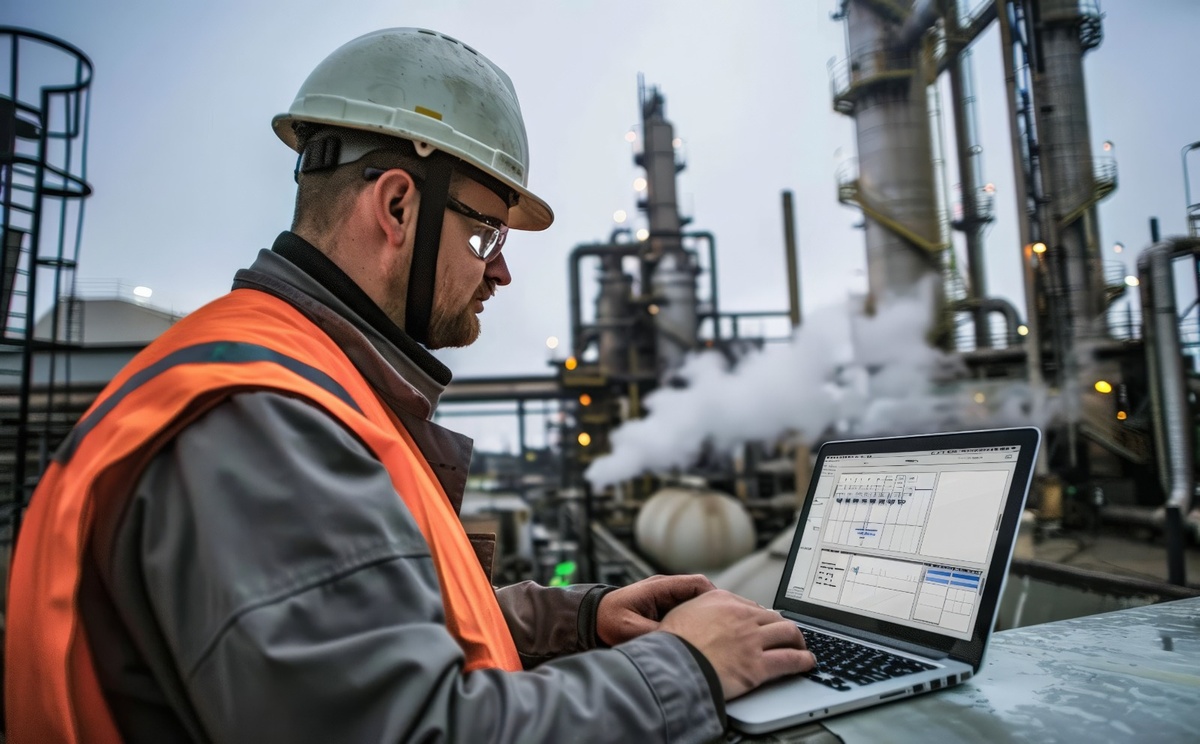
Technology, Data, and Logistics Drive Competitiveness in the Oil and Gas Sector in 2026 with Operational Efficiency, Digitalization, and Smart Management
-
GoodWe Launches SEMS+ and Solidifies Digital Energy Management with Intelligent Monitoring, Artificial Intelligence, and Data Analysis in the Brazilian Electric Sector

-
Nomus Start Industrial Expands Access to Industrial ERP for Companies under Simples Nacional with Free Implementation, Low Operating Costs, and Video Training
-
ValeCard Restructures Management, Invests Over R$ 50 Million in Technology and AI, and Grows 49% in 2025 Despite Changes in PAT and Regulatory Pressure in the Benefits and Fleet Market


Now, in 2026, according to sector analyses, digitalization and intelligent management have ceased to be competitive differentials.
Consequently, companies that do not integrate factory and management tend to lose market share in the national and international markets.
Current Moment and Structural Challenges
Currently, the main challenge involves, above all, data-driven decision-making.
According to the PINTEC Semester 2024 report released by IBGE, 89% of industries used advanced digital technology during the period.
However, despite this advancement, a large portion of these tools remains underutilized.
Additionally, the sector faces internal and external taxations that restrict investments and raise operational costs.
As a result, financial predictability has decreased.
At the same time, the lack of standardization among systems hampers workflows.
Consequently, older factories still operate with limited connectivity infrastructure, which compromises IoT and mobility projects.
Factory Floor Digitalization and Tangible Gains
In light of this scenario, factory floor digitalization has become a strategic priority.
Primarily, the Internet of Things (IoT) has started to monitor assets and detect failures early.
Moreover, when combined with Artificial Intelligence (AI), IoT reduces unexpected downtime.
Consequently, productivity has increased and unplanned costs have been reduced.
At the same time, technologies such as RPA, digital twins, and process automation have started to integrate industrial flows.
Thus, the trends for 2026 are:
- IoT-Based Prescriptive Maintenance
- Integrated All-in-One Solutions
- Investments with Quick ROI
- Connected Maintenance Chains
Additionally, companies that began digital implementation have reported:
- Early Fault Detection
- Increased Operational Transparency
- Extended Asset Lifespan
- More Accurate Indicators
Industrial Maintenance: From Preventive to Prescriptive
Historically, scheduled preventive maintenance predominated in Brazil.
However, since 2024, the transition to Condition-Based Maintenance (CBM) has begun.
Now, in 2026, it is evolving to Integrated 4.0 Asset Management, connected to CMMS and EAM systems.
In this model, manual routines are gradually replaced by continuous telemetry.
Furthermore, technologies such as plug & play predictive IoT and anomaly algorithms enhance efficiency.
Consequently, predictive maintenance is advancing to automated prescriptive maintenance.
In this format, the system:
- Detects faults
- Crosses historical data
- Automatically opens service orders
- Checks inventory
- Manages demand in real time
Thus, maintenance is no longer just reactive.
Therefore, it begins to act as an integrated manager, connecting operations, quality, sustainability, and supply chain.
In addition to machine availability, energy cost reduction and resource optimization are now required.
Future Outlook and Professional Qualification
Finally, the professional profile is also evolving.
Now, the industrial technician needs to present a hybrid profile.
That is, they must master their specialty while simultaneously understanding systems and data analysis.
Consequently, companies that invest in continuous training and digital culture tend to gain competitive advantage.
In summary, industrial competitiveness in 2026 directly depends on the integration of people, processes, and technology.
Therefore, simple, quick, and integrated solutions are prioritized.
However, digital transformation will only be effective when it reaches all organizational levels.
Companies that turn technology into culture will establish consistent growth in the coming years.










Seja o primeiro a reagir!