





 Português
  Inglês
  Espanhol
 5 min de leitura
  1 comentário


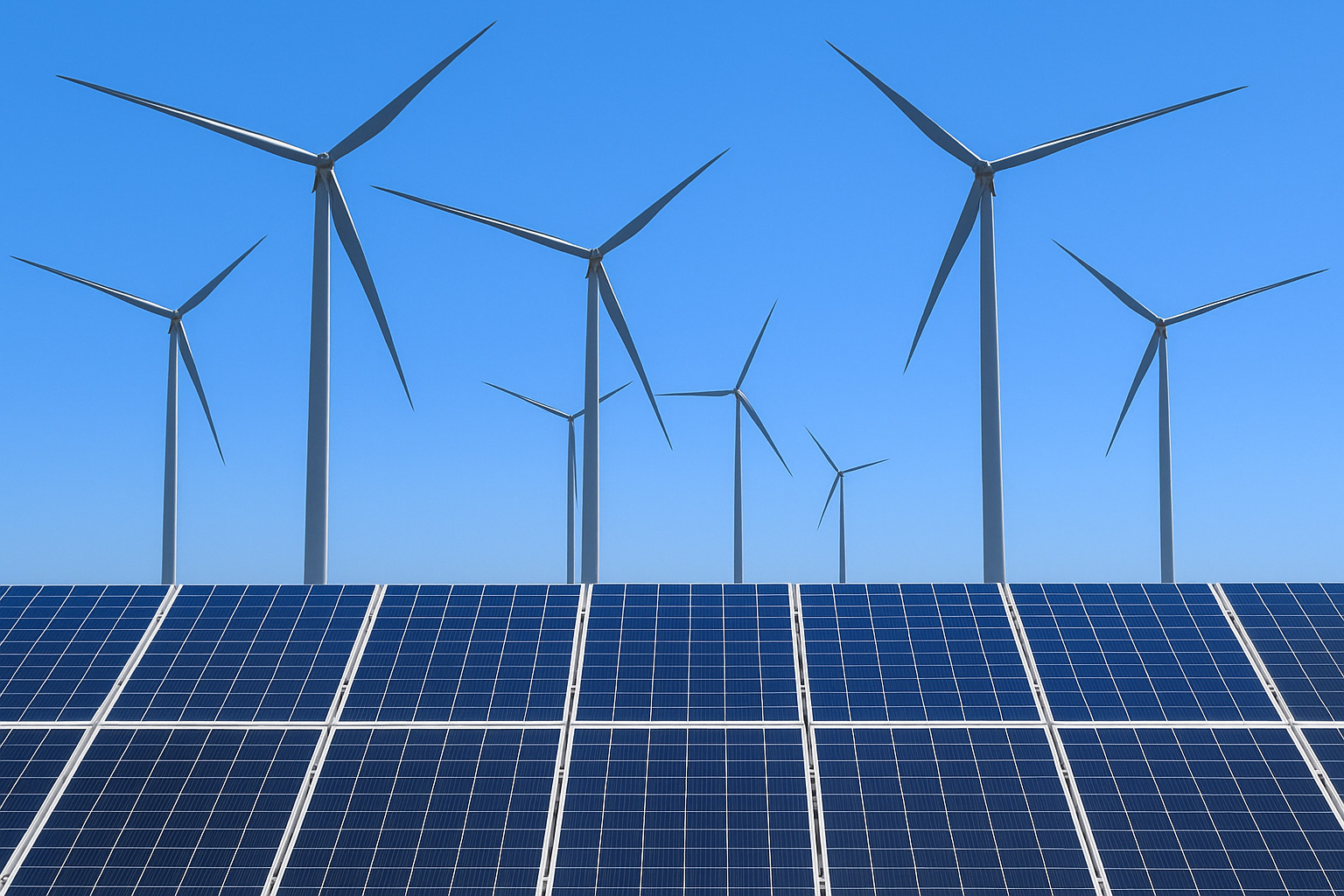

Discover How the Energy Transition and the Amazon Can Transform Brazil into a Global Reference in Sustainability and Environmental Protection.
Currently, the discussion about energy transition has become increasingly central in the global debate about sustainability and environmental protection.
In this context, Brazil, with its vast natural wealth and ecological diversity, assumes a strategic role.
Recently, Congresswoman Célia Xakriabá (PSOL) highlighted that policies must integrate economic development with Amazon preservation, emphasizing that the country can lead a global change that unites innovation, social justice, and environmental care.
-
Renewable energy advances over protected areas in Brazil, and a survey by the Energy Transition Observatory reveals silent impacts that challenge environmental conservation and pressure sensitive traditional territories.

-
Rio Grande do Sul accelerates energy transition: State invests in renewable technologies and consolidates decarbonization strategies and pathways to attract billions in new industrial investments.

-
With 160,000 m² of collectors, an area larger than 20 football fields, Silkeborg, in Denmark, hosts a solar thermal plant that heats 19,500 homes and could become the largest solar heating plant in the world.

-
A study reveals the expansion of renewable energy procurement in Brazil and shows how companies are taking advantage of opportunities to reduce expenses, ensure energy efficiency, and strengthen strategic environmental commitments.


The Strategic Role of Brazil in the Energy Transition
Historically, Brazil depended on fossil energy sources, such as oil and natural gas, to sustain its economic growth.
However, the country also has great potential in renewable sources, including hydropower, solar, wind, and biomass.
Therefore, this duality places Brazil in a unique position: while facing pressures to explore fossil resources, it can also lead the global energy transition.
Thus, experts assert that the change involves not only technology but also political and cultural decisions, requiring planning, investment, and social engagement.
Moreover, the Amazon, the largest tropical rainforest in the world, plays a central role in this debate.
It regulates the global climate and houses unique biodiversity, while sustaining traditional communities with ancestral knowledge.
Therefore, the protection of this biome is directly connected to the strategies for energy transition, as deforestation and predatory exploration increase greenhouse gas emissions.
In this way, policies that encourage clean energy and sustainable management can generate jobs, promote social inclusion, and protect the environment at the same time.
Furthermore, the Amazon has s symbolic and strategic value in international politics.
Thus, countries and organizations closely monitor how Brazil cares for its greatest environmental heritage, recognizing that the protection of the forest influences the global climate balance.
Hence, the Brazilian energy transition can become a model of social and environmental responsibility, demonstrating that it is possible to unite economic growth and sustainability.
Sustainable Energy and Social Justice
At recent events, such as the press conference organized by the network Parliamentarians for a Fossil Fuel-Free Future, Célia Xakriabá emphasized that the energy change needs to be humanitarian, ecological, and political.
More than just replacing fossil fuels with clean alternatives, the energy transition must consider social and cultural impacts.
Therefore, it is essential that local communities and indigenous peoples participate in the decisions that affect their lives and territories.
In this way, sustainable energy also promotes social justice.
Additionally, Brazil has gone through different phases of exploration of its natural resources.
From the extraction of brazilwood and gold in the colonial period to the expansion of coffee production and the oil industry in the 20th century, the country learned that economic growth often occurred at the expense of the environment.
Thus, today the challenge is to build a development model that integrates the Amazon as a strategic partner in the green economy, rather than treating it merely as a resource to be exploited.
Therefore, this new paradigm requires consistent public policies, scientific research, and support for technological innovation.
Furthermore, the relevance of the Amazon in the energy agenda is also reflected in its global climate function.
The forest acts as a huge carbon reservoir, helping to reduce the impacts of climate change.
At the same time, Amazonian rivers present great hydroelectric potential; however, the construction of dams needs to follow careful planning to avoid social and environmental impacts.
Thus, the energy transition must balance energy generation, biodiversity preservation, and rights of local populations.
Renewable Energies as an Alternative
In recent years, initiatives for renewable energy in Brazil have gained momentum.
Consequently, solar and wind energy projects are expanding in various regions, offering alternatives to the intensive use of fossil fuels.
Moreover, Congresswoman Célia Xakriabá reminds that this movement should align with the protection of the Amazon, avoiding policies that encourage deforestation or predatory exploration.
Thus, the energy transition is not merely technical but also an opportunity to consolidate a model of sustainable development that respects the environment and promotes social equity.
Additionally, the energy transition generates significant economic and geopolitical impacts.
Brazil can become a hub for clean energy innovation, attracting investment and fostering globally exportable technologies.
In this scenario, preserving the Amazon represents not only environmental protection but also a strategic asset, capable of ensuring competitiveness and leadership in emerging sectors of the green economy.
Moreover, the involvement of the private sector and non-governmental organizations plays an essential role.
Initiatives that combine social responsibility, scientific research, and investment in clean technologies strengthen the energy transition and the Amazon, creating solutions that benefit the environment and the local population.
Consequently, partnerships between governments, universities, and companies accelerate the adoption of sustainable practices, ensuring that the Amazon remains protected while the country grows economically.
Finally, the integration of the Amazon into the energy debate still depends on the recognition of the indigenous rights and the traditional communities.
Many of these peoples have ancestral knowledge about sustainable management of natural resources, agroforestry techniques, and biodiversity conservation.
Therefore, by including these perspectives, the energy transition becomes more just and efficient, promoting development that respects local history and culture.
If policies ignore these actors, they reproduce historic inequalities and deepen social conflicts.
Public Policies and a Sustainable Future
The strengthening of the energy transition in Brazil requires legislative initiatives that encourage innovation, research, and financing for sustainable projects.
This includes regulation of renewable energies and protection of strategic forest areas.
Therefore, the participation of the Congress ensures that the Amazon is treated as a priority and that the country advances coherently in emission reductions and in adopting clean energy models.
Historically, Brazil has shown capacity for adaptation to changes in the energy sector.
Thus, the creation of the National Biodiesel Program, the advancement of sustainable hydropower plants, and the growth of the solar and wind sectors prove that the country has the resources and expertise to lead the energy transition and the Amazon.
Still, the challenge is to align these advances with the preservation of the Amazon, ensuring that public policies and investments not only promote clean energy but also consolidate the forest as an environmental, cultural, and strategic heritage.
Thus, the energy transition and the protection of the Amazon go hand in hand.
In this way, Brazil has the opportunity to show the world that it is possible to reconcile economic development with environmental preservation and social justice.
As Congresswoman Célia Xakriabá emphasized, it is time to adopt humane, ecological, and political policies, promoting a sustainable future for the country and the planet.
Therefore, the path of clean energy goes through the Amazon, and the success of this journey depends on valuing local knowledge, social engagement, and a strategic vision that recognizes the forest as a central piece in building a more sustainable world.











I must say this article is extremely well written, insightful, and packed with valuable knowledge that shows the author’s deep expertise on the subject, and I truly appreciate the time and effort that has gone into creating such high-quality content because it is not only helpful but also inspiring for readers like me who are always looking for trustworthy resources online. Keep up the good work and write more. i am a follower.