





 Portuguese
  English
  Spanish
  5 min of reading
  0 comments


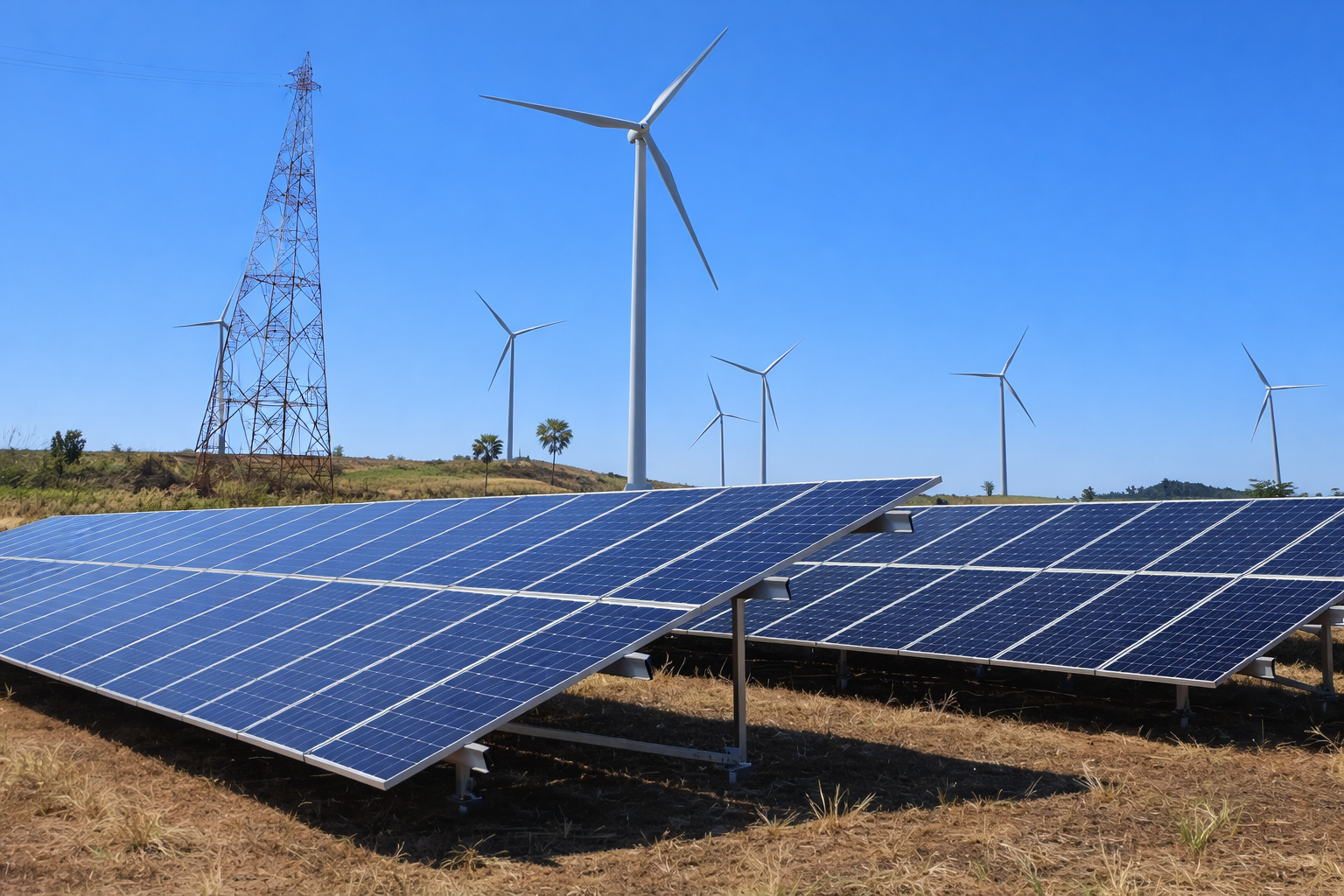
Energy Transition Enters Risk Zone and Pressures Governments and Companies Before 2030
The energy transition enters a risk zone before 2030 and calls into question climate targets, decarbonization timelines, and commitments made by governments and companies. Additionally, bottlenecks in financing, infrastructure, and supply chains threaten the pace necessary to curb the increase in global emissions.
In this context, experts warn that the world needs to accelerate investments in renewable energy, electrical grids, storage, and energy efficiency. Therefore, the debate about energy security and carbon neutrality becomes urgent.
At the same time, geopolitical conflicts, volatility in oil prices, and fiscal restrictions hinder strategic decisions. Thus, the pre-2030 scenario combines environmental pressure with economic challenges.
-
The Brazilian state accelerates industrial competitiveness with a focus on the extraction of strategic minerals to boost the energy transition in Goiás.
-
A Canadian retiree creates a hydroelectric system on a real river, generating energy continuously throughout the day and demonstrating how the power of water can supply a house with stability even in a simple structure.

-
Petrobras reaffirms its commitment to the market and ensures that it will carry out the energy transition safely to maintain national sovereignty.

-
Researchers discover a possible hydrogen deposit of up to 46 million tons beneath an ancient coal basin, and the volume could exceed half of the entire global production.


Energy Transition Enters Risk Zone: Climate Targets Require Immediate Acceleration
The international community has established ambitious targets to reduce emissions by 2030. However, the energy transition enters a risk zone when countries maintain a high dependence on fossil fuels.
Moreover, the expansion of renewable sources is still occurring at an uneven pace across regions. Therefore, experts advocate for more consistent and predictable public policies.
In this scenario, delays in energy auctions, regulatory difficulties, and legal uncertainties push investments away. Consequently, strategic projects become stalled.
Simultaneously, extreme weather events reinforce the need to reduce emissions quickly. Thus, governments face social and economic pressure to act more efficiently.
Investments Do Not Keep Up with the Necessary Speed
The energy transition requires billions of dollars in infrastructure, technology, and modernization of electrical grids. However, some countries face budgetary limitations.
Furthermore, banks and investment funds are adopting stricter criteria to finance large-scale projects. Therefore, some ventures struggle to get off the ground.
In this context, the energy transition enters a risk zone when the flow of capital does not keep up with established targets. Thus, the gap between planning and execution widens.
At the same time, the cost of technologies such as batteries, green hydrogen, and carbon capture still challenges emerging markets. Consequently, implementation relies on incentives and structured policies.
Supply Chains Face Global Bottlenecks
The expansion of solar and wind energy relies on specific equipment such as photovoltaic panels, turbines, and storage systems.
Additionally, the production of these components involves strategic minerals such as lithium, nickel, and rare earths. Therefore, the concentration of supply in a few countries creates vulnerability.
In this scenario, trade disputes and logistical restrictions impact deadlines and costs. Thus, projects face delays and budget revisions.
At the same time, the industry seeks to diversify suppliers and strengthen regional supply chains. Consequently, it aims to reduce structural risks.
Energy Security Returns to the Center of Debate
The energy crisis recorded in different regions of the world has reinforced the importance of supply security.
In this context, many countries have increased their use of fossil sources in the short term to ensure stability. Therefore, the energy transition enters a risk zone when emergency decisions prioritize traditional fuels.
At the same time, experts argue that renewable energies offer greater long-term predictability. Thus, diversifying the energy matrix reduces exposure to international shocks.
Moreover, hybrid systems, with integration between solar, wind, and hydropower, increase resilience. In this way, the electric sector gains operational flexibility.
Emerging Countries Face Additional Challenges
Developing economies need to balance economic growth with environmental targets.
Furthermore, these countries require affordable energy to sustain industrialization and job creation. Therefore, energy decisions directly impact competitiveness.
In this scenario, the energy transition enters a risk zone when climate policies do not consider structural inequalities.
At the same time, international climate financing mechanisms seek to support sustainable projects. Thus, global cooperation becomes a key piece.
The Role of Brazil in the Pre-2030 Scenario
Brazil has a predominantly renewable electricity matrix, with a strong presence of hydropower, wind, and solar energy.
Moreover, the country leads in biofuels production and invests in green hydrogen. Therefore, it occupies a strategic position in the international climate agenda.
However, experts warn that Brazil also needs to increase investments in transmission, storage, and network modernization.
In this context, the energy transition enters a risk zone if there is regulatory instability or a reduction in incentives.
At the same time, energy auctions and new renewable projects demonstrate potential for continuous growth. Thus, the country can strengthen its global role.
Industry and Private Sector Intensify Commitments
Large companies adopt carbon neutrality targets and increase their use of clean energy.
Additionally, supply chains require sustainable standards to maintain international competitiveness. Thus, decarbonization becomes a strategic differential.
In this scenario, companies invest in self-generation of solar energy and renewable energy purchase agreements.
At the same time, the financial sector integrates ESG criteria into credit and investment decisions. Thus, sustainability directly influences the market.
Technology Can Reduce Risks
Technological innovation plays a decisive role in accelerating the transition.
More efficient batteries, smart grids, and storage solutions enhance the stability of the electrical system.
Furthermore, green hydrogen emerges as a promising alternative for hard-to-decarbonize sectors such as steelmaking and heavy transportation.
In this context, the energy transition enters a risk zone if technological development does not advance at the necessary speed.
On the other hand, partnerships between universities, companies, and governments can accelerate solutions.
Social and Environmental Pressure Grows
Extreme weather events impact agriculture, infrastructure, and water supply.
Moreover, society demands concrete actions to reduce emissions and mitigate environmental impacts. Therefore, governments face increasing pressure to implement effective policies.
At the same time, consumers value companies committed to sustainability. Thus, market behavior influences strategic decisions.
Experts project continuous growth of renewable energy but warn of the need for global coordination.
Additionally, international agreements may define new commitments and intermediate targets. In this scenario, the energy transition enters a risk zone when there is misalignment between political discourse and practical execution.
At the same time, technological advances and cost reductions may accelerate structural changes. Thus, the pre-2030 period will be decisive in consolidating or compromising global climate targets.
The energy transition enters a risk zone before 2030 due to financial, technological, and geopolitical challenges.
Furthermore, delays in investments and production bottlenecks pressure climate targets. Therefore, governments, companies, and financial institutions need to act in a coordinated manner. At the same time, innovation and international cooperation can reduce uncertainties and accelerate results.
Thus, the world will determine in the coming years whether it can move towards a cleaner, safer, and more sustainable energy matrix.











Seja o primeiro a reagir!