





 Portuguese
  English
  Spanish
  5 min of reading
  0 comments


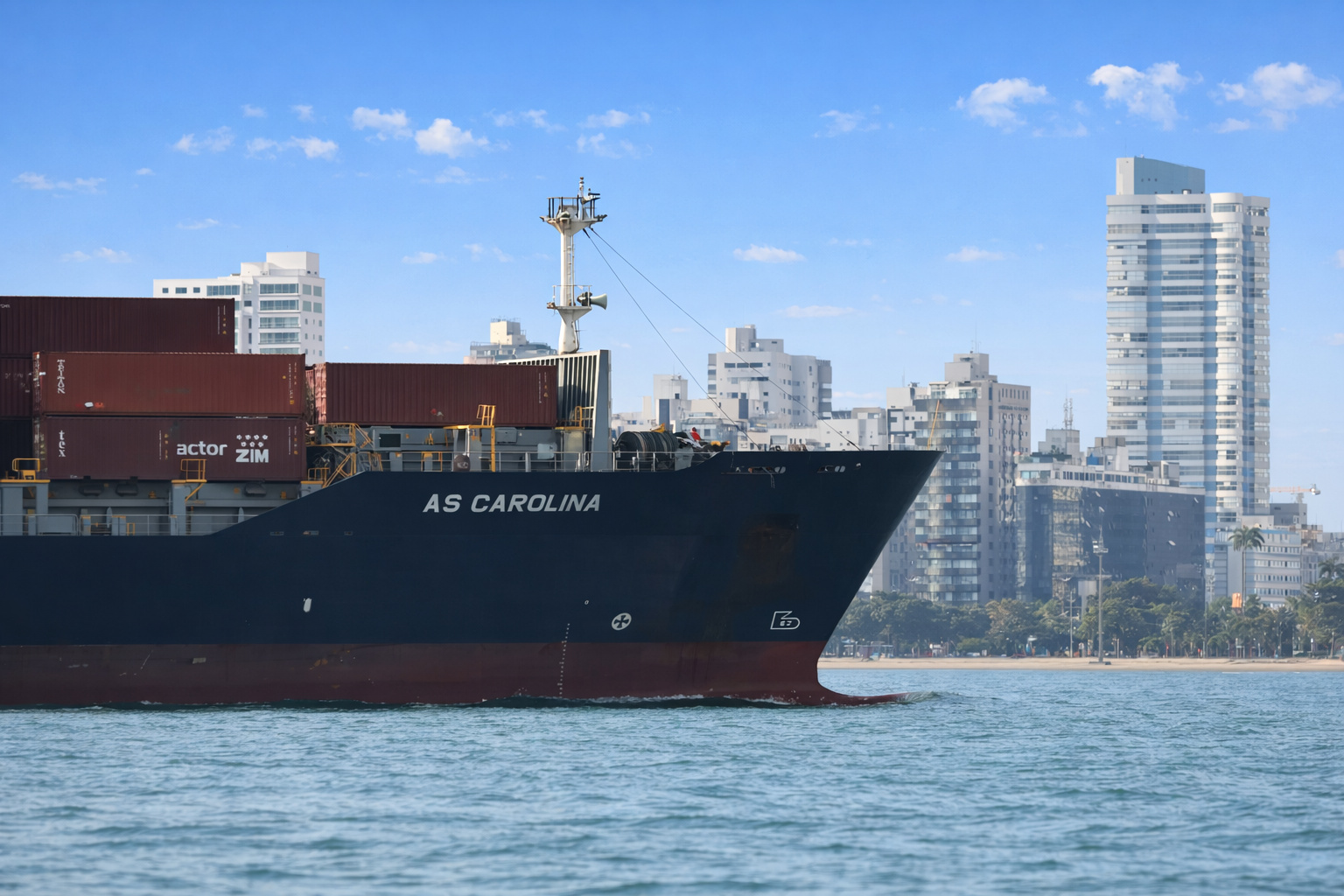
Waterway Transport Gains Strength In The Brazilian Energy Transition By Reducing Emissions, Cutting Logistical Costs And Increasing The Competitiveness Of Ports And Exports In The Country.
Waterway transport stands out as one of the main axes of the energy transition in Brazil, according to a recent study released by experts in the port and logistics sector. The research indicates that navigation on rivers and along the Brazilian coast can reduce carbon emissions, decrease operational costs and enhance efficiency in the flow of strategic cargo.
The survey highlights that Brazil has one of the largest navigable coastlines in the world and a waterway network with high potential that is still underexplored. At the same time, the country seeks alternatives to reduce dependence on road transport, which handles a large part of cargo movement and has a higher intensity of emissions.
Next, understand how waterway transport has gained momentum on the energy agenda, which sectors can benefit, and what economic impacts this change may generate in the coming years.
-
The government requests the Federal Revenue Service for a new system to automate the income tax declaration, reducing errors, time, and bureaucracy for millions of Brazilians.

-
Pix in installments, international Pix, and contactless payment without internet: the Central Bank revealed the new features coming to the tool that is already used by almost every adult in Brazil.

-
Mercado Livre has just started selling medications with delivery in up to three hours to your door, and this move could completely change the way Brazilians buy medicines on a daily basis.

-
In Dubai, rising tensions from the war in the Middle East are causing super-rich individuals to leave the Gulf and direct their fortunes to a new financial refuge in Asia.


Study Reinforces Strategic Role Of Navigation
The debate on decarbonization of the transport sector has advanced in recent years. First, experts warned of the weight of emissions from road transport. Then, governments and companies began to seek more efficient alternatives.
In this context, waterway transport entered the agenda as a viable solution. According to an analysis released by the port sector, navigation exhibits lower fuel consumption per ton transported compared to road transport.
Experts explain that vessels transport large volumes of cargo with lower relative energy expenditure. Furthermore, new technologies, such as alternative fuels and more efficient engines, enhance the potential for emission reductions.
Industry representatives claim that the integration of ports, waterways and cabotage can strengthen national logistics. Coastal navigation, for instance, allows cargo to be transported between states without overloading highways.
Brazil Has Competitive Geographical Advantage
Brazil has favorable natural conditions for waterway transport. The country has an extensive coastal area and important river basins, such as the Amazon and Paraná.
Additionally, strategic ports distribute cargo to different regions. The Port of Santos, managed by the Port Authority of Santos, leads national cargo movement and is already discussing projects related to logistical decarbonization.
Experts point out that the expansion of cabotage can reduce logistical costs and increase the competitiveness of Brazilian exports. Products such as grains, ores, and fuels can take maritime routes with a lower environmental impact.
However, the study emphasizes that the country still needs to invest in waterway infrastructure, port modernization, and multimodal integration.
Energy Transition Demands Changes In Transport
The Brazilian energy transition involves not only the generation of clean energy but also the transformation of cargo transport. The logistics sector accounts for a significant share of national emissions.
Therefore, companies are seeking more sustainable alternatives. Waterway transport emerges as a strategic option, as it combines scale, efficiency, and lower carbon intensity.
Moreover, international initiatives pressure supply chains to reduce their environmental footprint. European markets, for instance, require proof of sustainable practices in exports.
In this scenario, green logistics becomes a competitive differential.
Cabotage Gains Prominence In New Strategy
Cabotage, which consists of maritime transport between ports in the same country, has increased in relevance in recent years. Companies are investing in coastal routes to reduce dependence on long-distance road transport.
Logistics experts assert that cabotage can lower operational costs, reduce congestion, and improve delivery predictability.
Additionally, public policies encourage the strengthening of this mode of transport. The goal is to increase the participation of coastal navigation in the Brazilian transport matrix.
The integration between trucks and ships also presents itself as a hybrid solution. Cargo travels shorter distances by road to the port and continues by sea, reducing total emissions.


Waterways Expand Production Outflow
Waterways are also gaining importance in the energy transition strategy. Grain and mineral-producing regions utilize rivers to transport large volumes at lower costs.
Experts highlight that waterway transport consumes less fuel per ton transported. This factor reduces emissions and improves energy efficiency.
However, the sector faces structural challenges. Investments in dredging, signaling, and terminal modernization are essential to enhance competitiveness.
The study indicates that, with proper planning, waterway transport can consolidate as a sustainable logistical axis in the country.
Ports Invest In Decarbonization
Brazilian ports are also making progress on the environmental agenda. Port authorities discuss the electrification of equipment, the use of renewable energy, and the promotion of alternative fuels.
The Port of Santos, for example, is evaluating projects aimed at reducing emissions in operations. The goal includes infrastructure modernization and promoting energy efficiency.
Furthermore, private companies are investing in ships with more efficient engines and the possibility of using less polluting fuels.
This combination strengthens the role of waterway transport in the national sustainability strategy.
Economic Impacts And Job Creation
The expansion of waterway transport can generate direct and indirect jobs. Investments in port infrastructure require engineers, technicians, and logistics professionals.
Additionally, supply chains associated with shipbuilding and vessel maintenance may grow.
Economists point out that improving logistics reduces export costs and enhances international competitiveness. Brazilian products can reach foreign markets with a lower environmental impact.
This differential becomes strategic in an increasingly global environment attentive to carbon emissions.
Challenges For Consolidation Of The Model
Despite the potential, experts point out obstacles. Brazil needs to enhance the integration between modes, modernize waterways, and reduce bureaucracy.
Investments require long-term planning. Partnerships between the public and private sectors are crucial.
The study indicates that the energy transition in transport depends on coordination between government, companies, and port authorities.
Without efficient logistical integration, the potential of waterway transport may remain underutilized.
Experts project a gradual growth in the participation of waterway transport in the Brazilian logistical matrix. The pressure for decarbonization and cost reduction tends to accelerate investments.
Additionally, technological advancements should enhance vessel efficiency and further reduce emissions.
Brazil has strategic natural conditions to consolidate this model. With proper planning and infrastructure modernization, waterway transport can become a central piece of the national energy transition.
The combination of sustainability, efficiency, and competitiveness places navigation at the center of the debate on the future of logistics in the country.








-

-

2 pessoas reagiram a isso.