





 English
  Francês
  Alemão
  Italiano
  Japonês
  Norueguês
  Portuguese
  Spanish
  3 min of reading


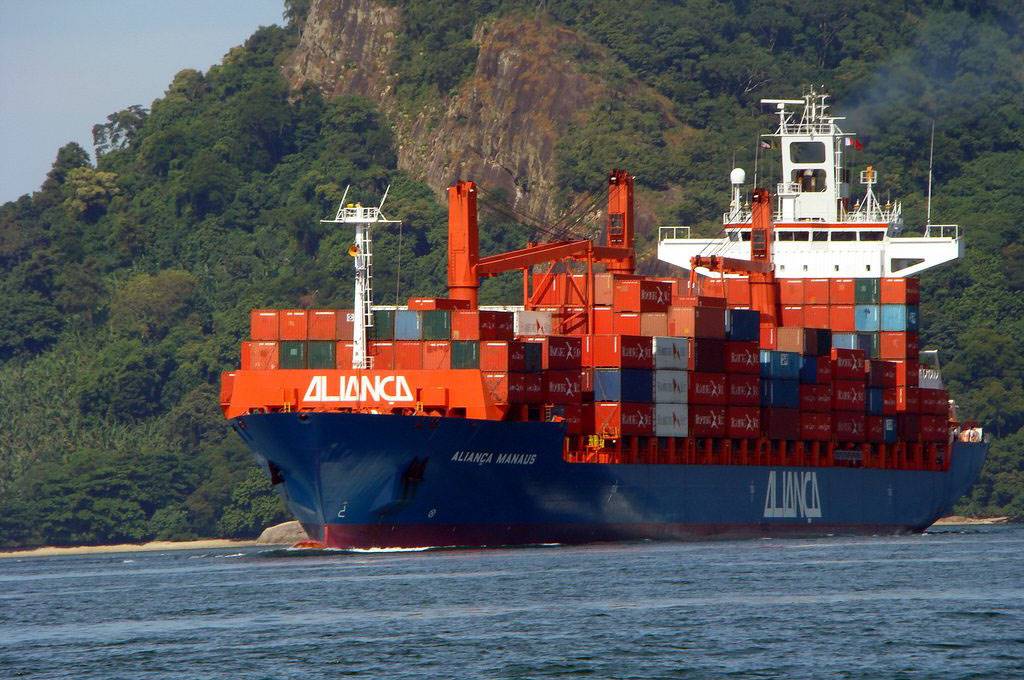
Cabotage, According to a Study by the Ilos Institute, Has the Potential to Grow Fivefold If It Absorbs Freight Transported by Highways Across the Country
The Ilos Institute, a reference in Brazil for planning, structuring, and implementing logistics and Supply Chain activities, released a study indicating that the cabotage market (shipping between ports of the same country) could multiply the volume of transported goods fivefold if it absorbed the volumes transported by road.
According to the study, about 22 million tons of goods transported by highways could be delivered by ships, boosting a very out-of-fashion modal here, cabotage.
If cabotage were to absorb the cargo currently transported by highways, it would be responsible for 44.2 million tons a year.
-
Government unlocks R$ 554 million for a highway that has been requested for decades and accelerates the duplication of BR.
-
Without bricks, without cement, and without endless construction: the cardboard house that is assembled in modules and can be moved.

-
Billions of barrels on the equatorial margin could lead Amapá to double its oil production in Brazil — the state aims to enter the route of companies in the Campos Basin, attract investments, and boost jobs and businesses in the oil and gas sector.

-
Without bricks, without cement, and without endless construction: the cardboard house that is assembled in modules and can be moved.

The Institute concludes the study by stating that a structured agenda is also necessary for the sector to grow. Currently, our transportation modal matrix is quite unbalanced, with more than half of the cargo exchanged between states being transported by highways, as shown below:
- 61% of cargo travels via road transport;
- 22% of cargo operates through railways;
- 11% of cargo is delivered using cabotage.
How It Is in Developed Countries
In Japan, for example, the freight transportation matrix is much more balanced; the road modal also accounts for a large share, with 50%, but cabotage plays a prominent role and is very close behind, delivering 44% of the volume to recipients.
The executive partner of the Ilos Institute, Maria Fernanda Hijja, responsible for the study, explained how the research was conducted, “To find the potential of cabotage, we identified the volume of cargo that was on highways, moved over 1,500 kilometers, that were near the coast. This is what has the potential to be taken out”.
The director also explained that a market survey was conducted with representatives of freight companies. “Then, we found that 21% of large Brazilian industries, those that handle the largest volume of cargo, intend to switch modes, moving from road transport to cabotage. We confirmed that there is cargo and that companies want to switch.”
Most Used Ports
The Port of Santos is the most utilized for cabotage operations in the country, representing a total of 21.6% of the cargo. In second place is the Suape port (PE) with 14.3%, and in third, the Manaus port (AM) with 13.5% of the goods.
In addition, the Pecém port (CE) concentrates 11.6% of the goods, and the most used routes involve the Port of Santos and Manaus.
The director of the institute concluded by stating that cabotage only has one disadvantage compared to other modes, but has many other significant advantages.
“Cabotage has a lower cost for a number of routes, emits fewer greenhouse gases, and for some companies, this is a deciding factor. There is less risk of cargo theft, but there is also the disadvantage of being slower than road transport.”
See Also! Brazil Will Invest R$ 1.5 Trillion in Oil and Gas by 2027








Seja o primeiro a reagir!