





 Português
  Inglês
  Espanhol
  4 min de leitura


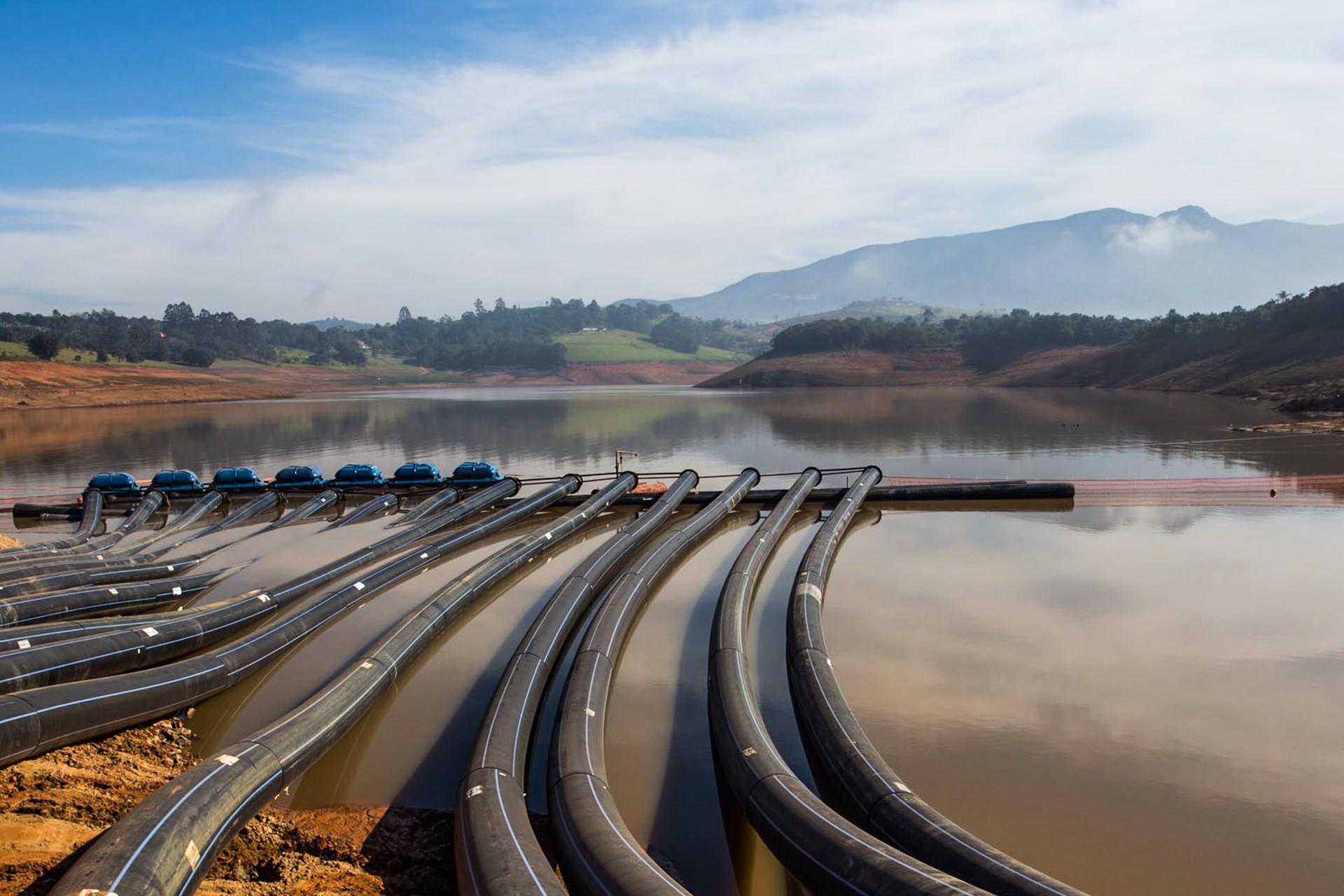
Water Treatment in São Paulo Is a Process That Happens from the Source Until It Reaches the Taps in Your Home. Check Out How It Works.
Would you be able to say what the importance of water treatment is for such a populous city like São Paulo? And about the impact on the environment in this city, could you explain?
Certainly, when we turn on a tap, we hardly imagine where that clean water comes from, or what sanitation processes it has gone through.
And even less so, what is the positive impact that treated water produces for society and the environment.
-
A bright yellow mushroom imported from Asia escaped from a cultivation farm in the United States in 2010 and is now aggressively spreading across 25 states, destroying entire communities of native fungi in American forests.

-
Buried under China, a colossal machine weighing 20,000 tons began operating as the largest neutrino detector on the planet and, in just 59 days, surpassed results that science took half a century to achieve.

-
Iran enters the center of a climate alert after the war emitted 5.6 million tons of CO2 in two weeks, surpassing the annual pollution of entire countries.

-
Lunar exploration may change after a Chinese probe finds a “cavity” of radiation that reduces the impact on astronauts by up to 20% at certain times on the Moon.


If you haven’t stopped to think about this issue yet, then keep reading this article and check out:
- What Are the Consequences of Water Pollution for the Environment?
- The Five Water Sources That Supply the City of São Paulo;
- What Are the Positive Impacts of Water Treatment for the City?
Now, continue reading to learn about the entire process behind that useful water you use daily.
Where Does the Water That Supplies the Metropolitan Region of São Paulo Come From?
Before discussing the topic, let us introduce you to the main water sources that supply the capital of São Paulo.
To start, let’s learn about two supply systems, which are: Cantareira and Alto Cotia.
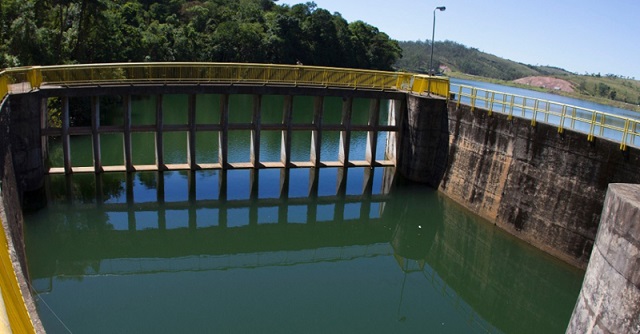
The first stores nearly 1 trillion liters of water through the reservoirs located in the regions of Piracicaba, Jundiaí, and Capivari. They are:
- Jaguari;
- Jacareí;
- Cachoeira and Atibainha.
And part of the second system: the Pedro Beicht and Cachoeira da Graça reservoirs, which store approximately 17 million liters of water. In addition to these, there are the reservoirs of Baixo Cotia, Guarapiranga, Rio Claro, and Alto Tietê.
Even with all these water reservoirs, it is necessary to raise awareness among the population and control its use from time to time.
This occurs due to the lack of rain in the region, the waste of water resources by industries and the population, as well as the pollution of rivers and lakes that makes the water unfit for consumption.
In this context, treating and reusing water is essential for environmental preservation.
What Are the Consequences of Water Pollution for the Environment?
It is worth noting that the problem of water pollution is quite old; thousands of people have already been contaminated by microorganisms and bacteria. Indeed, many others have died due to this contamination.
It is also important to remember that polluted waters harm life in rivers and seas. That is, all fauna and flora are compromised. In other words, pollution is a poison that gradually destroys the planet.
Who Is Responsible for Water Treatment in São Paulo?
Due to the populated and industrialized nature of São Paulo, there is a substantial investment in water treatment to meet the population’s demand.
As a result, there are at least two steps to reverse water pollution. The first, without a doubt, is to raise public awareness.
The second is to apply water recovery techniques, thus increasing the positive impacts of this action on the environment.
The company responsible for this work is the Basic Sanitation Company of the State of São Paulo – Sabesp.
What Are the Steps in Water Treatment?
The main objective of treating water is to make it safe for consumption, meaning free from contamination to prevent disease transmission.

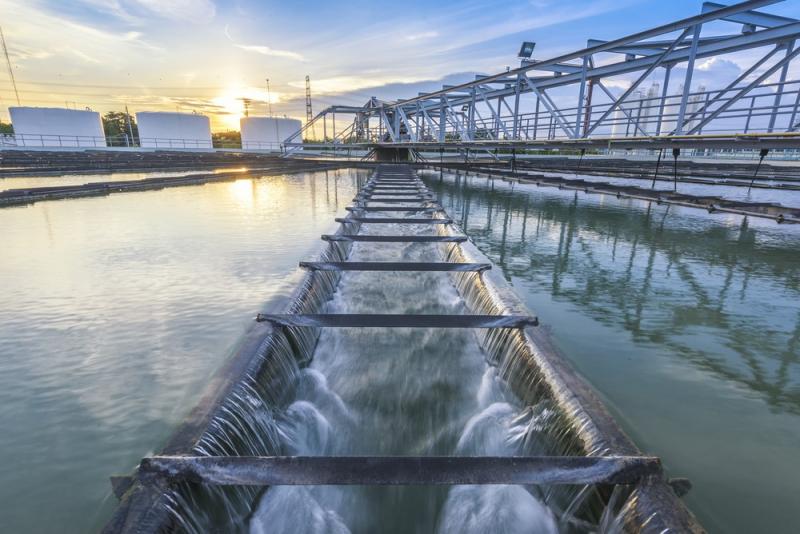
The location to carry out this process is called Water Treatment Stations – ETA. For this, after capturing the water in the reservoir, it goes through several sanitation stages before being distributed for consumption. Check it out!
1. Coagulation
In this first phase, the goal is to allow solid particles to remain suspended in the water. To achieve this, aluminum sulfate is added.
2. Flocculation and Clarification
In addition to the above steps, the ETA filters through layers of anthracite, sand, and gravel. The objective, therefore, is to eliminate small impurities.
3. Filtration
In addition to the above steps, the ETA filters through layers of anthracite, sand, and gravel. The objective, therefore, is to eliminate small impurities.
4. Disinfection
Before the final stage, chlorine, sodium hypochlorite, or others are applied to eliminate microorganisms that cause diseases.
5. Fluoridation and Distribution for Consumption
And to finalize, the water receives fluoride to prevent cavities in the population. After everything is ready, the distribution process for consumption begins.
In this way, all the steps of water treatment come to an end. And after this process, it will follow a complex path through a system of reservoirs and pipelines, as it is ready for use.
As you can see, this treatment system directly impacts nature and people’s lives.
Did you like learning how this process works? I hope that after this information, you are more secure about living in this great metropolis.







Seja o primeiro a reagir!