





 Portuguese
  English
  Spanish
  3 min of reading
  0 comments


Researchers Transform Fish Skin Into Biotech Tissue Capable of Accelerating Visual Recovery of Animals With Ulcers and Deep Damage
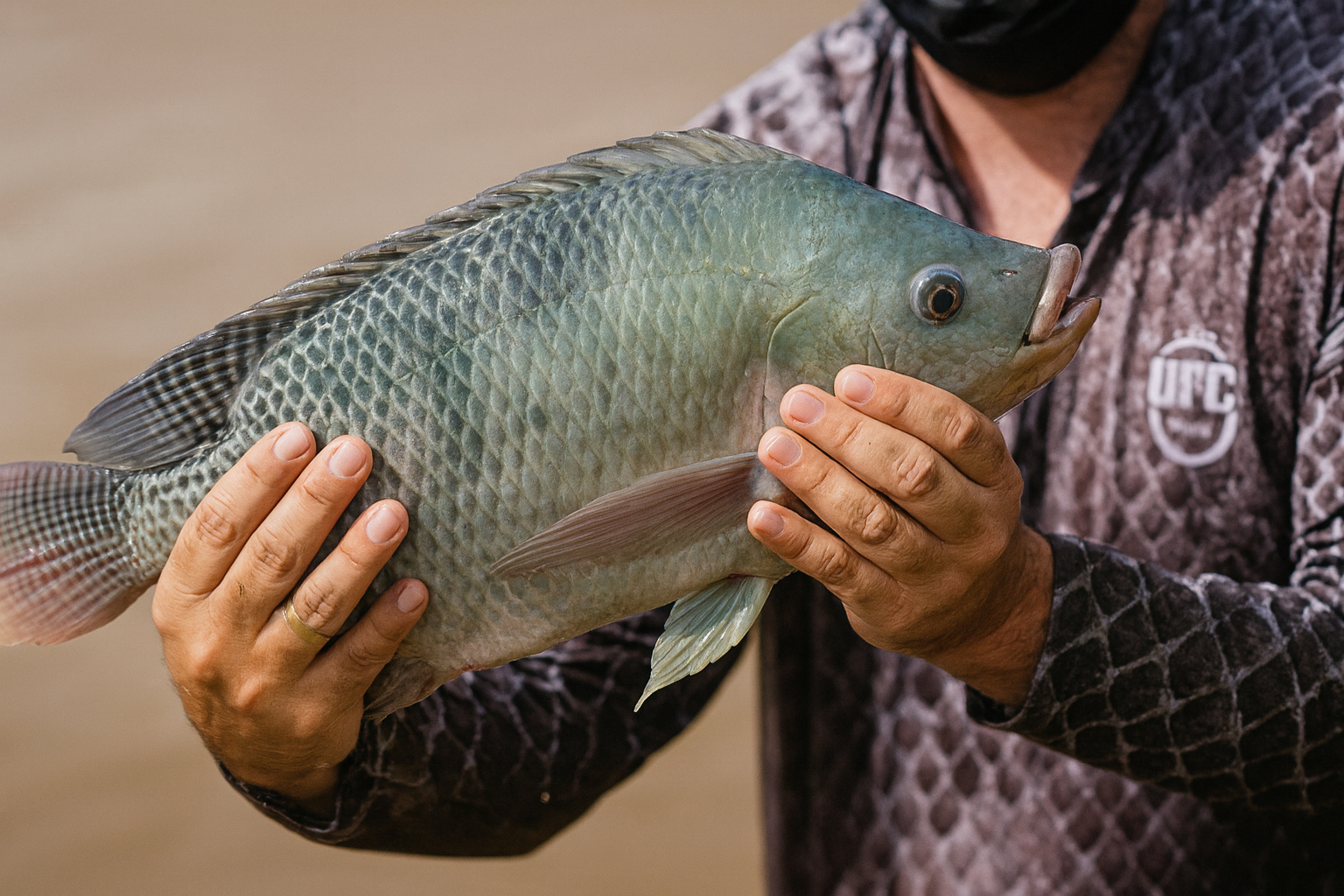
Research conducted at the Federal University of Ceará revealed that Nile tilapia skin has been used as a basis for a biotech tissue aimed at regenerating the cornea of dogs, as reported by the Fapesp Research Journal. Furthermore, this material has been tested on serious ocular ulcers and lesions, ensuring significant results in vision recovery.
Use of Tilapia Skin as a Biotechnological Tool
The studies developed by the Drug Production and Development Center at the UFC Medical School (NPDM-UFC) showed that the membrane extracted from the fish skin is rich in collagen, functioning as a graft in post-surgical dressings. Consequently, this membrane aids in the accelerated and controlled regeneration of the cornea.
Laboratory Process and Creation of Biotech Tissue
The researchers explained that the procedure starts with the complete removal of scales and cells. Thus, only collagen remains available for clinical use. The resulting biotech tissue stimulates corneal re-epithelialization, protects the injured area, and releases collagen absorbed by the body, as reported by veterinarian Mirza Melo in an interview with Fapesp. Additionally, over the past four years, more than 400 dogs have had their ocular health restored using the technique.
-
A “silent skill” is allowing Brazilians to earn up to R$ 22,000 per month without a degree and become indispensable for companies that rely on millions of data to survive.

-
Researchers at the Toyota Research Institute found that if a human uses robotic arms to flip a pancake 300 times in an afternoon, the robot learns to do it on its own the next morning, and this is currently the most promising method to solve the biggest bottleneck in modern robotics.

-
Goodbye iron: a common item in households is starting to lose space to technology that smooths clothes in minutes without an ironing board and with less energy consumption.

-
Antarctica reveals an unusual clue high in the Hudson Mountains, and what appeared to be just an isolated rock began to expose a secret hidden under the ice for ages.


Differences Between Tilapia Material and Imported Membranes
According to the researchers, although there are bovine and porcine biological membranes available on the market, all are imported. Therefore, tilapia skin stands out as it allows for the national production of more affordable membranes, which reduces costs and expands the availability of specialized treatments. Still, the researcher notes that each application requires rigorous clinical evaluation.
Clinical Application and Observed Advantages in Treatments
The technique has primarily been applied in cases of deep ulcers and extensive lesions. Thus, the membrane acts as a supportive structure. It protects the ocular surface, stimulates healing, and ensures tissue regeneration. The method allows for greater control and monitoring of clinical evolution, a practice considered decisive by professionals who adopted the protocol.
Results Observed After Four Years of Continuous Use
According to the research coordinator, treatments conducted between 2020 and 2024 confirmed that regeneration occurs more rapidly with the biotech tissue, maintaining the integrity of the cornea throughout the surgical process. Moreover, the gradual absorption of collagen contributes to long-lasting and safe results.
Effects of the New Biotech Tissue on Veterinary Practice in Brazil
As a result of the outcomes obtained, clinics and researchers began to evaluate the expansion of the use of the biotech tissue in other types of ocular lesions. Still, each case requires technical monitoring. However, the advancement represents an accessible alternative for professionals who previously depended exclusively on imported materials.
Impacts on National Research and Future Perspectives
The studies conducted in Ceará indicate that, with the continuous and monitored use of the biotech tissue, more treatments could be standardized nationally, strengthening Brazilian scientific production. Furthermore, the technique reinforces the role of veterinary research in creating innovative, economically viable solutions aligned with the country’s reality.








Seja o primeiro a reagir!