





 Portuguese
  English
  Spanish
 4 min of reading
  0 comments



Passenger Train Promises to Relieve Traffic, Generate 13 Thousand Jobs and Connect the Coast to the Capital in 90 Minutes, but Has a ‘Small Detail’: It Will Only Be Ready in 30 Years
With an Investment of R$ 15 Billion and a Deadline of Three Decades, the Intercity Train Project Between São Paulo and the Coast Foresees Great Changes in Urban Mobility, but Still Faces Technical and Logistical Challenges.
The Intercity Train (TIC) South Axis, intended to connect the city of São Paulo to Baixada Santista in about 90 minutes, is currently in the study phase — and is expected to conclude only within 30 years.
The expectation is that the project, with an estimated investment of R$ 15 billion, can create approximately 13 thousand jobs and ease heavy traffic on the Anchieta-Imigrantes System (SAI).
Project Stages TIC South Axis
The TIC South Axis is divided into six stages.
-
The government requests the Federal Revenue Service for a new system to automate the income tax declaration, reducing errors, time, and bureaucracy for millions of Brazilians.

-
Pix in installments, international Pix, and contactless payment without internet: the Central Bank revealed the new features coming to the tool that is already used by almost every adult in Brazil.

-
Mercado Livre has just started selling medications with delivery in up to three hours to your door, and this move could completely change the way Brazilians buy medicines on a daily basis.

-
In Dubai, rising tensions from the war in the Middle East are causing super-rich individuals to leave the Gulf and direct their fortunes to a new financial refuge in Asia.


The first phase, which deals with qualification in PPI-SP, has already been completed.
The study phase is underway, with completion expected in the first half of 2027.
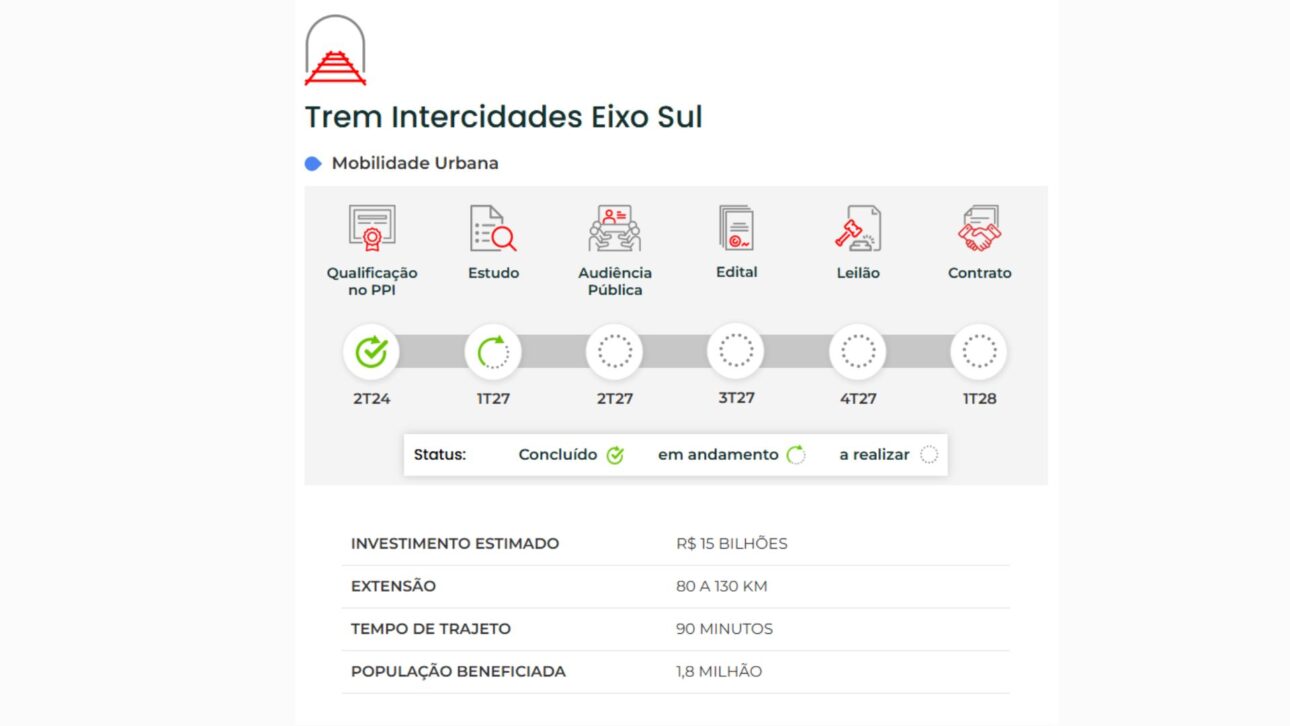
After that, there will be a public hearing, preparation of the bid, auction, and finally, signing of the contract.
The bid is expected to be published in the third quarter of 2027, the auction is estimated for the fourth quarter of the same year, and the signing of the contract is scheduled for the first quarter of 2028.
Possible Routes of the Passenger Train
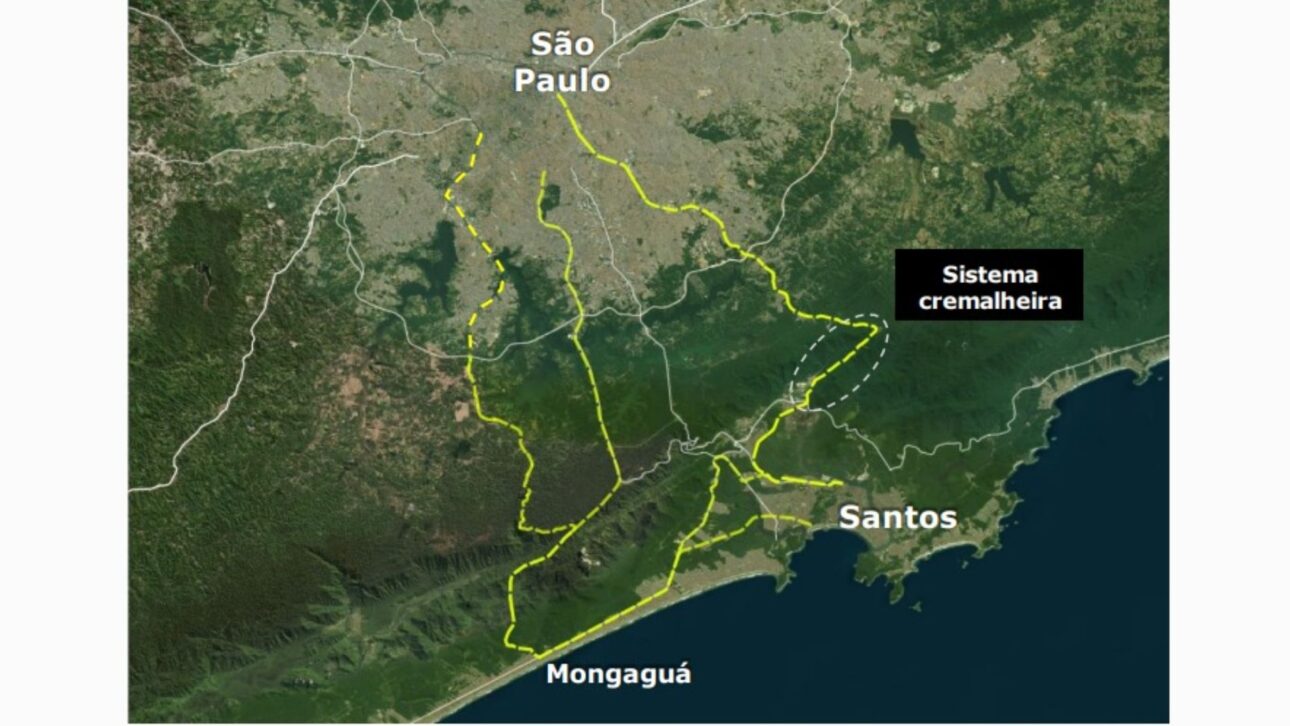
The route of the south axis is still under discussion.
Among the alternatives being evaluated are:
- Use of Line 10 – Turquoise of CPTM to Rio Grande da Serra, followed by an existing stretch to Paranapiacaba, descending the mountain by rack and pinion system.
- Departure from Line 9 – Emerald in the South Zone, connecting to the old railway towards Parelheiros.
- Direct use of the Immigrants Highway to access the plateau.
All routes face significant obstacles, especially due to the need to adapt existing infrastructure or implement new sections, mainly on the descent of the Serra do Mar.
Extension and Comparison with Other Axes
The TIC South Axis will have an extension between 80 km and 130 km, covering stretches from the plateau to the coast.
The proposal also includes integration with the urban VLT and other metropolitan lines, although modeling is still in the study phase.
In the same concession program, the São Paulo government plans three more intercity axes: North (Campinas), East (São José dos Campos), and West (Sorocaba).
On the North Axis, between SP and Campinas, the concession has been made, and the route is expected to take about 60 minutes to cover 101 km.
Timeline of the TIC South Axis
The mark of “30 years” refers to the estimated time for the entire infrastructure to be completed, from the study phase to the beginning of operations.
This period has been criticized by specialists, given the urgency of regional mobility and the environmental and social impacts resulting from the slow progress.
So far, it has not been possible to find information indicating intermediate stages or acceleration of this timeline.
Expected Impacts of the São Paulo–Coast Train
- Mobility: significant reduction in vehicle flow on the Anchieta and Imigrantes highways.
- Job Creation: more than 13 thousand direct and indirect jobs, according to estimates from PPI.
- Regional Integration: potential improvement in the connection between the coast and the capital, benefiting users of public and passenger transport.
Projections and Future Stages
Studies conducted by PPI-SP are expected to be completed by mid-2027.
The first formal public hearing is scheduled for after this period, although the official calendar is not publicly available.
The bidding notice will come in the third quarter of 2027, the auction in the fourth quarter of 2027, and the eventual signing of the contract in the first quarter of 2028.
There are currently no confirmations about intermediate deadlines such as the start of work or partial phases in operation.
Challenge in Sight?
After receiving this information, the question remains: is it possible for such significant infrastructure to be so far off on the horizon — 30 years — and still have the political clout to be completed on time? What is your opinion on this?








Seja o primeiro a reagir!