





 Português
  Inglês
  Espanhol
  5 min de leitura
  0 comentários


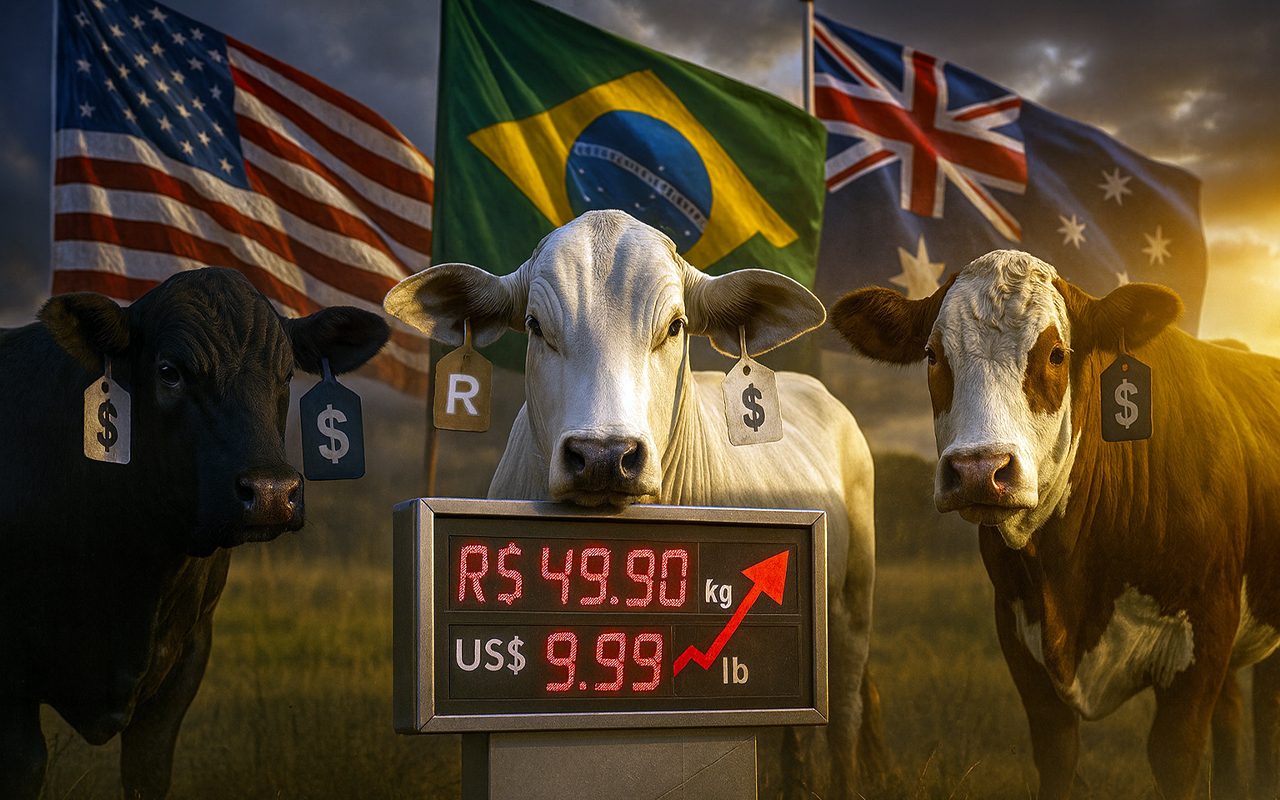
Retention of Females Among the Three Largest Exporters Indicates Lower Beef Supply and Price Support in 2026. U.S. Tariffs of 50% on Brazil Add Pressure on Trade and Costs.
For the first time in recent history, United States, Brazil, and Australia are moving in the same direction within the livestock cycle. Analysts highlight that the retention of heifers to rebuild herds is happening simultaneously in all three powers, shortening the supply in the short term and reprogramming the market for the coming years, which may lead to an increase in beef prices.
In the U.S., the USDA revised down its production forecasts for 2025 and 2026 and reported a strong rise in fed cattle prices, a reflection of slower slaughter rates and fewer calves available for feedlots. The August report already mentions lower beef imports from Brazil, reinforcing the tightening of U.S. supply.
In Brazil, the IBGE confirmed a record number of slaughterings in 2024 and growth in 2025, while the ABIEC reported a record confinement of 8.8 million head, equivalent to 19.2% of the total slaughter. The export structure remains strong, but the environment has become more complex with the new 50% tariffs from the U.S.
-
Brazilian city gains industrial hub for 85 companies that is equivalent to 55 football fields.

-
Peugeot and Citroën factory in Argentina cuts production by half and opens a layoff program for more than 2,000 employees after Brazil drastically reduced purchases of Argentine vehicles.

-
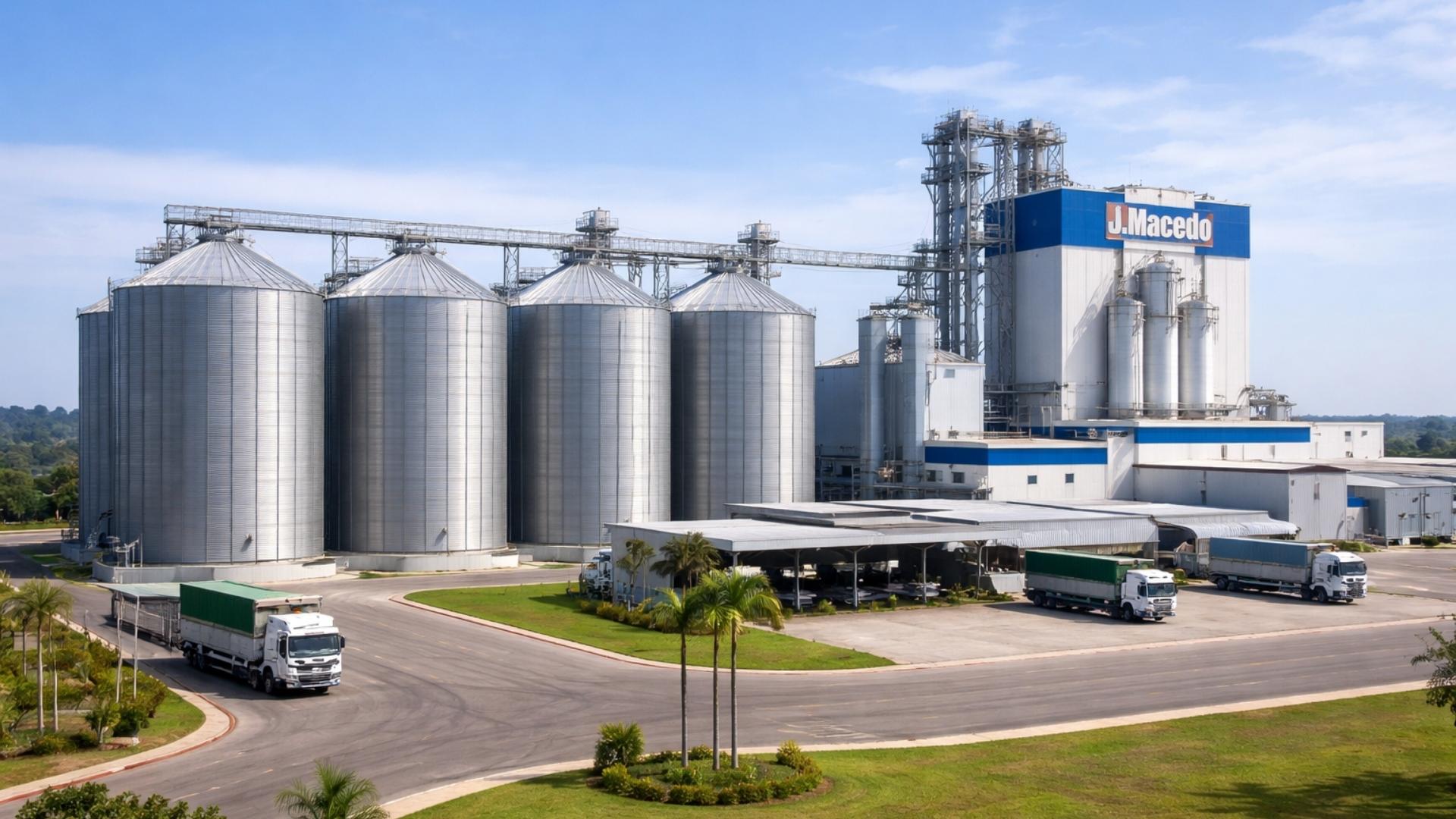
A Brazilian city gains a factory worth R$ 300 million with the capacity to process 200 thousand tons of wheat per year, a mill of 660 tons/day, silos for 42 thousand tons, and an industrial area of 276 thousand m².
-
Havan will leave the shopping mall in Blumenau to inaugurate something that the chain has never done before: a megastore in half-timbered style in the Historic Center of the city, which is expected to be completed in May and change the landscape of local retail.

In Australia, MLA projects a decrease in the herd to 30.1 million in 2025 and an all-time high in turn-off grainfed, confirming the adjustment phase of the cycle and helping to explain the global pressure on higher-value cuts.
Livestock Cycle 2025 and Female Retention: Why This Increases Beef Prices
The livestock cycle has known movements: periods of herd liquidation are followed by female retention for rebuilding, which reduces slaughters and the supply of beef in the short term. When three global leaders do this simultaneously, the impact amplifies.
According to industry analysis, the three largest exporters are entering the same phase of the cycle, a rare phenomenon that tends to shorten global supply for several years. For consumers, the effect usually appears as higher prices for cuts demanded in food service and retail.
In addition to the smaller volume, the meat mix also changes. Fewer animals ready in intensive systems reduce the availability of premium standard grainfed beef, supporting prices precisely in higher-value cuts.
United States: Herd at Lowest Level in Decades and Lower Production in 2026
The U.S. cattle inventory on January 1, 2025, was 86.7 million head, with 27.9 million beef cows, placing the herd at its lowest level in over 70 years. Drought since 2022 and the slaughter of cows have accelerated the decline.
In August, the USDA-ERS reduced its production projection for 2025 and 2026. For 2026, it cut 345 million pounds, down to 25.470 billion pounds, citing higher heifer retention and fewer calves for placement at the end of 2025 and beginning of 2026. This situation helps keep cattle prices at historically high levels.
The same report revised downward the beef imports for 2025 and 2026, particularly from Brazil. Meanwhile, reports show that inflation of beef has begun to surpass that of other foods, signaling that consumers may start adjusting their shopping carts in 2026.
Brazil: Record Slaughter, Rising Confinement, and More Pressure from Tariffs
The IBGE recorded a historic record of slaughters in 2024, with 39.27 million head, and reported that 2025 started with new growth in quarterly comparisons. This confirms the strong phase of the Brazilian cycle after years of robust exports.
The ABIEC reports that 8.8 million animals were finished in confinement in 2024, which corresponds to 19.2% of total slaughter. This advancement in intensive finishing increases the capacity to respond to peaks in demand but does not neutralize an international scenario of short supply when the U.S. and Australia also reduce female slaughters.
The external environment has become more difficult with the 50% tariff announced by the U.S. in August 2025 on most Brazilian imports. The case has already reached the WTO and financial news reports a diplomatic impasse, with the potential to raise costs and redirect trade flows.
Australia: Smaller Herd and Grainfed Boom Support Global Prices
Meat & Livestock Australia projects the herd at 30.1 million by June 30, 2025, with FSR above the equilibrium level and a trend for further decline until 2027. This signals prolonged destocking and less exportable supply on the horizon.
Contrary to old perceptions, Australia has been hitting records for stocking and turn-off of feedlots. In the second quarter of 2025, national utilization of feedlots reached 93%, with 894,000 head of turn-off and 112,900 tons of grainfed beef exports, making up 29% of total exports.
This reinforcement of grainfed helps supply premium markets, but herd adjustments limit overall volume. Meanwhile, MLA highlights slaughter peaks in 2024 and 2025, followed by a decline ahead, a typical scenario of cycle transition that tends to sustain international prices.
U.S. Tariffs on Brazil and the Redesign of Beef Trade
The 50% tariff imposed by the U.S. on Brazil in August 2025 has been accepted for consultation at the WTO and is already appearing in USDA reports as a factor for reduced imports from Brazil. Agricultural think tanks estimate a billion-dollar impact in the second half for Brazilian slaughterhouses.
International media describes a political and economic impasse between the two countries, with negotiations stalled and pressure from companies for a diplomatic solution. Meanwhile, the market is pricing in higher costs and rerouted shipments that previously went to the U.S.
For the American consumer, the combination of thin herd and tariffs helps explain the rise in beef prices observed in 2025. For Brazil, the trend is to reallocate volumes and protect margins through mix and currency, without losing sight of Asian demand.
What to Expect for 2026: Prices, Consumption, and Premium Cuts
The USDA projects a new decrease of 2% in U.S. beef production in 2026, down to 25.470 billion pounds, due to higher female retention and fewer calves for confinement. In a market already pressured by tariffs and adjustments in Australia and Brazil, the outlook favors firm prices.
Premium cuts and grainfed beef are expected to remain valued, with restaurants and retail adjusting supply and price. Meanwhile, substitutions with other proteins may emerge, but historically the full adjustment of consumption occurs gradually.
For Brazil, the challenge is to balance strong external demand, logistical costs, and a more protectionist trade environment. The expansion of intensive systems and price risk management can cushion shocks and preserve competitiveness in the current cycle.









-

-

-

-

7 pessoas reagiram a isso.