





 Portuguese
  English
  Spanish
  3 min of reading


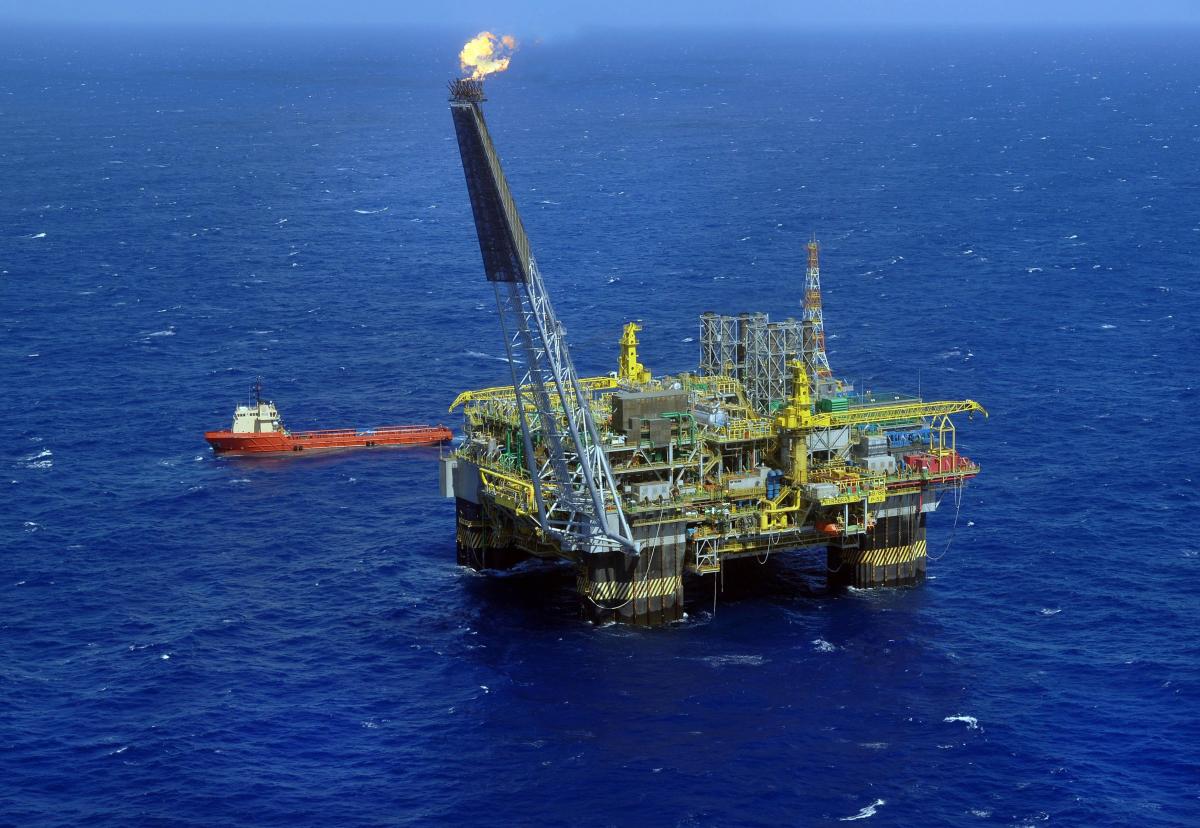
In September 2019, 293 granted areas, two onerous concession areas, and five sharing areas, operated by 34 companies, were responsible for national production. Of these, 71 are offshore and 229 are onshore.
In September 2019, the production of oil and natural gas in Brazil totaled 3.738 million barrels of oil equivalent per day (MMboe/d). The Lula, Búzios, and Sapinhoá fields, all in the pre-salt of the Santos Basin, produced 1.924 MMboe/d, which corresponds to about 51.5% of Brazilian production that month.
Oil production was approximately 2.927 million barrels per day (MMbbl/d), a decrease of 2.1% compared to the previous month and an increase of 17.8% compared to September 2018. Natural gas production was 129 million cubic meters per day (MMm3/d), a decrease of 3.4% compared to the previous month and an increase of 14.1% compared to September 2018. The main reason for the drop in production was the scheduled shutdown of the FPSO Pioneiro de Libra in the Mero field.
Production data for September is available on the Monthly Bulletin page of Oil and Natural Gas Production.
-
Government unlocks R$ 554 million for a highway that has been requested for decades and accelerates the duplication of BR.
-
Without bricks, without cement, and without endless construction: the cardboard house that is assembled in modules and can be moved.

-
Billions of barrels on the equatorial margin could lead Amapá to double its oil production in Brazil — the state aims to enter the route of companies in the Campos Basin, attract investments, and boost jobs and businesses in the oil and gas sector.

-
Without bricks, without cement, and without endless construction: the cardboard house that is assembled in modules and can be moved.

Pre-Salt
Pre-salt production, derived from 110 wells, was 1.827 MMbbl/d of oil and 73.3 MMm³/d of natural gas, totaling 2.289 MMboe/d. There was a decrease of 5.7% compared to the previous month and an increase of 28.3% compared to the same month in 2018. Pre-salt production accounted for 61.2% of total production in Brazil.
Utilization of Natural Gas
In September, the utilization of natural gas was 97.5%. 67.1 MMm³/day was made available to the market. The flaring of gas for the month was 3.275 MMm³/d, a decrease of 1.4% compared to the previous month and an increase of 5.2% compared to the same month in 2018.
- KEMPETRO with job vacancies for Macaé and Bahia on this November 5th
- The Brazilian Navy acquired a rescue ship that is currently in the United Arab Emirates
- Popular action in São Paulo may prevent the auction of the excess of onerous concession
Producing Fields
Lula, in the Santos Basin, was the largest oil producer, with an average of 962 MMbbl/d. It was also the largest natural gas producer: an average of 39.7 MMm3/d.
Source of Production
Offshore fields produced 96.4% of the oil and 80% of the natural gas. The fields operated by Petrobras produced 92.9% of the oil and natural gas. Regarding the fields operated exclusively by Petrobras, they produced 44% of the total. National production occurred in 7,221 wells, consisting of 655 offshore and 6,566 onshore.
Highlights
Estreito, in the Potiguar Basin, had the largest number of onshore producing wells: 1,105.
Marlim Sul, in the Campos Basin, was the offshore field with the highest number of producing wells: 74.
The Petrobras Platform 66 (P-66), producing in the Lula Field through seven interconnected wells, produced 143.8 Mbbl/d and was the installation with the highest oil production.
The Polo Arara installation, producing in the Arara Azul, Araracanga, Carapanaúba, Cupiúba, Rio Urucu, and Sudoeste Urucu fields, through 36 interconnected wells, produced 8.6 MMm³/d and was the installation with the highest natural gas production.
Marginal Accumulation Fields
These fields produced 48.5 bbl/d of oil and 1.0 Mm³/d of natural gas. The Itaparica field, operated by Newo, was the largest producer, with 16.7 boe/d.
Other Information
In September 2019, 293 granted areas, two onerous concession areas, and five sharing areas, operated by 34 companies, were responsible for national production. Of these, 71 are offshore and 229 are onshore. Of the total producing areas, 10 are related to contracts for areas containing marginal accumulations.
The average API gravity was 27.5, with 36.4% of the production considered light oil (>=31°API), 52.7% medium oil (>=22 API and <31 API), and 10.9% heavy oil (<22 API).
The mature onshore basins (long-term fields/tests from the Espírito Santo, Potiguar, Recôncavo, Sergipe, and Alagoas basins) produced 109.7 Mboe/d, consisting of 87.5 thousand bbl/d of oil and 3.5 MM m³/d of natural gas. Of this total, 101.6 thousand boe/d were produced by Petrobras and 8.1 thousand boe/d were produced by non-Petrobras-operated concessions, of which: 369 boe/d in Alagoas, 5,238 boe/d in Bahia, 17 boe/d in Espírito Santo, 2,298 boe/d in Rio Grande do Norte, and 188 boe/d in Sergipe.
Source: ANP









Seja o primeiro a reagir!