





 Portuguese
  English
  Spanish
  6 min of reading
  19 comments


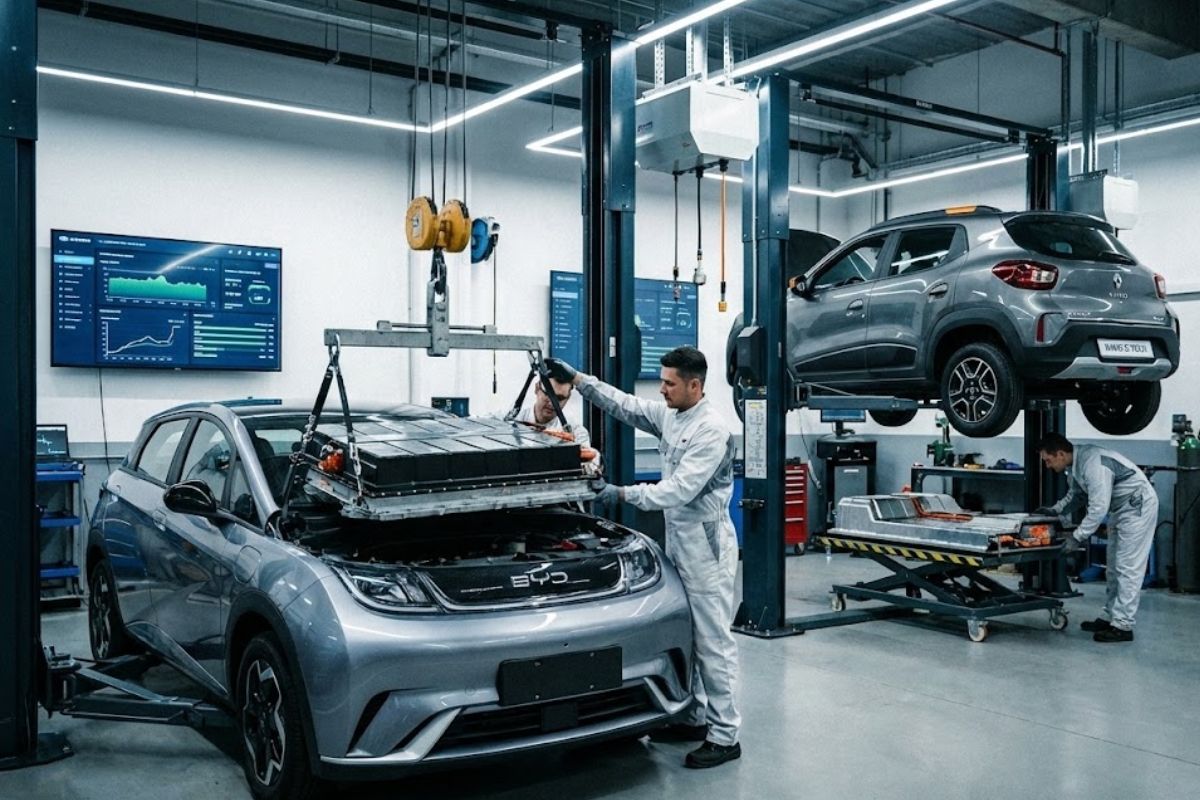


Out of Warranty, Replacing the Battery of an Electric Car Can Cost 30 to 50 Percent of the New Car’s Value, with Estimates Ranging from R$ 60,000 to R$ 80,000 for the BYD Dolphin and R$ 40,000 to R$ 50,000 for the Kwid E Tech Compact Electric.
In 2024 and 2025, with the advancement of entry-level electric cars in Brazil, the biggest concern for drivers is not where to charge, but how much it costs to replace the battery of an electric car if it fails out of the factory warranty. The fear is of receiving, in a few years, an impossible bill to pay.
At the same time, the market has also consolidated a practical rule for 2024/2025: complete replacement of the traction pack usually costs between 30% and 50% of the value of a brand-new car, which puts the BYD Dolphin and the Renault Kwid E Tech at the center of the discussion about the real cost of ownership.
How Much Does the Price of an Electric Car Battery Really Scare?
First of all, it is important to separate panic from reality. The battery of an electric car is not a fast-wearing item, like tires or brake pads.
-
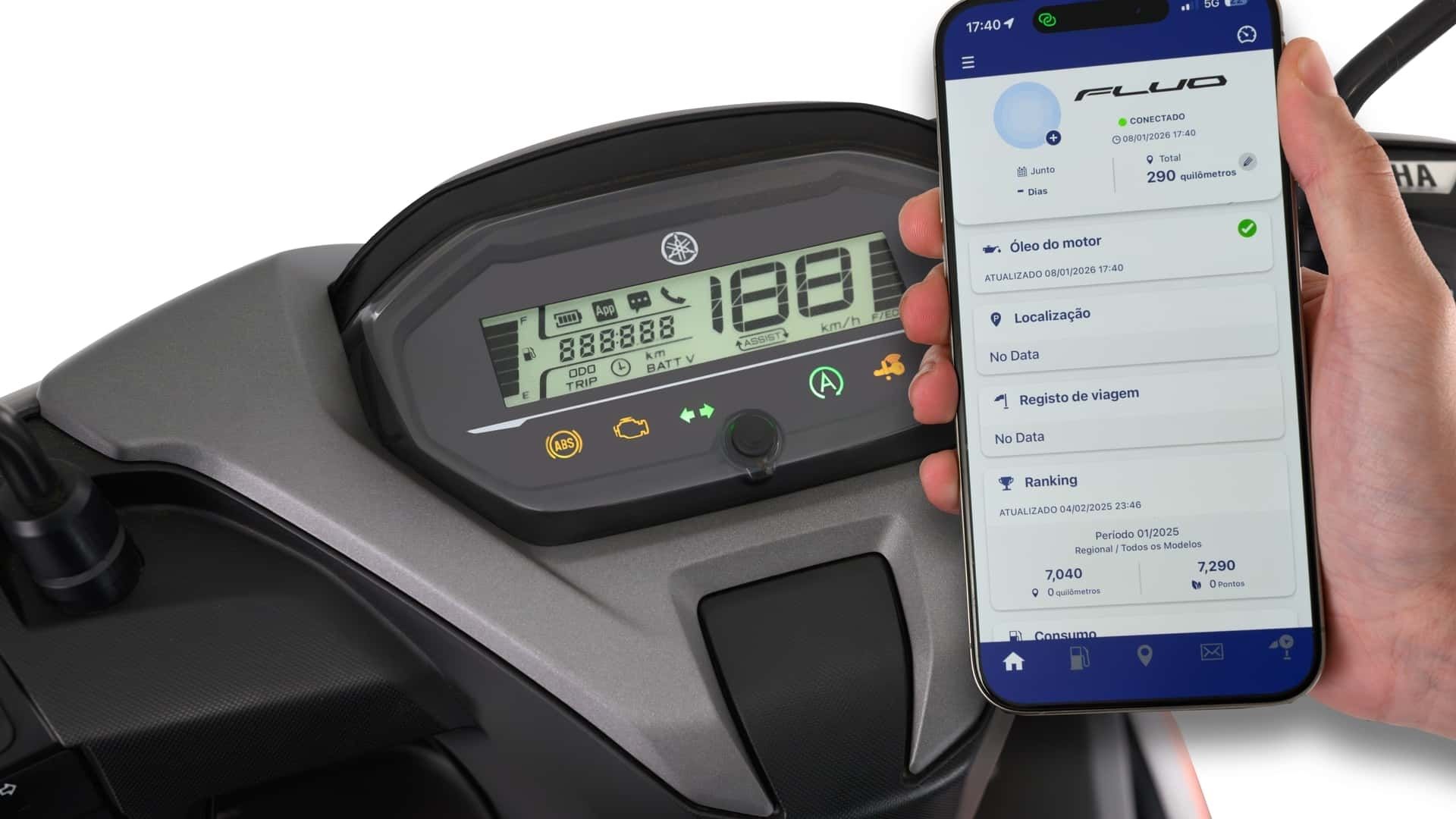
Costing R$ 16,000, the new Yamaha features a 125 cc hybrid engine with electric assistance, delivers 8.3 hp, includes ABS, optimized fuel consumption, Y-Connect connectivity, 25 liters of storage space, and a surprising 4-year warranty in the urban segment.
-
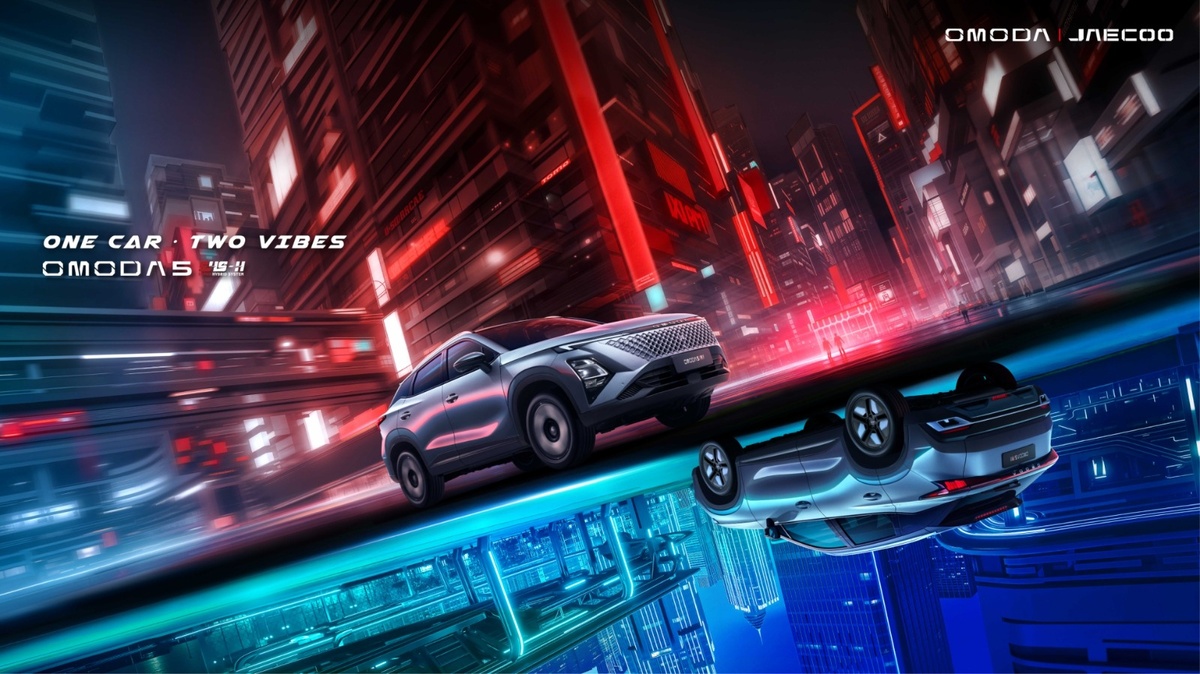
OMODA & JAECOO grows in Europe in 2026 with an integrated strategy of sales, innovation, local production, and technological advancement in the United Kingdom, Italy, and Spain.
-
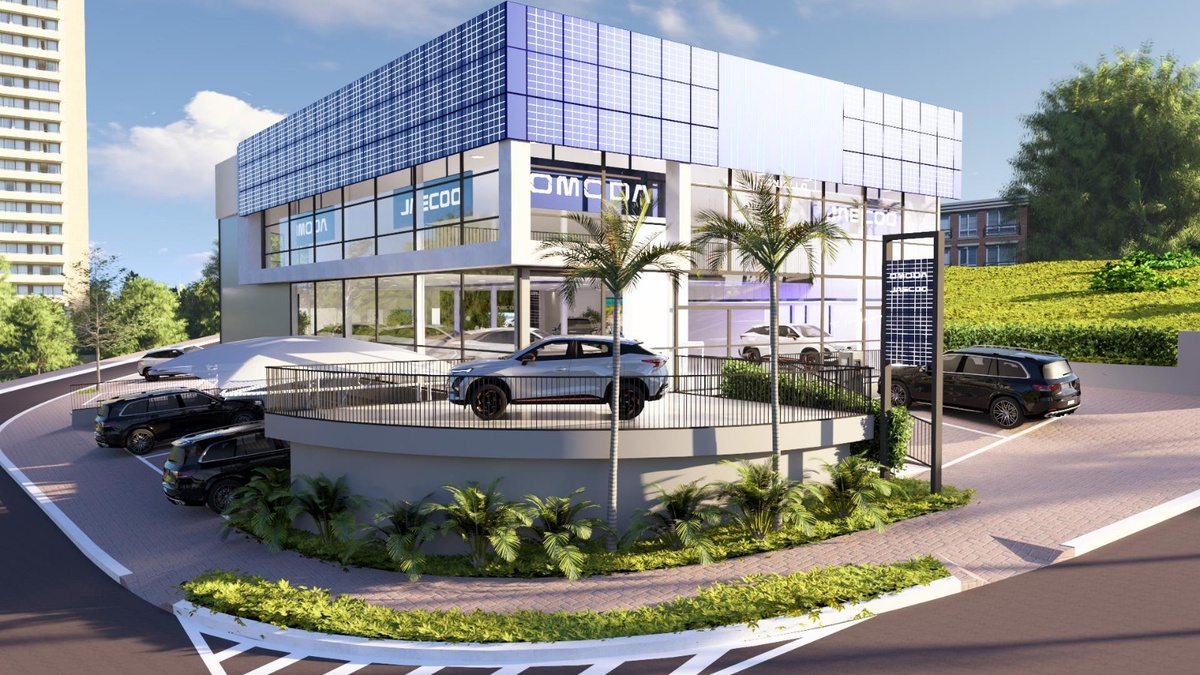
OMODA & JAECOO expands after-sales service in Brazil with competitive maintenance, a 7-year warranty, and high availability of parts for technological SUVs.
-
OMODA & JAECOO appoints Alessandra Souza as executive marketing director in Brazil and accelerates brand expansion with a focus on innovation, networking, and hybrid portfolio.


Brands like BYD and Renault offer about 8 years or around 160,000 km warranty, which protects the owner from huge expenses in the first decade of normal use.
After this period, market values come into play. For 2024/2025, the industry operates on the logic that a traction pack out of warranty costs between 30% and 50% of the total value of the new vehicle. In an entry-level model, this can easily exceed tens of thousands of reais.
Therefore, anyone wondering today how much it costs to replace the battery of an electric car needs to consider two scenarios: the full dealer price, with a new part and warranty, and the lower prices of used modules or packs, taken from totaled vehicles, but without any official backing from the manufacturer.
BYD Dolphin: Blade Battery More Expensive, But Very Robust
In the BYD Dolphin and Dolphin Mini family, the Chinese brand uses the Blade Battery, made of LFP (Lithium Iron Phosphate) chemistry, known for withstanding extreme puncture tests and providing high fire safety. This structural robustness, however, comes with a higher replacement cost.
Market and specialized workshop estimates indicate that a complete battery pack for the BYD Dolphin or Dolphin Mini ranges from R$ 60,000 to R$ 80,000 when talking about a new component from the official parts channel.
This is the scenario where the owner pays more but receives a new part, up to factory standards.
In the parallel market, with batteries taken from totaled cars, it is possible to find used modules or packs for around R$ 25,000 to R$ 35,000, always with the caveat that there is no BYD warranty.
In this case, the buyer exchanges lower cost for higher risk of an unknown history and potential degradation of the battery of an electric car that has already been used extensively.
Another differentiator is the temperature system. BYD batteries use liquid cooling, a feature that helps better control heat and tends to ensure longer lifespan in the Brazilian climate compared to solutions that are only air-cooled.
This reinforces the perception that the battery of an electric car from BYD is expensive to replace, but built to last a long time.
Renault Kwid E Tech: Smaller Battery and Cheaper Replacement
In the Renault Kwid E Tech, the traction system works with a considerably smaller battery, at 26.8 kWh, compared to something around 44 kWh in the Dolphin Mini.
Based on the logic of raw materials, fewer cells mean lower absolute cost to produce and, subsequently, to replace the complete part.
Although Renault does not disclose a public price list, as almost all replacements occur under warranty, the estimated cost of a new Kwid E Tech pack is around R$ 40,000 to R$ 50,000 when talking about complete replacement outside coverage.
In direct numerical comparison, the price is lower than that practiced in the BYD Dolphin family.
The architecture also works in favor. The battery of the Kwid E Tech is air-cooled and less integrated into the chassis, which may facilitate modular maintenance in specialized workshops, allowing for the replacement of defective cells or modules instead of total replacement.
For those worried about the cost of a new battery of an electric car, this possibility helps reduce the potential impact of an intervention outside the dealership.
Who Has the Advantage in Cost and Cost-Benefit?
Looking only at the component’s price, the Renault Kwid E Tech has the advantage.
Its smaller battery and project simplicity result in a cheaper pack in absolute terms, in the range of R$ 40,000 to R$ 50,000, below the estimated range of R$ 60,000 to R$ 80,000 for the BYD Dolphin.
However, when the subject is cost-benefit, BYD stands out. The Blade LFP battery offers higher energy density, more range per charge, and less degradation over approximately 10 years of use, which means having more usable capacity available after many kilometers driven.
In practice, those choosing between the two need to balance replacement price, technology used, real range, and usage profile.
For some drivers, a simpler entry-level electric car with a battery of an electric car easier to replace makes sense.
For others, the greater range and more resilient chemistry of BYD may outweigh the hypothetical shock of complete replacement.
Why You May Never Need to Replace the Entire Battery
Despite the fear, the truth is that most drivers will never pay for a complete pack replacement.
Studies indicate that modern batteries lose around 10% to 15% of capacity after about 200,000 km driven, which, in practice, means many years of urban and highway use before any really severe drop in range.
In addition, manufacturers typically offer warranties that cover not only total failures but also abnormal degradation, usually up to a limit of around 70% of the original capacity.
If the battery of an electric car falls below this threshold within the warranty period, the trend is for the brand itself to be obligated to act, at no cost to the owner.
When this limit is exceeded and the car has already traveled hundreds of thousands of kilometers, other components will also be well worn: tired suspension, marked interior, outdated embedded technology.
By this time, it is quite possible that investing in a new pack doesn’t make financial sense, and the vehicle ends up going to salvage or for partial reuse of parts.
Three Contract Points to Look for Before Buying Your Electric Car
Instead of just focusing on the gross value to replace the battery of an electric car, it is worth paying attention to the contract and the conditions in the manual.
Three points deserve special attention:
- Transferable Warranty
Check if the 8-year or around 160,000 km warranty remains valid for the second owner if you sell the car. A fully transferable battery warranty greatly increases resale value and reduces the fear of those buying a used electric car. - Degradation Coverage, Not Just Total Failure
Check if the brand promises to intervene when capacity drops to around 70% or only in case of complete pack failure. Most manufacturers work with the 70% threshold, and this is crucial to protect consumers against a loss of range that makes using the car uncomfortable. - Cooling System and Brazilian Climate
Pay attention to the type of cooling of the pack. Batteries with liquid cooling, like those from BYD, tend to withstand intense heat better, while air-cooled batteries, like those in the Kwid E Tech, require even more care in extreme use. This detail has a direct impact on the health of the battery of an electric car over the years.
With these numbers and conditions in hand, the fear that replacing the battery of an electric car will inevitably destroy the budget begins to give way to a more rational analysis, considering technology, warranty, real use, and resale potential.
After knowing these values and guarantees, would you have the courage to buy a BYD Dolphin or a Renault Kwid E Tech entry-level electric car now, or do you still prefer to stick to gasoline out of fear of the cost of the battery of an electric car?







fala da bateria de um veiculo elétrico, é o mesmo que se perguntar quando vou fazer a retifica do motor a combustão!! pois o preço também é mais de 30% do veiculo, pq ninguém faz essa pergunta também? resumindo: a bateria de um veiculo elétrico pode rodar muito mais que 600 mil km, quero ver um combustão rodar a 600mil km sem fazer a retifica e cabeçote!! ainda vai ter muitas novidade de veiculo elétrico, acredite ou não: o futuro está começando…
Esse site está uma poluição de publicidade.
Essas **** de carro elétrico vão dar muita dor de cabeça para quem comprar.
Agora é bonitinho e legal comprar,mas daqui uns 15/20 anos não vai ter lugar para desovar esses lixos.
Produto xing ling: só capinha de celular e utilidades domésticas e olhe lá
Disse João expert em carros elétricos
quantas retifica vc ja fez no seu veiculo a combustão? nos 200 mil km? haaa desculpe, voce já vendeu antes e o futuro **** irá fazer…. foi mau… sabia q carro eletrico, aguenta muito mais 600 mil km para rodar e ainda acima de 89% da bateria? até lá o seu ex-veiculo ja deve ter feito retifica perto dos 300 mil km, e isso quando não vira ferro velho… cade todos os palio/corsa/chevett/omega… onde estão todos esses vendido? acha mesmo q estão na garagem de colecionador? ou ja virou sucata? pensa direitinho.. pq carro elétrico a bateria tem vantagem de virar offgride de casa com energia solar funcionando muito bem e por anos!!! o produto xing ling q vc diz, está dominando, e mostrar que veio para ficar, igual os veiculo da Hyundai, quando tinham essa sua mentalidade de criança, olha onde eles estão? nem a ford está aqui… fico admirado vc defender carro a combustão com motores lixo que não aguentam 300 mil km sem fazer retifica, e pagar paga caro na gasolina, voce não tem liberdade de compra carro com 3.0 de motor, pq bebe, então sao obrigado a compra 1.0 para economizar na gasolina, (isso quando nao coloca gasolina batizada) agora temos opção de abastecer na eletricidade, fora a gasolina, e voce ainda reclama? voce reclama demais!! lembre-se bem quanto q era o valor do minuto do celular quando era TELESP, quando vieram os concorrente, olha quanto custa a ligação? é isso que quero para gasolina!! mais concorrente meu brother!!!!! abra a sua mente!!!! pra gente não fica refém da Petrobras!!!