





 Portuguese
  English
  Spanish
  3 min of reading
  0 comments


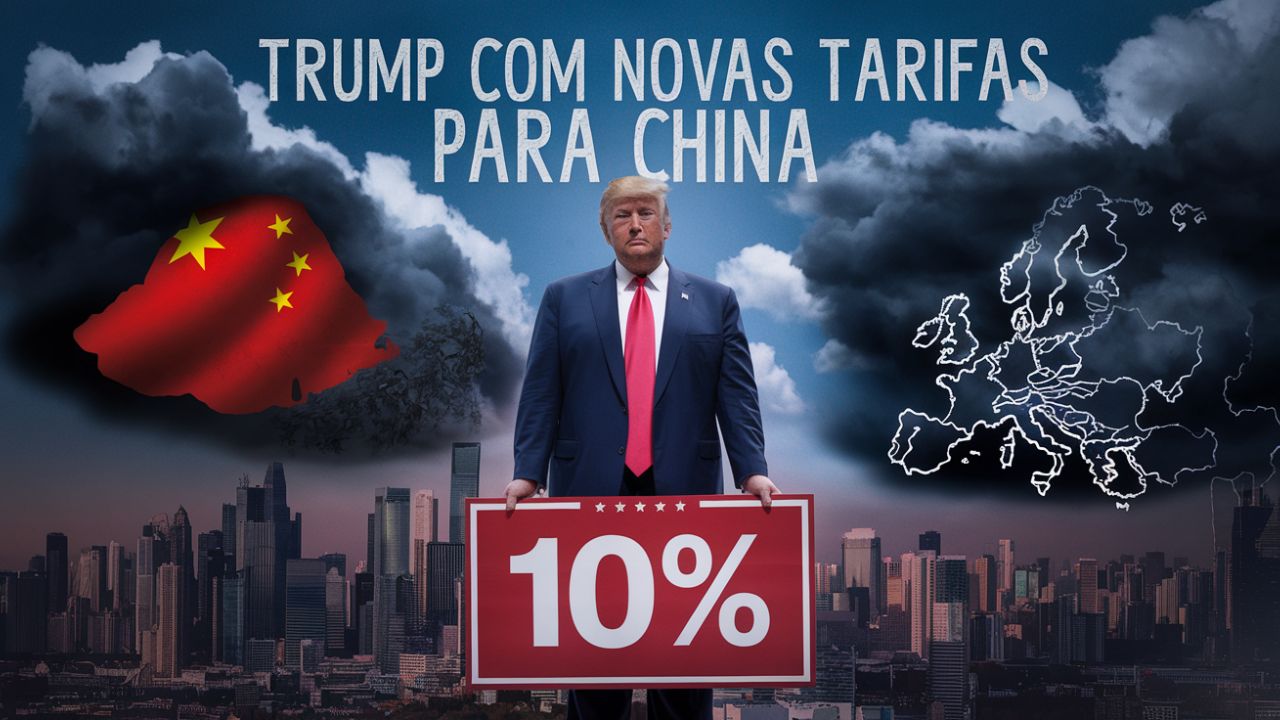
With New Threats, Trump Proposes 10% Tariffs on Chinese Products While Targeting the European Union. The Impact Could Shake Global Economies, Affect Supply Chains, and Rekindle Trade Tensions.
The current President of the United States, Donald Trump, has made headlines again. This time, the threat is clear: impose 10% tariffs on Chinese products and, surprisingly, bring the European Union into the center of the discussion. Does this sound like déjà vu? Perhaps. But the implications of this rhetoric go far beyond mere words.
Trump’s Return to the Political Game
When the name “Trump” appears in the headlines, we know something big is about to happen. His strategy of hardening negotiations with economic partners and rivals is not new, but it continues to be effective in generating tension. By Targeting China and the EU, he reinforces his narrative of protecting American interests, even if it means shaking up the global board.
Since 2018, Trump has shown his intention to redefine global trade. But are the conditions the same now? The global economy is recovering from recent crises, and new conflicts may destabilize the landscape even further.
-
Larger than entire cities in Brazil: BYD is building a 4.6 km² complex in Bahia with a capacity for 600,000 vehicles per year, but the discovery of 163 workers in conditions analogous to slavery has shaken the entire project.

-
With an investment of R$ 612 million, a capacity to process 1.2 million liters of milk per day, Piracanjuba inaugurates a mega cheese factory that increases national production, reduces dependence on imports, and repositions Brazil on the global dairy map.

-
Brazilian city gains industrial hub for 85 companies that is equivalent to 55 football fields.

-
Peugeot and Citroën factory in Argentina cuts production by half and opens a layoff program for more than 2,000 employees after Brazil drastically reduced purchases of Argentine vehicles.


Trump’s words are not just statements; they are clear messages to the market. Tariffs like these do not only impact the direct targets. They reverberate throughout the system, generating uncertainties for investors and global companies.
The 10% Tariffs and Their Impact on China

With China, Trump returns to his “economic warrior” stance. But why 10%? This number may seem arbitrary, but it is enough to pressure key sectors of the Chinese economy without causing a total collapse.
China is undoubtedly one of the largest economic powers in the world. However, tariffs like these hit strategic exports, impacting everything from electronics to manufactured goods. For Beijing, this means reassessing its trade approach with the U.S.
And us? Well, if trade between the two largest economies in the world suffers, everyone suffers. Electronics, cars, and even food may see global price adjustments. It seems like a domino effect, doesn’t it?
European Union in the Crosshairs: What to Expect?
This time, the surprise was the inclusion of the EU as a target. But what does Trump really want?
The explanation may lie in issues of subsidies, trade balance, and political divergences. Trump wants to balance trade at any cost, even if it means creating new enemies.
If these tariffs are implemented, sectors like automobiles and aircraft may be the most affected. The EU may even seek support from allies, but the impact will be inevitable.
Global Reaction: Tension or Negotiation?
It is no secret that such threats compel powers to take a stand. While some countries bet on dialogue, others may use these tensions to their advantage.
According to Bloomberg Línea, China has already indicated that it will not remain silent. Meanwhile, the EU may seek support from historical allies like Japan and Canada to neutralize possible impacts.
And Brazil? With strong trade ties to China and the EU, the country needs to balance its diplomacy to avoid being swept up in the turmoil. It could be a golden opportunity or an economic problem.








Seja o primeiro a reagir!