





 English
  Francês
  Alemão
  Italiano
  Japonês
  Norueguês
  Portuguese
  Spanish
  4 min of reading
  0 comments


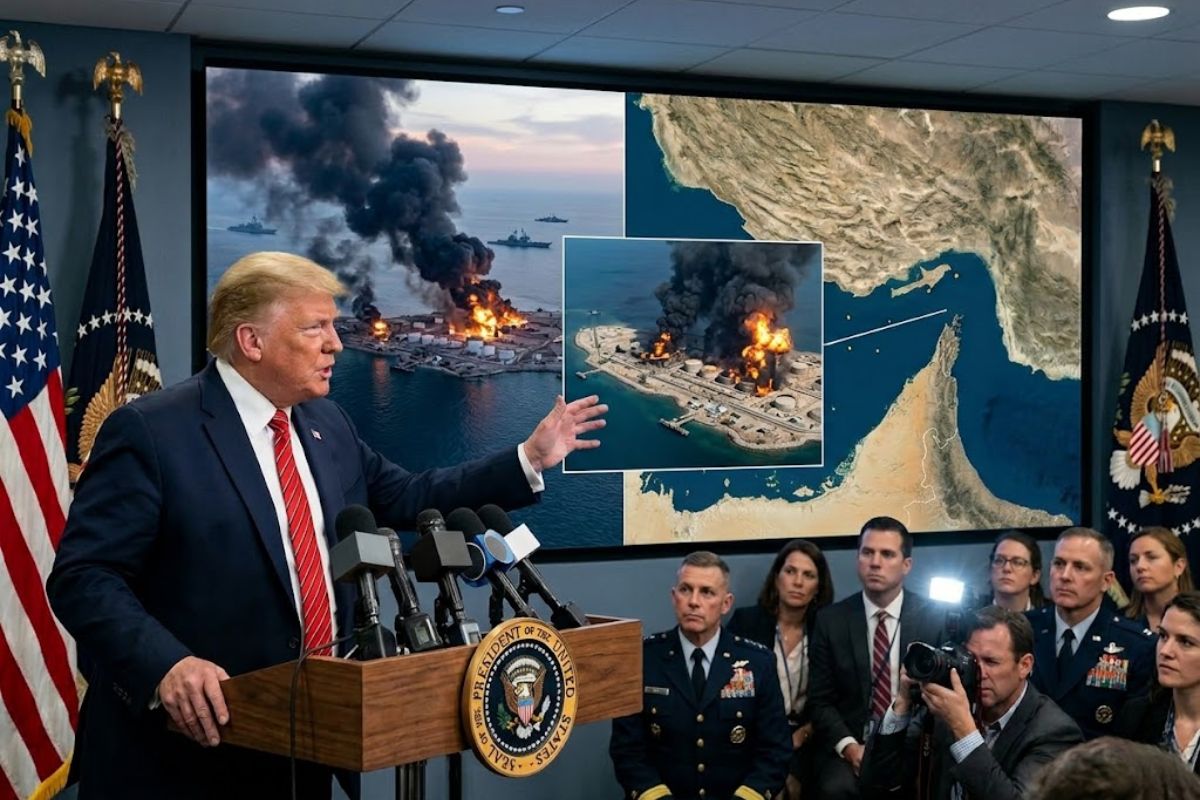
After US Military Offensive Against Iranian Targets on Kharg Island, Responsible for a Large Part of Iran’s Oil Exports, Donald Trump Claims He Avoided Hitting Energy Infrastructure, but Issues Stern Warning About Any Threat to Navigation in the Strategic Strait of Hormuz.
The Strait of Hormuz has returned to the center of international tensions after US President Donald Trump announced that American military forces bombed targets on the Iranian island of Kharg, one of the most sensitive points of Iran’s energy infrastructure.
According to Trump, announced this Friday (Mar. 13, 2026), the military facilities on the island were “completely destroyed,” but the attacks deliberately did not hit the oil structures. The decision was accompanied by a direct warning: any threat to navigation in the Strait of Hormuz could lead to new attacks.
US Attack Hits Strategic Island for Oil Export
According to information from the 360 portal, Kharg Island, located in the Persian Gulf, occupies a central position in Iran’s energy economy. The territory functions as a massive export terminal and accounts for about 90% of the crude oil sent by the country to the international market.
-
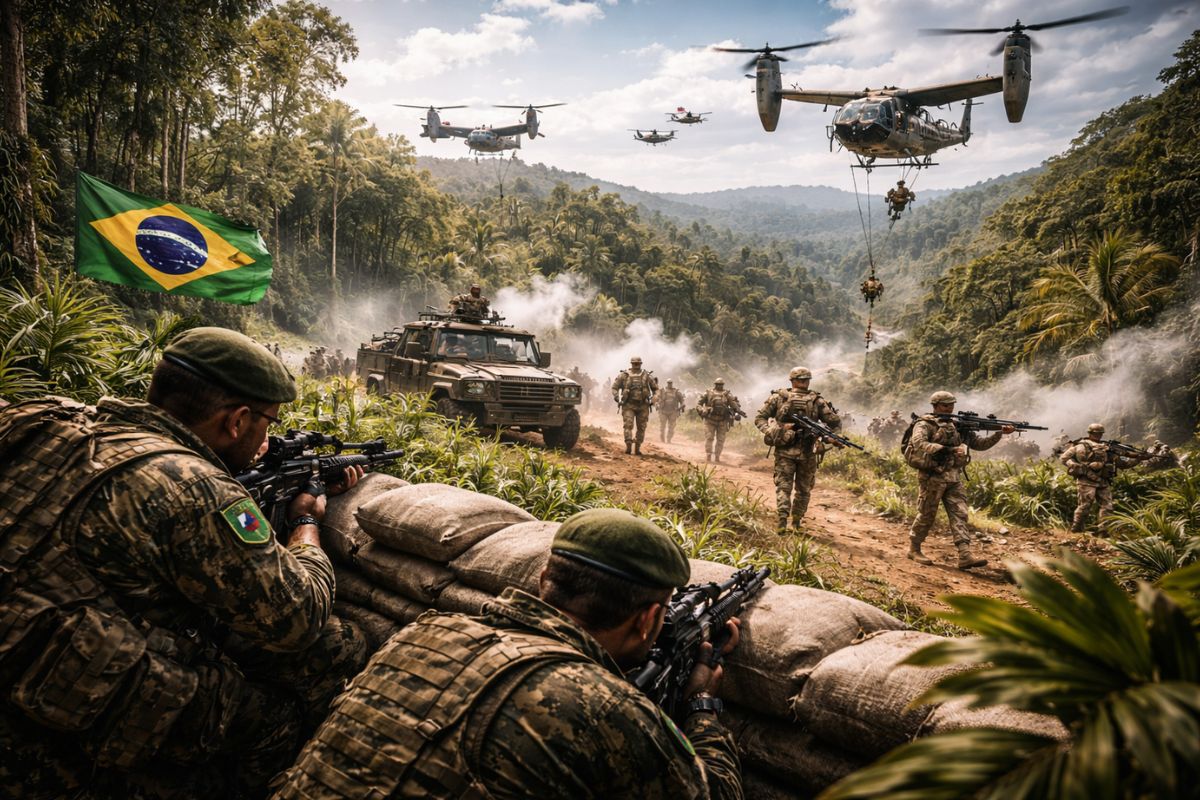
If the USA were to go to war with Brazil, Washington’s greatest fear would not be the attack itself, but facing a vast territory, prolonged resistance, and a costly, chaotic, and unpredictable occupation.
-
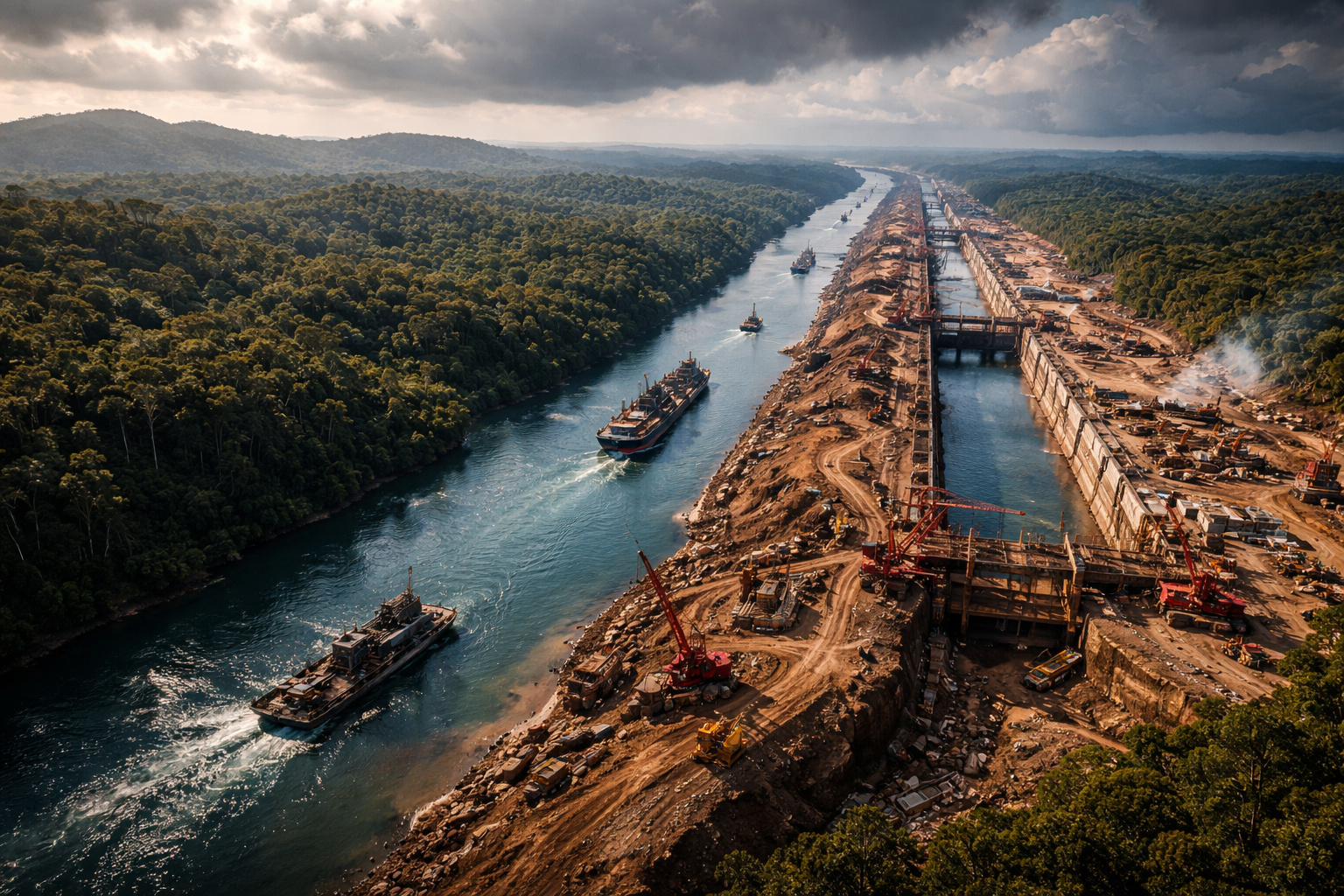
In 2013, Nicaragua sold the concession for a canal to rival Panama to a Chinese billionaire who lost 85% of his fortune, disappeared, and was declared bankrupt. Now the project resurfaces with a new route, a new Chinese partner, and a cost of $64.5 billion.
-
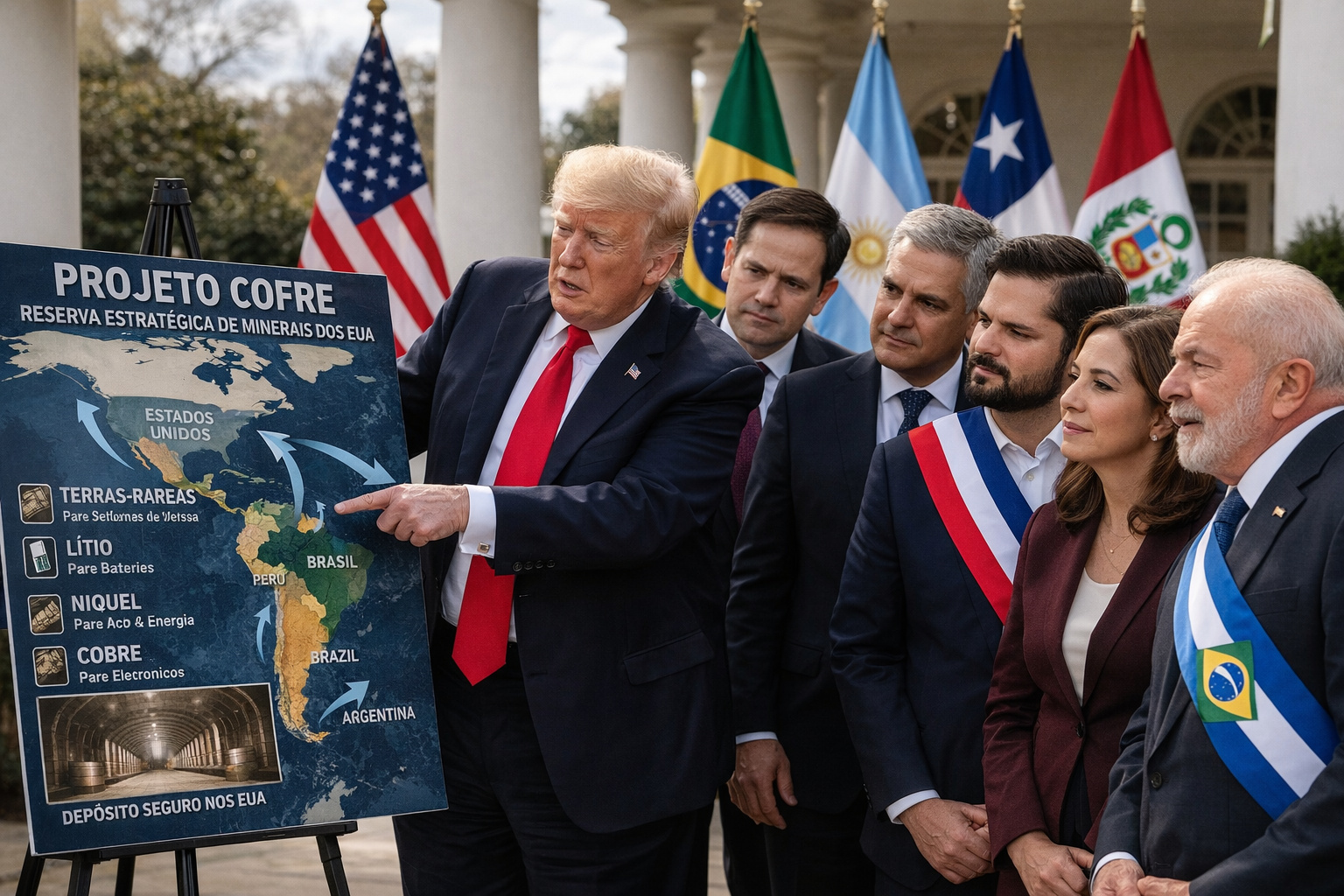
The USA announces a mysterious billion-dollar vault project to store critical minerals, but what intrigues experts is not just the plan itself, but why Latin America, including Brazil, has entered the center of this global dispute against China.
-
At Less Than 40 Kilometers Wide, Strait of Hormuz Holds 20% of Global Oil and Becomes Epicenter of Global Crisis After Military Operation Against Iran Halts Oil Tankers and Triggers Energy Price Surge
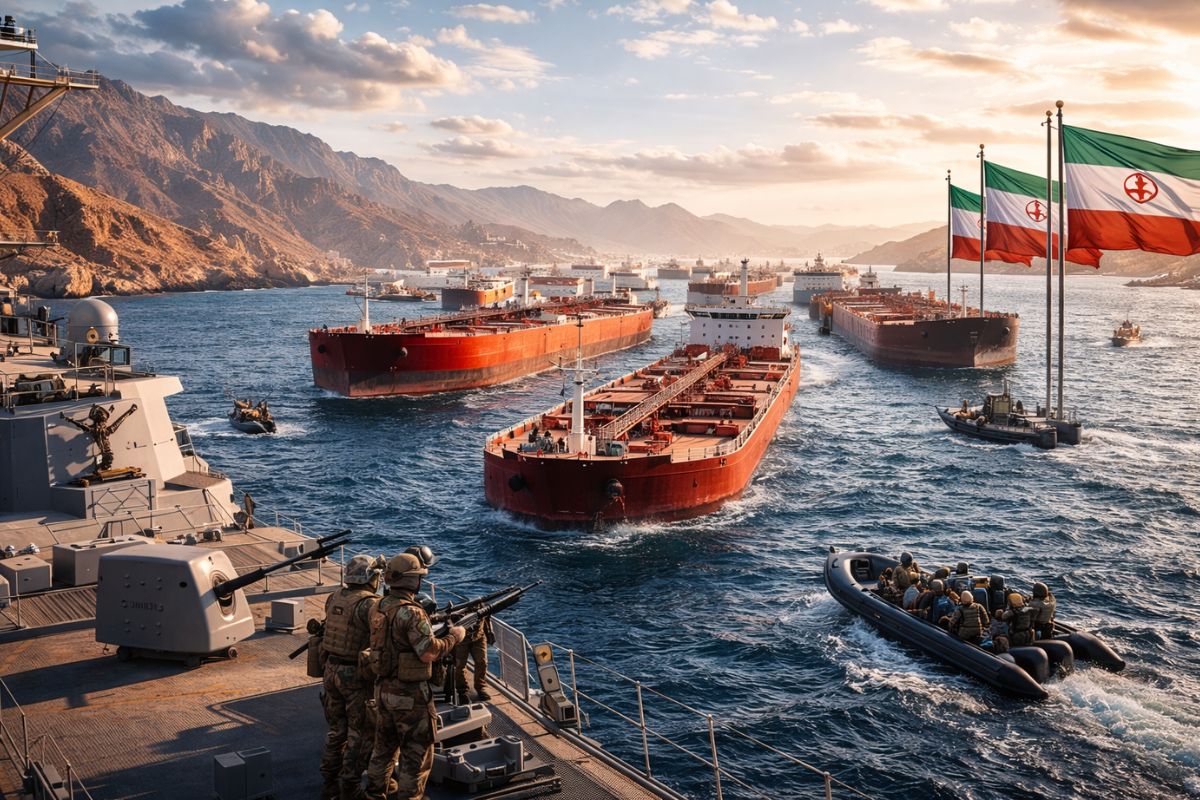

The offensive announced by the United States targeted military installations on the island. According to the statement made by Trump on his Truth Social platform, American forces used weaponry considered among the most advanced in the world to hit the designated targets.
Despite the intensity of the operation, Trump claimed he made a strategic decision: not to directly attack the oil infrastructure. According to him, the goal was to limit the immediate economic impact and avoid a sudden disruption in the global energy flow.
Strait of Hormuz Becomes Global Tension Focus Again
The most forceful warning from the US president was linked to the Strait of Hormuz, considered one of the most important maritime points in the world for oil trade.
Large volumes of oil are transported daily through the strait by tanker ships leaving the Persian Gulf heading to international markets. Any blockade or threat to navigation in the region could have immediate effects on global energy prices.
Trump stated that he decided not to hit the island’s oil structures but indicated that this decision could be revisited. According to him, any interference with the safe passage of ships through the Strait of Hormuz will lead to an immediate military response from the United States.
Kharg Island Is Considered the “Crown Jewel” of Iranian Oil
The strategic importance of the island goes far beyond its geographical position. Kharg serves as the main storage and loading point for oil produced in fields in southwestern Iran.
Oil pipelines transport the crude oil to the island terminal, where the product is stored before being transferred to large tanker ships. It is estimated that the local infrastructure has the capacity to move millions of barrels per day, making the location vital for Iranian exports.
International analysts often classify the island as the heart of the country’s oil industry. Therefore, any military action in the region is seen as highly sensitive and potentially capable of affecting the global energy balance.
Iran Reacts and Warns Adversaries About Consequences
Even before the offensive, Iranian authorities had already warned about potential attacks on the island. The spokesperson for Iran’s Ministry of Foreign Affairs, Esmail Baghaei, stated that the country would respond to any aggression.
According to the diplomat, Iranian territory would be a “graveyard for the wishes and illusions of foreigners”, in a clear reference to possible external military operations.
Trump, for his part, asserted that Iran would not have the capacity to defend its assets against attacks from the United States.
The US president also reiterated his criticism of the Iranian regime and continued to pressure for political changes in the country.
Possible Impacts on Global Energy Market
The Persian Gulf region concentrates some of the most critical routes in global oil trade. For this reason, any military confrontation near the Strait of Hormuz is closely monitored by governments, businesses, and financial markets.
Experts warn that direct attacks on Iranian oil infrastructure could trigger an immediate increase in oil prices and raise the risk of regional military escalation.
Even without targeting the export terminals, the military operation itself is already increasing geopolitical tension, raising the level of uncertainty over energy flow through the region.
The bombing announced by the United States on the Iranian island of Kharg puts the Strait of Hormuz once again at the center of global geopolitics.
The decision to target military installations while avoiding oil infrastructure indicates an attempt to send a strategic message without causing an immediate shock to the energy market.
At the same time, the warning that new attacks may occur if navigation is threatened reinforces the risk of military escalation in the region, considered one of the most sensitive in the world for international oil trade.
In light of this scenario, the question remains direct: do you believe that the conflict could really escalate into a larger crisis involving the Strait of Hormuz, or will the powers attempt to avoid direct confrontation? Share your analysis in the comments.









Seja o primeiro a reagir!