





 Portuguese
  English
  Spanish
  5 min of reading
  0 comments


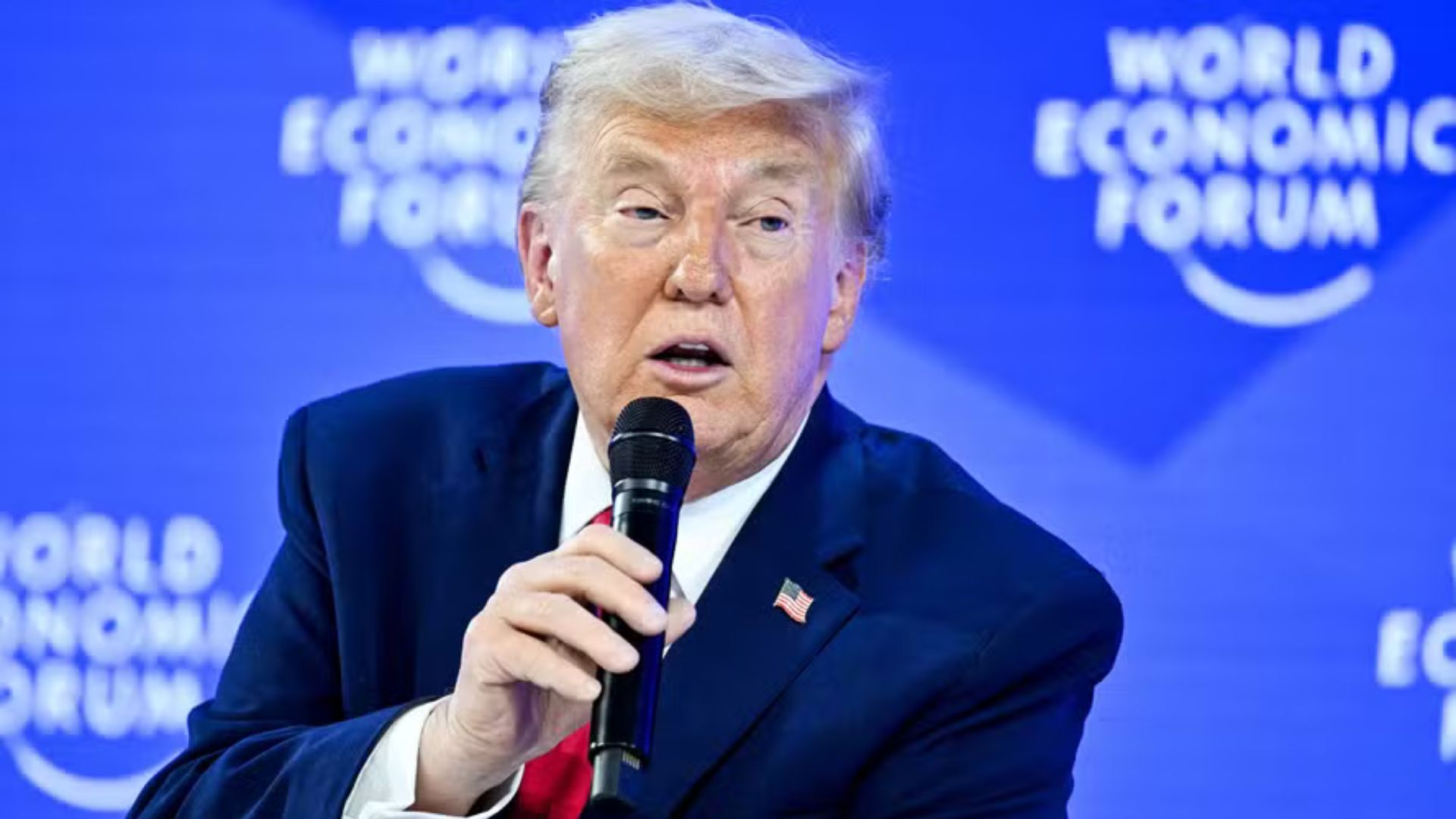
During The World Economic Forum, Trump Provokes International Reaction By Criticizing Wind Farms In Davos, Questioning Green Energy And Pointing To Economic Impacts And Competitiveness In Europe
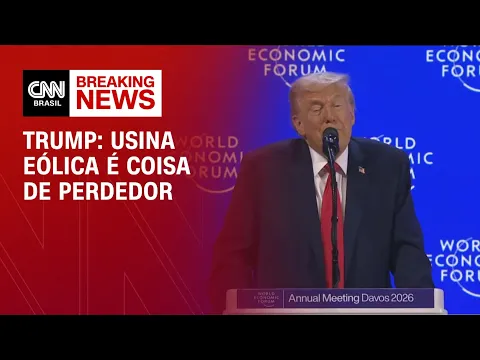
On January 21, 2026, during the World Economic Forum, held in Davos, Switzerland, the President of the United States, Donald Trump, once again provoked strong international repercussions by attacking energy transition policies adopted by European countries. In a strong speech, Trump directly criticized wind farms, classified green energy as economically harmful, and called European leaders “losers” for insisting on this model.
The statement was made in front of businessmen, heads of state, and representatives of multilateral organizations, on one of the most relevant stages of the global economic debate. According to Trump, the expansion of renewable sources, especially wind energy, would be raising electricity costs, weakening economies, and reducing Europe’s international competitiveness. The information was initially disclosed by CNN Brazil on Wednesday (21), which covered the event in Davos.
Trump Criticizes Wind Farms During Speech In Davos
During his speech at the World Economic Forum, Trump stated that countries that have heavily invested in wind farms are facing increasing economic difficulties. The president cited a supposed 139% increase in electricity prices in Europe following the expansion of wind energy, an argument used to support his criticism of green energy.
-
Renewable energy advances over protected areas in Brazil, and a survey by the Energy Transition Observatory reveals silent impacts that challenge environmental conservation and pressure sensitive traditional territories.

-
Rio Grande do Sul accelerates energy transition: State invests in renewable technologies and consolidates decarbonization strategies and pathways to attract billions in new industrial investments.

-
With 160,000 m² of collectors, an area larger than 20 football fields, Silkeborg, in Denmark, hosts a solar thermal plant that heats 19,500 homes and could become the largest solar heating plant in the world.

-
A study reveals the expansion of renewable energy procurement in Brazil and shows how companies are taking advantage of opportunities to reduce expenses, ensure energy efficiency, and strengthen strategic environmental commitments.

According to him, “the more wind energy a country has, the more money it loses and the worse it gets.” The statement received mixed reactions from the audience in Davos, composed of business and political leaders who, for the most part, advocate for energy transition as a response to climate change.
Trump classified the advancement of wind farms as a strategic mistake, asserting that the promise of cheap and sustainable energy has not materialized in several European countries.
Green Energy At The Center Of The Global Economic Battle
Trump’s speech in Davos reinforced a clash that goes beyond environmental issues. For the American president, green energy represents not just a technical challenge, but a structural economic problem. He again used the term “green coup” to refer to policies promoting renewables, suggesting that such investments do not deliver adequate financial returns.
Although official data from the European Union indicate that factors like the natural gas crisis and geopolitical conflicts have influenced energy prices in recent years, Trump directly attributed the rising costs of electricity to wind farms. The speech underscores an economic view based on industrial competitiveness, immediate cost reduction, and the use of traditional energy sources.
Trump Compares Europe And China When Talking About Wind Farms
Another central point of the speech in Davos was Trump’s comparison between Europe and China. According to him, the Asian country adopts a “smarter” posture by manufacturing equipment for wind farms but without relying on this source as a pillar of its energy matrix.
According to Trump, China uses wind energy primarily as a showcase, while maintaining oil, natural gas, and nuclear energy as the bases for its economic growth. “They sell wind energy to whoever buys it, but they don’t use it,” he stated.
Experts point out that, although China still relies heavily on fossil fuels, the country also leads global investments in green energy, including wind and solar parks, data confirmed by international organizations such as the International Energy Agency.

Trump’s History Against Green Energy
The criticisms made in Davos are not new. Throughout his political career, Trump has always shown resistance to strict environmental policies and the strengthening of green energy.
During his first term, the United States withdrew from the Paris Agreement, a decision that marked his skeptical stance on climate change. For Trump, the focus should be on ensuring abundant, cheap, and reliable energy, even if this implies greater use of fossil fuels.
The wind farms, according to him, do not offer this security and depend excessively on public subsidies. This view directly contrasts with the agenda advocated by most leaders present in Davos, who see energy transition as inevitable.
Wind Farms And The Real Data On Costs And Competitiveness
Despite Trump’s statements, studies from European institutions and the International Renewable Energy Agency indicate that onshore wind energy is among the cheapest sources of electricity generation in several countries. In many cases, new wind farms produce energy at costs lower than those of coal and natural gas.
Experts emphasize that the final price of electricity depends on multiple factors, such as taxes, transmission infrastructure, cross-subsidies, and fluctuations in the fossil fuel market.
Therefore, attributing tariff increases exclusively to green energy may overly simplify a complex scenario. Still, Trump insists that the negative economic impact of renewables needs to be debated more transparently.
Davos As A Stage For The Confrontation Of Energy Views
The World Economic Forum, held annually in Davos, has become a symbolic space for this clash of narratives. On one side, leaders advocating for the rapid expansion of green energy as a climate response and economic opportunity. On the other, figures like Trump, who warn of competitiveness risks and high costs.
The speech by the U.S. president showed that the energy transition is not just an environmental issue, but also a central theme of geopolitics and the global economy.
Trump’s remarks quickly reverberated in markets and the international press. European leaders avoided responding directly, but reinforced commitments to climate targets and investments in green energy.
Analysts assess that the speech may influence electoral debates and strategic decisions, especially in countries facing internal economic pressures. The criticism of wind farms also resonates with industrial sectors concerned about energy costs.
What The Speech In Davos Reveals About The Future Of Energy Transition
Trump’s statements in Davos indicate that the energy transition will continue to be one of the most controversial topics on the global agenda. While European governments bet on green energy as a driver of innovation and energy security, the U.S. president advocates for a more conservative and pragmatic approach.
The clash between these views is expected to intensify in the coming years as countries seek to reduce emissions without compromising competitiveness. The speech makes it clear that the discussion about wind farms, costs, and the economy is far from a global consensus.








Seja o primeiro a reagir!