





 Português
  Inglês
  Espanhol
  4 min de leitura
  0 comentários


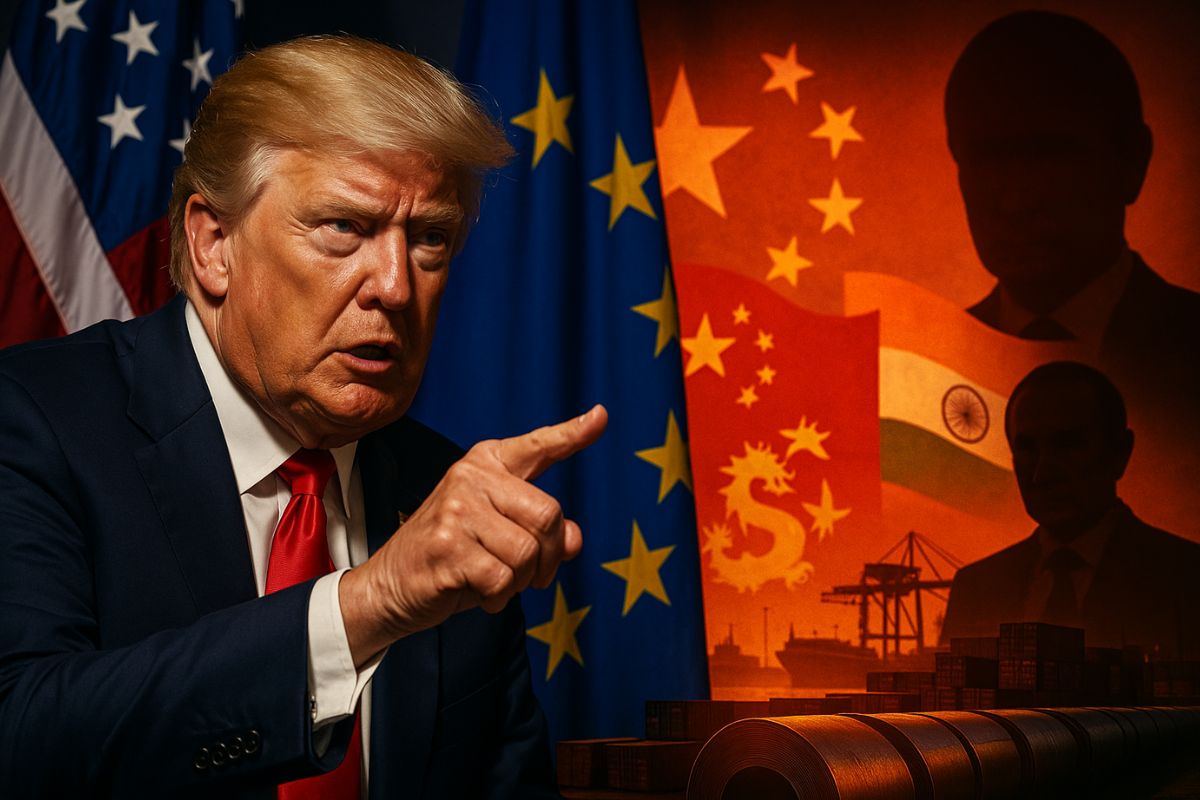
Donald Trump Pressures European Union to Expand Sanctions and Use 100% Tariffs as Economic Weapon to Suffocate Russia and Isolate Putin.
The President of the United States, Donald Trump, has escalated the tone in the economic war against Russia and is now targeting China and India. On September 9, 2025, he demanded that the European Union implement tariffs of up to 100% on exports from these countries as a way to <strong-weaken the Russian economy and cut the revenue used by the Kremlin in the war in Ukraine. This information was disclosed by Veja.
For Trump, taxing the two largest buyers of Russian oil is the only way to drastically reduce the flow of resources to Moscow.
However, the proposal represents a radical shift in strategy, as until now, the sanctions have focused directly on Russia without affecting third parties.
-
Brazilian city gains industrial hub for 85 companies that is equivalent to 55 football fields.

-
Peugeot and Citroën factory in Argentina cuts production by half and opens a layoff program for more than 2,000 employees after Brazil drastically reduced purchases of Argentine vehicles.

-
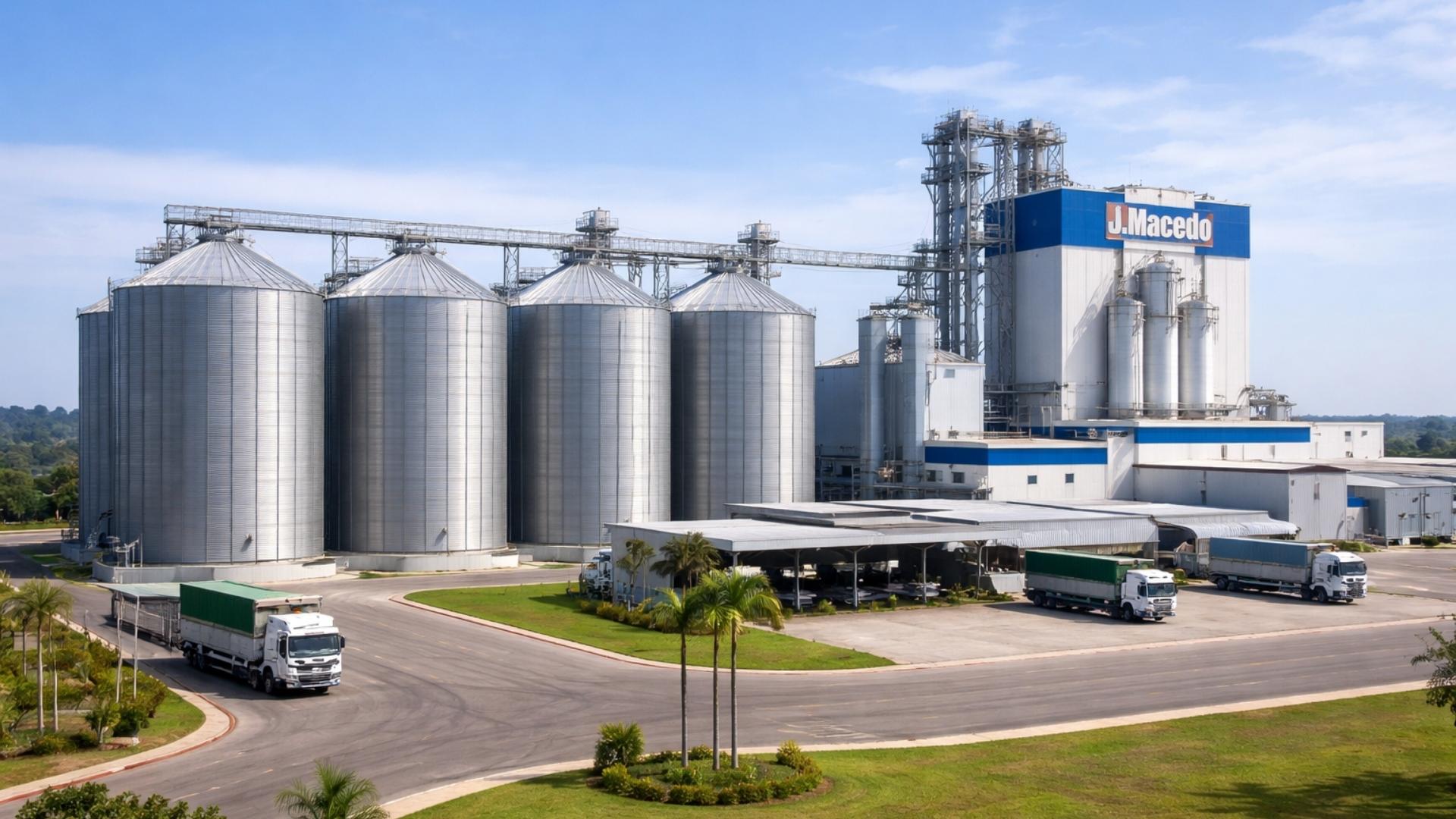
A Brazilian city gains a factory worth R$ 300 million with the capacity to process 200 thousand tons of wheat per year, a mill of 660 tons/day, silos for 42 thousand tons, and an industrial area of 276 thousand m².
-
Havan will leave the shopping mall in Blumenau to inaugurate something that the chain has never done before: a megastore in half-timbered style in the Historic Center of the city, which is expected to be completed in May and change the landscape of local retail.


Why China and India Have Entered Trump’s Sights
According to Veja, China and India absorb a large portion of Russian oil and have become the main escape valve for Moscow since 2022.
This economic relationship is seen by Trump as an obstacle to traditional sanctions.
By imposing 100% tariffs, the U.S. and the European Union would aim to indirectly strangle Russian revenue, making it difficult to finance the war.
An European diplomat involved in the discussions stated that Washington made it clear: “We will do this, but you need to do it with us.”
This reinforces Trump’s pressure for joint action, even in the face of internal divisions within the European bloc.
How the Request Was Presented to the European Union
Trump’s request was made via videoconference with the EU’s envoy for sanctions, David O’Sullivan, and other representatives.
According to Veja, the White House indicated that it would only apply tariffs of this magnitude in coordination with the Europeans.
The proposal opens the door to a new phase of the trade war, placing strategic countries like China and India at the center of the global economic conflict.
For experts, this is a test of cohesion within the European Union, which is still debating how far it can go without generating backlash that affects its own economy.
The Immediate Reaction from China
The Chinese Ministry of Foreign Affairs reacted strongly, criticizing the use of its trade as a pressure tool.
Beijing classified Trump’s proposal as an “unfair instrumentalization” of trade relations and warned of possible responses if punitive measures are adopted.
Analysts cited by Veja state that a 100% tariff would have a direct impact not only on the trade balance but also on the geopolitical balance of BRICS, strengthening the approach between China, India, and Russia against the West.
Contradictions in the Relationship with India
Despite the rhetoric, Trump maintains an ambiguous relationship with New Delhi.
In July, the president had already raised tariffs against India by 25 percentage points, but at the same time praised his partnership with Prime Minister Narendra Modi, highlighting the expansion of bilateral trade.
This contradictory stance indicates that the U.S. aims to press without completely pushing India away, a country viewed as a strategic counterbalance to Chinese influence in Asia.
Criticisms Targeting the European Union
In addition to targeting China and India, Trump took the opportunity to criticize the European Union itself, accusing the bloc of still relying on Russian gas.
According to Veja, in 2024 about 19% of the gas imported by the EU still came from Russia, despite the reduction promises made in Brussels.
This push reinforces pressure on European leaders, who already face internal dilemmas about the costs of sanctions and the risks of economic retaliation.
Strategic Consequences if the Proposal Goes Through
If Trump’s proposal is accepted, the world may witness three simultaneous movements:
1. Expanded Trade War, directly hitting China and India.
2. Division within the European Union, among countries willing to harden against Beijing and New Delhi and others concerned about retaliation.
3. Coordinated Reaction from China and India, strengthening alliances in BRICS and accelerating the search for trade mechanisms outside the Western system.
Analysts warn that a 100% tariff may trigger widespread retaliation, increasing the risk of a global economic war.
The move by Donald Trump extends the reach of sanctions against Russia and pressures European allies to adopt harsher measures.
But it also opens the door to unprecedented trade tensions with China and India, countries central to the global economy.
And what about you? Do you believe that Trump’s strategy of imposing 100% tariffs is effective in weakening Putin, or will it only escalate the global trade war?
Share your opinion in the comments — we want to hear from those who are closely following this international scenario.









Seja o primeiro a reagir!