





 Portuguese
  English
  Spanish
  5 min of reading
  0 comments



With Promises of High Tariffs and Permanent Tax Cuts, Donald Trump Returns to Power in the United States with an Economic Plan That Breaks Market Traditions and Places the Country at the Center of a New Era of Economic Nationalism.
The rhetoric of the “Minimal State,” which has been one of the pillars of American liberalism for decades, seems to have been set aside with the return of Donald Trump to the presidency of the United States. The Controversial Proposals of the New U.S. President for the Economy bring a nationalist focus that breaks with the ideology of the free market and adopts interventionist measures, such as increased import tariffs, incentives for domestic production, and promises of subsidies for American industries.
High Tariff: A Barrier to Global Trade?
Among Trump’s most controversial proposals is the creation of a widespread tariff on imported products, which could range between 10% and 20% for regular trading partners and up to 60% for Chinese products. Trump also had the option to implement rates exceeding 100% in specific cases. The goal? Protect domestic production, reduce dependence on imports, and encourage American companies to produce locally.
Brazil’s Industry Advances to 40th Place in the Global Ranking of Industrial Production
-
A new Brazilian shopping center worth R$ 400 million will be built in an area equivalent to more than 4 football fields, featuring 90 stores, 5 cinemas, a supermarket, a college, and parking for 1,700 cars, potentially generating 3,000 jobs.

-
Larger than entire cities in Brazil: BYD is building a 4.6 km² complex in Bahia with a capacity for 600,000 vehicles per year, but the discovery of 163 workers in conditions analogous to slavery has shaken the entire project.

-
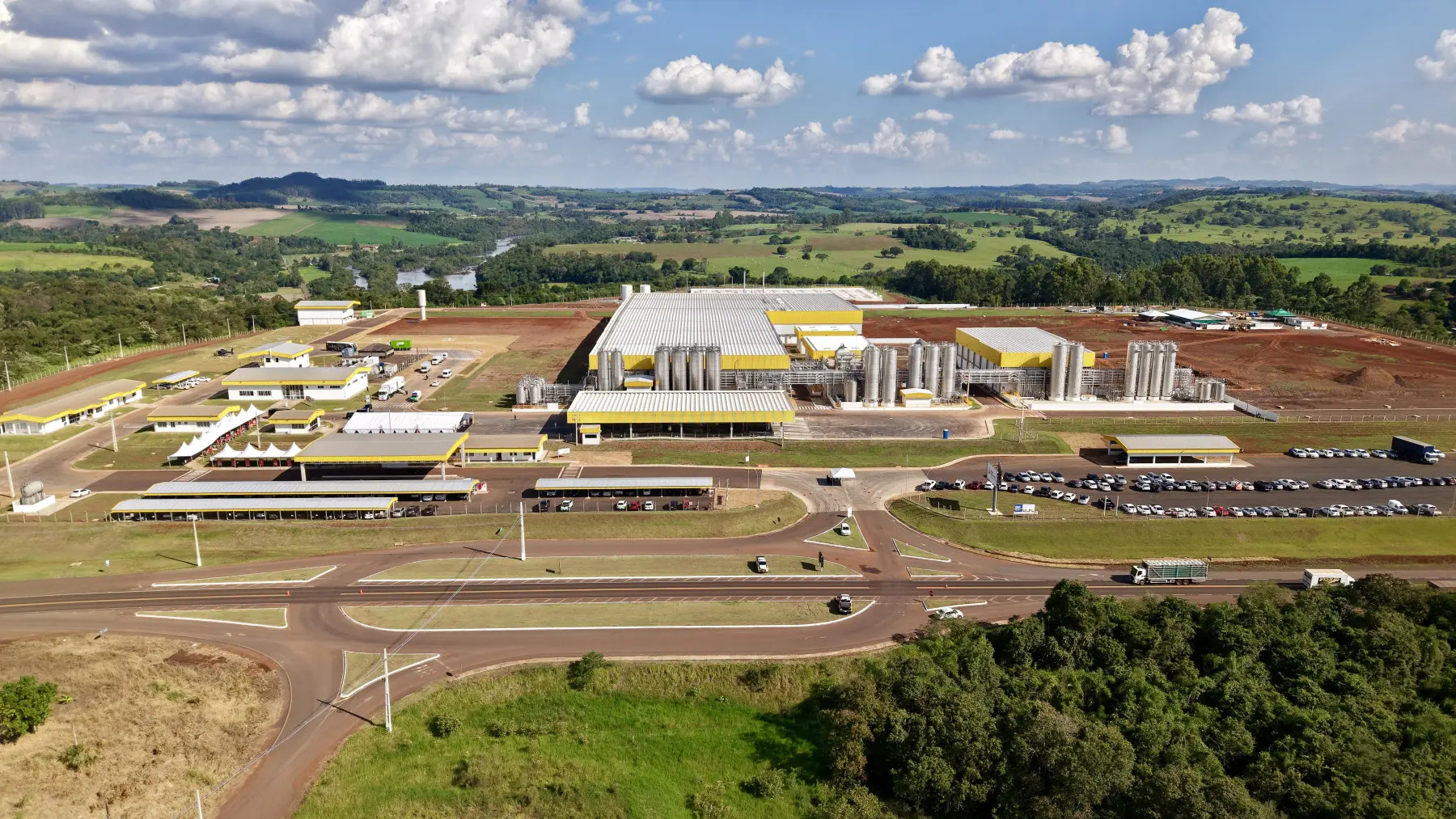
With an investment of R$ 612 million, a capacity to process 1.2 million liters of milk per day, Piracanjuba inaugurates a mega cheese factory that increases national production, reduces dependence on imports, and repositions Brazil on the global dairy map.
-
Brazilian city gains industrial hub for 85 companies that is equivalent to 55 football fields.


However, experts warn of the risks. Such measures could trigger a trade war and increase inflation in the U.S., as the rise in tariffs would make imported goods more expensive for American consumers. “This import tariff increase policy is not liberal. It goes against the free market and has a direct inflationary effect,” explains José Francisco de Lima Gonçalves, chief economist at Banco Fator. “If consumers have no local production alternatives for what was once imported, prices will rise, and this directly impacts the economy.”
Subsidies and Tax Exemptions: Economic Populism?
In addition to tariffs, Trump plans to make permanent the tax cuts instituted during his first term, which were set to expire in 2025. This tax relief measure, along with new subsidies and exemptions for American sectors, was a promise that pleased the electorate but raised concerns among economists. “The United States is not used to this type of long-term tax benefit. Here, it is common for a temporary tax cut to become permanent, as we saw with the payroll tax relief in Brazil, which was created as a provisional measure and is still in effect more than a decade later,” says Livio Ribeiro from FGV.
Trump also promises tax exemptions for sectors like services, especially for workers’ tips, which would have a limited effect on the middle class and could distort the labor market. “Exempting taxes on tips may seem like a fair measure, but in practice, it will only benefit a fraction of the workforce and create an imbalance in income policies,” adds Steven Kamin, senior researcher at the American Enterprise Institute.
Deportation of Immigrants and Impact on the Labor Market
Another controversial point in Trump’s economic agenda is his promise to deport millions of undocumented immigrants. Today, many sectors of the American economy, such as construction and services, heavily rely on immigrant labor. The withdrawal of this workforce could create a shortage of workers in crucial areas and increase costs, resulting in a price increase.
Mass deportation would thus have a direct impact on the economy. “If we remove millions of workers, especially in the service and construction sectors, the market will struggle to find substitutes. This creates inflation by increasing companies’ operating costs, which will eventually be passed on to the final consumer,” points out Kamin. The situation could further exacerbate labor shortages in certain regions of the U.S., making the scenario even more complicated.
Treasury Direct Sales Reach the Highest Monthly Value in History, Totaling R$ 8.01 Billion in August
Economic Nationalism and Break with Liberalism
The Controversial Proposals of the New U.S. President for the Economy mark a departure from the liberal agenda that has traditionally guided U.S. economic policies over the past decades. Instead of seeking to open the market and promote global competition, Trump advocates a more nationalist and protectionist path, focusing on strengthening industries and the domestic labor market. Armando Castelar, an economist at FGV, classifies this approach as “a modern reinterpretation of mercantilism.” He explains that by adopting an agenda focused on tariffs and subsidies, Trump seeks to reindustrialize the country and prioritize American workers, even if this means raising prices for consumers.
“Trump’s policy does not fit into classical liberalism, nor in Keynesianism or any other standard economic theory. It is a hybrid model, with elements of protectionism and interventionism, and is far from what one would expect from a liberal economy,” asserts Castelar.
The Impact of Trump’s Policies on the Global Economy
Trump’s return to the presidency of the U.S. represents a turning point not only for the country but also for the global economy. The proposal to increase import tariffs and stimulate domestic production could trigger a chain reaction, leading other nations to adopt protectionist measures to protect their economies. “The scenario that Trump envisions for the coming years could reduce global trade and affect economies that depend on exports to the United States,” says Francis Fukuyama in an article for the Financial Times. Fukuyama also warns that the nationalist movement could cause fragmentation of international trade and increase the cost of living in countries that depend on products imported from the U.S.
A Break with American Liberalism?
Trump’s proposals have highlighted a shift in the political and economic landscape of the United States. For decades, the country has been the standard bearer of economic liberalism and globalization. However, Trump’s rhetoric suggests that liberalism, at least as we knew it, is being reevaluated. “Trump is the symbol of a moment when globalization and the free market are under scrutiny. He represents a change, not just for the U.S., but for the entire world,” says Fukuyama.
With these changes, the effects will be felt worldwide, including in Brazil. American protectionism may limit Brazilian products’ access to the U.S. market, as well as alter price dynamics and competition in the international market.
Will Trump’s return mark the beginning of a new economic era? How far will these nationalist and interventionist policies take the U.S. – and the world?








Seja o primeiro a reagir!