





 Portuguese
  English
  Spanish
  3 min of reading
  1 comment


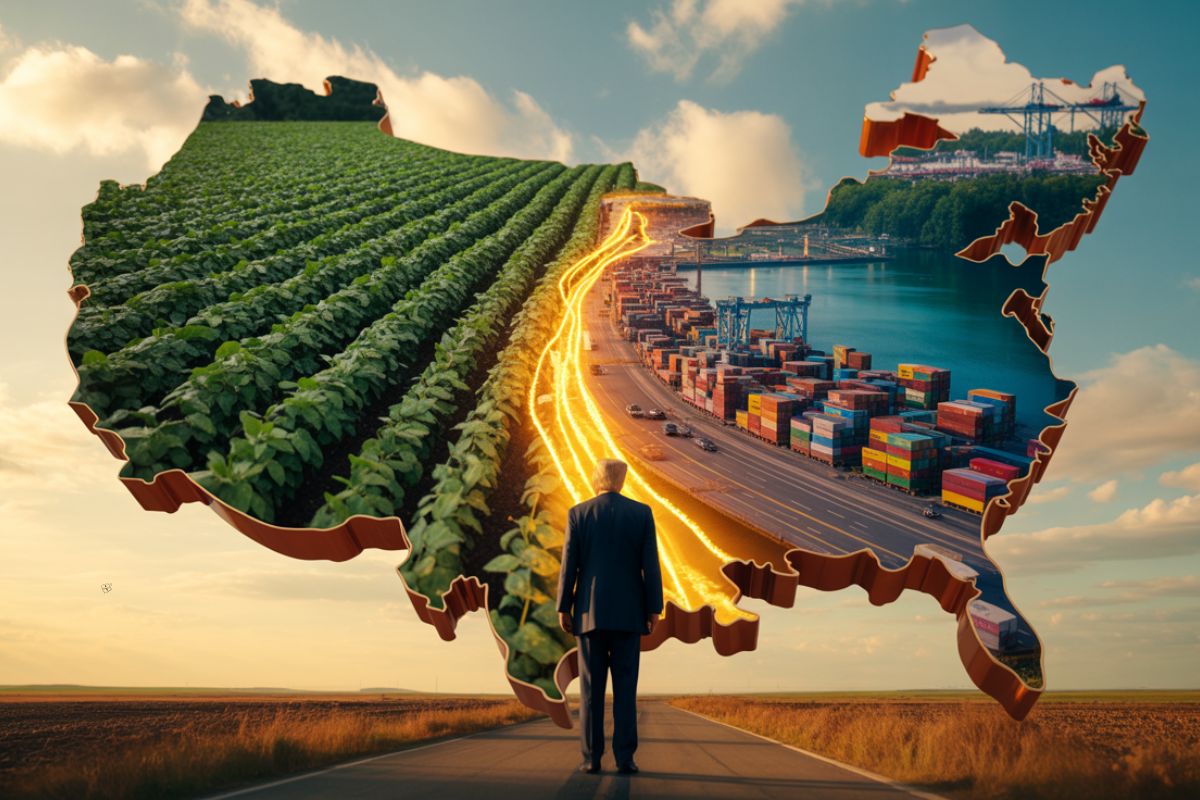

Trump Pressures China For Record Soybean Purchase And Reignites Trade Dispute. Requirement To Quadruple Orders Exposes Tension Between The Largest Economies In The World And Directly Affects Global Agriculture
The Trump Pressures China has returned to the spotlight this week. In a post on Truth Social, the President of the United States urged Beijing to quickly quadruple its purchase of American soybeans, claiming that this would help reduce the Chinese trade deficit with Washington.
The demand comes at a delicate moment, with the deadline of the temporary trade truce about to expire. The move was interpreted as an attempt by Trump to use soybeans — one of the main agricultural products exported by the U.S. to China — as a bargaining chip in a broader deal.
How Soybeans Entered The Trade War Board
The relationship between soy and diplomacy is not new. During the first escalation of the trade war, China redirected much of its purchases to Brazil, drastically reducing imports from the U.S.
-
A new Brazilian shopping center worth R$ 400 million will be built in an area equivalent to more than 4 football fields, featuring 90 stores, 5 cinemas, a supermarket, a college, and parking for 1,700 cars, potentially generating 3,000 jobs.

-
Larger than entire cities in Brazil: BYD is building a 4.6 km² complex in Bahia with a capacity for 600,000 vehicles per year, but the discovery of 163 workers in conditions analogous to slavery has shaken the entire project.

-
With an investment of R$ 612 million, a capacity to process 1.2 million liters of milk per day, Piracanjuba inaugurates a mega cheese factory that increases national production, reduces dependence on imports, and repositions Brazil on the global dairy map.
-
Brazilian city gains industrial hub for 85 companies that is equivalent to 55 football fields.

According to Mariana Almeida, an analyst interviewed by CNBC, this shift benefited Brazilian agriculture, which increased its soybean exports to China by billions of dollars, taking advantage of a record harvest and high Asian demand. For American producers, however, the measure represented significant losses and pressure on the government.
Trump’s Goal And Its Practical Challenges
The request to quadruple purchases is considered unrealistic in the short term. To achieve this volume, about 80% of total U.S. soybean exports would have to be directed exclusively to China, forcing the country to redirect sales from other markets.
Additionally, the soybean production cycle does not allow for such abrupt increases without prior planning. The trading of agricultural commodities involves contracts, planting and harvesting windows, and the need to maintain trust between buyer and seller.
The Impact On Brazil And The Global Market
If China significantly increases its purchase of American soybeans, supplying countries like Brazil would have to seek new markets to compensate for the loss of ground in the Asian giant. This could lead to changes in global price dynamics and alter established supply chains.
On the other hand, if the deadlock continues, Brazilian producers will remain a strategic alternative, strengthening their presence in the Chinese market and taking advantage of periods of instability in Sino-American relations.
The Truce That Expires And The Risk Of New Tariffs
The 90-day deadline of the current trade truce between the U.S. and China ends tomorrow, and there are no guarantees of renewal. The uncertainty worries the agricultural sector, which needs predictability to plan production and logistics.
Mariana Almeida emphasizes that “Trump’s Numbers Game ignores essential microeconomic factors, such as price stability and maintaining alternative markets. Quadrupling purchases is more of a political move than a viable goal.”
And you, do you believe that the “Trump Pressures China” strategy can actually change the global flow of soybeans or is it just political rhetoric? How would this impact Brazil? Share your opinion in the comments.







Kkkkkk. O naziracista quer mandar no mundo.