





 Portuguese
  English
  Spanish
  4 min of reading
  0 comments


Large-Scale Tariff Measures, Attacks on the Federal Reserve, and New Rules for Stablecoins Show How Trump Wants to Weaken the Dollar, but Experts Warn That the Maneuver Could Generate Global Instability and Erode Confidence in the American Currency
Donald Trump has adopted a set of measures that, according to experts consulted by g1, converge towards a single goal: weaken the dollar. By promoting an environment of uncertainty with tariffs against trading partners, pressuring the Federal Reserve for interest rate cuts, and even introducing regulation of stablecoins, the Republican president signals that he wants to make American products more competitive in the external market.
The plan, however, is far from simple. The dollar is the most widely used currency in international reserves and global transactions, which guarantees its hegemony even in times of turmoil. Economists like André Perfeito and André Roncaglia, cited by André Catto in g1, argue that Trump’s strategy could have dangerous side effects, such as increased inflation and structural weakening of U.S. exports.
Why Trump Insists on a Weaker Dollar
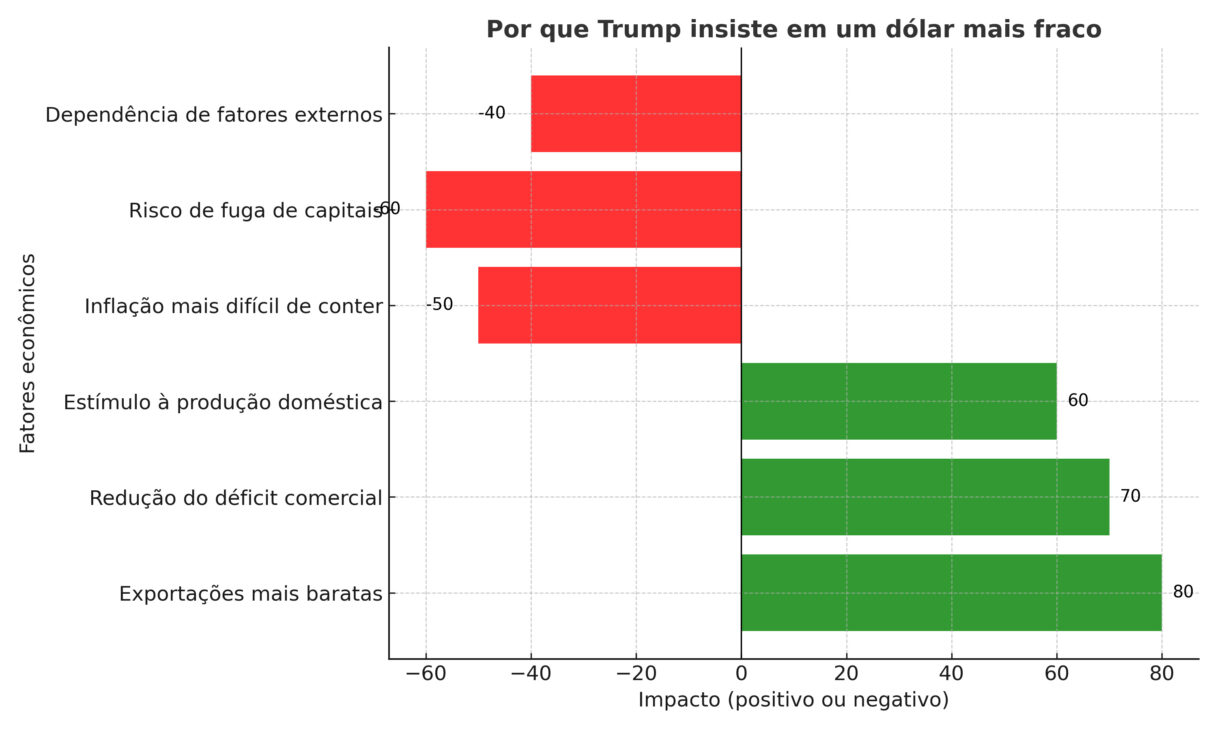
The president himself has admitted in recent speeches that a strong dollar harms strategic sectors of the economy.
-
With an investment of R$ 612 million, a capacity to process 1.2 million liters of milk per day, Piracanjuba inaugurates a mega cheese factory that increases national production, reduces dependence on imports, and repositions Brazil on the global dairy map.

-
Brazilian city gains industrial hub for 85 companies that is equivalent to 55 football fields.

-
Peugeot and Citroën factory in Argentina cuts production by half and opens a layoff program for more than 2,000 employees after Brazil drastically reduced purchases of Argentine vehicles.

-
A Brazilian city gains a factory worth R$ 300 million with the capacity to process 200 thousand tons of wheat per year, a mill of 660 tons/day, silos for 42 thousand tons, and an industrial area of 276 thousand m².


“You can’t sell tractors, you can’t sell trucks, you can’t sell anything,” Trump said, highlighting that currency appreciation may be positive only for inflation control but represents obstacles to foreign trade.
The logic behind this movement is clear: the more appreciated the dollar, the more expensive American products become for other countries.
By weakening the currency, Trump aims to reduce the trade deficit and stimulate domestic production.
Still, experts remind us that unilateral currency policies rarely sustain results in the long term since they depend on factors like interest rates, global confidence, and capital flow.
The Risks of Devaluing the Hegemonic Currency
The large-scale tariff policy adopted by Trump has created a scenario of instability that has directly affected the exchange rate.
In 2025, the DXY index, which compares the dollar to a basket of strong currencies, recorded a decline of over 10%.
The movement benefited emerging currencies like the real, but also raised the prices of gold, a safe asset that increased by almost 40% in the year.
According to André Catto from g1, the risk is that the dollar, even if it remains a reserve currency, loses some of its attractiveness.
This could further pressurize the American economy, which is grappling with persistent trade deficits and relies on external financing to maintain its high level of consumption.
Trump and the Attacks on the Federal Reserve
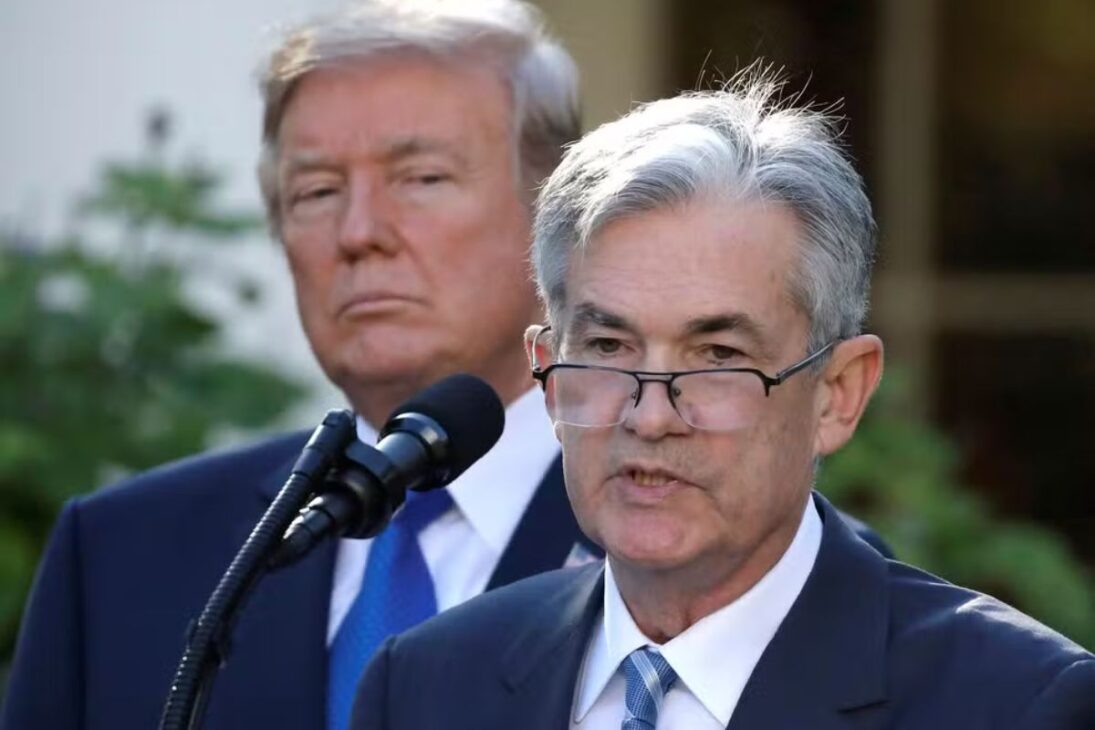
Another axis of the strategy is the offensive against the Fed. Trump has already called the institution’s president, Jerome Powell, “dumb” and “stubborn” and has begun indicating allies willing to cut interest rates more aggressively.
In September, the basic rate fell to the range of 4% to 4.25% per year, and the government’s pressure was for even larger cuts.
For experts, this stance aims to reduce the inflow of capital into the U.S., forcing a devaluation of the dollar.
The idea is that with lower yields, investors will seek other markets, decreasing the demand for the American currency without compromising its status as an international reserve.
The Role of Stablecoins in Trump’s Plan
In parallel, Trump signed the Genius Act, the first federal law in the U.S. to regulate stablecoins.
These digital currencies, backed by secure assets like Treasury bonds, create a new source of structural demand for American debt.
Economists explain that by purchasing a stablecoin, the investor indirectly finances the government, which can offset some of the pressure caused by lower interest rates.
According to André Perfeito, this innovation could serve as a “shortcut” to maintain confidence in American securities even in the face of interest rate cuts.
But effectiveness depends on market acceptance and the credibility of the rules imposed by the new law.
An Old Strategy, but With New Risks
The attempt to weaken the dollar is not unprecedented in U.S. history. Nixon, Reagan, and Obama also resorted to similar policies in different contexts.
But, as Roberto Dumas, a professor at Insper, reminds us, the American problem goes beyond the exchange rate: it involves low domestic saving and excessive spending.
Without addressing these causes, piecemeal measures tend to fail.
The difference now is that Trump combines aggressive fiscal policies, institutional attacks, and regulation of digital assets in a single offensive.
The outcome could be unpredictable, both for the U.S. and for the global economy.
Trump’s idea of forcing the dollar’s devaluation may seem a quick path to increasing exports, but experts warn of consequences that may compromise the credibility of the world’s most important currency.
While on one hand, the measure benefits some sectors of the American industry, on the other hand, it may open gaps for instability, inflation, and loss of international confidence.
And you, do you believe Trump wants to weaken the dollar to protect the American economy, or do you think the strategy could turn into a risk for the United States itself? Leave your opinion in the comments — we want to hear your views on this movement.









-

-

2 pessoas reagiram a isso.