





 Portuguese
  English
  Spanish
  4 min of reading
  0 comments


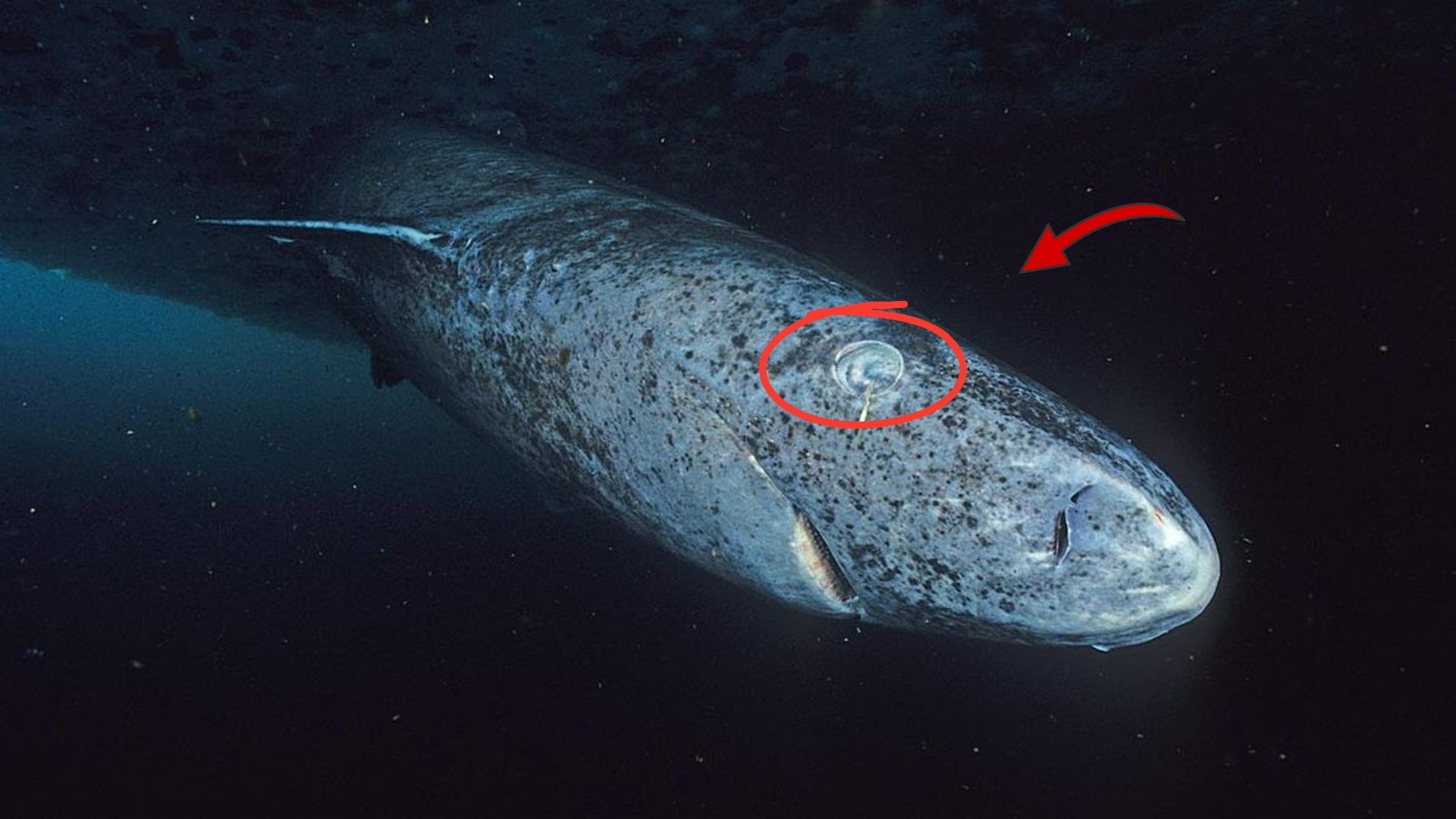
Scientific Study Reveals That the Greenland Shark Maintains An Active Visual System For Over A Century, Contradicting Old Theories And Opening New Leads On Longevity And Eye Health
For decades, science believed that one of the longest-living animals on the planet hardly saw. However, a new detailed analysis of the eyes of the Greenland shark (Somniosus microcephalus) revealed something surprising: even after over 100 years of life, these animals maintain a functional visual system, highly adapted to the extreme darkness of the ocean depths. The discovery challenges long-held assumptions and reignites the debate on how extremely long-lived organisms manage to preserve sensitive tissues over time.
The information was released by ScienceAlert, based on a study recently published in the scientific journal Nature Communications, resulting from a collaboration among researchers from the United States, Switzerland, and Denmark. The work analyzed the eyes of sharks captured and euthanized between 2020 and 2024, all under official government authorization from the territory where the collections took place.
The individuals analyzed had estimated ages over 100 years, with the oldest surpassing 130 years, reinforcing the status of the Greenland shark as one of the longest-lived vertebrates known.
-
Where there was only sand and wind at 40 degrees, China built a megacity of 500,000 inhabitants with farms, vineyards, and universities in the middle of the desert using melted glacier water from hundreds of kilometers away.

-
In the middle of the desert, Saudi Arabia wants to make it snow, build a billion-dollar ski resort on a 2,600-meter mountain, and prove to the world that even sand can become a luxury winter destination.

-
Without a button, sensor, or any electronic system, Harvard scientists create a solar device that autonomously decides whether to generate energy or heat and can transform energy use in homes and buildings.

-
Theories about UFOs have resurfaced strongly after an aerospace scientist and a general connected to the Roswell case mysteriously disappeared in the United States within a few months, and even the FBI was called in to investigate.


Life In The Depths And The Myth Of Total Blindness
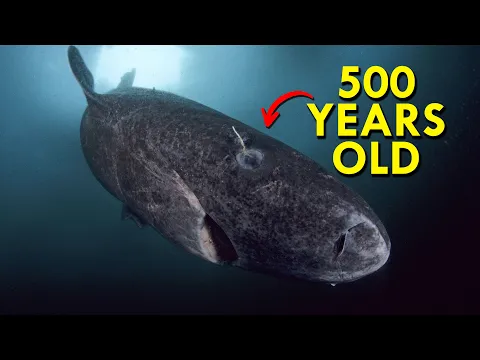

The Greenland shark spends most of its life in deep waters, reaching up to 1,200 meters below the surface — equivalent to 3,940 feet. In these regions, the amount of available light decreases drastically from 100 meters, and below 1,000 meters, there is practically no sunlight incidence.
Moreover, these sharks often have parasites adhered to their corneas, which led many scientists to conclude, for years, that the animal survived with little or no visual acuity. However, contrary to this hypothesis, molecular, genomic, and structural analyses of the ocular tissues showed that the eyes remain surprisingly healthy, even after a century of continuous use in extreme conditions.
Corneal measurements indicated that, even with adhered parasites, the structure still allows for the transmission of most of the incident light, which contributes to the maintenance of vision in almost completely dark environments.
A Retina Made To See In Absolute Darkness
From a biological perspective, the retina of vertebrates typically has two types of light-sensitive cells: cones and rods. While cones are responsible for color vision and function better in illuminated environments, rods are highly sensitive to light and essential for vision under low light conditions.
In the case of the Greenland shark, researchers discovered that the retina lacks cones, being composed exclusively of rods — a rare adaptation observed only in a few animals that permanently inhabit dark environments. This characteristic allows for optimized vision for the constant twilight of the ocean depths.
Additionally, scientists analyzed rhodopsin, a light-sensitive protein present in rods. In the studied sharks, the sensitivity of rhodopsin peaks at around 458 nanometers, corresponding to blue light, precisely the wavelength that can penetrate most efficiently in the deep waters where these animals live.
Extreme Longevity And Preservation Of Vision For Over A Century
Another notable finding from the researchers was the state of preservation of the retinas. Even in individuals over 100 years, no signs of retinal degeneration were observed, something common in aging animals and humans. Although the exact mechanism has yet to be identified, scientists suspect that the phenomenon is linked to a highly efficient DNA repair system, already associated with the extraordinary longevity of the species.
According to the authors of the study, this ability to keep neuronal tissues intact for so long highlights the Greenland shark as a valuable biological model for understanding cellular maintenance processes throughout life. It is still unclear whether these findings could generate direct applications for human eye health, but the scientific potential is considered significant.
“Our results support the presence of a preserved and functional visual system in the adult Greenland shark, well adapted to extreme low-light conditions,” the researchers state in the article. They add that the animal “represents an impressive example of long-term preservation of retinal integrity, sustained at the molecular and histological levels, highlighting the extraordinary potential for neuronal maintenance in extremely long-lived organisms.”
Source: Sciencealert







-

-

3 pessoas reagiram a isso.