





 Português
  Inglês
  Espanhol
  4 min de leitura
  0 comentários


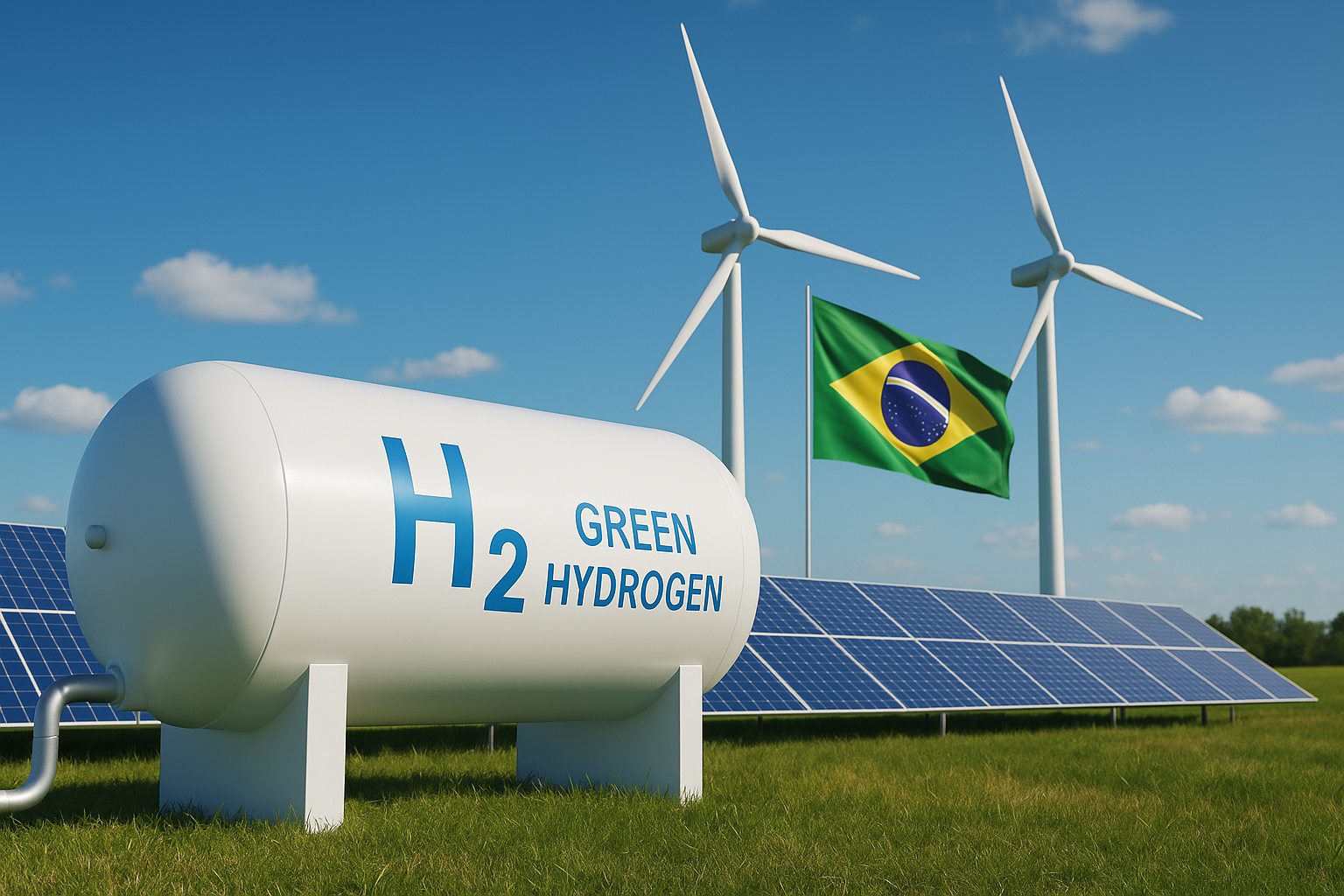
Understand How Green Hydrogen in Brazil Becomes a Key Element in the Energy Transition, Attracting Investments and Strengthening National Protagonism in Sustainability.
The interest in hydrogen as an energy source dates back to the 19th century, when French scientist Jules Verne envisioned a future where hydrogen could be used as clean fuel.
However, it was only in recent decades that this idea gained traction, especially due to concerns about climate change and the urgent need for sustainable alternatives.
In Brazil, green hydrogen has been gaining prominence as a solution to diversify the energy matrix and reduce greenhouse gas emissions.
-
Renewable energy advances over protected areas in Brazil, and a survey by the Energy Transition Observatory reveals silent impacts that challenge environmental conservation and pressure sensitive traditional territories.

-
Rio Grande do Sul accelerates energy transition: State invests in renewable technologies and consolidates decarbonization strategies and pathways to attract billions in new industrial investments.

-
With 160,000 m² of collectors, an area larger than 20 football fields, Silkeborg, in Denmark, hosts a solar thermal plant that heats 19,500 homes and could become the largest solar heating plant in the world.

-
A study reveals the expansion of renewable energy procurement in Brazil and shows how companies are taking advantage of opportunities to reduce expenses, ensure energy efficiency, and strengthen strategic environmental commitments.


According to the International Energy Agency (IEA, 2023), green hydrogen is produced through water electrolysis using renewable energy, which avoids carbon emissions.
Hydrogen is the most abundant chemical element in the universe and, when used as fuel, generates energy without releasing carbon dioxide.
Electrolysis, a process that divides water into hydrogen and oxygen using electric current, becomes sustainable when the energy powering this process comes from clean sources like solar, wind, or hydropower.
Historically, gray hydrogen, produced from natural gas, has dominated the industry but emits large amounts of CO₂.
Blue hydrogen, an alternative that captures these emissions, still depends on fossil fuels.
In contrast, green hydrogen stands out for being truly clean, driven by the growth of renewable energies and climate urgency, as reported in the IEA 2023 report.
The Natural Potential of Brazil for Green Hydrogen
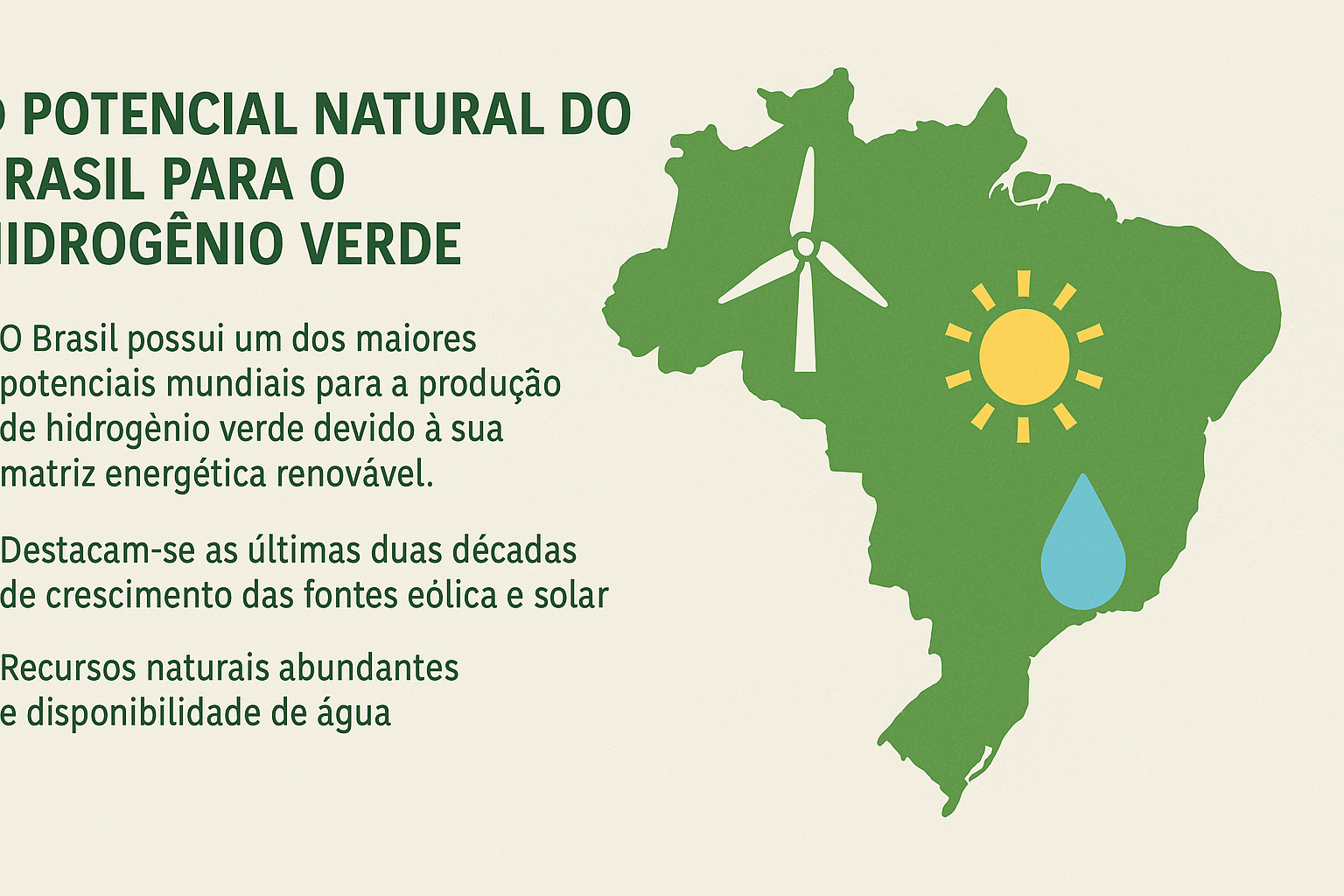
According to the National Energy Plan 2050, released by the Energy Research Company (EPE) in 2022:
Brazil has one of the largest global potentials for green hydrogen production due to its renewable energy matrix.
The country has a solid track record in clean energy, particularly hydropower, which has been Brazil’s main source since 1950.
In the last two decades, the growth of wind and solar sources has further enhanced this potential.
Brazil is abundant in natural resources, has vast land available for renewable parks, and has water availability, all favorable factors for the production of green hydrogen.
In 2021, the Ministry of Mines and Energy launched the National Hydrogen Program (PNH2), aiming to align efforts among government, companies, and universities to promote the sector.
According to the Brazilian Agency for Industrial Development (ABDI, 2023), the PNH2 aims for technological development, workforce training, and stimulating private investments.
States like Ceará, Bahia, Rio Grande do Norte, and Pernambuco are already announcing billion-dollar investments in infrastructure and research, aiming to transform their regions into hubs for the production and export of green fuel.
Projects and Investments That Drive the Sector
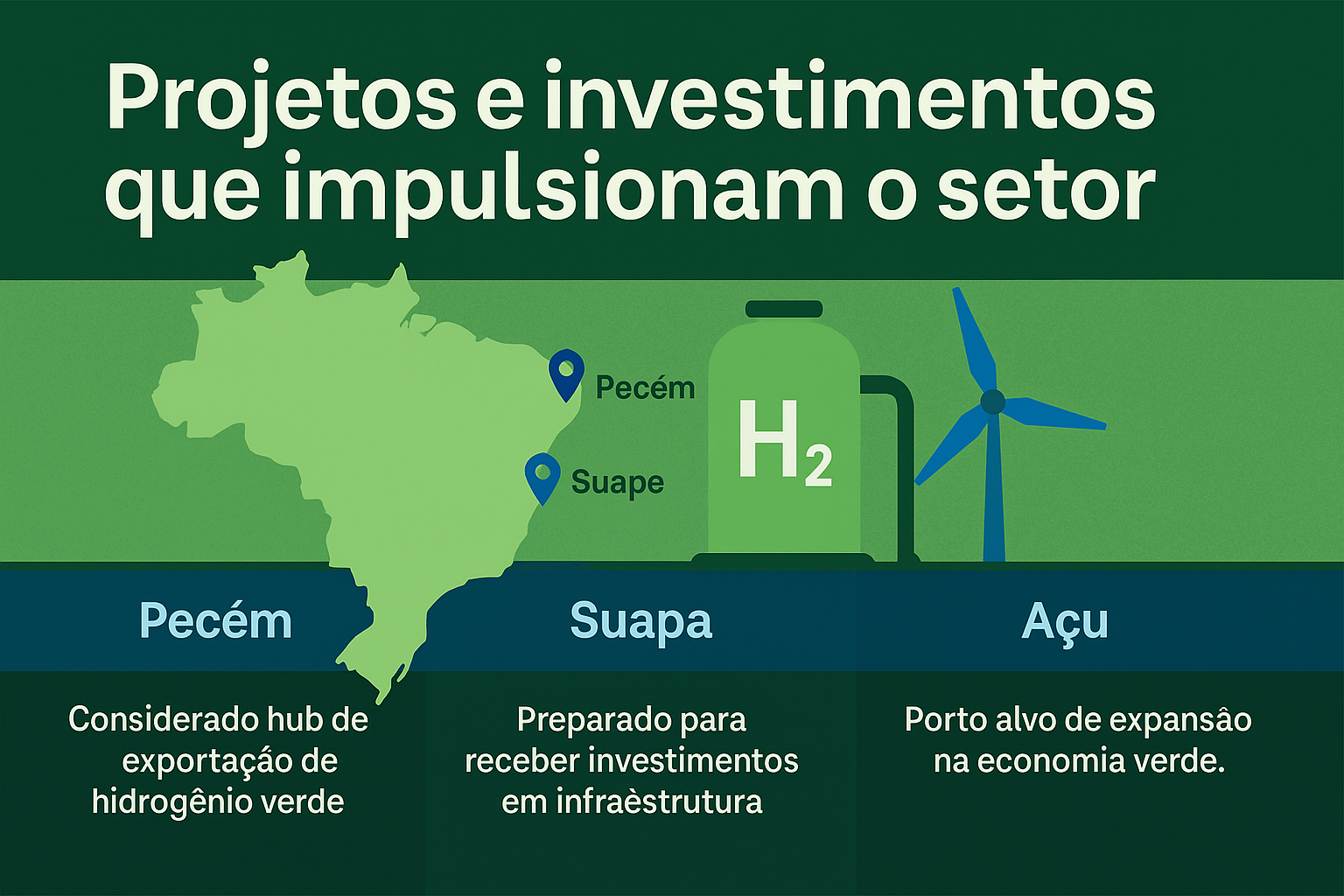
The Pecém Port in Ceará stands out as a strategic project, intending to transform the region into a green hydrogen export hub.
According to the Ceará Secretary of Economic Development (2023), its location near Europe facilitates the export of the product to international markets.
Additionally, the ports of Suape, in Pernambuco, and Açu, in Rio de Janeiro, are also preparing to receive investments in hydrogen infrastructure.
This expansion integrates port logistics into the green economy, fostering new businesses and generating jobs.
Despite the advances, Brazil faces challenges. The high initial cost of electrolysis equipment still limits production scale, making government support and effective public policies necessary.
According to the National Confederation of Industry (CNI, 2023), the lack of a clear regulatory framework represents another obstacle.
To attract investments, the country needs to establish rules and incentives that provide legal certainty and encourage sector growth.
Opportunities and Economic and Environmental Impacts
Historically, Brazil has experience with biofuels, such as ethanol, which boosted the national industry and contributed to the diversification of the energy matrix.
Now, with green hydrogen, the country has the opportunity to lead a new cycle of innovation.
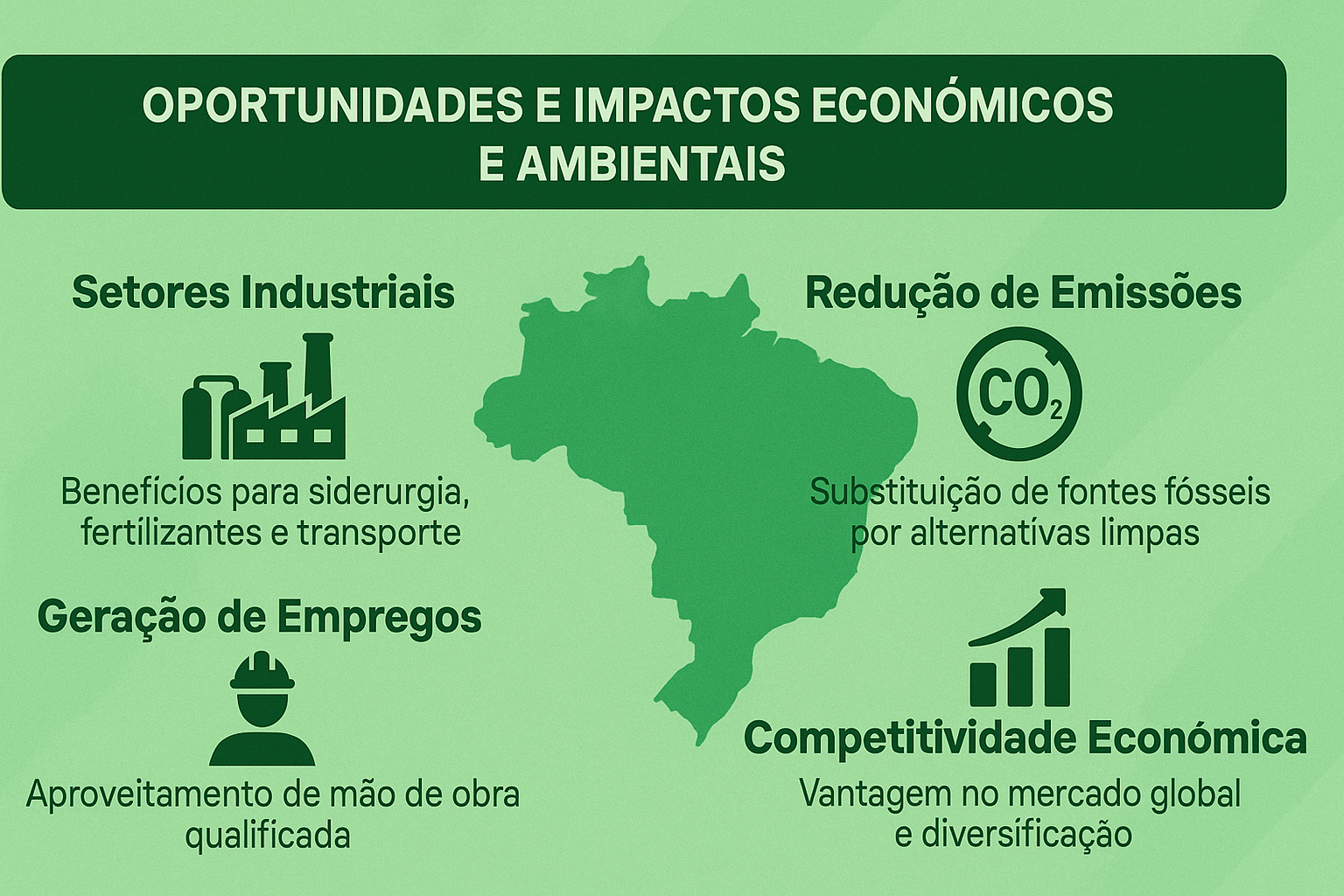
Sectors such as steelmaking, fertilizers, and heavy transport can benefit from hydrogen, replacing fossil sources with clean alternatives and reducing emissions.
According to the United Nations Development Program (UNDP, 2023), this transition brings environmental and social benefits, such as the creation of skilled jobs and strengthening the economy.
In agro-industry, green hydrogen can reduce Brazil’s dependence on imported fertilizers, representing a significant competitive advantage in the global market.
The advancement of green hydrogen helps the country meet climate goals established in international agreements, while strengthening its image as an environmental powerhouse.
Finally, green hydrogen in Brazil represents more than a trend: it is a solid strategy for a clean, secure, and competitive energy future.
With firm decisions, appropriate public policies, and coordinated investments, the country can lead this transformation and stand out globally in the sustainable economy.










-

Uma pessoa reagiu a isso.