





 Portuguese
  English
  Spanish
  5 min of reading
  0 comments



Discover How the Job Market in Infrastructure Has Evolved in Brazil, What Are the Growing Areas, and Why It Remains Essential for Economic and Social Development.
The job market in infrastructure has always been one of the pillars of economic and social development in Brazil.
From the first major public works, such as railways, ports, and highways in the 19th century, to current urban mobility, energy, and technology projects, this sector continues to generate jobs and sustain the country’s sustainable growth.
Moreover, working in infrastructure means operating in the areas that build, maintain, and modernize physical structures and essential services — such as roads, airports, sanitation, energy, telecommunications, and housing.
-
Employee Fired After Accumulating 114 Days of Medical Leave in One Year, Labor Court Upholds Company’s Decision

-
Employee Fired While Treating Depression Wins in Court and Vale Is Required to Rehire Him Following Decision Based on the CLT and INSS Benefits

-
Workers Should Be Aware! March 6 Will Be The Fifth Business Day Of March And The Final Deadline For Companies To Pay Salaries According To The CLT

-
2026 FGTS Anniversary Withdrawal Is Released According to Birth Month, Sets Amounts by Balance Range, Establishes Deadlines for March and April, and Changes Rules in Case of Dismissal


Therefore, the sector demands technical, qualified, and often specialized labor.
This diversity, therefore, ensures opportunities on different fronts, both in the public and private sectors.
Furthermore, infrastructure directly impacts the quality of life for people. When communities receive improvements in water supply, transportation, and sewage, the entire social dynamic transforms.
Thus, children can go to school more safely, hospitals receive supplies promptly, and local trade strengthens.
For this reason, investing in infrastructure is, above all, investing in dignity and social progress.
A Timeline of Infrastructure in Brazil
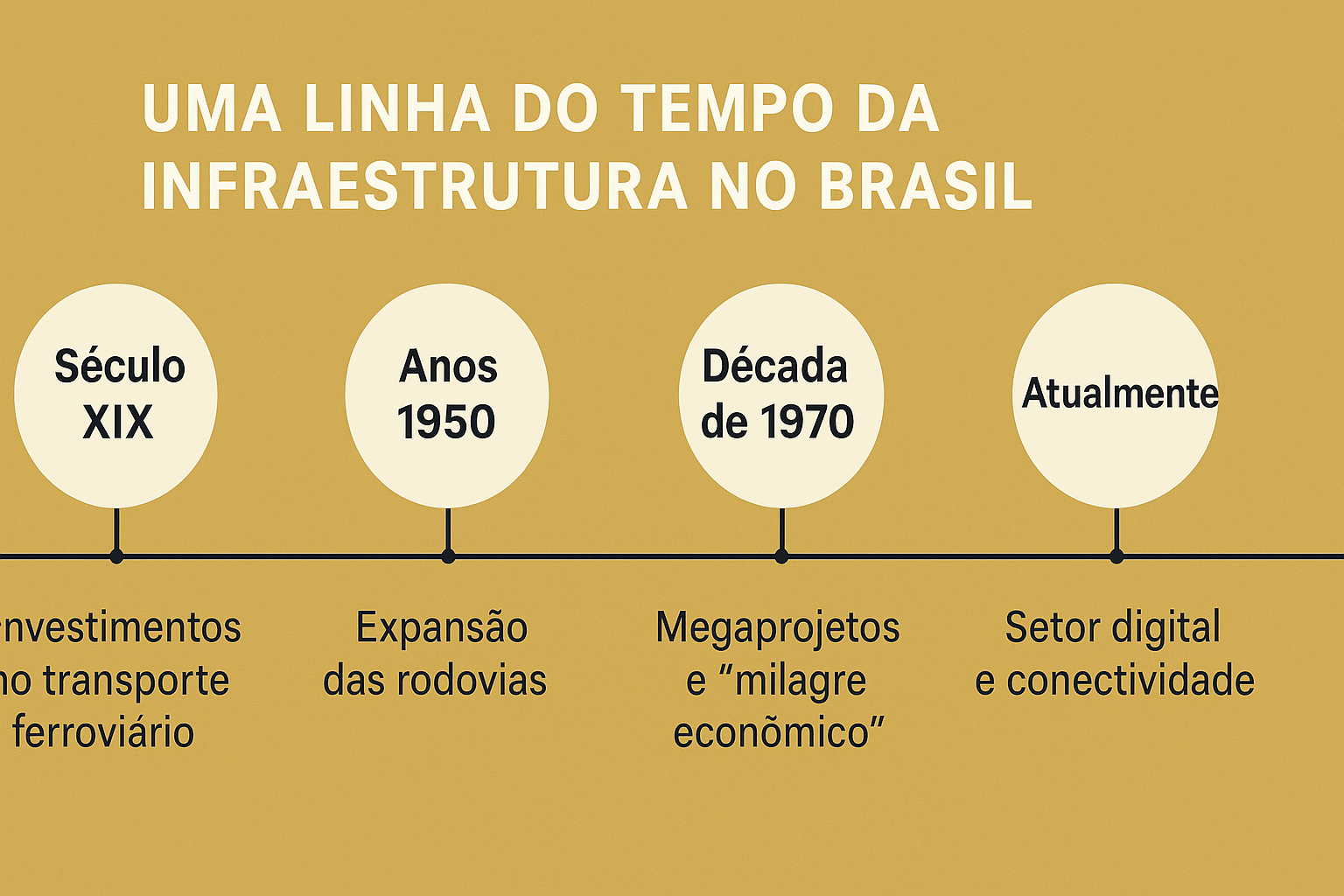
To understand the job market in infrastructure today, it is essential to observe the historical past of the country.
During the Empire and the First Republic, Brazil prioritized investments in rail transport to move agricultural production.
According to the Brazilian Institute of Geography and Statistics (IBGE), between 1860 and 1930, there was a significant growth in railways, especially in the Southeast and South regions, reflecting the need to connect agricultural areas to ports for export.
Over the years, the focus shifted to the expansion of highways, especially during the governments of Getúlio Vargas (1930-1945 and 1951-1954) and Juscelino Kubitschek (1956-1961).
According to data from the Ministry of Infrastructure, the 1950s marked the beginning of the construction of Brazil’s main highways, connecting regions and facilitating the transportation of goods.
The slogan “fifty years in five,” by Juscelino Kubitschek, propelled the construction of Brasília and major roads, consolidating the idea of progress tied to infrastructure.
In the 1970s, the country experienced the so-called “economic miracle.” During this period, megaprojects like hydropower plants and large highways gained prominence.
However, the economic crises and political instabilities of the following decades reduced investments.
This stagnation only began to change with public policies more focused on the sector, such as the Growth Acceleration Program (PAC), launched in 2007 by the federal government.
According to the Ministry of Planning, the PAC invested approximately R$ 503 billion in works and services until 2014, encouraging the resumption of essential projects.
Additionally, today, infrastructure also includes the digital sector: fiber optic networks, data centers, and connectivity have become essential.
According to data from the National Telecommunications Agency (Anatel), Brazil already has over 1.2 million kilometers of installed fiber optic cables in 2023, a proof of the growing importance of technology for modern infrastructure.
In an increasingly connected world, these elements support the digital economy and ensure access to information on a large scale.
The Importance of the Sector for the Economy and Society
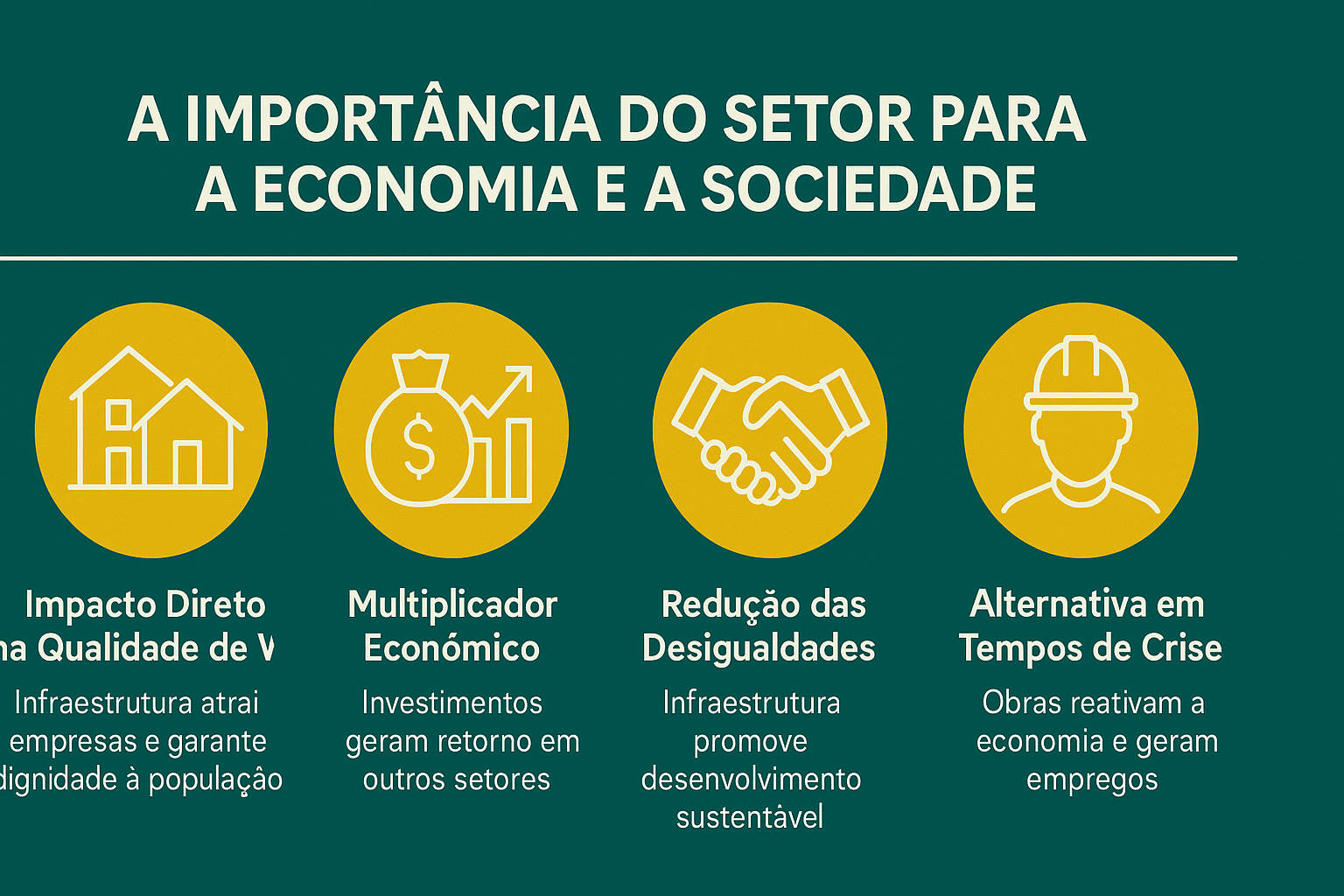
The infrastructure sector moves trillions of reais worldwide and has a direct impact on job creation, quality of life, and attracting investments.
Therefore, a well-structured city, with paved streets, effective sanitation, functional public transportation, and accessible internet attracts companies, boosts commerce, and ensures dignity for the population.
In addition, infrastructure acts as an economic multiplier. Every real invested generates returns in other sectors — such as civil construction, technology, engineering, and specialized services — stimulating the economy in a chain reaction.
According to the Institute for Applied Economic Research (IPEA), investments in infrastructure promote sustainable economic growth and reduce regional inequalities, proving the importance of infrastructure as a development tool.
In times of crisis, investments in infrastructure gain even more relevance. Governments often turn to major works to reactivate the economy, generating jobs and income quickly.
Thus, the sector becomes a strategic alternative for economic recovery.
Current Overview of the Job Market in Infrastructure
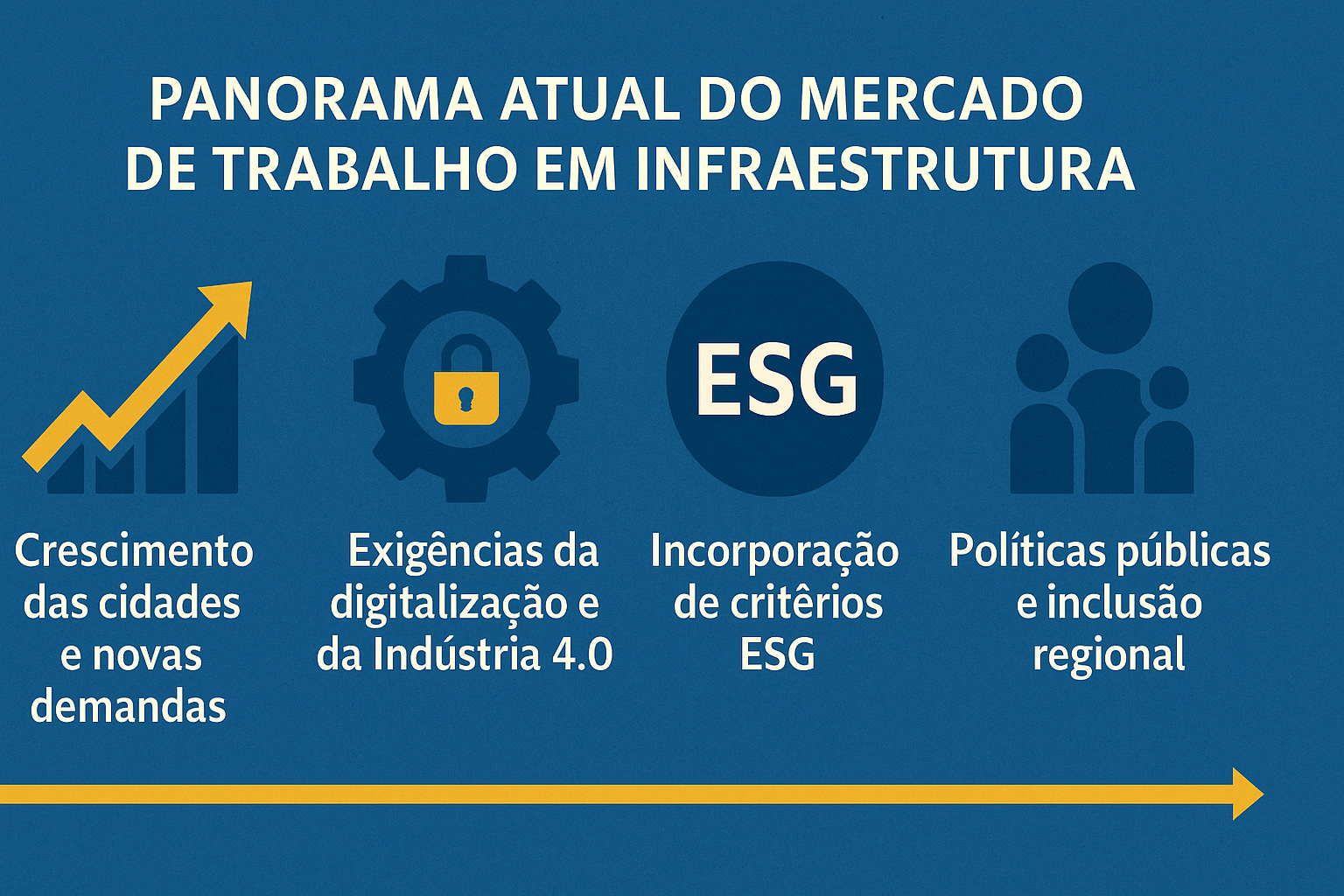
The population continues to grow, cities expand, and needs evolve. Therefore, the sector requires constant maintenance, modernization, and new projects.
With the advance of digitalization and Industry 4.0, new demands arise. Today, it is not enough to build roads and bridges — it is necessary to integrate them into intelligent systems with sensors, remote monitoring, data analysis, and energy efficiency.
This expands opportunities for professionals in engineering, technology, telecommunications, and automation.
Another important point is the incorporation of the ESG (Environmental, Social and Governance) agenda in the sector.
Companies seek professionals with a strategic, multidisciplinary profile sensitive to environmental and social causes.
Thus, the inclusion of sustainable criteria in works opens new job fronts and promotes more conscious and lasting infrastructure.
Furthermore, public policies focused on social inclusion and regional development have increased access to work in previously neglected regions.
Therefore, projects in peripheral communities and rural areas offer employment while simultaneously reducing historical inequalities.
Highlighted Areas and Professions in the Sector
The infrastructure sector welcomes professionals of all education levels. Workers, technicians, engineers, urban planners, architects, logistics specialists, technology experts, and sustainability professionals have guaranteed space.
Some areas have been gaining prominence. For instance, urban infrastructure is growing with a focus on mobility and accessibility.
Digital infrastructure is rapidly expanding, driven by the demand for connectivity.
The energy sector is transforming with renewable sources.
Meanwhile, sanitation has gained priority with the new legal framework approved in 2020, which envisions the universalization of services by 2033, according to the Ministry of Regional Development.
Logistics and transportation are also being boosted by the growth of e-commerce.
Therefore, companies are seeking efficient and quick solutions for moving products, opening new opportunities for those working in fleet management, routing, technology, and data analysis.
Public works continue to be major job generators, especially during economic recoveries.
At the same time, Public-Private Partnerships (PPP) create demands for managers, analysts, and legal professionals specialized in contracts and bidding.
Overall, the job market in infrastructure is vast, strategic, and essential for Brazil’s development.
Thus, those who work in infrastructure participate in a constant process of construction — of cities, opportunities, and a better future.
If you intend to pursue a career in the area, know that there is space for those who want to make a difference with purpose, technique, and responsibility.











Seja o primeiro a reagir!