





 Português
  Inglês
  Espanhol
  4 min de leitura
  0 comentários


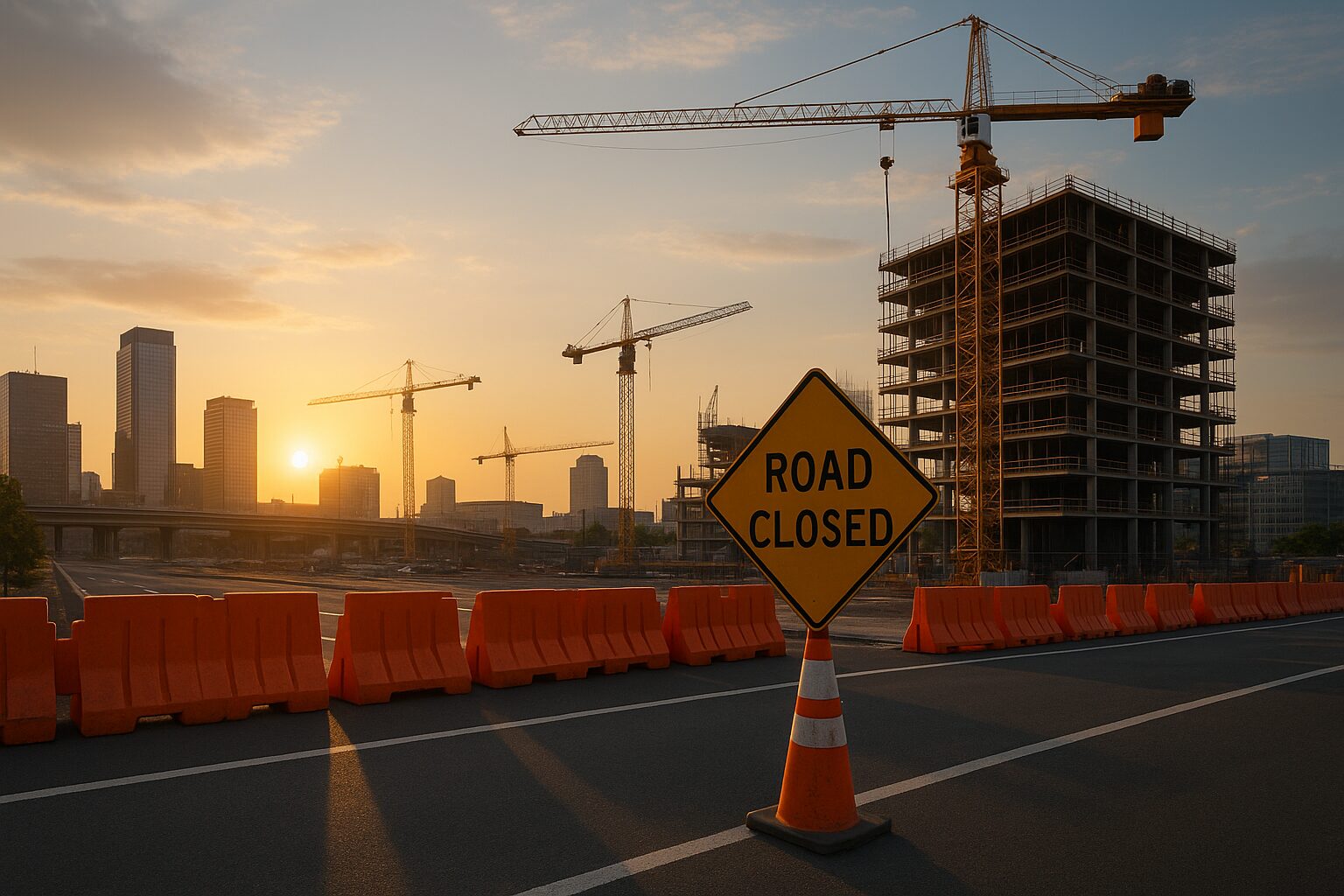
Discover How the Future of Infrastructure Is Transforming the Labor Market with Technology, Innovation, and Sustainability That Shape the Professions and Cities of Tomorrow.
The infrastructure has always been essential for the development of societies.
From the early Roman roads to the imposing modern skyscrapers, it represents the foundation upon which we build economic, social, and technological progress.
However, what can we really expect from the future of infrastructure? How will it affect the labor market? And what transformations are already underway?
-
Employee Fired After Accumulating 114 Days of Medical Leave in One Year, Labor Court Upholds Company’s Decision

-
Employee Fired While Treating Depression Wins in Court and Vale Is Required to Rehire Him Following Decision Based on the CLT and INSS Benefits

-
Workers Should Be Aware! March 6 Will Be The Fifth Business Day Of March And The Final Deadline For Companies To Pay Salaries According To The CLT

-
2026 FGTS Anniversary Withdrawal Is Released According to Birth Month, Sets Amounts by Balance Range, Establishes Deadlines for March and April, and Changes Rules in Case of Dismissal


To answer these questions, it’s essential to take a brief journey back in time and understand how infrastructure has shaped the world so far.
A Look at the Past

Historically, significant advances in infrastructure have occurred during times of profound transformation.
The Industrial Revolution, for example, not only changed production methods but also necessitated the construction of railways, ports, bridges, and energy systems.
The “Industrial Revolution,” which began in the late 18th century, transformed not only the way people worked but also the cities, with the emergence of new urban areas and the intensification of infrastructure construction.
According to the International Labour Organization (ILO), infrastructure was crucial for economic growth during this period.
During the Industrial Revolution, infrastructure not only boosted the economy but also generated new professions.
Railway engineers and factory workers became a vital part of the economy.
However, new challenges also emerged, such as pollution and unhealthy working conditions, issues that began to be addressed in the following decades, especially after the two world wars.
After the world wars in the 20th century, many countries invested in large reconstruction and modernization projects.
It was then that federal highways, telecommunication networks, and the first integrated sanitation systems emerged.
According to the ILO report, from 1945 to 1970, the world experienced increasing urbanization, which required significant advancements in infrastructures.
The post-World War II period also saw the growth of energy networks and the popularization of automobiles.
This required the construction of vast highways and bridges, such as those built in the United States, where the government invested billions in infrastructure, including the Interstate Highway System project.
These investments boosted employment in areas such as civil engineering, architecture, and transportation, in addition to fostering the construction materials industry.
However, the increasing urbanization also brought environmental challenges, an aspect that, since the 1970s, has been addressed more seriously by international organizations, such as the United Nations, which held the United Nations Conference on Environment and Development in 1992, highlighting the need for sustainable solutions.
The Current Scenario

In recent years, infrastructure has undergone profound transformations. Cities continue to grow rapidly, demanding smarter and sustainable solutions.
At the same time, environmental impacts force governments and companies to rethink their models of construction, energy consumption, and mobility.
With the advancement of technology, digitalization has reached infrastructure. Today, we already speak of “smart infrastructure”, where sensors, software, and digital networks monitor bridges, tunnels, and buildings in real time.
The concept of smart cities – where everything is connected, automated, and efficient – is gaining traction in urban planning projects around the world.
According to the World Economic Forum, over 50% of global cities plan to implement smart technologies by 2030, a strategy that is already underway in cities like Barcelona and Singapore, which use technology for environmental monitoring and traffic management.
Moreover, the rise of emerging technologies, such as artificial intelligence, Internet of Things (IoT), and big data, is transforming how data on infrastructure is collected and analyzed.
According to the OECD’s (Organisation for Economic Co-operation and Development) report “Global Infrastructure Outlook,” by 2030, global infrastructure will need investments of US$ 94 trillion, highlighting the growing demand for innovations in the sector.
Consequently, the future of infrastructure is increasingly linked to technological innovation, sustainability, and the integration of different areas of knowledge.
The changes in the sector thus offer new opportunities to create new jobs and transform the labor market, making it more dynamic and adaptable to the new needs of society.
What to Expect from the Future of Infrastructure?

The future of infrastructure is undoubtedly a matter of continuous adaptation.
Population growth, resource scarcity, and climate change require more efficient and sustainable solutions.
In this context, the sector will need to find ways to reinvent itself, both in terms of construction and urban planning.
For example, the buildings of the future will need to generate less waste, utilize renewable energy, incorporate more eco-friendly transportation systems, and adopt smarter urban planning practices.
The Dutch company Royal BAM Group, one of the pioneers in sustainable construction, already uses eco-friendly materials in its projects and exemplifies what is to come.
These innovations allow for faster, cheaper, and more sustainable construction, altering production and labor dynamics.
Indeed, sustainable materials such as recycled concrete, engineered wood, and bio-inspired solutions are being explored more frequently.
As a result, the trend is for the infrastructure of the future to become more sustainable and efficient.
In the area of urban mobility, changes are inevitable.
Metropolises continue to grow, creating challenges related to traffic and pollution.
As a result, there is a growing demand for more efficient public transportation, integrated bike lanes, as well as electric and autonomous cars.
The 2023 report from the World Health Organization (WHO) highlights that air pollution in cities continues to be one of the biggest public health issues worldwide, driving the demand for cleaner and sustainable solutions.










Seja o primeiro a reagir!