





 Portuguese
  English
  Spanish
  4 min of reading
  2 comments


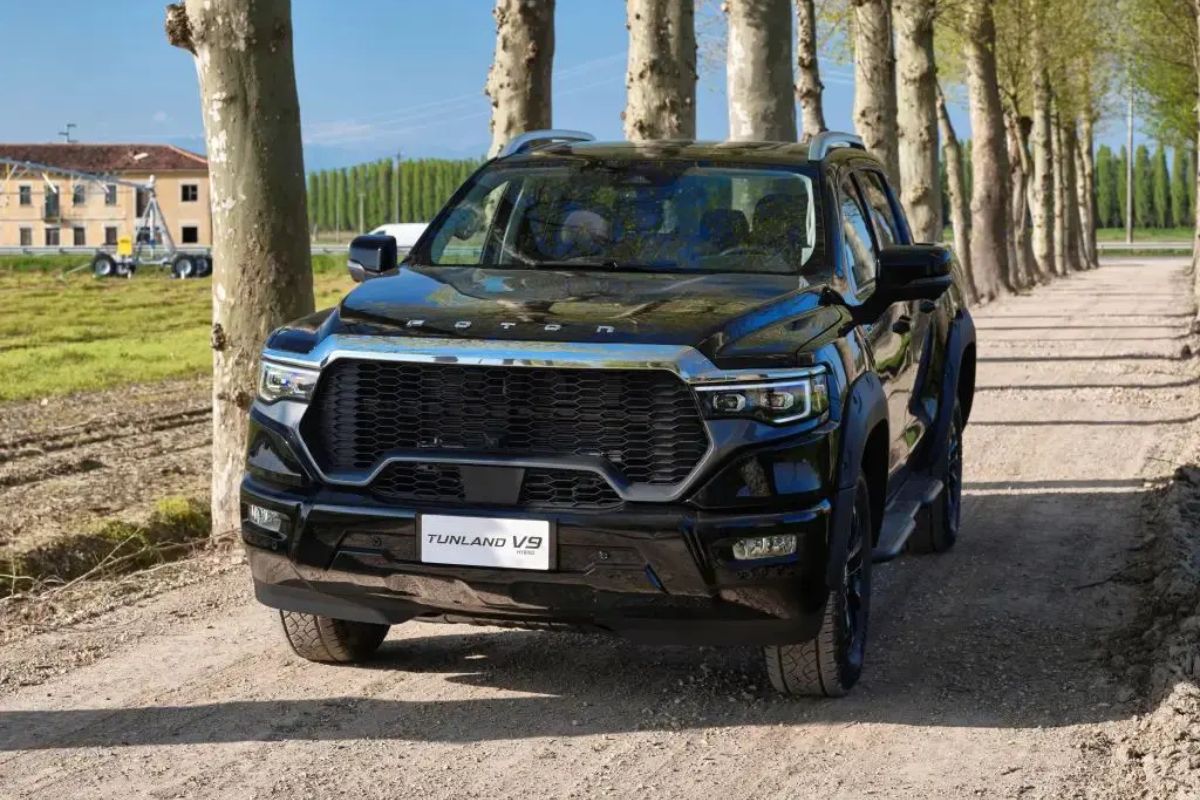

Chinese Pickup Bets on Comfort, Technology, and Refined Design to Compete with Mid-Sized and Large Models, but Performance and Cost Raise Doubts About Its Real Balance Between Robustness and Efficiency.
The Tunland V9 by Foton has arrived in the Brazilian market with a bold proposal: to unite large pickup size, urban comfort, and 4×4 traction in a package with visual and technological appeal. With a light hybrid diesel engine and a price starting at R$ 310 thousand, the model aims to attract consumers looking for a modern and comfortable truck, but without a vocation for heavy-duty work.
Despite the refined finish and good internal space, high fuel consumption and limited performance compromise part of the proposal. Nevertheless, the launch signals Foton’s ambition to consolidate its presence in the light vehicle segment, where it has so far been primarily recognized for its trucks.
Comfort and Space of a Large Pickup
Being the largest mid-size pickup sold in Brazil is one of the main selling points of the Tunland V9. The model measures 4.61 meters in length, approaching giants like the Ford F-150 and RAM 1500 while surpassing the traditional Ranger in size.
-
For R$ 32,000, a brand new Hyundai car is a rival to the Kwid with a 1.2 engine producing 82 hp, 6 airbags as standard, multimedia with wireless Android Auto, up to 391 liters in the trunk, and a refreshed look for 2026 in India.
-
He bought a new car in 1983, locked it in the barn in 1988, and no one opened the door for 38 years until the family discovered what was stored inside and realized it looked like something out of a movie.
-
A 250cc motorcycle that can reach 560 km with a 14-liter tank, features disc brakes on both wheels and is among the most well-known in Brazil.
-
Man finds over 200 rare cars abandoned on a lot and tries to do the impossible in 8 hours with a surprise at the end.

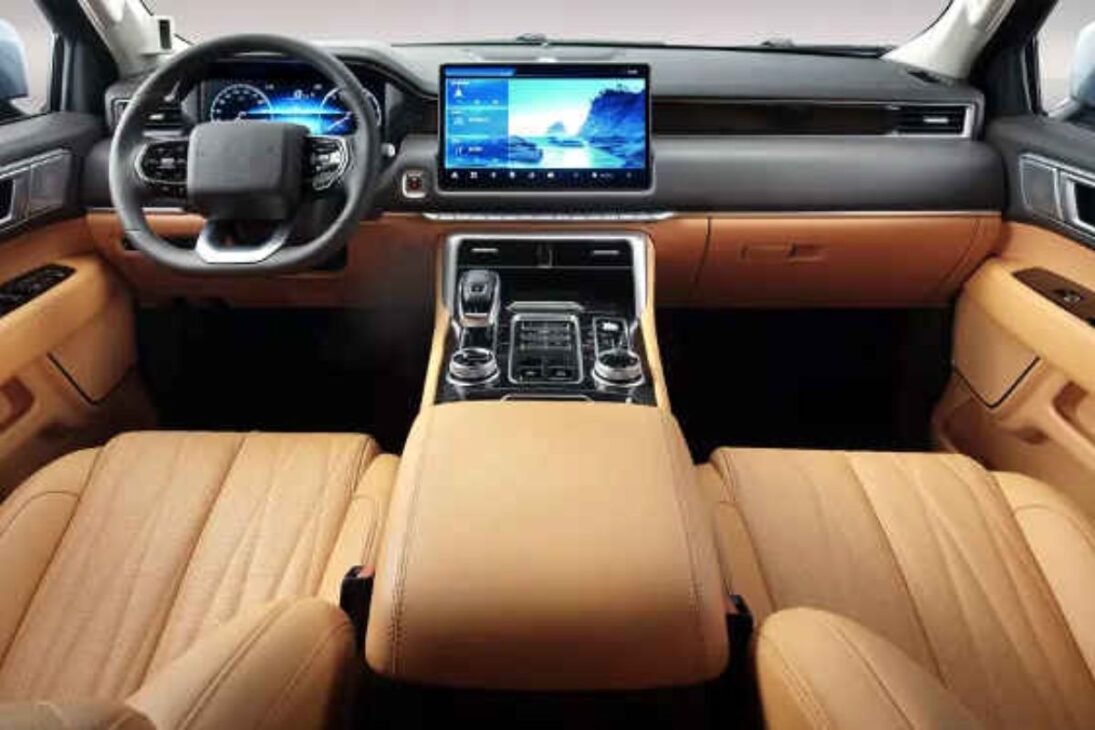
The internal space is one of its highlights: three adults travel comfortably in the back seat, and the environment gains brightness with the panoramic sunroof, a feature still rare among competitors in the category.
The V9 version features a Multilink rear suspension, designed for comfort in urban use and on road trips, unlike the V7 which uses leaf springs and costs R$ 290 thousand.
The result is a softer and more stable ride, ideal for those who value comfort over load capacity. The finish also impresses: soft-touch materials and good acoustic insulation reinforce the intention to elevate the standard of Chinese pickups in Brazil.
Technology and 4×4 Traction for Urban and Recreational Use
In terms of technology, the Tunland V9 impresses. The model comes equipped with a ADAS driving assistance system, including adaptive cruise control (ACC) with stop function and automatic lane centering, forming a semi-autonomous driving package.
The light hybrid system, featuring a 48V battery, aids in starts and improves energy efficiency, ensuring the pickup is exempt from São Paulo’s vehicle rotation restrictions.
The mechanical package also includes 4×4 traction with low range, enhancing its versatility to tackle light trails and dirt roads. Nonetheless, the proposal is clearly aimed at urban and family use, with a smoother rather than adventurous driving behavior.
The noise insulation and stability at high speeds are also worth highlighting positively.
Performance and Consumption Leave Something to Be Desired
On the other hand, the performance of the Tunland V9 does not match its size. The 175 hp turbo diesel engine with 45 kgfm of torque performs well in urban settings but struggles with overtaking and acceleration on single-lane roads, especially when the vehicle is loaded.
The sense of power is less than expected from a pickup weighing over two tons with a premium proposal.
Fuel consumption is also disappointing: an average of 8.7 km/l in the city and just over 9 km/l on the highway, high figures for a model that presents itself as a light hybrid.
Even with electric assistance, the gain in efficiency is modest, which reduces the attractiveness of the package compared to more balanced competitors in terms of power and economy.
Quality Finish, but with Usage Limitations
Although the interior of the Tunland V9 conveys visual and tactile quality, noticeable noises on uneven surfaces and off-road compromise the sense of robustness.
The ample size, which guarantees generous internal space, also makes maneuvering in tight parking spots and narrow streets difficult, which can be bothersome for drivers used to SUVs.
Additionally, the absence of Android Auto, both wired and wireless, disrupts the model’s technological proposal. In a segment that values connectivity, this limitation weighs negatively.
Another critical point is the high price, which places the Tunland V9 in direct competition with established and more powerful pickups, such as the Toyota Hilux, Ford Ranger, and GWM Poer P30, all with equivalent versions in the price range of R$ 240 thousand to R$ 300 thousand.
Tunland V9: Between Luxury and the Challenge of Convincing
The Tunland V9 by Foton demonstrates the Chinese brand’s ability to produce a modern, comfortable, and visually appealing vehicle, but still faces the challenge of balancing performance and perceived value.
The lightweight hybrid system adds innovation but does not significantly change consumption; and the price places the model in a competitive tier where tradition and brand trust still weigh more than design and comfort.
For those looking for a pickup with premium finish, ample space, and urban focus, the V9 delivers on its promises. But for those seeking efficiency and power in proportion to the price, they may find more balanced options.
And you, do you think that new Chinese pickups, such as the Tunland V9 by Foton, can already compete on equal footing with traditional brands?










Esse motor de bicicleta elétrica nessa carroceria enorme não aguenta e quando a bateria acabar ? vai cair para 100 cavalos? pensem nisso.
Se colocar nela um motor cummins serie b o mesmo da f 250 ai sim ela vira o bicho ai ia vender muito