





 Portuguese
  English
  Spanish
  4 min of reading
  0 comments


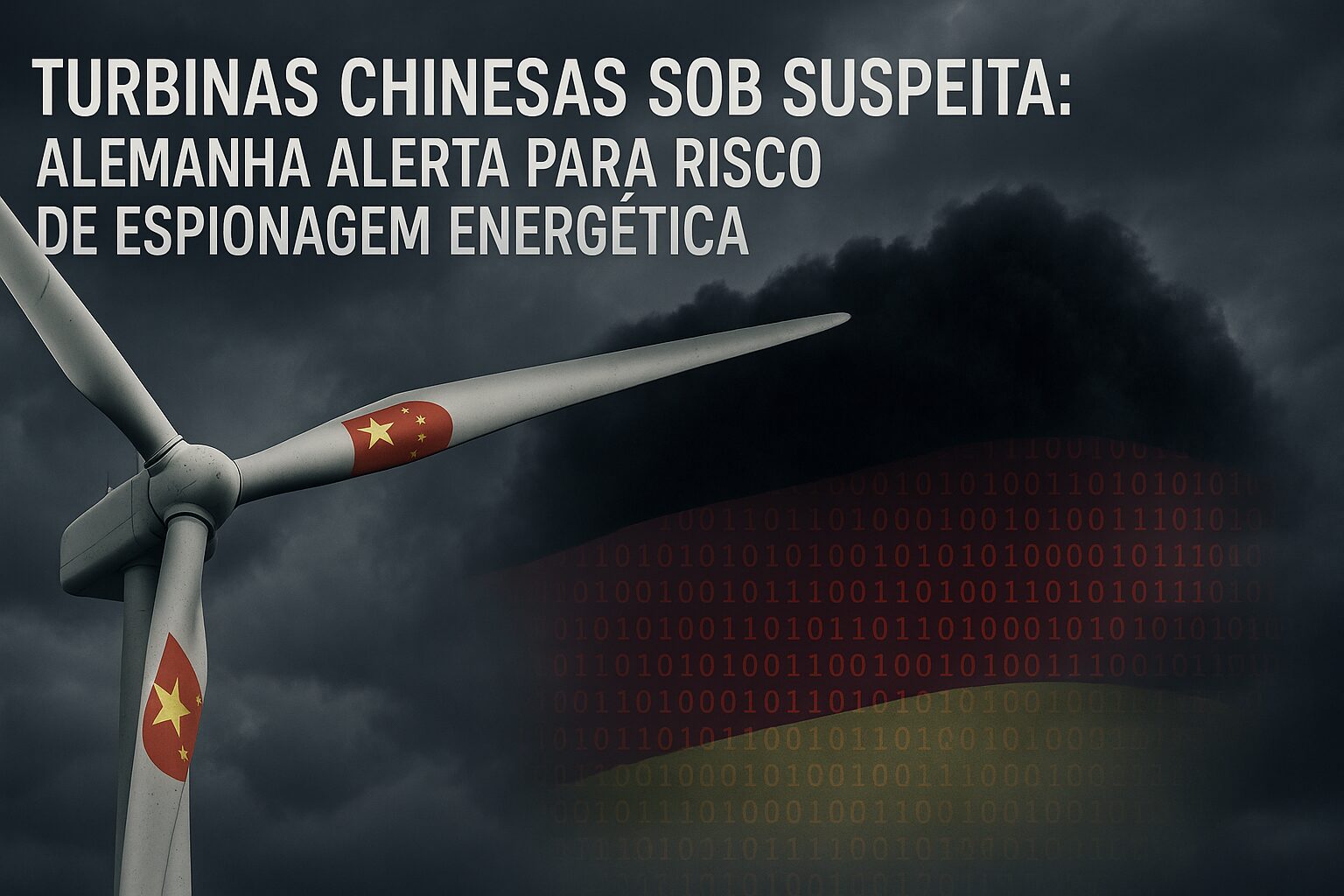
Defense Ministry Report Raises Red Flag On Technological Security And Europe’s Energy Dependence In Light Of Advancement Of Chinese Companies In The Renewable Energy Sector.
The commercial relationship between China and Germany has entered a new chapter of tension following the release of a report commissioned by the German Ministry of Defense, which suggests possible risks of espionage through wind turbines manufactured by Chinese companies. The allegation, although unproven, reignites the debate on technological security, industrial dependence, and energy sovereignty in European countries.
According to the document prepared by a German think tank, the Chinese wind turbines installed in German territory may be equipped with sensors capable of collecting sensitive data or, in extreme cases, allowing remote shutdown of the equipment. The report recommends that the government suspend projects involving Chinese companies, such as the offshore wind farm Waterkant in the North Sea.
China Denies And Accuses Disguised Trade Barrier Under The Guise Of Security Concerns
The China Chamber of Commerce with the European Union (CCCEU) immediately reacted to the allegations, labeling the report as “technically implausible and without factual basis.” In an official statement, the entity argues that the turbines are designed exclusively to optimize performance, monitor failures, and protect wildlife.
-
The Brazilian state accelerates industrial competitiveness with a focus on the extraction of strategic minerals to boost the energy transition in Goiás.

-
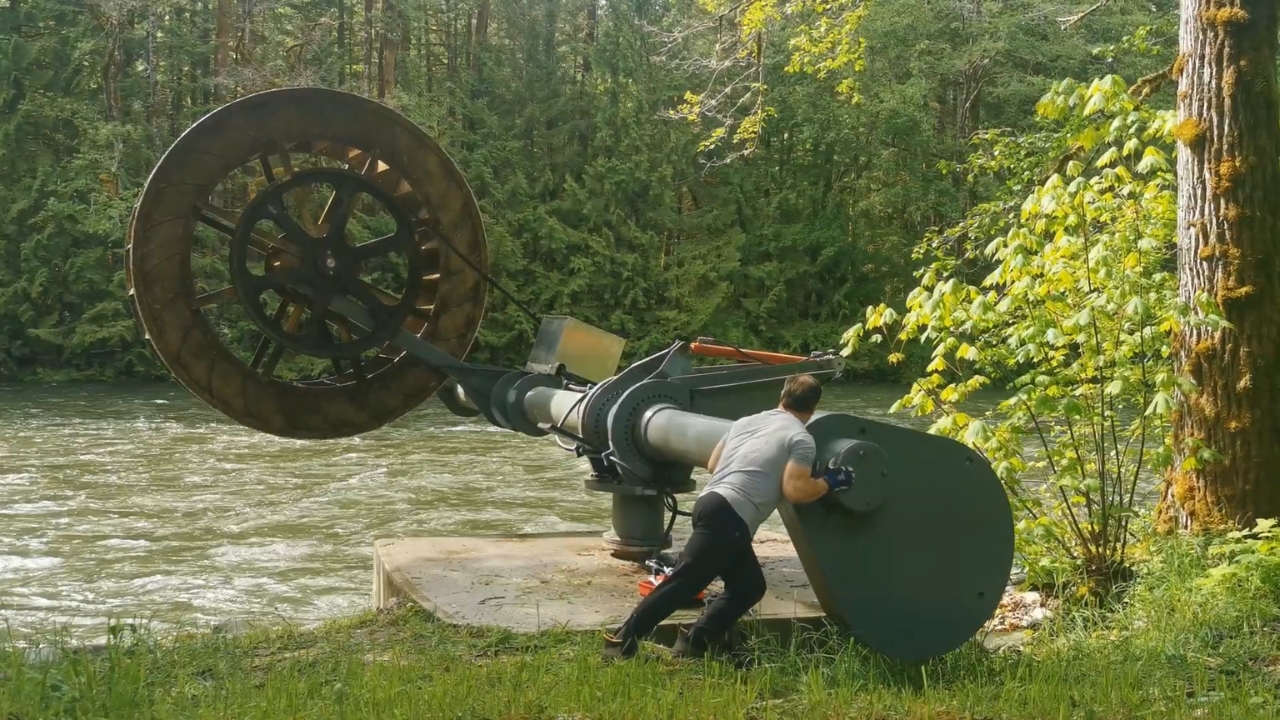
A Canadian retiree creates a hydroelectric system on a real river, generating energy continuously throughout the day and demonstrating how the power of water can supply a house with stability even in a simple structure.
-
Petrobras reaffirms its commitment to the market and ensures that it will carry out the energy transition safely to maintain national sovereignty.

-
Researchers discover a possible hydrogen deposit of up to 46 million tons beneath an ancient coal basin, and the volume could exceed half of the entire global production.


According to the CCCEU, the remote control systems of the wind farms mentioned, including Waterkant, are managed by European companies, not by Chinese suppliers. Furthermore, according to representatives from China, the allegations are seen as a pretext to limit the presence of Chinese manufacturers in the European market, which could affect international competition and bilateral relations.
Use Of Wind Turbines In National Security Becomes An International Debate Topic
The discussion surrounding the use of wind turbines in sensitive areas is not exclusive to Germany. Sweden, for instance, has suspended offshore wind projects near military installations due to concerns about impacts on tracking and defense systems. According to technicians, the size and positioning of the turbines can interfere with missile and aircraft monitoring.
On the other hand, other European Union countries have explored opposite strategies. Poland, for example, is using wind turbines as allies in maritime surveillance, integrating radar and sonar equipment into structures installed at sea. The idea is being expanded through the Symbiosis project, developed in collaboration with WindEurope, NATO, and the European Defense Agency (EDA), which seeks to leverage wind farms as multifunctional platforms for defense and energy generation.
Accusations Against China Recur In Europe
The suspicion of espionage involving China is not new in Germany. In 2023, authorities arrested three individuals accused of stealing information related to military technology. More recently, the country accused the Chinese government of operating secret space aircraft over European airspace.


The German press has reported investigations involving the use of Starlink satellite signals to track airplanes and drones, as well as the development of cameras capable of identifying faces up to 100 kilometers away. These cases fuel fears that China is developing an intelligence structure aimed at technological and economic dominance by 2049.
The focus of these actions is said to be concentrated on the Guoanbu, the Chinese state security agency, which is believed to have expanded its operations in collecting strategic data worldwide, emphasizing industrial espionage and cyber espionage.
Energy And Commerce At The Center Of Sino-European Relations
Despite recent tensions, China remains one of the main trading partners of Germany and the European Union. In 2024, bilateral trade between the countries reached 5.59 trillion yuan (equivalent to US$ 771 billion), with a growth of 1.6% compared to the previous year.
The expansion of Chinese participation in energy projects, especially in the area of wind turbines, is viewed with caution by European countries. Chinese companies are among the largest suppliers of equipment for renewable energy generation, including components for offshore wind energy, a sector where Europe also aims to lead.
With the United States reducing import tariffs and adjusting its trade policies, Beijing is taking advantage of the situation to expand its exports and strengthen ties with European partners. However, the advancement of wind turbines manufactured by Chinese companies has raised concerns about data security and control of critical infrastructure.
Sensors And Monitoring Systems Are At The Center Of The Controversy
At the center of the controversy are the sensors installed in wind turbines, responsible for functions such as fault detection, climate monitoring, and performance optimization. According to German experts, these sensors, if misused, could be exploited for unauthorized purposes.
The main concern raised by the report is that the sensors and connectivity systems could allow the transmission of data to servers outside Europe or, in extreme cases, permit remote interference in operations. The fear increases in sensitive environments, such as military installations or critical energy infrastructures.
China, for its part, maintains that such allegations are technically unfeasible. The CCCEU emphasizes that the turbines manufactured by Chinese companies operate within European regulations and are audited by independent entities. Furthermore, the command and control systems are mostly the responsibility of European operators.
Source: Xataka









Seja o primeiro a reagir!