





 Portuguese
  English
  Spanish
  5 min of reading
  0 comments


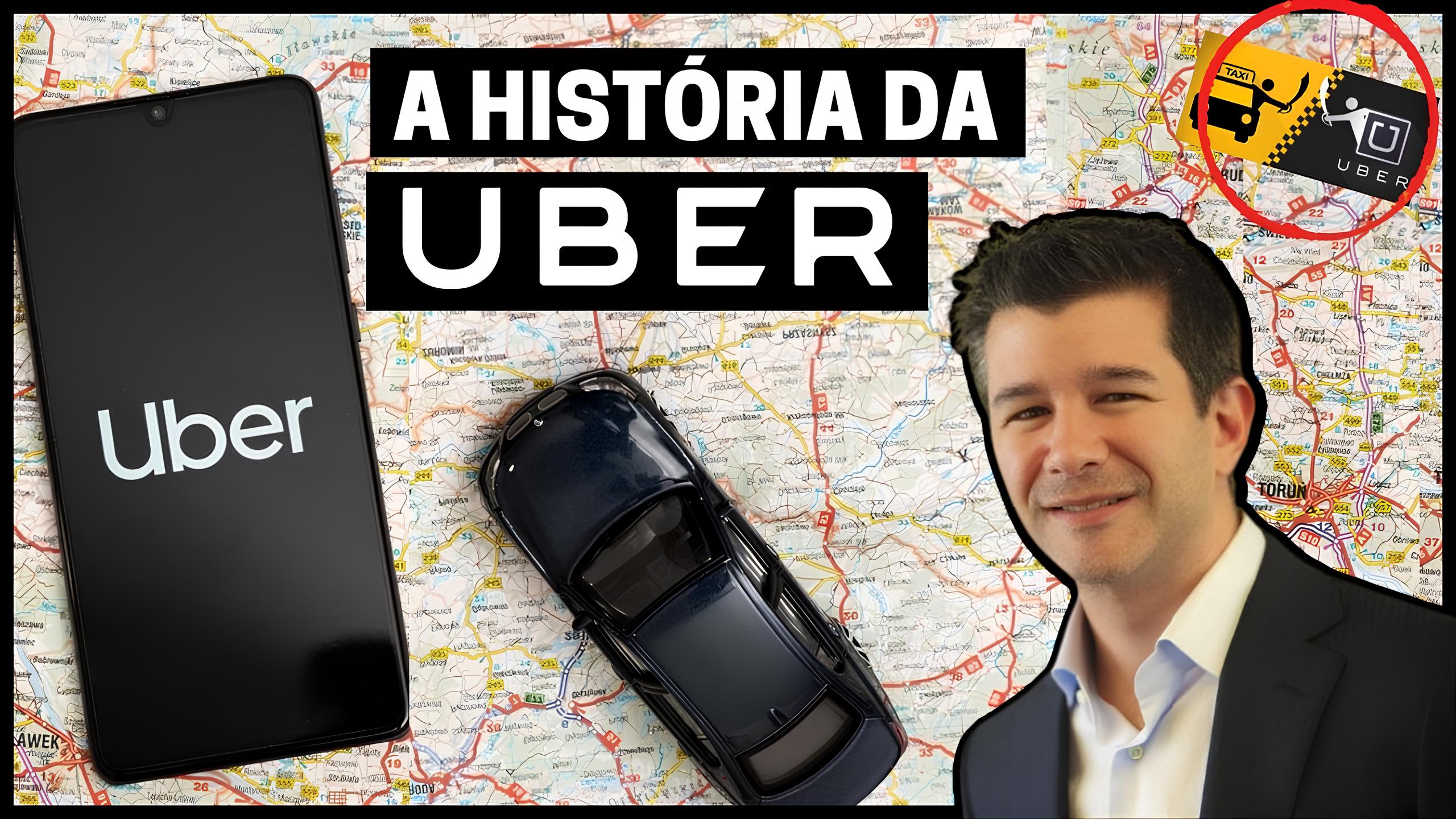
What Was Supposed to Be Just a Frustrating Night in Paris Ended Up Becoming the Seed of One of the Greatest Innovations in Urban Mobility in the World. Learn How Uber, the Giant of Ride-Hailing Present in More Than 70 Countries, Was Born.
The origin and creation of Uber dates back to a cold night in December 2008, in Paris, when two entrepreneurial friends, Travis Kalanick and Garrett Camp, found themselves unable to find a taxi after an event. Frustrated, they began to reflect on how useful it would be to request a car with just a tap on a cell phone.
From that situation, the idea of creating an on-demand transportation system was born, utilizing the mobile technology that was beginning to gain popularity. Shortly thereafter, Camp bought the domain UberCab.com and began developing a prototype. Kalanick, already known in Silicon Valley for selling his company Red Swoosh, joined as “chief incubator” and became the project’s main executive.
Creation of Uber: Launch and First Tests
The creation of Uber was officially announced on June 1, 2010, in San Francisco, California, under the name UberCab. The service began with a premium proposition: connecting passengers to luxury car drivers, all through a ride-hailing app that accepted credit card payments, something still not widely adopted at the time.
-
The household appliance that consumes the most energy in Brazilian homes is not the air conditioner; it is located in the smallest room of the house, is used daily, and can account for up to 25% of the electricity bill, while an alternative in the same outlet can reduce this cost by up to 75%.

-
Son of a seamstress from the rural area of Ceará who did not speak English wins a scholarship of over 2 million reais at Williams College, one of the top 10 universities in the United States, covering everything including dormitory, meals, and annual trips to Brazil.

-
Bill Gates revealed that the true secret behind every great achievement is not a brilliant leap but rather small improvements repeated over the years, and the data from his own career and the fight against climate change prove that he is right.

-
With 22 thousand tons of steel, a height nearly three times greater than the Eiffel Tower, and a cost of R$ 1.6 billion, China is building the highest bridge on the planet over a colossal canyon, reducing a crossing time of over 2 hours to just over 2 minutes.


The first test of the app was conducted in New York in early 2010, with just three vehicles in operation. The official launch of the platform took place in May of the same year in San Francisco. The response was immediate and positive, especially from users looking for comfort, safety, and convenience.


From Premium Service to uberX: The Democratization of Ride-Hailing
Uber gained attention, but the service was still elitist, aimed at those who could afford a luxury car. The big turning point came in July 2012, with the launch of uberX. With it, anyone with a personal vehicle that met safety criteria could become a partner driver on the platform.
This change was essential for the popularization of the ride-hailing app, allowing for more accessible fares and an increasingly large user base. The uberX model was also responsible for the explosion in the number of independent drivers, boosting what has been called the sharing economy.
From then on, Uber never stopped growing, attracting investors and expanding to dozens of cities in the United States and later to other countries.
Uber’s Arrival in Brazil: A Revolution in Urban Mobility
Uber arrived in Brazil in 2014, with operations initially in Rio de Janeiro, São Paulo, and Belo Horizonte. The adoption was immediate, but it also faced resistance from taxi drivers and regulatory debates in several capitals.
Despite the difficulties, the service gained popularity among Brazilians for offering competitive prices, digital payment, and driver ratings, which brought more safety and control to passengers.
Today, Uber is present in over 500 Brazilian cities and is one of the most used apps in the country, both by those needing transportation and by those wanting to earn income as partners of the company.
Uber Around the World: Presence in More Than 70 Countries
Uber’s international expansion accelerated between 2013 and 2016, with the company entering markets in Europe, Latin America, Asia, and Africa. In many countries, Uber’s entry completely transformed the urban transportation ecosystem, forcing the emergence of specific regulations for ride-hailing apps.
Currently, Uber operates in over 10,000 cities, with about 122 million monthly active users and 5 million partner drivers and deliverers worldwide.
The platform has become a global symbol of on-demand mobility, and its name has become synonymous with innovation in the sector.
Diversification of Services: Beyond Passenger Transport
With the growing user base, Uber expanded its services to beyond transporting people. In 2014, it launched Uber Eats, a food delivery service that quickly consolidated itself as one of the largest delivery platforms in the world.
In addition, the company invested in other segments such as:
- Uber Freight: freight transport
- Uber for Business: corporate solutions
- Uber Transit: integration with public transport
- Uber Green: rides with electric or hybrid vehicles
- Autonomous Technology: research and testing with autonomous vehicles
The diversification strategy helped Uber to solidify itself as a technology company focused on mobility, rather than just a ride-hailing app.
Challenges Faced: Crises, Layoffs, and Leadership Changes
Despite its meteoric success, Uber also faced serious internal and external crises. Between 2016 and 2017, a series of scandals involving the company’s corporate culture, allegations of harassment, disputes with regulators, and unfair competition practices damaged the brand’s reputation.
The then-CEO Travis Kalanick was forced to step down in 2017, being replaced by Dara Khosrowshahi, former CEO of Expedia. The leadership change was essential to reposition the company’s image, improve transparency, and implement good corporate governance practices.
Since then, Uber has been refining its market approach, balancing growth, profitability, and social responsibility.
Uber and the Transformation of the Labor Market
One of the most discussed legacies of Uber is the transformation of the relationship between employer and service provider. The company’s business model is based on the so-called gig economy, or on-demand economy, in which partner drivers are not formal employees but work as freelancers connected via the app.
This structure has generated legal and labor debates around the world, with lawsuits in countries such as the United Kingdom, Germany, France, and also in Brazil, where courts have been discussing the degree of connection between the platform and the driver.
Despite the controversies, millions of people worldwide use Uber as their primary or supplementary source of income, and the model has inspired other service platforms like 99, iFood, and Rappi.
Uber in the Future: Technology and Sustainability
Uber continues to bet on innovation and sustainability to maintain its leadership in the sector. Among the projects in development are:
- Autonomous Vehicles: cars that do not require drivers
- VTOLs (electric vertical takeoff aircraft): Uber Air project
- Zero Carbon Emission Rides
- Partnerships with Electric Vehicle Manufacturers
- Multimodal Platforms: integration with bikes, subways, and buses
The company’s goal is to achieve zero carbon emissions for all rides by 2040, which will require a complete transformation of its fleet and supporting infrastructure.
The case of Uber is an emblematic example of how a simple idea can transform the entire world. By trying to solve a personal problem on a winter night in Paris, two entrepreneurs ended up creating a business model that revolutionized urban transportation.
The company’s trajectory shows how technology, boldness, and the right timing can drive profound changes across entire sectors of the economy. Uber not only created a ride-hailing app but also redefined how people move, work, and interact with urban services.
And even while facing challenges, the creation of Uber remains one of the greatest milestones in the recent history of global entrepreneurship.









Seja o primeiro a reagir!