





 Portuguese
  English
  Spanish
  5 min of reading
  0 comments



UFC Advances in Innovation by Closing Partnership for Artificial Intelligence Solutions and Supporting Oil and Gas Studies and Operations in the Equatorial Margin, Expanding Technology, Research, and National Impact
The UFC officially announced the beginning of a strategic partnership to develop advanced Artificial Intelligence solutions applied to the exploration of oil and gas in the Equatorial Margin. This is a cooperation agreement with Petrobras, in partnership with the French company Eliis — a world reference in seismic interpretation software — for the development of applied research over four years.
The initiative, announced on the university’s official portal, puts the Northeast in a prominent position in the national energy innovation landscape and reinforces the connection between academic research and the technological demands of the industry. The announcement marks an important step for Brazil’s scientific advancement by uniting cutting-edge technology, applied research, and one of the most strategic sectors for the national economy.
Immediate Importance of the Partnership and Potential of the Equatorial Margin
The new collaboration comes at a crucial moment for the country. The Equatorial Margin, viewed by experts as one of the most promising frontiers for the expansion of oil and gas production, has attracted significant attention from the federal government, industry, and scientific institutions. Recent studies show that the region could receive investments exceeding US$ 56 billion, in addition to generating thousands of jobs and significantly increasing revenue for states and municipalities.
-
Brazilian giant expands borders in the Southeast: Petrobras confirms new oil discovery in ultra-deep waters in the pre-salt of the Campos Basin.

-
Alert in the global energy market: Severe tropical cyclone hits the coast and disrupts gas production at major plants in Australia, threatening global supply.

-
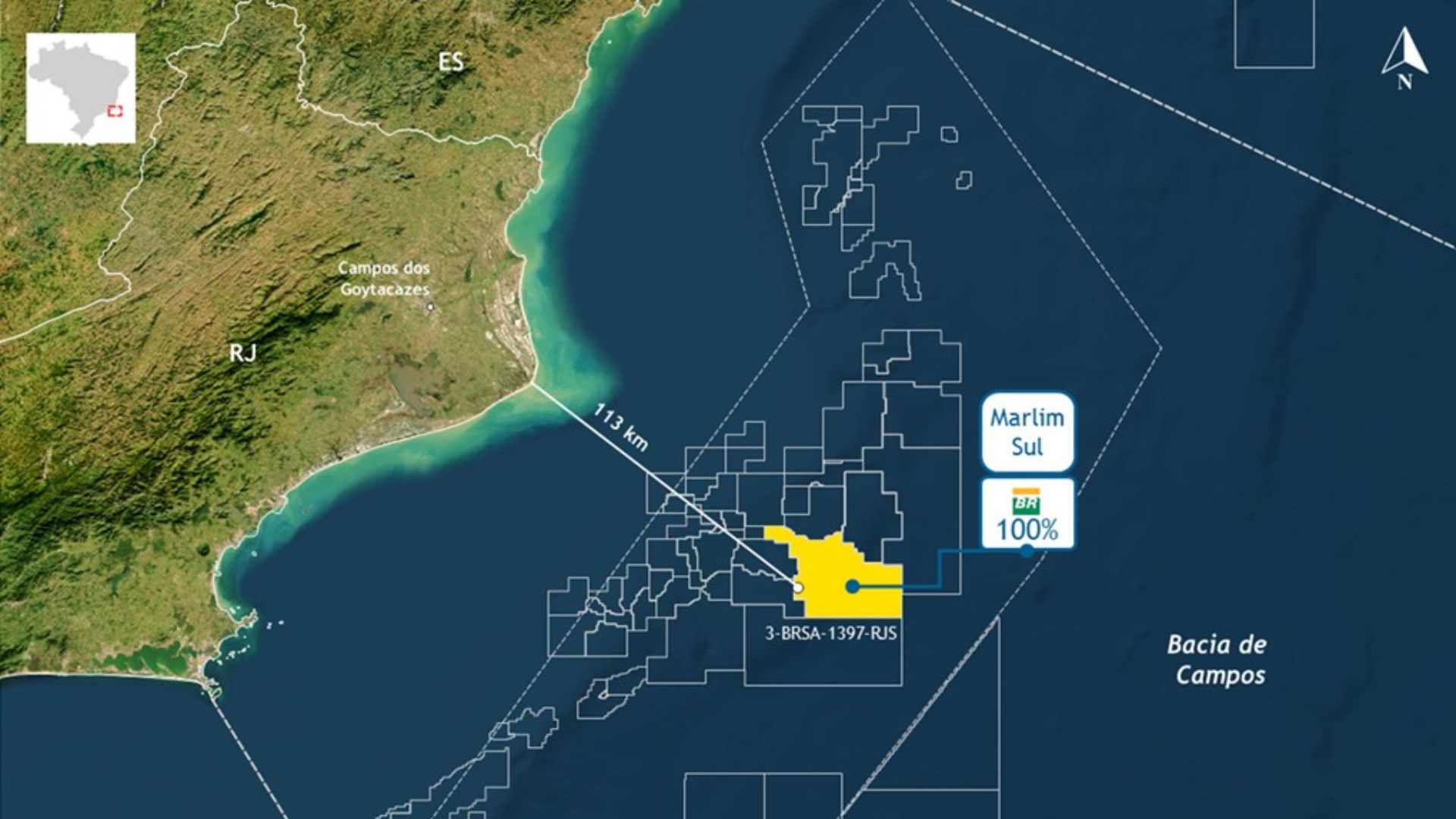
Petrobras finds high-quality oil in the pre-salt at 113 km from RJ and reignites expectations about strategic reserves in the Campos Basin.

-
Ocyan opens registrations for startups focused on innovation in the oil and gas sector and will select projects for Innovation Day with the support of Nexio.


Geologists from the Federal Fluminense University highlight that this area represents a strategic opportunity for Brazil’s energy security while also stimulating socioeconomic development in historically under-served regions by large sector projects. Given this scenario, developing more modern, faster, and precise solutions for analyzing seismic and geological data becomes essential. It is at this juncture that the partnership announced by UFC gains relevance, positioning the university as a leader in applied research and technological innovation for the energy sector.
Application of Artificial Intelligence in the Oil and Gas Sector
The initiative aims to create new artificial intelligence (AI) solutions focused on the software PaleoScan™, developed by Eliis. Recognized as an advanced seismic interpretation and geological modeling technology, the program is widely used in exploratory underground research, covering extraction and management projects for natural resources — such as oil, gas, and minerals.
The agreement stipulates that UFC will work on developing AI tools and models capable of analyzing large databases and assisting in identifying potential exploration areas in the Equatorial Margin. With advanced algorithms, it will be possible to refine prospecting processes, reduce uncertainties, and increase operational efficiency.
The digitalization of the energy industry is a global trend. Companies and research centers around the world have utilized AI to:
- accelerate seismic analysis,
- enhance geological modeling,
- predict reservoir behaviors,
- reduce exploration costs and environmental risks.
Other Brazilian institutions are already participating in this movement, such as the Brazilian Center for Physical Research and private hubs that invest in automation. Therefore, the initiative from UFC not only aligns with this trend but also reinforces the role of public universities as generators of high-impact technological solutions. With more precise methods and intelligent automation, oil exploration becomes more efficient, predictable, and safe.
Equatorial Margin and the Oil and Gas Sector Require Advanced Technological Solutions
The Equatorial Margin encompasses areas from Amapá to Rio Grande do Norte. The region has geological characteristics similar to those of major discoveries made in Guyana and Suriname, increasing the interest of Brazilian and international companies.
Despite the economic potential, it is an environmentally sensitive area, which houses:
- diverse marine ecosystems,
- breeding zones for species,
- traditional coastal communities,
- artisanal fishing areas.
Scientific institutions have emphasized that exploration should be accompanied by technical rigor, transparency, and thorough studies. In this context, artificial intelligence technologies can assist in the precise mapping of risks, environmental monitoring, and more responsible decision-making.
Therefore, the use of advanced techniques is a way to balance economic development and environmental preservation, avoiding irreversible impacts and aligning energy exploration with the best global practices.
How the Partnership Can Transform the Oil and Gas Industry
The integration between universities and the energy sector is expected to generate direct and indirect effects in the country. Among the anticipated benefits, the following stand out:
Advancements in Operational Efficiency
AI-based solutions allow for faster analyses, early detection of anomalies, and greater accuracy in interpreting seismic data. This reduces operational costs and increases the success rate of exploratory campaigns.
Development of National Technologies
Projects developed by UFC have the potential to reinforce Brazil’s technological sovereignty, reducing dependence on foreign platforms and stimulating local innovation.
Training Specialized Professionals
The partnership opens up space for students, researchers, and professionals to participate in advanced projects, creating a highly qualified workforce for the future of the industry.
Stimulus to Regional Development
Investments attracted by exploration in the Equatorial Margin can boost local economies, generating direct and indirect opportunities.
Mitigation of Environmental Risks
Intelligent tools make monitoring more precise, allowing for preventive actions and quick responses in critical situations.
These factors reinforce the vision that technology and energy can move together, as long as they are guided by responsibility and commitment to society.
Prospects and Next Steps for Brazil in the Oil and Gas Sector
The partnership announced by UFC marks the beginning of a more integrated stage between academic research and the productive sector in the energy field. In the coming years, new projects may be established with the participation of companies, governments, and research institutions. It is expected that:
- new data models and algorithms will be developed,
- geological studies will achieve greater precision,
- research will result in technologies applicable to the industry,
- universities will expand their presence in strategic projects,
- the country will strengthen its scientific and energy capacity.
Additionally, the initiative may encourage other universities to establish similar agreements, creating a national network of applied research focused on innovation in the oil sector.
Strategic Impact and Relevance for the Country’s Energy Future
The partnership established by UFC to develop Artificial Intelligence solutions aimed at the exploration of oil and gas in the Equatorial Margin symbolizes an important movement for Brazil. By uniting innovation, science, and one of the most strategic sectors of the economy, the country strengthens its position in the global energy landscape and opens up new possibilities for technological development.
If conducted with responsibility, transparency, and social commitment, this initiative could decisively contribute to modernizing the sector, generating opportunities, and strengthening national energy security.








Seja o primeiro a reagir!