





 English
  Francês
  Alemão
  Italiano
  Japonês
  Norueguês
  Portuguese
  Spanish
 5 min of reading
  1 comment




UFSM Reveals Hydrogen Car Developed by GPMOT and Advances National Research with Clean Solutions Based on Renewable Energy, Strengthening the Future of Sustainable Mobility in Brazil
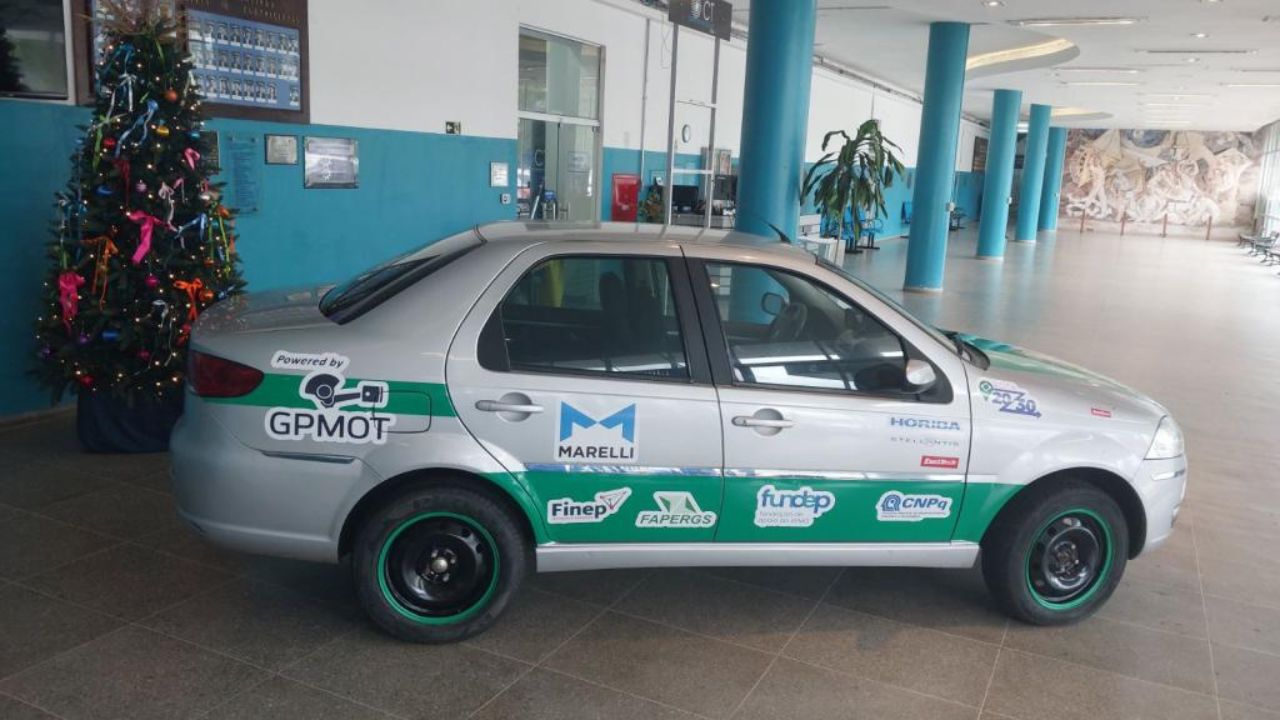
On the morning of December 9, 2025, UFSM publicly presented a hydrogen-powered vehicle completely converted in its laboratories, becoming one of the first institutions in the country to demonstrate a car capable of operating with hydrogen in an internal combustion engine. The project, carried out in the hall of the Technology Center, immediately attracted attention due to the presence of the car inside the building and the stickers of companies and funding agencies that support the initiative.
UFSM Technology Highlighted in the Development of the Hydrogen-Powered Vehicle
This hydrogen car, developed by the Research Group on Engines, Fuels, and Emissions (GPMOT), represents a significant step towards sustainable mobility in Brazil. Right from the first information released, the researchers highlighted that the vehicle emits only water vapor during its operation, without releasing CO₂ or other pollutants associated with fossil fuels.
The conversion of the car — a Fiat Siena — is part of the graduation project of student Augusto Graziadei Folletto from the Mechanical Engineering program. Guided by Professor Mario Martins and co-guided by Professor Thompson Lanzanova, the student carried out the complete adaptation of the original combustion system for the exclusive use of hydrogen as fuel.
-
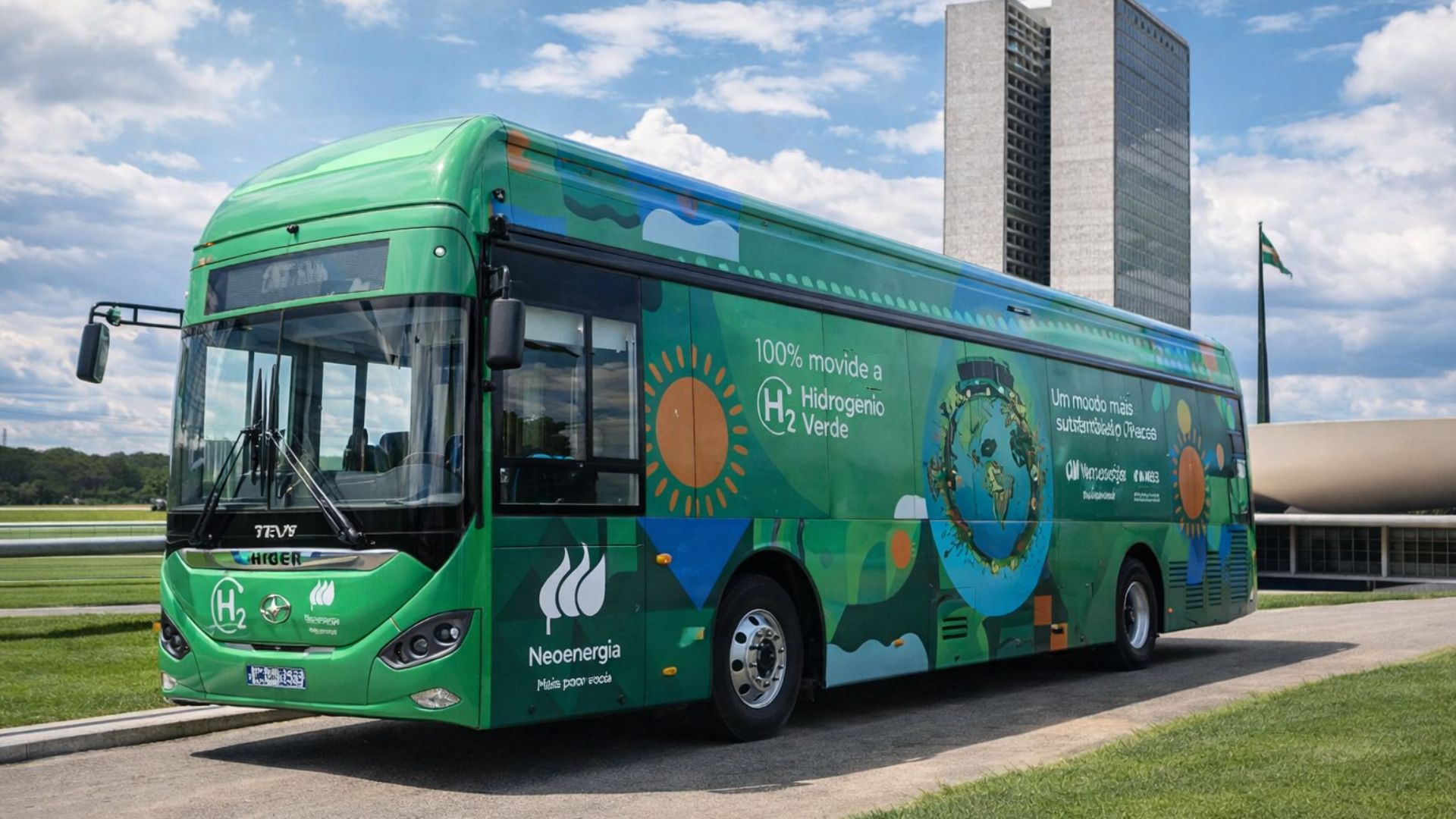
The Federal District bets on innovation and sustainability by launching a hydrogen-powered bus on a new tourist route, promising to reduce emissions and transform the urban experience for residents and visitors.
-
A study reveals the expansion of renewable energy procurement in Brazil and shows how companies are taking advantage of opportunities to reduce expenses, ensure energy efficiency, and strengthen strategic environmental commitments.

-
Mato Grosso do Sul excels in the sugar-energy sector: the state reaches a milestone of 22 operating mills and accelerates the production of clean energy in MS with a focus on sustainability.

-
National energy dilemma: Brazilians support clean energy but reject increases in tariff costs to finance the sustainable transition.

The result demonstrates that, even maintaining all factory characteristics, the engine responds adequately to the use of hydrogen, achieving clean and stable combustion. This experience reinforces that the hydrogen car is not just a possibility for the future, but a technically viable application in the present.
Furthermore, the project received investments from recognized research institutions such as CNPq, Finep, Fapergs and the Rota 2030 Program, as well as essential support from companies like Marelli, TCA-Horiba, and FuelTech. The latter collaborated with technology and fundamental components for engine control. The union between academia, government, and industry demonstrates how innovation can be accelerated when there is integration between different sectors.
GPMOT and the Evolution of Research in Sustainable Mobility and Renewable Energy
GPMOT already has a solid history in research with alternative fuels, low-emission engines, and integration between engineering and sustainability. Therefore, the development of the hydrogen-powered vehicle consolidates UFSM as one of the key academic references in Brazil in the search for sustainable transportation solutions.
The project is part of the study “Development of an Automotive Engine Powered by Biohydrogen for the Brazilian Market,” funded by the Rota 2030 Program. This work is part of a national strategy to strengthen the automotive industry and expand research related to decarbonization.
Recent data from the International Energy Agency (IEA) reinforces that hydrogen has the potential to become one of the main energy vectors in the world in the coming decades. This is especially true in countries with a large capacity for generating renewable energy such as Brazil. According to the project leaders, the expansion of the hydrogen economy will be driven by industrial decarbonization and the growth of renewable sources, consolidating a favorable scenario for its use in transportation.
Retrofitting and Technical Viability of UFSM’s Hydrogen Car
One of the most important points demonstrated by UFSM’s project is the technical viability of retrofitting — the process of converting existing vehicles to cleaner technologies. The Fiat Siena used maintained its original structure, receiving only specific adaptations to the fuel supply system and the electronic engine control.
This possibility paves the way for transition strategies that do not rely exclusively on producing new vehicles. In countries like Brazil, where the fleet is extensive and diverse, retrofitting can be an effective interim solution towards sustainable mobility.
The converted hydrogen car presents virtually zero emissions, as the combustion of hydrogen generates only water or water vapor. Although small amounts of NOx may arise under certain conditions, modern control and post-treatment techniques can drastically reduce this index, bringing the process closer to zero emissions.
Hydrogen as a Vector of Renewable Energy and Its Perspectives in Brazil
Brazil is among the countries with the greatest potential to become a leader in green hydrogen production, thanks to the availability of renewable energy sources — primarily solar, wind, and hydroelectric. International studies suggest that the country could produce green hydrogen at competitive costs by 2030, boosting industrial, logistical, and transportation applications.
According to the IEA, hydrogen is expected to play a central role in hard-to-electrify sectors such as heavy transport, steel production, and navigation. With technological advancements, hydrogen is likely to expand to light transportation as well, including cars and utilities — an area in which the hydrogen-powered vehicle from UFSM serves as a pioneering test of practical application.
This global trend highlights the need for more investments in infrastructure, especially in storage and distribution. Still, academic and industrial advancements show that the country is aligned with international sustainable and energy development pathways.
UFSM’s Protagonism in National Research for Sustainable Mobility
The Technology Center at UFSM has several initiatives related to hydrogen, including competition teams developing prototypes powered by gas, fuel cell projects for electric generation, and award-winning research on clean combustion. These complementary fronts strengthen the institutional positioning in the field of sustainable mobility and renewable energy.
GPMOT, by partnering with companies in the automotive sector, provides scientific data, experimental trials, and specialized training. This integration between research and industry is essential to accelerate the adoption of innovative solutions in the country, especially at a time when environmental policies and decarbonization targets are becoming increasingly relevant. UFSM demonstrates once again that Brazilian research has the capacity to lead strategic projects with national impact.
The Advancement of UFSM as a Milestone for the Future of Hydrogen Cars in Brazil
The presentation of the hydrogen-powered vehicle from UFSM not only proves the technical viability of this technology but also points to concrete paths for the future of automotive innovation in the country. The initiative symbolizes a scientific advancement aligned with global demands for efficiency, emission reduction, and the use of renewable energy.
Thus, the converted hydrogen car in UFSM’s laboratory becomes an example of how Brazil can develop its own competitive and environmentally responsible solutions. The project opens doors for new research, enhances national academic leadership, and reinforces the strategic role of universities in the country’s technological development.









Esperou que dê certo, não apenas na questão tecnológica mas também na questão legislativa e política.
Já houve várias tentativas e experiências individuais mas, o triste é que os proprietários dos experimentos ou desistiam ou eram desistidos.
Eu mesmo, medíocre estudante de Física, já fiz um opala 4 cilíndros funcionar na garagem, gerando hidrogênio por eletrólise. Na minha imaginação iria descobrir a América.
Espero que o corretor dê textos não altere minha escrita.