





 Portuguese
  English
  Spanish
  4 min of reading
  13 comments


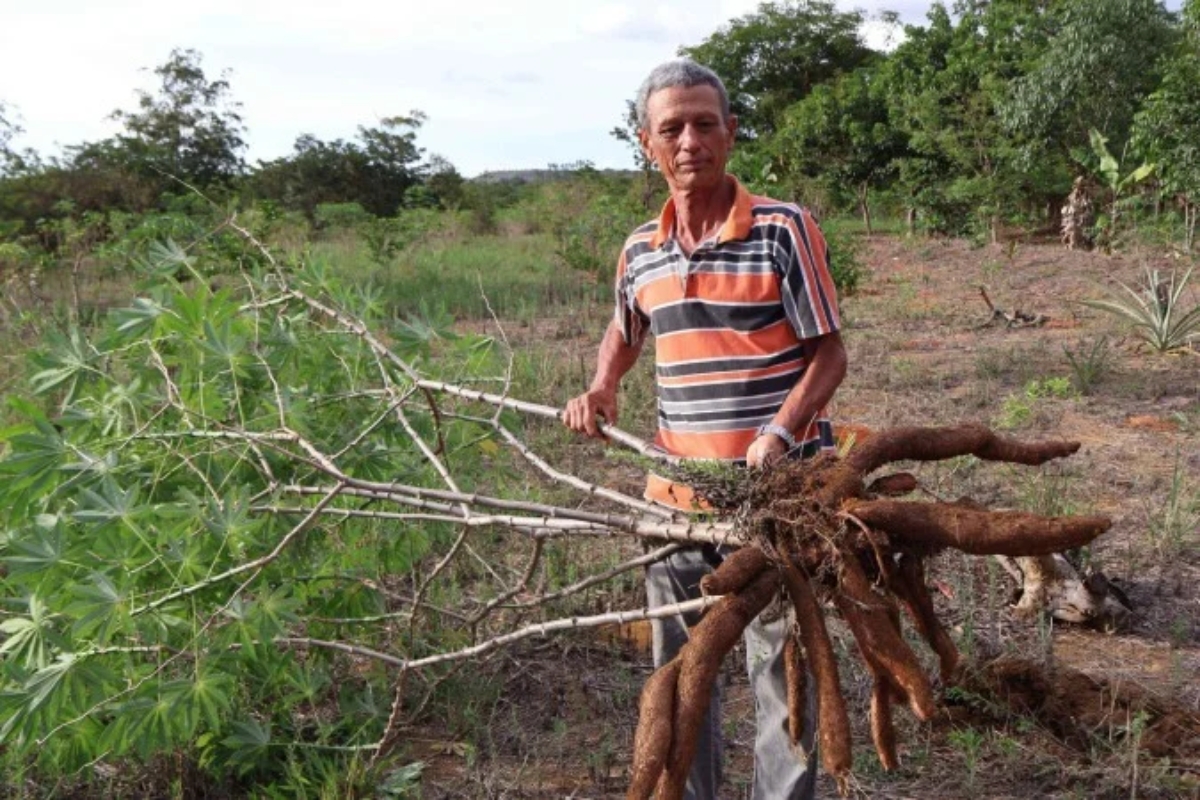


From Living Soil to Rock Powder, Agroecological Practices Advance: 2,188 Sustainable Properties, Growing Organics, and 6 Hectares Restored, Uniting Income, Clean Food, and Conservation
In the Federal District, smallholder farmers, large producers, and community projects have implemented sustainable practices in 2,188 properties and restored 6 hectares to produce food without pesticides, recover degraded areas, and strengthen biodiversity, leading to increased productivity.
The Federal District has become a practical example of how agriculture and the environment can walk hand in hand.
In the Cerrado, producers are changing the traditional field logic. Instead of expanding areas, the strategy has been to recover soils, preserve forests, and increase productivity in the same space.
-
Friends have been building a small “town” for 30 years to grow old together, with compact houses, a common area, nature surrounding it, and a collective life project designed for friendship, coexistence, and simplicity.

-
This small town in Germany created its own currency 24 years ago, today it circulates millions per year, is accepted in over 300 stores, and the German government allowed all of this to happen under one condition.

-
Curitiba is shrinking and is expected to lose 97,000 residents by 2050, while inland cities in Paraná such as Sarandi, Araucária, and Toledo are experiencing accelerated growth that is changing the entire state’s map.

-
Tourists were poisoned on Everest in a million-dollar fraud scheme involving helicopters that diverted over $19 million and shocked international authorities.


What seemed impossible decades ago has now become a model of sustainable production, with impressive numbers showing that agro can be environmentally correct and economically viable.
Farmer from São Sebastião Transforms Small Property into Productive Agroforestry
In São Sebastião, family farmer Luiz Carlos Feitosa, 60, decided to take a different path. With the support of Emater DF, he implemented an agroforestry system on his property.
The model combines trees and agricultural crops in the same area. On the land, he grows baru, acerola, and various fruits, all integrated with native vegetation.
The strategy includes planting trees to protect the soil, composting, and recycling. The goal is to produce without pesticides and improve soil quality.
The result has been visible. The soil has become more fertile, biodiversity has returned, and the family’s quality of life has improved.

Federal District Now Has 2,188 Properties with Ecological Practices
The progress is not limited to isolated cases. Currently, the Federal District has 2,188 rural properties that adopt ecological practices or have organic certification.
The number of organic producers has grown rapidly. There were about 230 at the beginning of last year. Now there are 388 producers.
A large part of this group is made up of settlers. For many, organic farming has become a gateway to the market, ensuring income with sustainability.
According to experts, Brazil is now the country that uses bioinputs the most in the world, reinforcing a structural change in the way food is produced.
Farm in PAD DF Maintains Production for 38 Years Without Deforestation and Expands Native Vegetation
Image generated by AI
In PAD DF, Fazenda Malunga has become a reference in organic agriculture in the Cerrado. Producer Joe Valle started when the term alternative agriculture was still not well known.
Today, the property adopts agroecological corridors that connect forested areas. These corridors allow insects to perform natural biocontrol, reducing the need for external interventions.
The production is based on three main pillars:
- use of microorganisms in living soil
- rock powders for remineralization
- cover crops
For 38 years, the farm has produced in the same location. During this time, it has expanded areas of native vegetation and increased productivity without deforestation.
The return of native fauna has been one of the most visible effects. Natural barriers against wind and forest preservation have helped restore ecological balance.
Project Will Restore 6 Hectares Within the APA of the Central Plateau
Another important initiative is the Sementes do Cerrado Floresta Viva project. The initiative operates in the Oziel Alves Settlement, within the Environmental Protection Area of the Central Plateau.
In total, 6 hectares will be restored across 13 family properties.
The focus is on recovering areas degraded by fires and the invasion of exotic grasses. The methodology used is the Agrocerratense System, which integrates native Cerrado species with agricultural crops that have no invasive potential.
The work is participatory, with diagnosis and technical support conducted alongside the community and the Cerrado Seed Network. The support from ICMBio strengthens actions to prevent fires and monitor vegetation.
The detail that has garnered the most attention is that restoration occurs without interrupting food production, strengthening family income.
Cerrado Gains Prominence on the Global Climate Agenda
Experts emphasize that the Cerrado is known as Brazil’s water tank, due to its strategic importance in the production of water resources.
Like the Amazon, the biome plays a central role in climate balance. The difference is that now the Cerrado is starting to occupy a larger space in the international debate.
Producing, preserving, and expanding vegetation in the same territory has ceased to be just talk and has become concrete practice in the field of the Federal District.
The set of these initiatives shows that it is possible to recover degraded areas, increase productivity, and preserve the Cerrado at the same time, something that stands out amid global discussions on climate and food security.
And what about you? Do you believe this model can be expanded to other regions of Brazil? Leave your opinion in the comments.










Primeiro eu quero dizer que eu estou muito feliz em saber que os agricultores estão se informando e encontrando uma solução que os beneficia ao mesmo tempo em que preservam a Natureza. E sim, eu acredito que todo o Brasil possui um grande potencial para que se produza alimentos sem danificar.
This method of environmentally sustainable agriculture which is organic based is commended and should be adopted as a 21st century farming system in Brazil and beyond.
Não só pode como deve, a terra bem cuidada devolve tudo em dobro, mas o ser humano só quer devastar, lucrar, lucrar e lucrar.