





 Portuguese
  English
  Spanish
  8 min of reading
  17 comments


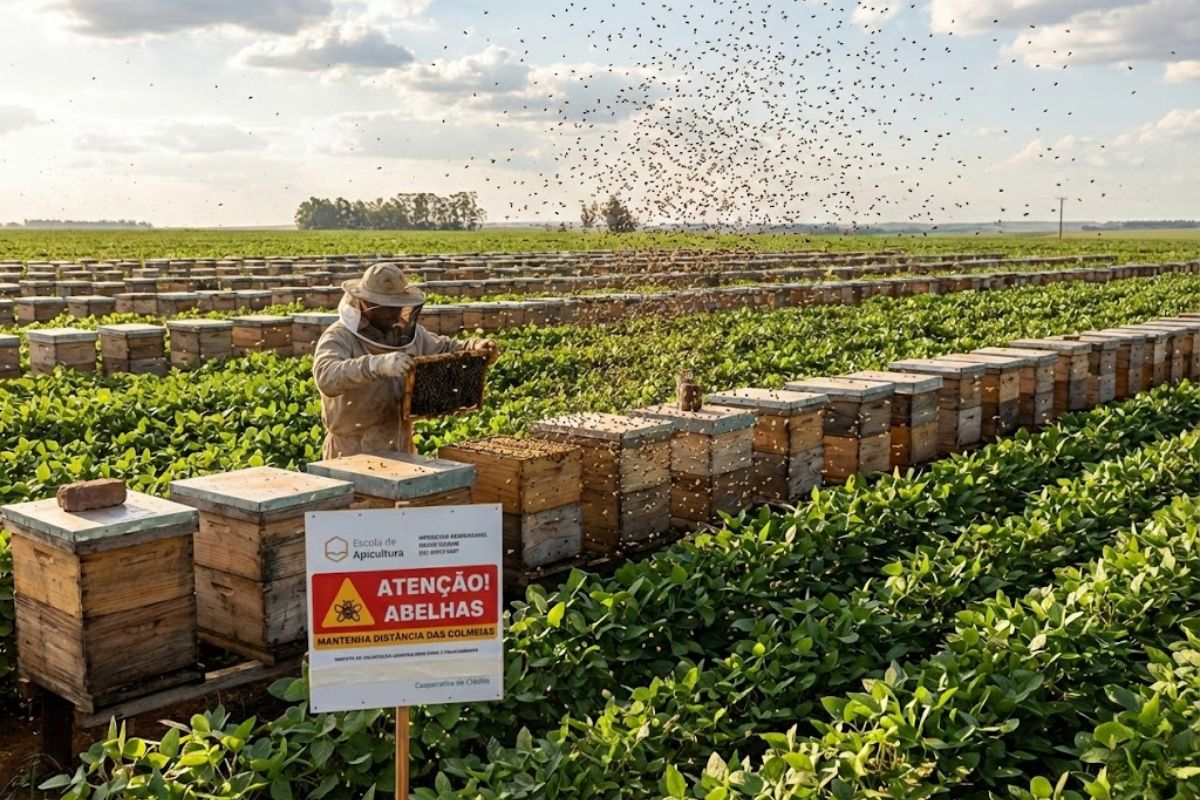


In The Heart Of Brazil, A Beekeeper Took Millions Of Bees To 10% Of A Soybean Crop Of 2,500 Hectares In Montividiu, Goiás. There Were 250 Hectares With Swarms, Hives Of 50 Thousand Insects, And Reach Of 5,000 M² Per Hive, Aiming For Gain Of 15% To 20% Based On Science.
In the heart of Brazil, in Montividiu, Goiás, a producer decided to put millions of bees to work within a soybean crop and test, on a real scale, how assisted pollination can change the outcome of a crop known for self-pollinating. The intervention was concentrated on 10% of a total area of 2,500 hectares, separating 250 hectares to receive hives and swarms in a planned manner.
The proposal is simple to understand and difficult to execute: to use science and nature together to transform insects into agricultural force. The Expectation Of Productivity Increase ranges from 15% to 20%, in a movement that tries to prove that even a self-pollinated crop can respond when receiving pollinators acting as reinforcement in the process.
Where The Operation Took Place And Why Montividiu Became The Center Of The Test

The experience was set up in Montividiu, Goiás, in a region of high agricultural production in the heart of Brazil.
-
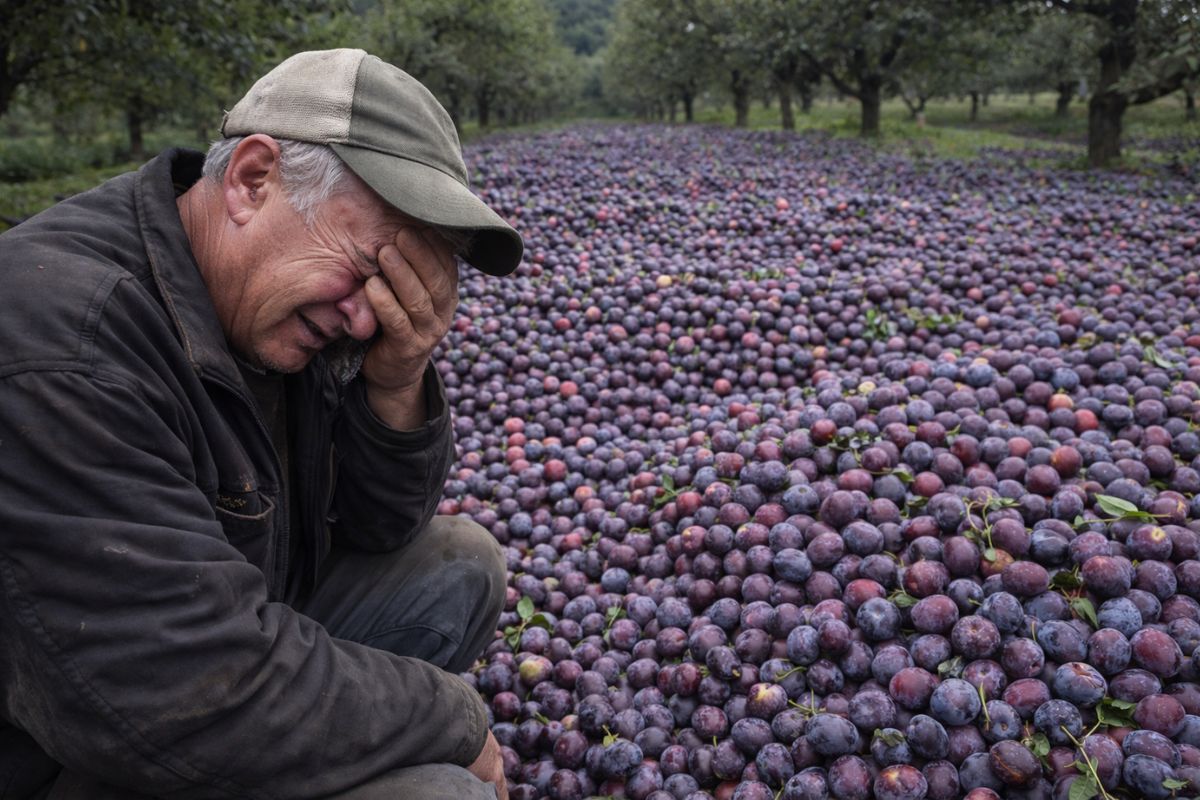
A rural producer from Urubici cries as he shows 50 tons of plums thrown on the ground because no one wanted to buy them, and in desperation, he records a video asking anyone to come to the property to pick the fruits before they rot.
-
Unable to pass through Hormuz, Brazil activated a plan B that uses Turkey as a gateway to the Middle East: the route through Gibraltar and the Mediterranean is longer and more expensive but ensures that chicken, beef, and corn continue to reach Arab markets.

-
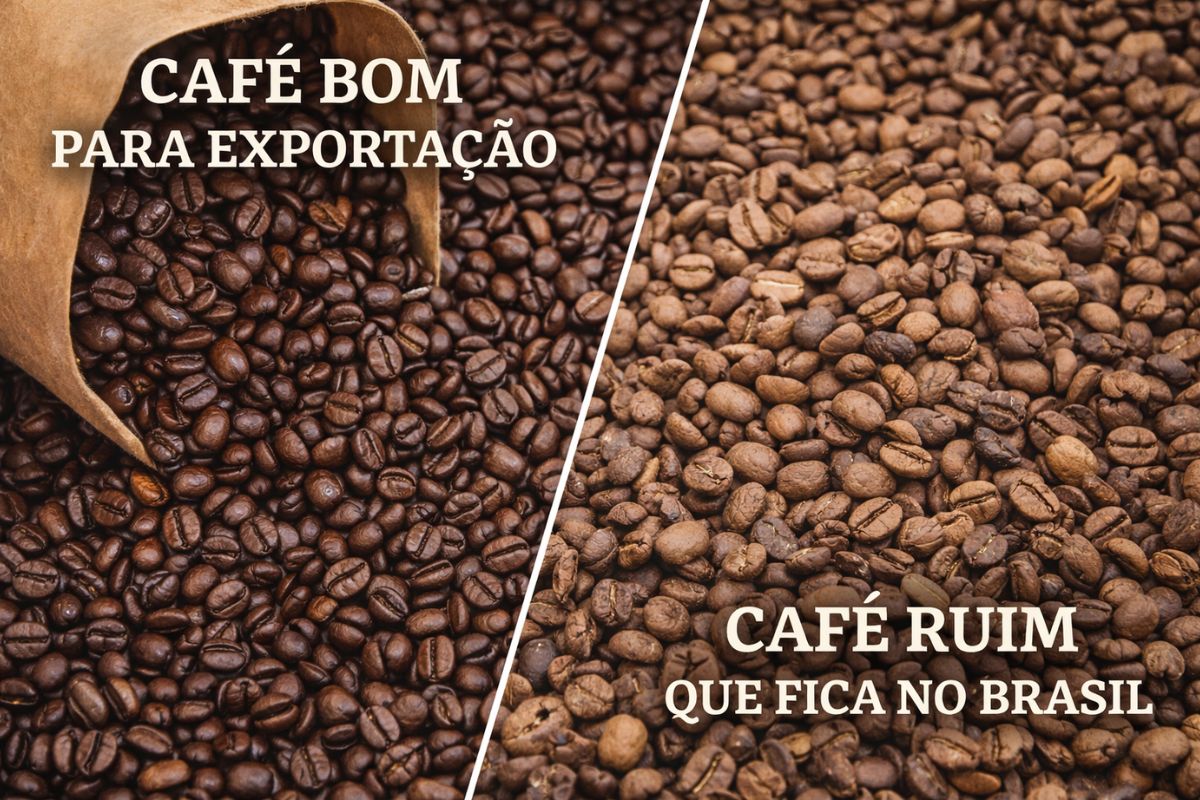
You grew up hearing that the good coffee from Brazil goes all abroad and the bad coffee stays for Brazilians, but this story has completely changed, and the numbers show that in the 1980s, thirty percent of the coffee sold here was adulterated with corn and barley.
-
Engineer creates reforestation method that transforms small plots into dense forests in a few years using local biomass and can reduce environmental recovery costs.


The key point is that it was not a small trial, a backyard, or laboratory experiment.
The scenario was a soybean field with 2,500 hectares, placing the initiative at a large-scale agriculture level, where any adjustment needs to be calculated to avoid losses.
Montividiu comes as a reference because the test did not occur in a symbolic plot.
The choice to apply the technique to 250 hectares shows an attempt to make assisted pollination work on a size of area that already requires field logistics, hive distribution planning, and consistent management capacity.
The Size Of The Crop And What It Means To Work On 10% Of The Area
The producer did not spread hives across the entire farm. Assisted pollination was implemented on 10% of the soybean field, equivalent to 250 hectares within the total of 2,500 hectares.
This reveals a strategy of controlled testing within the property itself, with an area large enough to generate impact, but delineated enough to maintain viable management.
Working on 10% is a decision of calculated risk. It is a middle ground between boldness and control: large enough to be relevant, but not so total that it ties the entire production to a newly implemented technique in soybeans.
The Logic Behind The Millions Of Bees And Why The Number Is Not An “Exaggeration”
To cover the 250 hectares, 25 million bees were used. The number is startling, but it arises from a logic of hive sizing and pollination reach, not of spectacle.
Each hive was described as containing around 50,000 insects and being able to pollinate approximately 5,000 m².
With these two data points, the operation becomes an agricultural coverage calculation.
250 hectares equal 2,500,000 m².
If each hive covers 5,000 m², the area requires about 500 hives to reach the total. And 500 hives with 50,000 bees each result in 25 million.
In other words, “millions of bees” is not a figure of speech, it is a calculated scale. It is the size necessary for the presence of pollinators to be, in fact, relevant in the 250 hectares chosen.
Why Bet On Bees If Soybean Self-Pollinates
Soybean is described as a crop that self-pollinates, and this has always been an argument to minimize the role of insects in the field.
The test exactly challenges this practical belief.
The logic used by the producer is that self-pollination does not mean “maximum guaranteed performance.” It simply means that the crop can self-pollinate without relying exclusively on external agents.
Assisted pollination comes in as a reinforcement. The intention is to stimulate and intensify the process, creating conditions for pollination to occur more efficiently and thus reflecting in the final productivity.
The experiment does not seek to deny self-pollination, but rather test whether the result can improve when bees act as pollinators on a planned scale.
What The Publication Of 2023 Put On The Radar Of Producers
Beekeeper Pedro Feldon cited a 2023 publication from Embrapa showing that the use of bees as pollinators in soybean cultivation can considerably increase the productivity of the crop, with the potential for increase between 15% and 20%.
This detail changes the weight of the project. It is not just an intuitive attempt to “put bees and see what happens.”
There is a technical starting point that pushes producers to test. From there, the field becomes the place to confirm what science suggests, taking the concept to an area large enough to have economic consequence.
Who Is Pedro Feldon And The Role Of The Beekeeper In The Agricultural Strategy
Pedro Feldon appears as the beekeeper and central voice of the initiative. He describes soybean as self-pollinated, but emphasizes that, when using bees as pollinators, productivity can increase considerably, within the indicated range of 15% to 20%.
The role of the beekeeper in this type of operation is not just to “provide hives.” He participates in the logic of the field: defining how many hives are necessary, understanding the reach per unit, and guiding the use of bees for assisted pollination.
The Presence Of A Beekeeper In The Field Transforms The Insect Into A Planned Tool, rather than an random occurrence from the environment.
Africanized European Bees And The Concept Of Assisted Pollination
The method uses africanized European bees worked for assisted pollination, that is, to help the pollination process in soybean and increase the farmer’s production.
The term assisted pollination here means introducing swarms into a defined area, with a productive goal and planned application.
This is not just “having bees around.” It is distributing hives in a specific parcel of the crop so that the activity of pollinators can occur intensely where results are desired.
In practice, it is treating the hive as an agricultural service unit, with estimated reach and targeted function.
Hives As Field Infrastructure And Not As A Detail On The Farm Edge
When talking about 250 hectares, the hive ceases to be a peripheral element. It becomes infrastructure.
There are enough hives to cover the area, within the estimated reach of 5,000 m² per unit, creating a constant presence of pollinators in the portion of the crop.
This changes the operational landscape. The area no longer depends solely on what would occur naturally and now has a layer of biological management.
The Swarm Comes Into Planning Like Any Other Field Decision, because its distribution and scale determine whether assisted pollination will have a real chance of working.
The Logic Of Coverage Of 5,000 M² And How This Guides Distribution
The data of 5,000 m² per hive works as a coverage standard. In a scenario of 250 hectares, it helps to size how many hives need to be present so that the presence of bees is consistent and not just occasional.
This also shows why the project depends on scale. If the area were covered by few hives, the pollination activity would be small and irregular.
By sizing for total coverage, the producer tries to ensure that the effect, if it exists, appears clearly.
It Is The Difference Between “Putting A Few Hives” And “Implementing An Assisted Pollination System”.
Productivity Between 15% And 20% And Why This Interval Catches So Much Attention
The potential gain cited for the crop is between 15% and 20%. In any planting of large area, such percentages are not detail. They mean a significant increase in the final result, and that is why the strategy becomes a topic of debate.
This interval also shows that the producer is not seeking a symbolic improvement. He is seeking a leap. The Proposal Is That Nature, When Organized With Science, Generates Measurable Returns, not just abstract environmental benefits.
What Changes When The Crop Receives Millions Of Bees Instead Of Depending On Chance
The introduction of 25 million bees into 250 hectares changes the intensity of the environment.
The area now has more pollinator activity, more insect circulation, and more contact with the reproductive structures of the plants, precisely the mechanism that assisted pollination seeks to reinforce.
This also changes the producer’s reading of the crop. He stops viewing pollination as something “automatic and guaranteed” and begins to see it as a process with room for optimization.
In Other Words, The Soybean Continues To Self-Pollinate, But Does Not Need To Do It Alone.
Why Assisted Pollination Is Already Common In Other Crops
Although it is recently implemented in soybean, assisted pollination is already described as common in watermelon, melon, and avocado plantings.
This detail is crucial because it places the technique on a known path. It did not just come about now; it migrated from crops where the presence of pollinators is more traditionally valued.
The novelty is the destination. Transferring the practice to soybean is what generates shock, precisely because it is a crop recognized for self-pollination.
It Is The Adaptation Of A Strategy Already Used In Other Plantings To A Crop That Many Considered “Closed” To This Type Of Intervention.
The Experiment As A Practical Debate Between Self-Pollination And Biological Reinforcement
The test in Montividiu, Goiás, opens a debate in simple language: if soybean self-pollinates, why would there still be room for improvement with bees?
The answer the project seeks is not theoretical but practical. The 250 hectares exist to show whether the reinforcement of pollinators, at scale, produces a difference.
What draws attention is the combination between the cited science and the applied nature.
The project does not sell itself as a miracle. It presents itself as an attempt to raise productivity with a known biological agent, worked and sized.
It Is A Direct Confrontation Between “It Has Always Been Like This” And “Let’s Test With Method”.
Science And Nature Together As A Production Strategy In The Heart Of Brazil
The case concentrates, in the same place, three clear elements: large crop, defined cut, and planned presence of pollinators.
Montividiu, Goiás, becomes the scenario where the producer tries to prove that managing bees is not just about honey and beekeeping, but also about grain agriculture.
The strategy is to transform insects into agricultural force, placing hives as part of the productive design and using the numbers of the system itself, 50,000 bees per hive and 5,000 m² per unit, to justify the scale.
When A Producer Puts Millions Of Bees Into 250 Hectares, He Is Not “Embellishing” The Crop, He Is Creating An Agricultural Operation Based On Coverage And Objective.
What This Type Of Initiative Suggests For Soybean Planters
Even without expanding the test to the 2,500 hectares, the project already brings assisted pollination into the conversation of those seeking productivity.
If the potential gain of 15% to 20% is confirmed within the applied cut, the method stops being a curiosity and becomes a management alternative.
The operation also helps to show that innovation does not always mean a new machine or product.
Sometimes it means organizing what already exists in nature and fitting it into the productive logic with scale, planning, and goals.
In The Field, The Question Stops Being “Does Soybean Need Bees?” And Becomes “Does Soybean Improve With Bees When Management Is Well Sized?”.
Would You Place Millions Of Bees In Part Of Your Soybean Field, Like In Montividiu, Goiás, To Try To Achieve Up To 20% Productivity Gain, Or Would You Still Rely Only On Self-Pollination?









Saudações…
Estas abelhas tem ferrão?
Elas apresentam risco de ataque a humanos?
Qual o direcionamento da produção de mel e derivados?
Gostaria de saber se essa área reservada de 10%, recebeu ou não aplicação de defesivo agricola?
Éso ya se probó en Argentina y ayudó algo a la soja, pero no a las abejas ya que ellas se desgastan mucho más rápido y mueren antes, pregunto, 50 abejas por colmena? La verdad no me cierra.
50 abejas por colmena me sonó a demasiado poco.. a su vez 50×500=25 mil, no 25 millones. Para que diera 25 millones, con 500 colmenas debería haber 50 mil abejas por colmena. Ahora 50 mil abejas por colmena me suena a demasiado mucho, pero capaz sea cierto..