





 Portuguese
  English
  Spanish
  3 min of reading
  1 comment


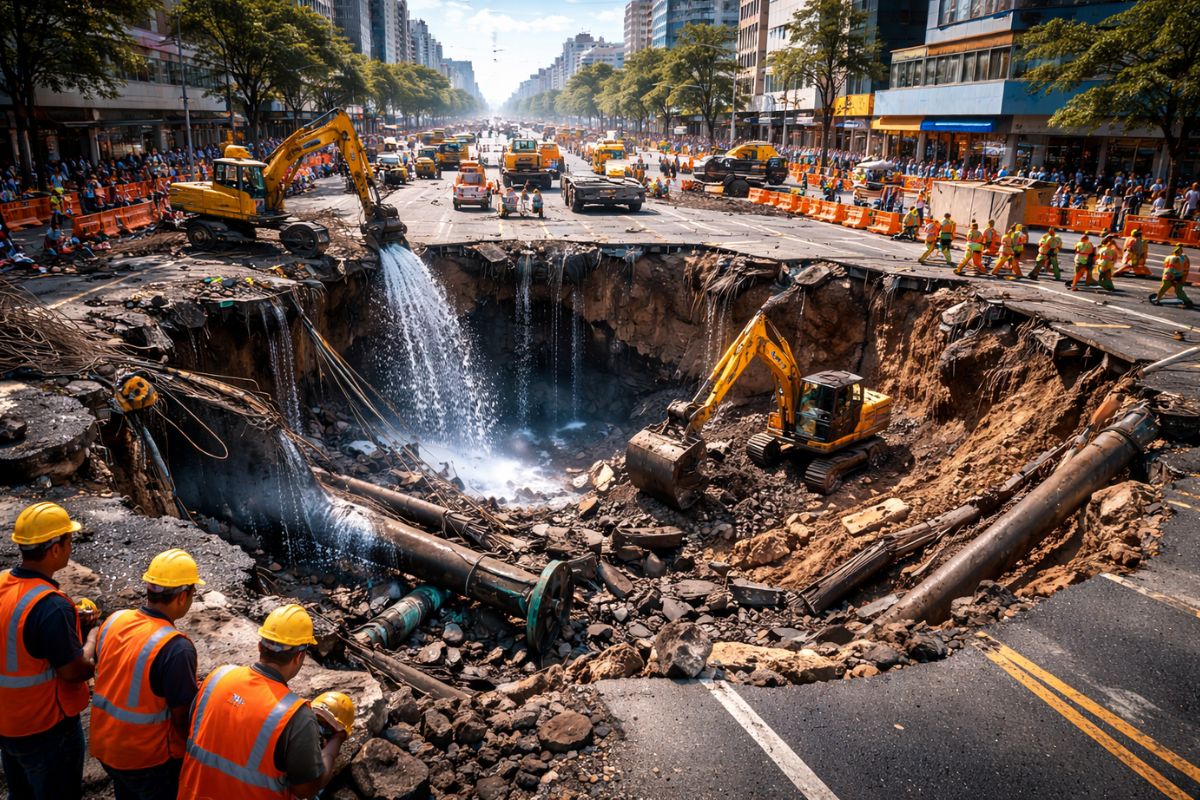


The 450 m² Hole Opened in 2016 on a Road in Fukuoka Next to the Hakata Station Took Down Five Lanes and Cut Water, Electricity, Gas, and Telephone. In 48 Hours, Teams Filled 15 Meters of Depth with 6,200 Cubic Meters and Delivered a Base 30 Times More Resistant in Practice.
The 450 m² hole appeared suddenly in one of the busiest areas of Fukuoka, near the Hakata train station, swallowing five lanes of a road. No one was injured, but water, electricity, gas, and telephone services experienced temporary interruptions.
In 48 hours, the road was back in operation, following continuous reconstruction day and night and tests to check soil integrity and the safety of the teams. To close the crater, 6,200 cubic meters of sand and cement were used, and Mayor Soichiro Takashima stated that the new structure became 30 times more resistant than the previous one.
The Collapse That Swallowed Five Lanes in Fukuoka

The 450 m² hole appeared in 2016 and opened a crater about 30 meters by 27 meters, reaching 15 meters in depth.
-
Florianópolis will receive a million-dollar BRT that will begin construction in 2026 with nearly 400 million in funding from the federal government and the Inter-American Development Bank, and the map already shows the routes for the exclusive bus corridors.

-
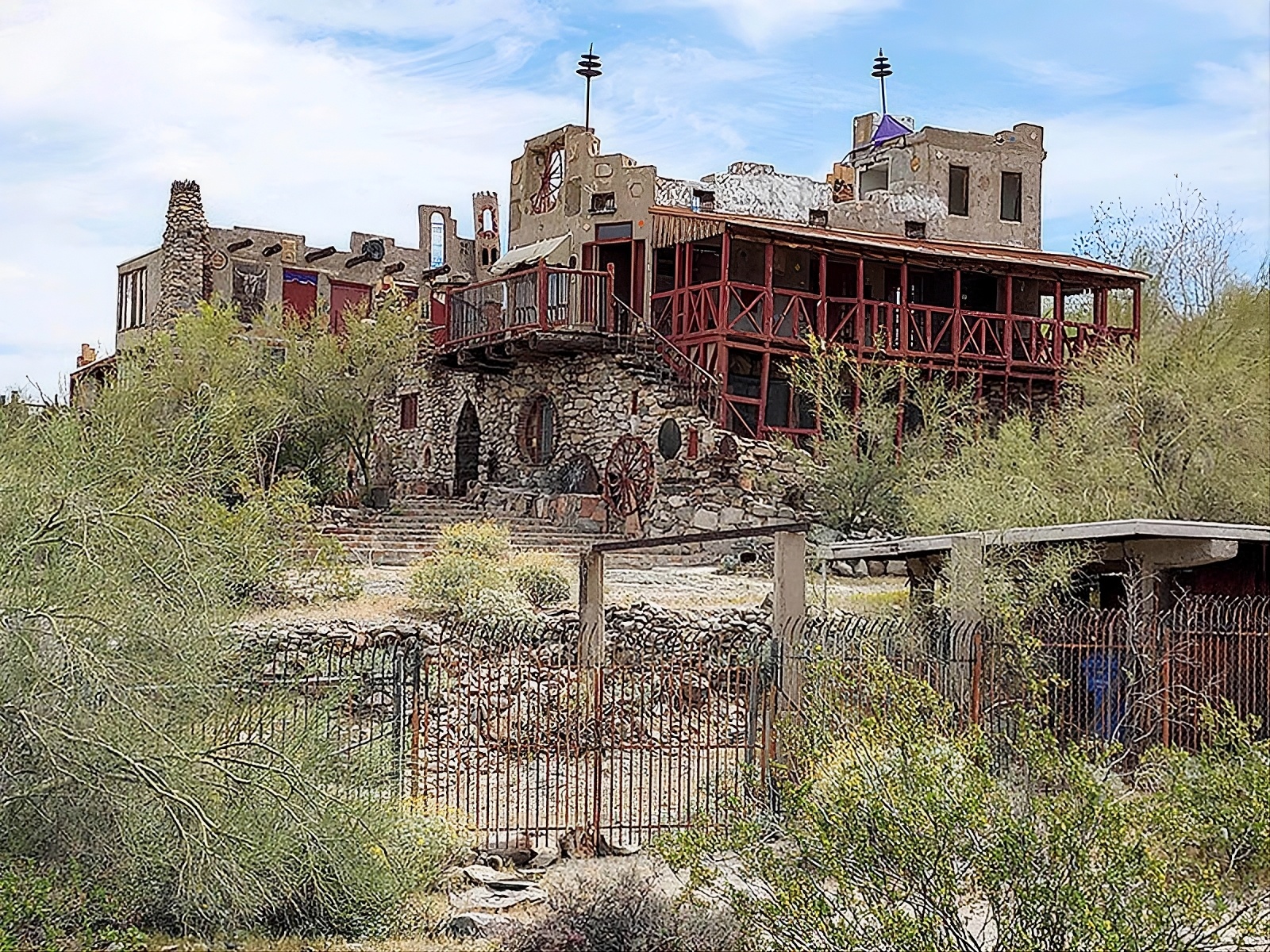
Without a blueprint, without an engineer, and using scrap from the dump, a father spends 15 years building an 18-room castle for his daughter, featuring tram tracks, 13 fireplaces, and over 700 m², which may now be demolished.
-
A megaproject worth R$ 89 billion is advancing in Iraq and promises to change the game in global trade by creating a new corridor between Asia and Europe, reducing traditional routes and repositioning the country as a logistics powerhouse.

-
Goodbye bedside table: floating shelves become a trend in 2026 by freeing up space in the bedroom, improving circulation, bringing visual lightness, and integrating technology without taking up floor space.


The failure occurred on a road near the Hakata station in Fukuoka, a point of significant urban flow and railway connection.
The size of the 450 m² hole transformed the incident into a potential immediate crisis.
Five lanes were compromised, and the surrounding area had to be treated as a risk zone to prevent the approach of pedestrians and vehicles.
Water, Electricity, Gas, and Telephone Interrupted in the Surroundings of Hakata

In addition to the damage to the asphalt, the 450 m² hole caused cascading effects on essential services.
There were temporary interruptions of water, electricity, gas, and telephone services, affecting daily life in Fukuoka and increasing pressure for a rapid response.
As soon as the pavement began to collapse, authorities evacuated nearby buildings and streets for safety.
Technicians began immediate structural assessments, and before the advancement of the construction, they conducted tests to ensure soil integrity and the health of workers.
The Construction in 48 Hours and the 6,200 Cubic Meters Applied


The reconstruction that returned the road in 48 hours became the most remembered point of the episode.
With teams working non-stop, day and night, the focus was on stabilizing the terrain and restoring the roadway without leaving room for new sinkholes in the same area of Fukuoka.
To close the crater, the solution employed approximately 6,200 cubic meters of sand and cement.
The volume was used to fill the cavity and restore structural support to the section near Hakata, aiming to recover circulation and reduce risks.
Structure 30 Times More Resistant and Timelapse That Went Viral
The mayor of Fukuoka at the time, Soichiro Takashima, stated that the new structure became 30 times more resistant than the previous one.
The promise was treated as a sign that the repair of the 450 m² hole would not be just a patch, but a correction with soil reinforcement.
Timelapse images recorded by security cameras showed the speed of the construction in 48 hours and circulated widely on social media.
The visual sequence reinforced the perception of coordination and efficiency in responding to the 450 m² hole.
Suspicion Linked to the Subway and Commission to Investigate the Case
Although the official causes were not immediately confirmed, local authorities pointed as the main suspect the ongoing expansion works of an underground subway line nearby.
The hypothesis connects the sinking to the context of underground interventions in Fukuoka.
Soichiro Takashima promised the creation of a special commission to investigate the 450 m² hole and prevent similar incidents in the future.
A week later, the intersection was fully opened for traffic, functioning as if nothing had happened.
With impacts in Hakata, in Fukuoka, the 450 m² hole became a reference for urban response in 48 hours, but also a warning about underground infrastructure.
For those circulating in areas with construction, keeping track of official announcements and closures remains the most realistic measure.
What surprises you most about this 450 m² hole: the reopening in 48 hours, the use of 6,200 cubic meters, or the fact that five lanes were swallowed near Hakata?








O jornalista descreveu muito bem o ocorrido, só não disse em que país se localiza Hakata.