





 Portuguese
  English
  Spanish
  5 min of reading
  0 comments


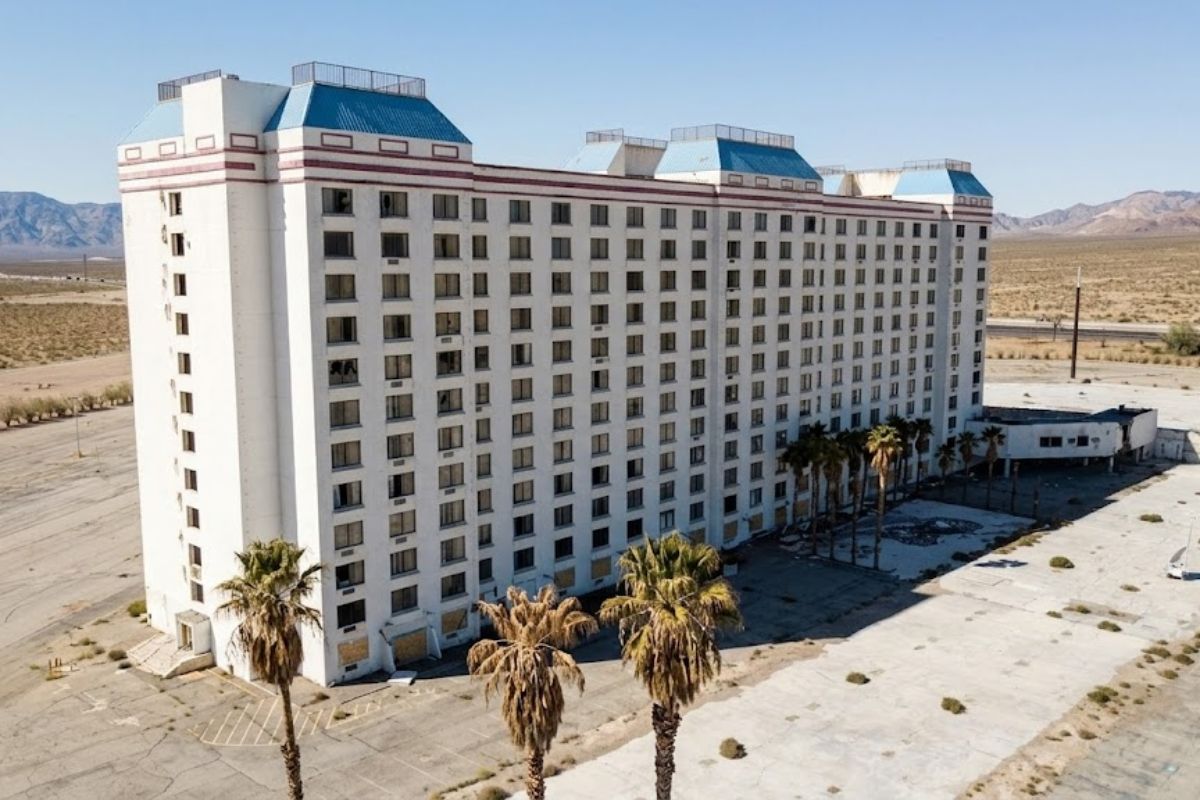
The Giant Casino That Once Welcomed Travelers Between Las Vegas and California Now Survives Empty in Jean, Nevada, Surrounded by Fire, Mold, Broken Windows, and Promises of a Logistics Center That Stopped Midway, Turning the Abandoned Hotel Into an Unintentional Landmark Along the Highway in the Nevada Desert.
The giant casino in Jean, Nevada, still dominates the landscape as if waiting for guests who will never return. On one side, the highway remains alive, full of trucks, tourists, and rush; on the other, the abandoned hotel stands still, dirty and darkened, like a block of concrete that should have long since disappeared.
The contrast explains why the structure attracts so much attention. This is not just an empty building, but a point of passage that lost function without losing presence. Those crossing the border between Las Vegas and California see the busy station, the cars coming and going, and soon after encounter the lifeless tower that insists on standing in the desert.
The Casino That Lived Off Traffic and Became a Highway Ruin
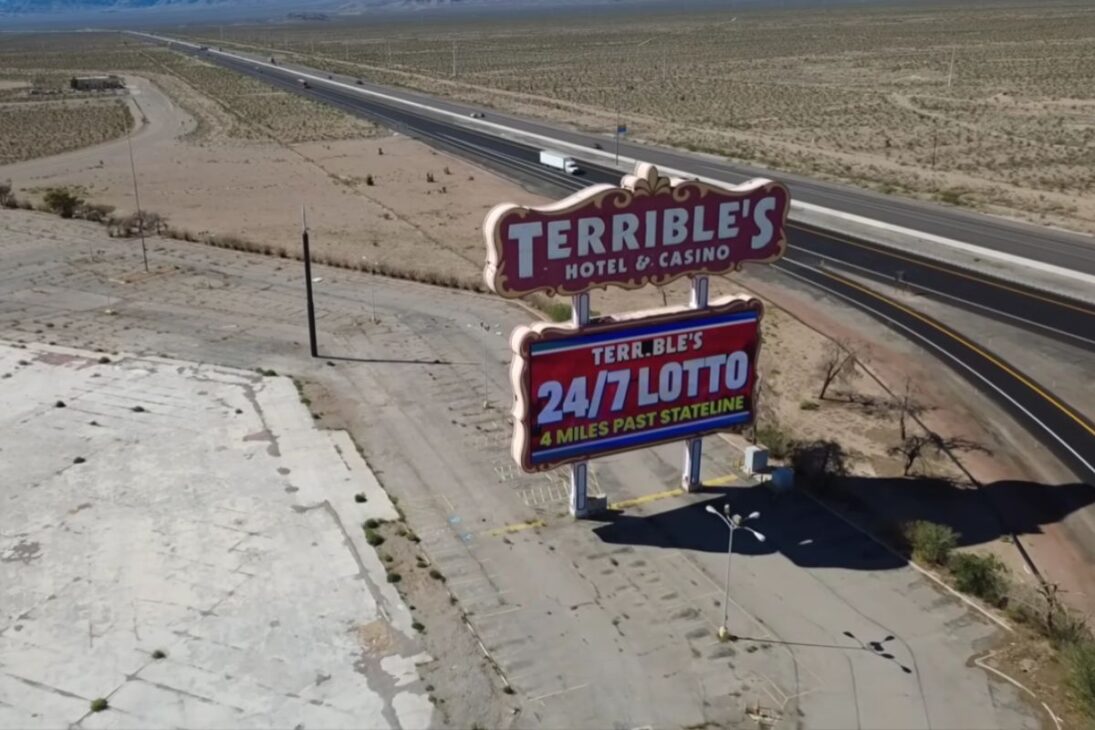
The old Terrible’s, formerly known as Gold Strike, was born in the late 1980s as a roadside casino with a simple logic: to be the first or last stop for those crossing Jean, Nevada, along the highway between Las Vegas and California. There were cheaper rooms, easy parking, quick meals, and a few rounds at the machines for those looking to rest before continuing their journey. The place did not compete with the mega-resorts in Las Vegas; it lived off the flow.
-
Son of a seamstress from the rural area of Ceará who did not speak English wins a scholarship of over 2 million reais at Williams College, one of the top 10 universities in the United States, covering everything including dormitory, meals, and annual trips to Brazil.

-
Bill Gates revealed that the true secret behind every great achievement is not a brilliant leap but rather small improvements repeated over the years, and the data from his own career and the fight against climate change prove that he is right.

-
With 22 thousand tons of steel, a height nearly three times greater than the Eiffel Tower, and a cost of R$ 1.6 billion, China is building the highest bridge on the planet over a colossal canyon, reducing a crossing time of over 2 hours to just over 2 minutes.
-
With more than 635,000 doctors, Brazil sees competition increasing in large cities, and recent graduates are competing for shifts at an accelerated pace while the countryside still faces shortages.


This model made sense for decades. Jean was never exactly a traditional town, with neighborhoods, schools, and its own urban life. It always functioned more like a service stop, a place to pause. The giant casino was the heart of this arrangement because it captured part of the money and time of those passing through the highway. When it closed during the pandemic and never reopened, the emptiness of the building began to expose the fragility of the local logic itself.
Today, what remains is a physical portrait of decay. The abandoned hotel has boarded-up windows on the ground floor, broken glass on the upper floors, burn marks creeping up the concrete, and cracked parking areas overtaken by weeds. The silence weighs heavily because the highway remains noisy, but the building no longer responds to this movement. It just observes.
Even the layout of the place reinforces the sense of interruption. Exposed metal staircases, accumulated debris, black mold caused by leaks, and the dark interior turn the giant casino into something akin to a post-apocalyptic scene. The problem is that there is no scene. There exists a real ruin, frozen in time.
Demolition Seemed Certain, But the Market Slammed the New Bet
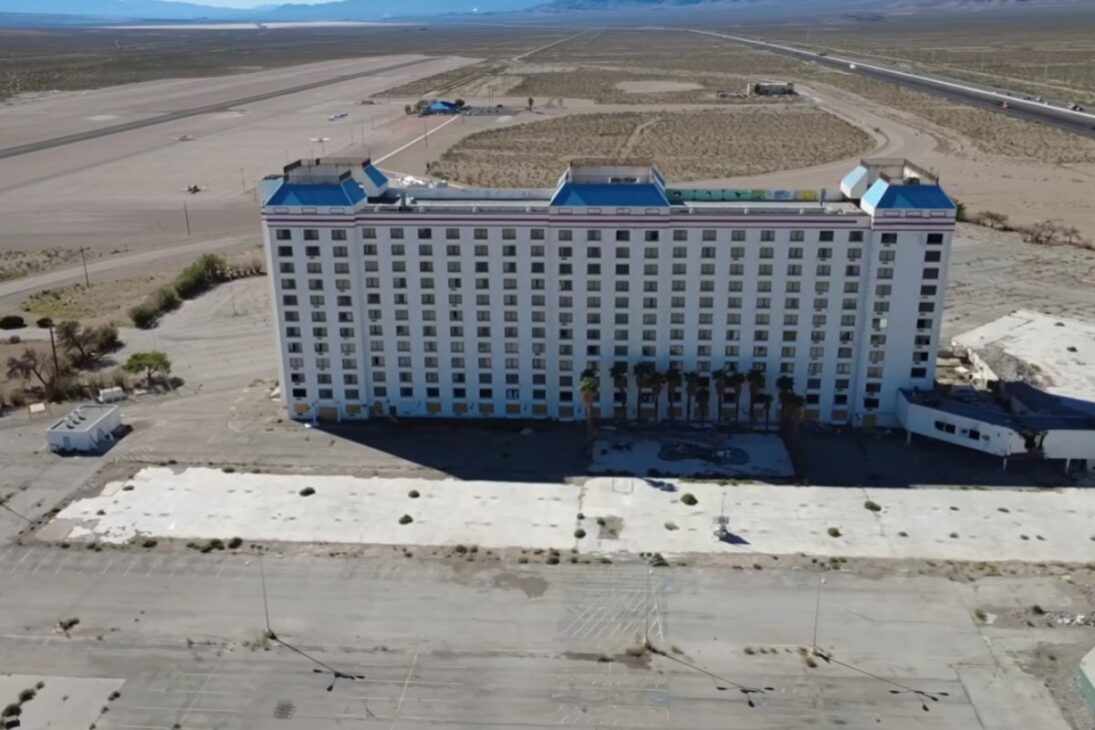
At one point, the fate of the abandoned hotel seemed resolved. A developer from Reno purchased the property and the surrounding land, over 140 acres, for about $44.7 million. The idea was not to recover the casino but to demolish everything and erect the South Vegas Industrial Center, a warehouse and distribution complex of 1.9 million square feet. The location of Jean, Nevada, seemed too good to remain idle. The I-15 highway offered direct access to the corridor between California and Las Vegas.
The reasoning was very strong while the logistics market was hot. Truck drivers coming from the ports of Los Angeles and Long Beach could unload in Jean, avoid the congestion and land prices of Las Vegas, and still return the same day. In 2022, when the purchase was made, the vacancy rate for warehouses in southern Nevada was around 2%. It seemed like the perfect time to bury the giant casino for good and replace the old roadside economy with modern logistics.
But the market turned quickly. By the end of 2024, the vacancy rate rose to 11.5%, the highest level in over a decade. There was excessive construction, interest rates became heavier, and trade tensions left many companies less willing to close contracts. The project stalled before it really even began, and the abandoned hotel remained where it was, waiting for a demolition that no longer seemed urgent for the new owners.
This freeze helps explain why the building is still there. It’s not because no one noticed the problem. It’s because the economic logic that would justify tearing it down has lost strength for the time being. While the industrial center is on hold, the giant casino stands as a dormant asset that no one uses but still occupies a valuable spot in Jean along the highway.
Jean Stays Alive on the Map, But Almost Empty as a Town
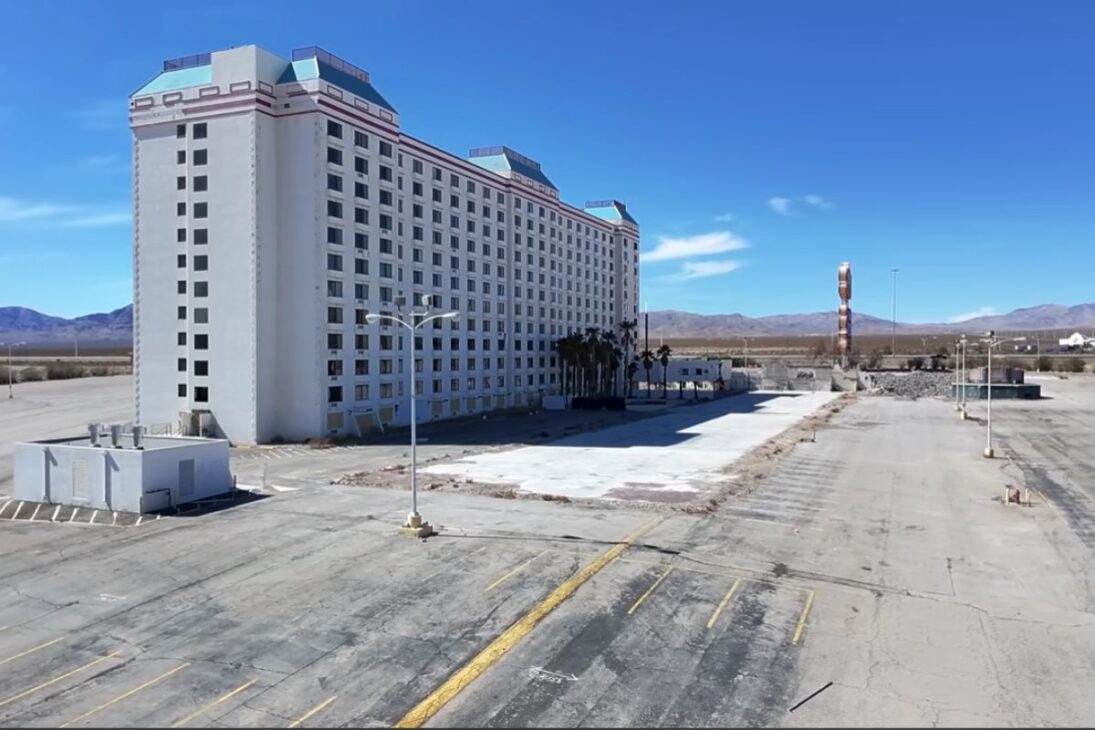
The case becomes stranger when looking at the rest of the area. Aside from the station known for being the largest Chevron in the world and the skydiving center that still operates daily flights, Jean has very little permanent life. The only constant population mentioned is that of the Jean Conservation Camp, a minimum-security women’s prison with about 240 inmates. This reinforces the feeling that Jean did not become a town; it became an interlude.
The empty giant casino has ended up acquiring indirect uses. Truck drivers use the lot to stop and rest. Skydivers use the structure as a visual navigation point. Locals and drivers have started calling the building the “hotel of the dead.” It’s a harsh nickname, but understandable. The abandoned hotel no longer serves to host anyone, yet it continues to be the strongest image of Jean, Nevada.
The irony is that the place still holds some strategic value. The owners continue to say that the location, just 25 miles from the Strip and with direct access to the highway, is too good to stay idle forever. The company’s website still mentions up to 2.6 million square feet of industrial space and even the potential for a future connection with the southern Nevada supplemental airport. The problem is that none of this has changed the physical reality of the building so far.
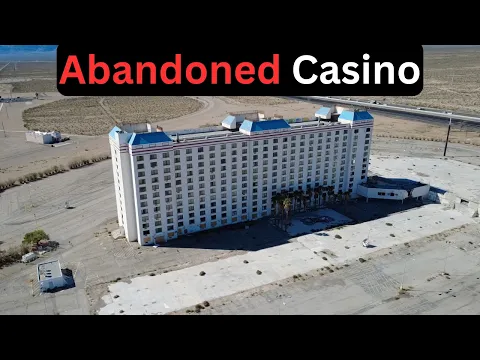

Until this new identity arrives, what exists is an unintentional monument. The giant casino should have been demolished, but it has become a concrete record of a defeated economic model, of interrupted real estate expansion, and of a piece of desert that continues waiting for a new utility that has yet to come.
The giant casino in Jean, Nevada, remains standing because the old logic of roadside establishments died before the new industrial logic could be born. In the midst of this interval, the abandoned hotel has become a strange monument: too large to be ignored, too useless to be quickly restored, and too expensive to be erased without economic conviction.
In your view, does Jean still have a real chance to reinvent itself, or has this building already become just a permanent skeleton of the desert?







Seja o primeiro a reagir!